

Desiccators
We personally find you the right used, refurbished and new desiccators instruments & equipment from verified suppliers.
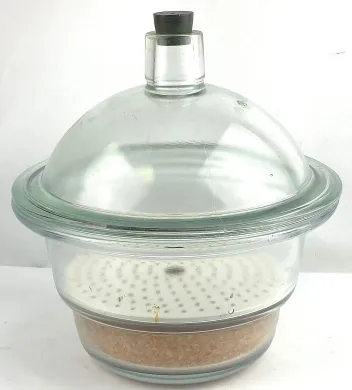
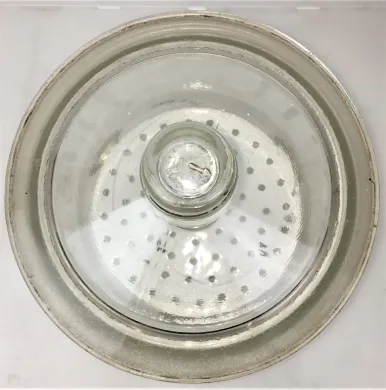
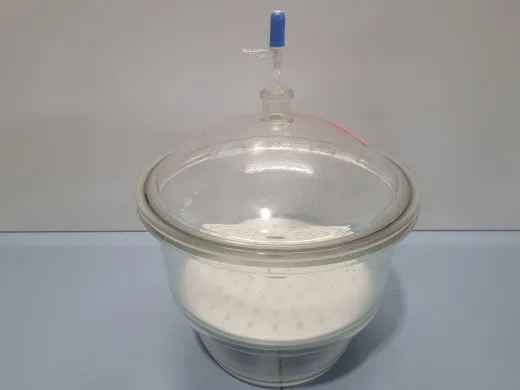
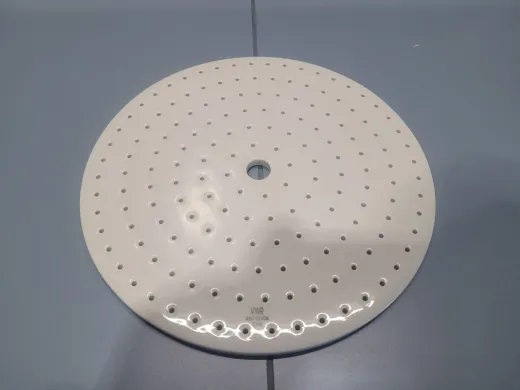
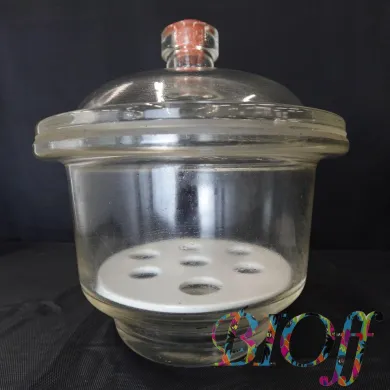
Desiccators are sealed containers that hold a dry internal atmosphere, used in laboratories to protect hygroscopic samples, calibration weights and moisture-sensitive materials from ambient humidity. A desiccant such as silica gel sits below a perforated plate while the specimen rests above it, and a greased rim or a vacuum port keeps outside air out. On Questpair, 128 of the 138 desiccator listings are used, drawn from 13 verified suppliers and distributors across 7 countries. Both new and used laboratory desiccators are listed, with refurbished units priced below new. Prices run from EUR 17 to EUR 2.237. 93 percent of the listings are used.
Updated:
Desiccators product list


Not the exact instrument you need?
Tell our scientists what you are after. We track it down, including off-market supply.
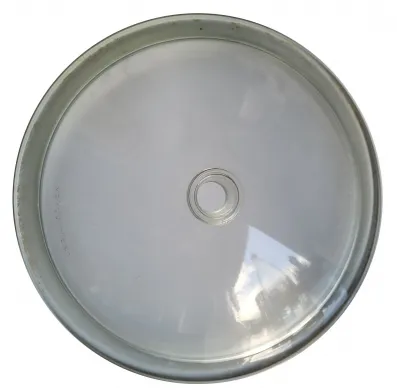
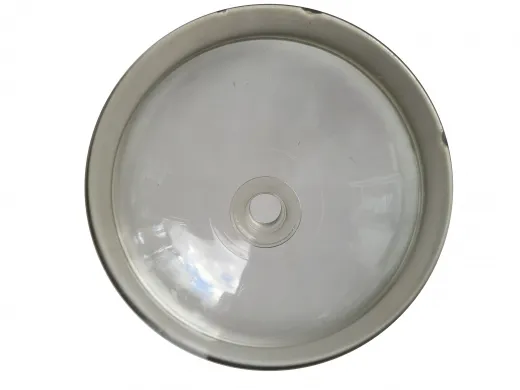
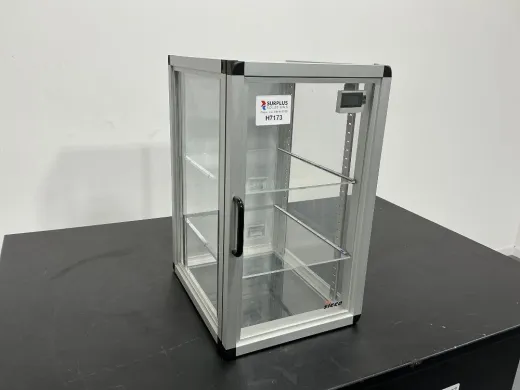
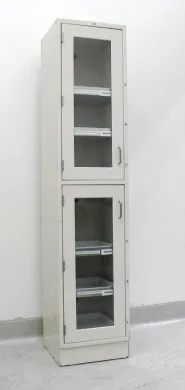
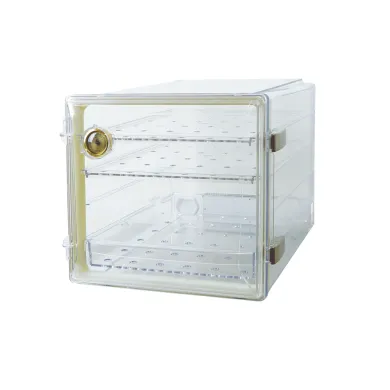
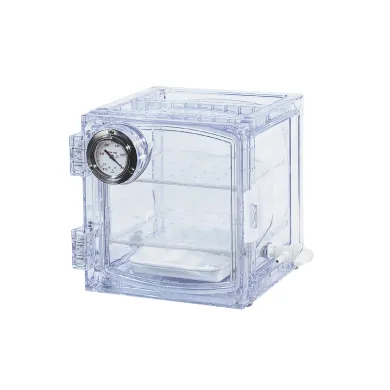
Not the exact instrument you need?
Tell our scientists what you are after. We track it down, including off-market supply.
Showing 1–40 of 62 listings
Show 22 more listingsBuying guide
The seal settles a desiccator purchase before anything else, because it is the single component that determines whether the unit does its one job. A ground-glass rim with vacuum grease holds a static dry atmosphere well enough for routine storage; a gasketed cabinet door or an O-ring stopper holds it better and opens faster. Where a vacuum is needed, the body has to withstand the pressure differential without imploding, which rules out thin glass and lightweight polycarbonate for repeated evacuation. Decide first whether the work is static storage, vacuum drying, or controlled humidity with a monitored indicator, and the rest of the specification follows from that choice.
Capacity and material come next. Benchtop glass desiccators suit a handful of flasks or weighing bottles; a floor-standing or wall-mounted cabinet holds trays of wafers, electronic components or large glassware. Glass lets a user see the contents and resists most solvents but breaks; polycarbonate and acrylic cabinets are lighter and shatter-resistant but can craze under certain vapours. Match the chamber volume to the batch, not to the bench space available, because a half-empty unit wastes desiccant and a crammed one blocks airflow around the samples.
On a used unit, verify the parts that wear. Check the ground-glass flange or the door gasket for chips and compression set, test the stopcock or valve on a vacuum model for leaks, and confirm that any humidity indicator or electronic hygrometer still reads true. A desiccator that will not hold vacuum overnight needs a new seal or valve, and those are consumable items rather than faults in the body. Ask what the chamber has stored before, since corrosive vapours leave residue that no cleaning fully removes.
Price tracks size and type more than age. What a small glass desiccator costs sits near the bottom of the range at EUR 17, while a large automated cabinet with nitrogen purge and digital control reaches EUR 2.237, and the average of EUR 317 reflects the mix of simple benchtop units and instrumented storage systems. For a limited budget, a used glass or polycarbonate desiccator covers routine moisture protection at a fraction of new, and the refurbished units listed for sale run well under new pricing. Brands such as Various, Bel-Art Products, Nalgene, Bel-Art, Unknown recur across the listings, which makes replacement parts and comparable models easier to find.
Types of Desiccators
Which desiccator types are listed here?
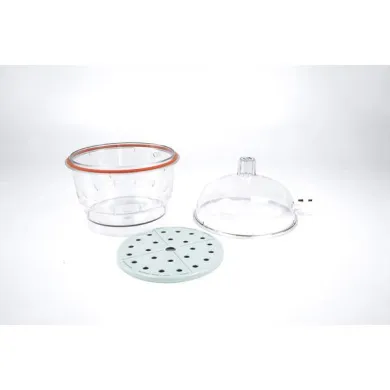
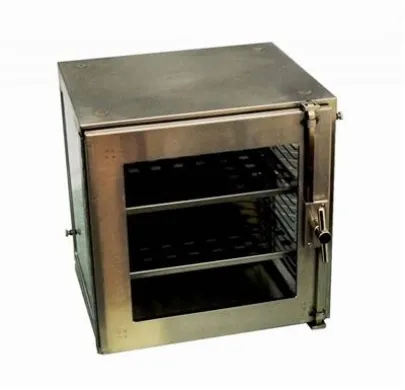
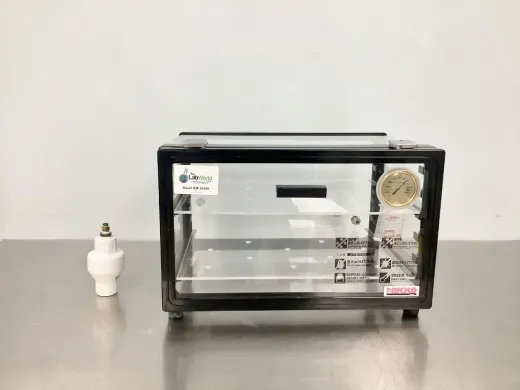
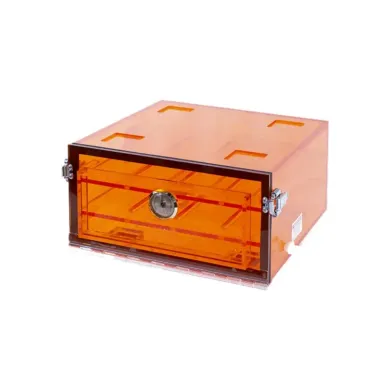
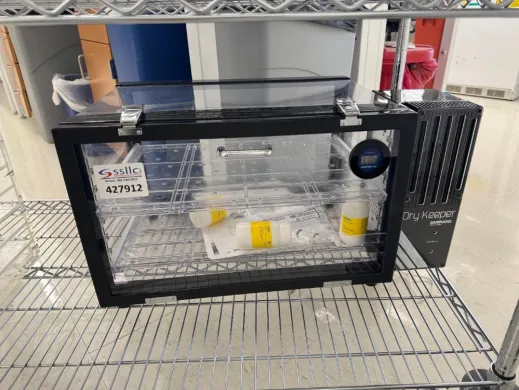
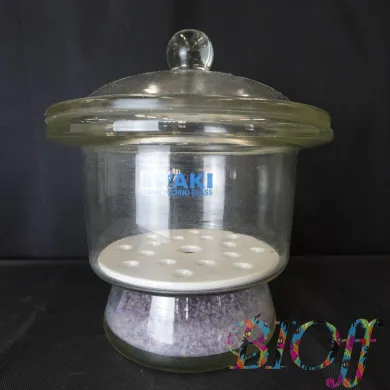
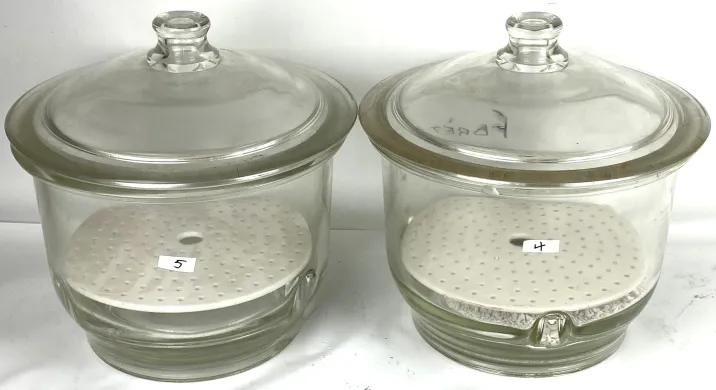
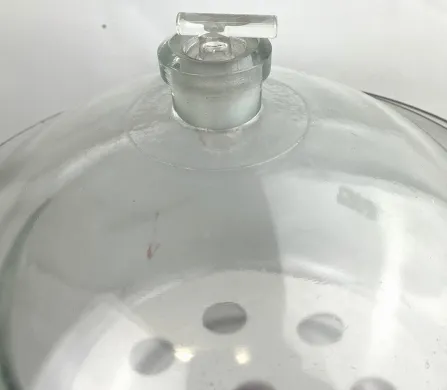
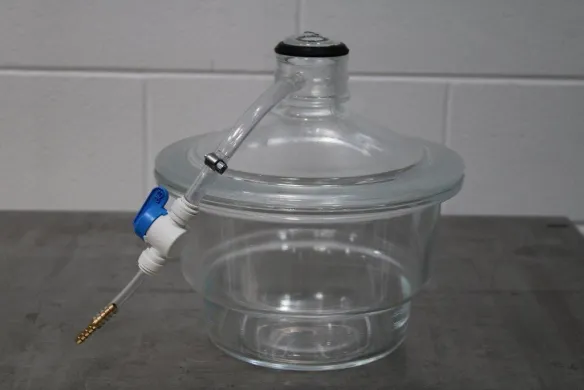
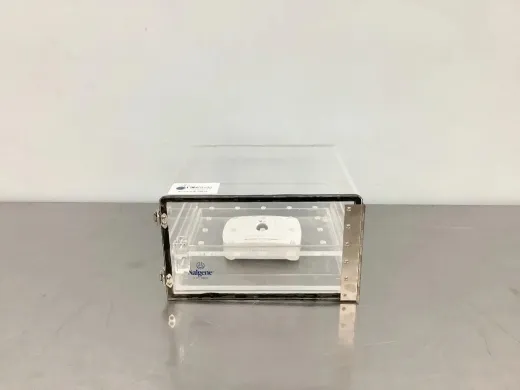
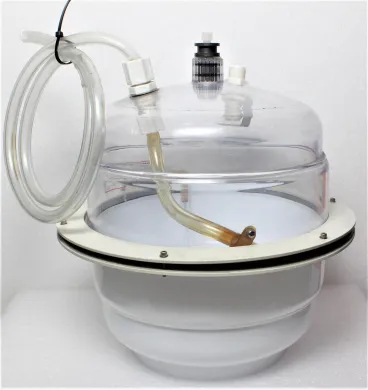
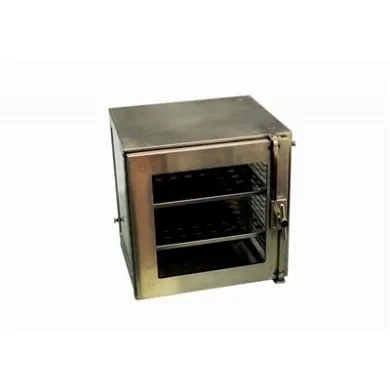
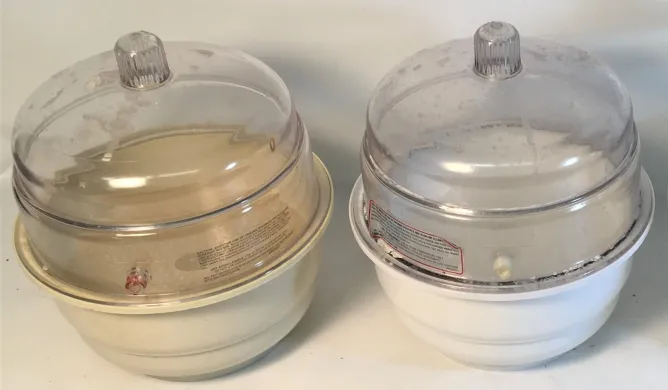
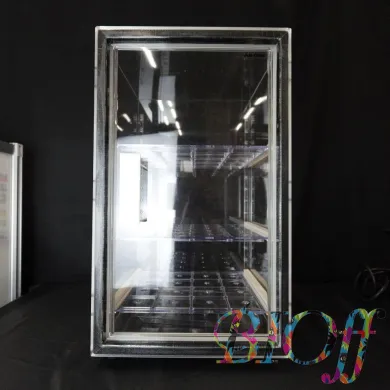
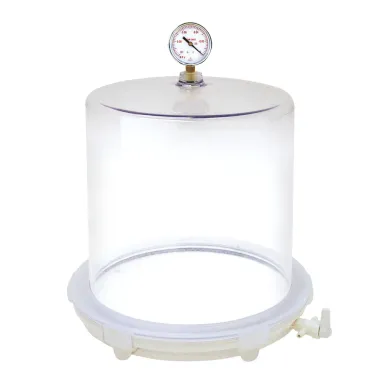
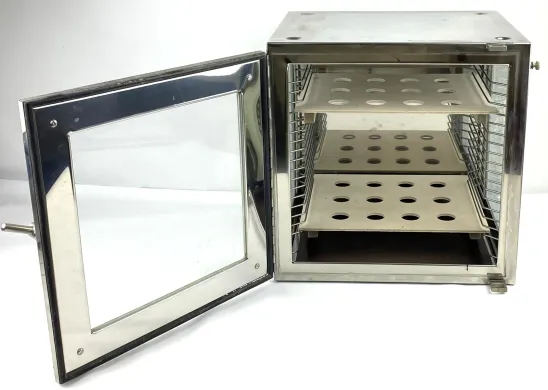
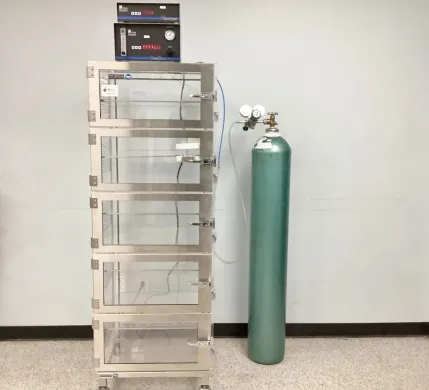
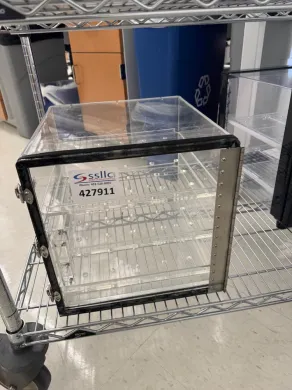
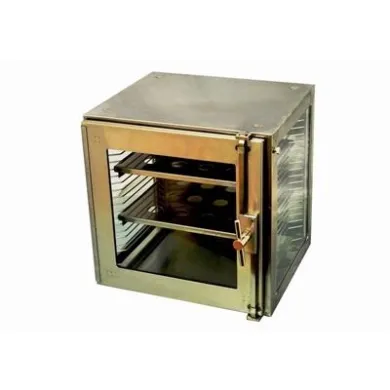
Among the listings that specify a type, the common forms are laboratory desiccator, glass desiccator, vacuum desiccator, desiccator cabinet, desiccator, laboratory storage cabinet. A standard laboratory desiccator is the plain sealed chamber with a desiccant well below a perforated plate, used for static storage at ambient pressure. A glass desiccator is the same arrangement in borosilicate, chosen where visibility and chemical resistance matter more than weight. A vacuum desiccator adds a stopcock or valve so the chamber can be evacuated, which speeds drying and lowers the moisture floor below what a static unit reaches. A desiccator cabinet scales the principle up to a cupboard, often with multiple shelves, sliding doors and sometimes a nitrogen purge for continuous dry storage of larger stock. Laboratory storage cabinets of the controlled-atmosphere kind overlap with this last group where humidity, rather than ventilation, is the point.
These units do work across the life sciences. In molecular biology and genomics, a desiccator keeps lyophilised DNA, enzymes and buffer salts dry between uses, since rehydration degrades them. Cell culture and microbiology laboratories store agar plates, media components and desiccated reference strains under controlled low humidity. In proteomics and gravimetric analysis, a vacuum desiccator brings samples and weighing vessels to constant mass before a measurement, removing adsorbed water that would corrupt the reading. Histology and sample preparation workflows use desiccator cabinets to protect embedded blocks and prepared slides from moisture during long-term archiving. A vacuum desiccator for moisture-sensitive samples and a nitrogen-purged desiccator cabinet for long-term reagent storage are the two configurations a buyer in these fields reaches for most.
The brands behind the desiccator listings
The recurring names across the catalogue are Various, Bel-Art Products, Nalgene, Bel-Art, Unknown. Bel-Art Products and Nalgene account for much of the polymer side, which keeps replacement plates, stopcocks and bodies straightforward to source and comparison between models simple. A large share of listings carry a generic or unidentified maker, which is normal for a product where the chamber matters more than the badge; for those, judge the unit on its seal, material and condition rather than on the brand. Where a specific brand recurs, a buyer can line up several of the same model and compare price directly.
What a used desiccator costs here
Both new and used units are listed, and 93 percent of the listings are used. Prices run from EUR 17 to EUR 2.237, with an average of EUR 317. That spread separates small glass or polymer benchtop desiccators at the low end from instrumented storage cabinets with purge and monitoring at the top. Used and refurbished desiccators are listed below new pricing, and where a warranty applies it is arranged in consultation for the specific listing.
Frequently asked questions
What is a desiccator?
A desiccator is a sealed chamber that holds a low-humidity atmosphere, used to store samples, reagents and hygroscopic materials that would degrade in ambient moisture. It keeps a drying agent beneath a perforated plate while the stored items sit above it.
What does the word desiccator mean?
The name comes from desiccation, the removal of moisture. A desiccator is the vessel that maintains dry conditions around whatever is stored inside it.
How do desiccators work?
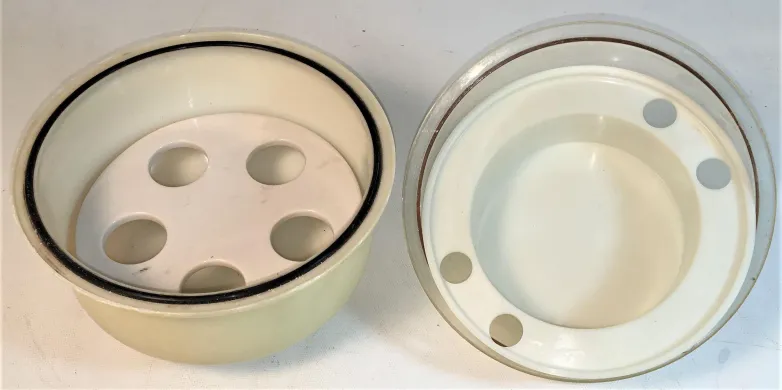
A desiccant such as silica gel sits at the bottom of the chamber, below a perforated plate that holds the samples clear of the drying agent. The sealed lid prevents outside air from entering, so the desiccant pulls moisture from the trapped air and keeps the interior dry.
What types of desiccators are there?
The listings here cover laboratory desiccator, glass desiccator, vacuum desiccator, desiccator cabinet and laboratory storage cabinet. Glass and plain laboratory forms rely on the desiccant alone, vacuum forms add a valve for active drying, and cabinets are upright enclosures for larger volumes.
What is a desiccator used for?
It stores moisture-sensitive materials such as reagents, dried DNA, lyophilised proteins, optics and electronics where humid air would cause clumping, oxidation or spoilage. Vacuum forms also remove trace solvent from samples before analysis.
How do I choose a desiccator?
Match the form to the task: a glass or plain chamber for passive storage of small batches, a vacuum chamber when you need active drying or low humidity, and a cabinet for bulk long-term storage. Check chamber diameter, plate material and valve type on the listing against what you intend to store.
What is the difference between refurbished and used?
A used unit is sold in its existing condition, while a refurbished one has been checked and brought back to working order before listing. Both appear in the catalogue at prices below new; the individual listing states which applies.
How much does a desiccator cost?
Prices on Questpair range from EUR 17 to EUR 2.237, with an average of EUR 317. Where a unit lands depends more on form and size than on condition, since the range covers both small moulded jars and instrumented cabinets.
Which brands make desiccators?
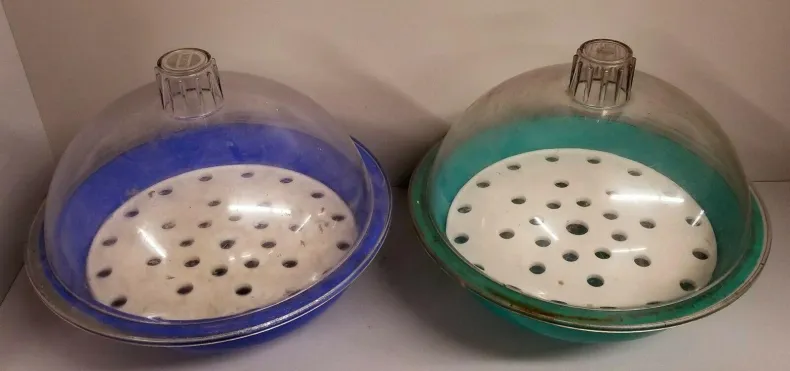
The listings carry Bel-Art Products, Nalgene, Bel-Art and a share under generic or unspecified makers. Bel-Art Products and its Nalgene line cover the moulded polycarbonate and polypropylene units, where stopcocks, plates and gaskets are widely interchangeable.
Is there a warranty on a refurbished desiccator?
A warranty is often possible and is arranged in consultation for the specific listing. Terms are not set centrally, so check the individual unit you are considering.
Can I get parts for a desiccator?
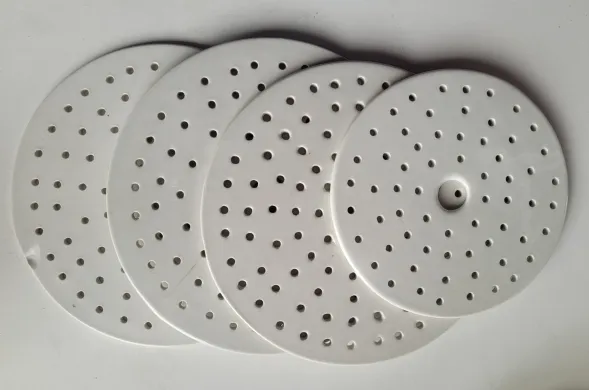
Parts such as plates, stopcocks and gaskets can be sourced via Questpair. For moulded Bel-Art and Nalgene units these components are commonly interchangeable, which makes replacements easier to find and price.
How long does a desiccator last?
A glass or moulded chamber has no moving parts beyond the seal and valve, so it lasts for years with the gasket kept in good condition. Cabinets with electronic hygrometers or nitrogen purge systems depend on those components staying functional.
Should I buy new or used?
Used and refurbished desiccators are listed at lower prices than new ones, which is the clearest difference between them. Weigh the condition described on the individual listing against the price, and note that warranty is arranged per listing in consultation.
Where can I buy a desiccator?
Questpair lists desiccators from verified suppliers and distributors, with 138 listings from 13 suppliers across 7 countries. You can filter by type, condition and brand within the catalogue.
What is the lead time and shipping?
Lead time and shipping depend on the individual seller and the unit's location. The listing shows the supplier, and Questpair specialists respond within one hour if you need details before ordering.
How do I maintain a desiccator and does it need calibration?
Maintenance centres on keeping the flange greased or the ground joint sealed, and replacing or regenerating the desiccant when it is saturated. A plain chamber needs no calibration; a cabinet with an electronic hygrometer may, and that depends on the specific instrument.
Which desiccator types are listed most and who uses each?
Glass and plain laboratory desiccators are reached for by labs storing small batches of reagents, vacuum desiccators by proteomics and genomics work that removes trace solvent before mass spectrometry or sequencing, and cabinets by cell culture and histology labs storing stains, slides and bulk stock.
Which brands dominate the listings and what does that mean for a buyer?
Bel-Art Products and Nalgene account for the moulded plastic units, where parts are interchangeable and units are easy to compare against one another. A large share lists under generic or unspecified makers, which keeps entry prices low but means the specification on the listing, chamber diameter, plate material and valve type, matters more than the name.
What separates a cheap desiccator from an expensive one here?
At the low end sit small moulded storage jars that rely on desiccant alone. At the high end are vacuum-capable chambers with heavier walls and cabinet units with shelving, electronic hygrometers or nitrogen purge, so the price gap reflects volume, drying capability and instrumentation rather than condition.