

Mills
We personally find you the right used, refurbished and new mills instruments & equipment from verified suppliers.
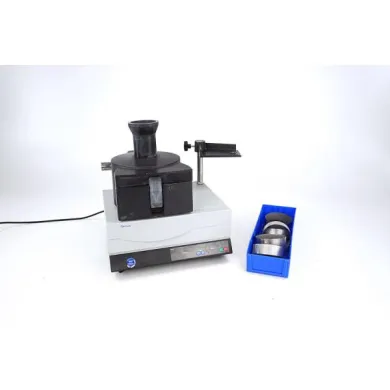
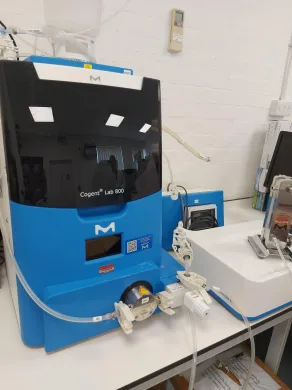
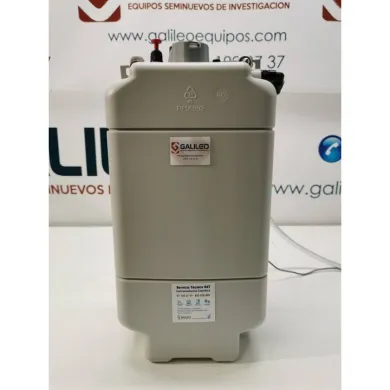
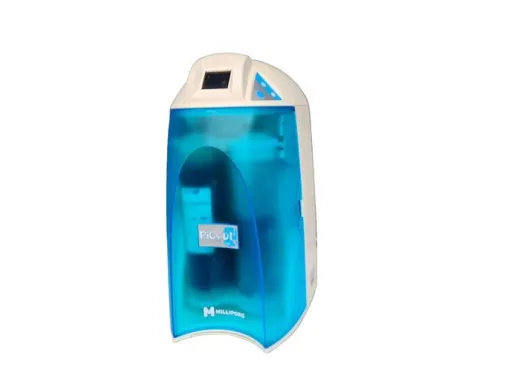
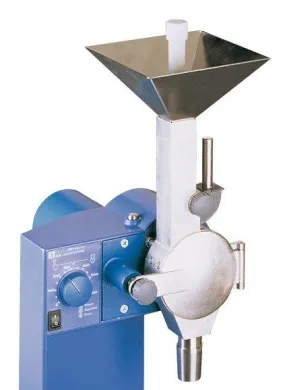
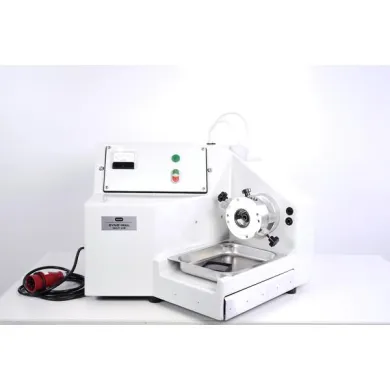
Mills are laboratory instruments that reduce solid samples to a fine, uniform particle size for analysis or further processing, grinding, cutting or crushing material that would otherwise be too coarse to weigh out, digest or extract reproducibly. The Questpair catalogue lists new, used and refurbished mills, and among the current listings 93 percent are used. Across 182 listings from 12 verified suppliers and distributors in 6 countries, the range spans bench grinders through to analytical-grade units. Prices run from EUR 47 to EUR 52.479. The category also holds adjacent sample-preparation hardware, including laboratory water systems and filtration equipment, which share the same preparation step ahead of measurement.
Updated:
Mills product list


Not the exact instrument you need?
Tell our scientists what you are after. We track it down, including off-market supply.
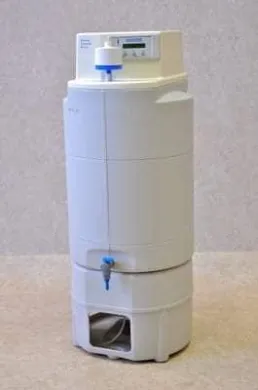
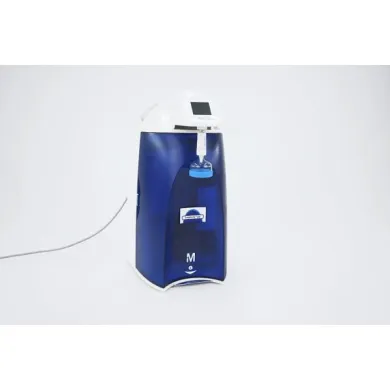
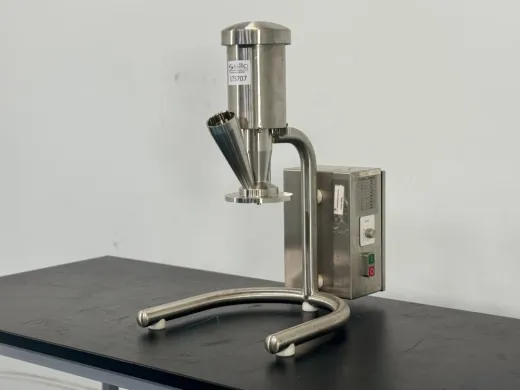
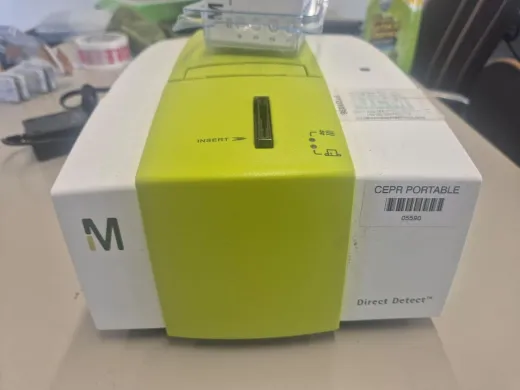
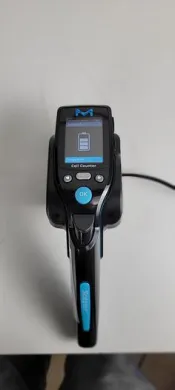
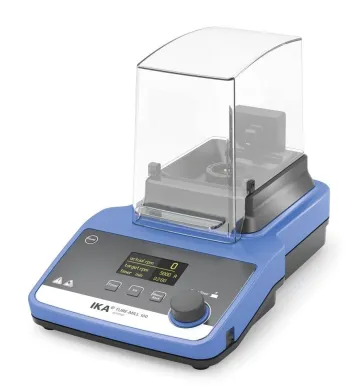
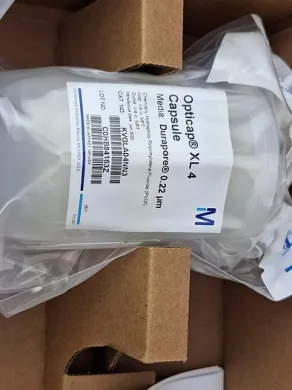
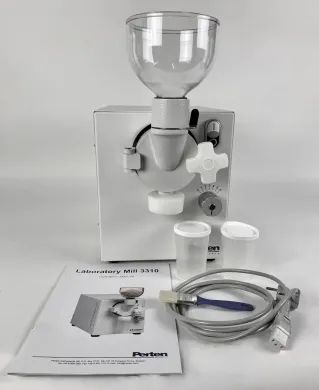
Not the exact instrument you need?
Tell our scientists what you are after. We track it down, including off-market supply.
Showing 1–40 of 86 listings
Show 40 more listingsBuying guide
The specification that settles most mill purchases is the final particle size the instrument can reach, and whether it reaches it on the material you actually run. A cutting mill made for fibrous plant tissue will not take a hard mineral to a few microns, and a ball mill that pulverises rock will smear a soft polymer rather than cut it. Match the grinding principle to the sample first: impact and friction for brittle solids, cutting for tough or fibrous matter, pressure and shear for everything between. Throughput, the maximum feed size the chamber accepts, and whether the process generates enough heat to alter a temperature-sensitive sample all follow from that first decision. A unit that grinds beautifully but heats a thermolabile compound past its degradation point has solved the wrong problem.
A used mill carries wear where the sample meets the tool, so that is what to verify. Grinding chambers, rotors, sieves, blades and balls are consumables, and a worn screen or a chipped blade changes the particle-size distribution the instrument delivers. Ask which wear parts are present and which are missing, because a mill without its matching sieve set is an incomplete instrument however sound the drive. Check that the chamber seals, since a leaking chamber loses fine material and cross-contaminates the next batch. Confirm that replacement grinding media and sieves are still made for the model; a discontinued chamber geometry can strand an otherwise working unit. Where documentation matters for a validated method, the manuals and specifications can be requested through Questpair.
Price spans a wide band here because the category runs from simple bench grinders to analytical cryo-mills, and the two share little beyond the word on the label. What a unit costs tracks closely with the finest size it reaches and the degree of contamination control it offers, so a buyer setting a budget should fix the required particle size before the number. Refurbished mills listed for sale sit below new pricing, which is where a buyer who needs analytical-grade grinding on a limited budget usually finds an affordable route. The brands that occupy the band reflect that split: Millipore, Retsch, IKA, Merck Millipore, PS Analytical appear across the listings, with the laboratory-mill names clustered at the specialist end and the sample-preparation and water-system names filling the broader supply role. Warranty, where it applies, is arranged in consultation for the specific listing rather than set centrally.
Types of Mills
Which equipment types are listed under mills?
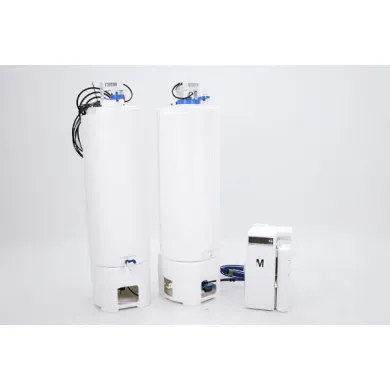
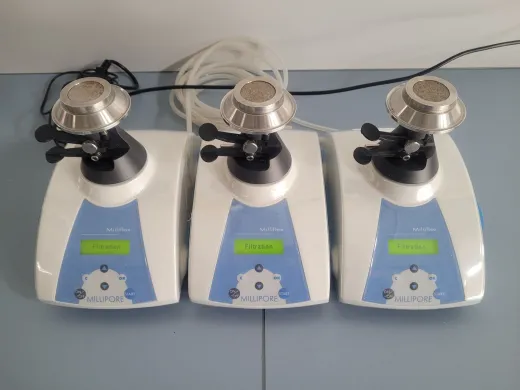
Among the listings that specify a type, the catalogue mixes true grinding instruments with adjacent sample-preparation hardware. The laboratory mill proper reduces solid samples to a defined particle size, and it is the instrument a method calls for when homogeneity decides the result. Alongside it sit laboratory water systems and water purification systems, which produce the reagent-grade water that downstream chemistry depends on, and filtration systems and filtration equipment, which separate solids from liquids ahead of analysis. These are different machines doing different jobs, grouped because each prepares a sample before it is measured rather than measuring it. A buyer after a grinder should read the type field closely, since the word "mill" in a listing title does not guarantee a grinding chamber inside.
Several of these types do recognised work in biotechnology and life sciences. Laboratory mills perform sample preparation and tissue homogenisation for molecular biology, grinding frozen material so that nucleic acids and proteins can be extracted from a uniform starting powder; a cryogenic mill is the common route into RNA extraction from hard or fibrous tissue. Laboratory water systems supply the ultrapure water that cell culture, electrophoresis buffers and PCR reactions require, since trace contamination there carries straight into the assay. Filtration equipment is also used for sterile filtration of media and for protein purification steps where particulates must be removed before a column. A sample-preparation mill paired with a reagent-grade water system is a standard front end for genomics and proteomics workflows that start from solid tissue.
The brands behind the mill listings
The names that recur across these listings are Millipore, Retsch, IKA, Merck Millipore, PS Analytical. Their presence matters to a buyer for practical reasons rather than reputation: a brand with a long production run tends to have grinding chambers, sieves and replacement media still available, which keeps a used unit serviceable, and a widely sold model is easier to compare across listings because its specifications are documented and its wear parts are known quantities. The specialist grinding names concentrate at the analytical end of the catalogue, while the water-system and purification names reflect the sample-preparation hardware grouped alongside the mills. Where a part is needed, it can be sourced via Questpair.
What a used mill costs here
New, used and refurbished units all appear, and 93 percent of the listings are used. Prices range from EUR 47 to EUR 52.479, a spread that covers simple bench grinders at one end and contamination-controlled analytical mills and complete water-purification systems at the other. The gap between those two ends is the whole story of the range, so the figure means little until a buyer fixes the particle size or water grade the work actually needs. Used and refurbished mills are listed below new pricing, and warranty on any given unit is arranged in consultation for that listing.
Frequently asked questions
What is a mill in a laboratory?
A mill is a laboratory instrument that reduces solid samples to a fine, uniform particle size by grinding, cutting or impact. It prepares material so it can be analysed, extracted or formulated consistently.
What does 'mill' mean in this context?
In this catalogue 'mill' refers to the size-reduction step of sample preparation, not to industrial processing equipment. It covers benchtop grinders and laboratory-scale platforms that break down solids before measurement.
How do laboratory mills work?
A ball mill grinds hard, brittle material by impact inside a jar filled with beads; a cutting mill shears soft, fibrous or elastic samples; a knife mill handles moist food and biological tissue. The mechanism is chosen to suit the sample rather than the volume.
What types of mills are there?
The catalogue lists laboratory mills such as ball, cutting and knife grinders, alongside sample preparation equipment, water purification systems, laboratory water systems, and filtration systems. These sit together because they cover the front end of a single workflow: reduce the solid, supply the water, clean the extract.
What are mills used for?
Mills grind and homogenise samples ahead of analysis or extraction, for example milling a tissue or seed before DNA is read in genomics, or breaking cells open to feed cell culture and microbiology work. The reduced material then moves to filtration, electrophoresis or assay steps.
How do I choose the right mill?
Match the milling mechanism to the sample: impact grinding for hard and brittle material, cutting for fibrous or elastic material, knife milling for moist tissue, and cryogenic or bead milling for cells. Throughput and jar or chamber volume then narrow the model within that mechanism.
What is the difference between refurbished and used mills?
A used mill is sold in its existing condition, while a refurbished unit has been checked and brought back toward working order before listing. Both are listed below new prices; the exact condition and what was done to it is described in the individual listing.
How much does a mill cost?
Listings run from EUR 47 to EUR 52.479, with an average around EUR 2.598. The low end covers small benchtop grinders and filtration housings, while the high end covers water purification systems and larger milling platforms.
What are the main brands for mills?
The brands that recur are Millipore, Retsch, IKA, Merck Millipore and PS Analytical. Retsch and IKA are the milling and grinding names, while Millipore and Merck Millipore sit on the water and filtration side.
Is there a warranty on refurbished mills?
A warranty is often possible and is arranged in consultation for the specific listing. Check the listing itself for the condition and terms that apply to that unit.
Can I get parts for a mill?
Parts such as grinding jars, beads and filter cartridges can be sourced via Questpair. A concentration around established makers like Retsch, IKA and Millipore makes consumables easier to find.
How long does a laboratory mill last?
A mill's working life depends on the duty it sees, the hardness of the samples and how wear parts such as grinding jars and beads are maintained. Consumables are replaced over time while the drive and chamber carry the longer service life.
Should I buy a new or a refurbished mill?
The clear difference is price: used and refurbished units are listed below new. Where you have to weigh the two, compare the condition described in each listing and note that warranty is arranged in consultation for the specific unit.
Where can I buy a mill?
The Questpair catalogue holds 182 mill listings from 12 verified suppliers and distributors across 6 countries. New, used and refurbished units are all listed.
What are the lead time and shipping like?
Lead time and shipping depend on the individual seller and where the unit is located among the 6 countries represented. The listing holds the specifics, and Questpair specialists can respond to questions within an hour.
How are mills calibrated and maintained?
Maintenance centres on replacing wear parts such as grinding jars, beads and filter cartridges, and keeping the chamber clean to avoid cross-contamination. Parts for this can be sourced via Questpair; Questpair does not carry out servicing.
Which mill types are listed most, and who reaches for which?
The catalogue leans toward sample preparation: laboratory mills sit alongside water purification systems, laboratory water systems and filtration equipment. A biology or genomics lab reaches for sample preparation and bead mills ahead of extraction, while an analytical lab pairs a grinder with a water system and filtration stage before measurement.
Which brands dominate this category and what does that mean for a buyer?
Retsch and IKA cover the milling side, Millipore and Merck Millipore the water and filtration side, which is why those types appear heavily in the catalog. For a buyer this means consumables are easier to source and a used model can be compared against a current equivalent from the same maker.
What separates the cheapest mills from the most expensive here?
At the bottom of the band sit small benchtop grinders and filtration housings, simple single-purpose units with small chambers. At the top sit water purification systems and larger milling platforms built for higher throughput, which carries the price toward EUR 52.479.