

Automated liquid handling
We personally find you the right used, refurbished and new automated liquid handling instruments & equipment from verified suppliers.
Automated liquid handling is the use of programmable instruments to aspirate, dispense and transfer precise volumes of liquid without a technician holding a pipette. These systems move reagents, samples and buffers across microplates, tubes and reservoirs under software control, replacing manual pipetting in high-throughput and repetitive work. The Questpair catalogue carries 1440 listings in this category from 19 verified suppliers and distributors across 10 countries. New, used and refurbished laboratory units are listed side by side, and 99 percent of them are used. Prices run from EUR 19 to EUR 387.400, a spread that separates a single accessory from a full deck instrument.
Updated:
Automated liquid handling product list


Not the exact instrument you need?
Tell our scientists what you are after. We track it down, including off-market supply.
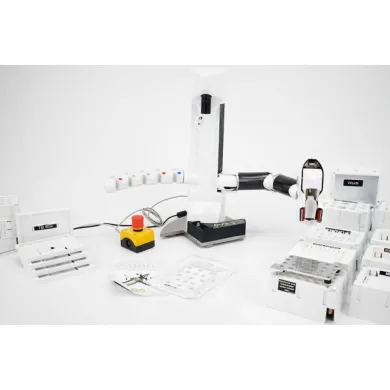
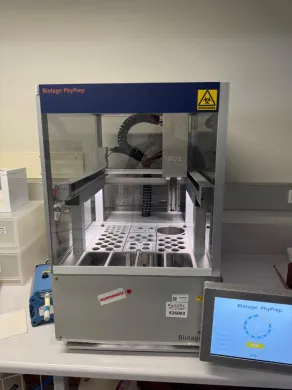
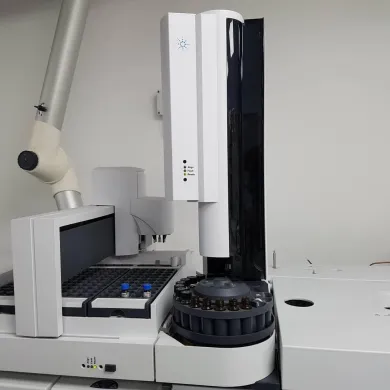
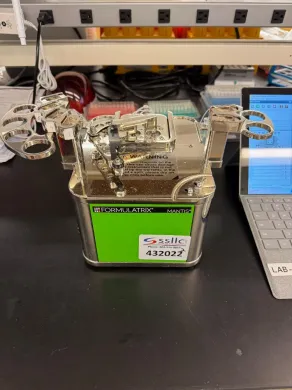
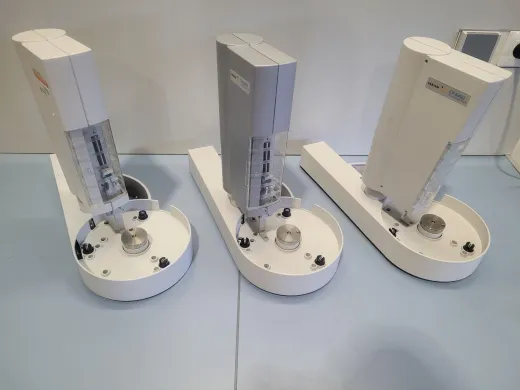
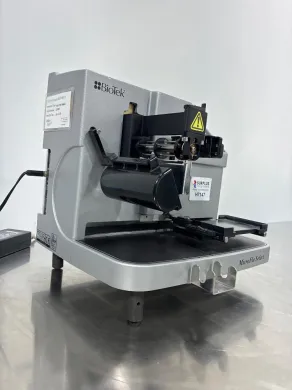
Not the exact instrument you need?
Tell our scientists what you are after. We track it down, including off-market supply.
Showing 1–40 of 852 listings
Show 40 more listingsBuying guide
The specification that settles the purchase is the deck, because everything a liquid handler can do follows from how many positions it holds and what sits on them. A system built for a handful of plates will never run a 96-sample genomic prep unattended, and a large eight-channel platform is wasted on a bench that processes a few reactions a day. Before any brand comparison, map the throughput you actually need against the deck footprint, the number of tip channels, and whether the head is fixed or interchangeable. Pipetting volume range matters next: a unit tuned for microlitre reagent addition behaves differently from one dispensing millilitre buffer volumes, and accuracy at the low end is where applications succeed or fail.
On a used unit, the checks shift away from the datasheet. Pipetting precision drifts as seals and plungers wear, so the record of calibration and the state of the pipetting head carry more weight than the original specification. Ask what tips the system takes, since proprietary tip formats tie a buyer to one consumable stream, and confirm the controlling software still runs on a supported operating system, because an orphaned control PC can strand an otherwise sound instrument. For a platform with a robotic arm or integrated modules, the condition of the moving parts and the availability of parts decide whether it stays in service.
Where the price band sits reflects that range directly. The Questpair catalogue runs from EUR 19 to EUR 387.400. A low entry cost often buys an autosampler or a single accessory rather than a complete workstation, while a budget toward the upper figure reaches full automated platforms with integrated plate handling. The average listing sits at EUR 8.114. Used and refurbished units for sale are listed below new pricing, which is what puts a Thermo Scientific, Qiagen, Hamilton, Beckman Coulter, Tecan platform within reach of a smaller laboratory. Those five names occupy most of the deck-based segment, and their wide installed base means parts and comparable models are easier to find than for a one-off maker.
Types of Automated liquid handling
Which automated liquid handling types are listed?
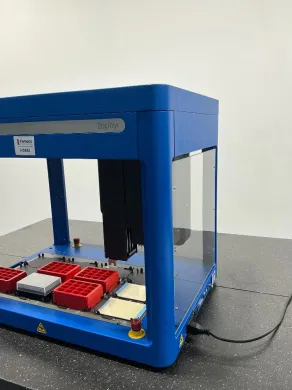
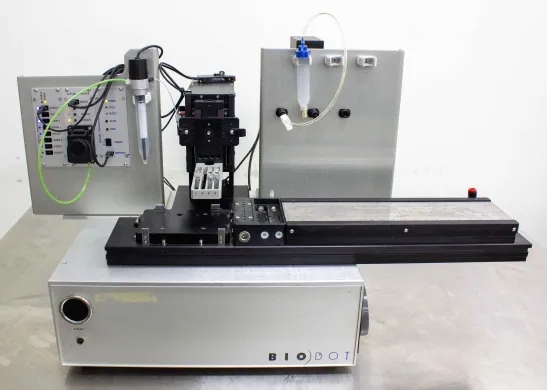
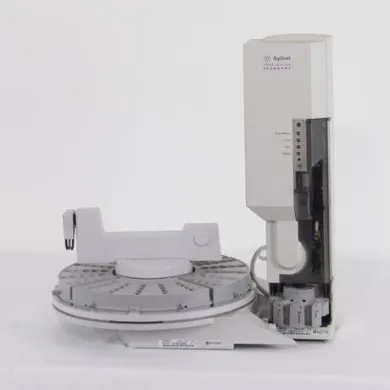
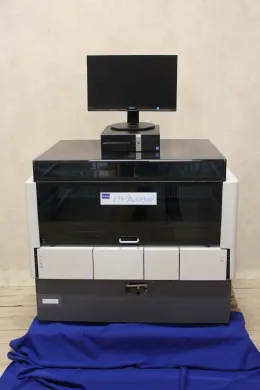
Among the listings that specify a type, the catalogue divides into a few recognisable groups. A full automated liquid handling system is a deck-based workstation that aspirates and dispenses across plates and tubes under a defined protocol, used where a whole assay runs unattended. A liquid handler or automated pipetting system is the narrower pipetting engine at the core of that work, chosen by a laboratory that wants programmable transfer without a full robotic deck. Broader laboratory automation equipment extends past pipetting into plate movement and sample tracking. An autosampler sits at the lighter end, feeding samples in sequence into an analytical instrument rather than running an assay of its own. These platforms do the repetitive transfer work behind cell culture plating, protein purification setup, and reagent addition for immunoassay, and automated liquid handling for molecular biology covers the plate-filling steps of genomics and proteomics workflows. In molecular diagnostics and high-throughput screening the same systems run nucleic acid extraction and library preparation, which is why automated pipetting for genomics appears so often in this category. They are also used for serial dilution and normalisation, the bulk steps that consume a technician's day.
The brands behind the liquid handling listings
The segment is led by Thermo Scientific, Qiagen, Hamilton, Beckman Coulter, Tecan. For a buyer, that concentration is practical rather than cosmetic: a widely installed platform has a deeper pool of comparable listings, so a given deck configuration can be checked against several units rather than taken on trust. It also means tips, racks and replacement heads circulate more freely, and a model number can be matched against documented specifications. The presence of these makers tends to anchor the mid and upper price bands, where deck-based instrumentation sits, while lighter autosamplers and accessories fill the lower end.
What a used liquid handler costs here
The condition mix is heavily weighted toward pre-owned stock: of the listings, 1419 are used against 16 new, so 99 percent are used. Prices span from EUR 19 to EUR 387.400. That range covers everything from a single tip rack or autosampler to a complete automated workstation with integrated plate handling, which is why the spread is so wide. The average listing sits at EUR 8.114.
Frequently asked questions
What is automated liquid handling?
It is the use of programmable instruments to aspirate, dispense and transfer set volumes of liquid without a person holding a pipette. The instruments move reagents, samples and buffers across microplates, tubes and reservoirs under software control.
What does automated liquid handling mean in practice?
In practice it means a technician programs a protocol once, and the instrument repeats the pipetting steps across many samples without manual intervention. It replaces manual pipetting in high-throughput and repetitive laboratory work.
How do automated liquid handlers work?
A controlling PC runs a protocol that tells the instrument which positions on its deck to aspirate from and dispense to, and in what volumes. Pipetting channels, driven by a fixed or interchangeable head, move over the deck to transfer liquid between plates, tubes and reservoirs.
What types are listed in this category?
The catalogue separates into full automated liquid handling systems, narrower liquid handlers and automated pipetting systems, broader laboratory automation equipment, and autosamplers. A full system runs a whole assay unattended, while an autosampler feeds samples in sequence into an analytical instrument.
What is automated liquid handling used for?
It handles the repetitive transfer work behind cell culture plating, protein purification setup, reagent addition for immunoassay, serial dilution and normalisation. In molecular diagnostics and high-throughput screening the same systems run nucleic acid extraction and library preparation.
How do I choose an automated liquid handler?
Start with the deck: map the throughput you need against the deck footprint, the number of tip channels, and whether the head is fixed or interchangeable. Then check the pipetting volume range, since a unit tuned for microlitre reagent addition behaves differently from one dispensing millilitre buffer volumes.
What is the difference between refurbished and used?
A used unit is sold in its existing condition, while a refurbished unit has been checked and brought back toward working specification before sale. On both, the state of the pipetting head and the record of calibration matter more than the original datasheet, so ask what was done to the specific listing.
How much does an automated liquid handler cost?
Prices in the catalogue run from EUR 19 to EUR 387.400, with the average listing at EUR 8.114. The low end buys an autosampler or a single accessory, while the upper figure reaches a full automated workstation with integrated plate handling.
Which brands are worth looking at?
The brands listed here include Thermo Scientific, Qiagen, Hamilton, Beckman Coulter and Tecan. A widely installed platform has a deeper pool of comparable listings and more freely circulating tips, racks and heads, which makes a used unit easier to check and service.
Is there a warranty on a refurbished unit?
A warranty is often possible and is arranged in consultation for the specific listing. Terms are not set centrally, so confirm what applies to the unit you are considering before you buy.
Can I get parts for these systems?
Parts can be sourced via Questpair. For a platform with a robotic arm or integrated modules, confirm the condition of the moving parts and parts availability before purchase, because these decide whether the instrument stays in service.
How long does an automated liquid handler last?
Lifespan depends on how the pipetting head and seals hold up, since pipetting precision drifts as seals and plungers wear. A controlling PC tied to an unsupported operating system can strand an otherwise sound instrument, so software support affects usable life as much as the mechanics.
Should I buy new or refurbished?
Used and refurbished units are listed at lower prices than new, which is what puts a deck-based platform within reach of a smaller laboratory. The main checks on a pre-owned unit are the calibration record, the state of the pipetting head, and whether the control software still runs on a supported operating system.
Where can I buy automated liquid handling equipment?
The Questpair catalogue lists 1440 units in this category from 19 verified suppliers and distributors across 10 countries. New, used and refurbished units appear side by side.
What are lead time and shipping like?
Lead time and shipping depend on the individual listing and the supplier offering it, since these come from verified suppliers and distributors across 10 countries. Check the specific listing or contact Questpair, where specialists respond within one hour.
What about calibration and maintenance?
On a used unit the record of calibration carries more weight than the original specification, because pipetting precision drifts as seals and plungers wear. Confirm which tips the system takes and whether proprietary formats tie you to one consumable stream, since that affects ongoing upkeep.
Which types are listed most, and who reaches for which?
The listed types include full automated liquid handling systems, liquid handlers and automated pipetting systems, laboratory automation equipment, and autosamplers. A laboratory running a whole assay unattended reaches for a full system, one wanting programmable transfer without a robotic deck takes a liquid handler, and a lab feeding an analytical instrument reaches for an autosampler.
Which brands dominate this category and what does that mean for a buyer?
Thermo Scientific, Qiagen, Hamilton, Beckman Coulter and Tecan occupy most of the deck-based segment. For a buyer, a wide installed base means a given deck configuration can be checked against several comparable units, and tips, racks and replacement heads are easier to find than for a one-off maker.
What separates the bottom of the price band from the top?
The bottom often buys an autosampler or a single accessory such as a tip rack, while the top reaches a complete automated workstation with integrated plate handling. The deck size, the number of tip channels and whether plate movement is integrated are what move a listing from one end of the range to the other.