

Evaporators
We personally find you the right used, refurbished and new evaporators instruments & equipment from verified suppliers.
Evaporators are laboratory instruments that remove a solvent from a sample by lowering its boiling point under reduced pressure, leaving a concentrated residue or recovered distillate behind. On Questpair, the evaporators catalogue holds 432 listings from 16 verified suppliers and distributors across 8 countries, in new, used and refurbished condition. Of those, 88 percent of the listings are used. Prices range from EUR 16 to EUR 101.236. The work is called evaporation, and in the laboratory it is how a chemist concentrates an extract, recovers a solvent for reuse, or dries down a fraction before the next step. The equipment spans small benchtop units through to production-scale systems.
Updated:
Evaporators product list
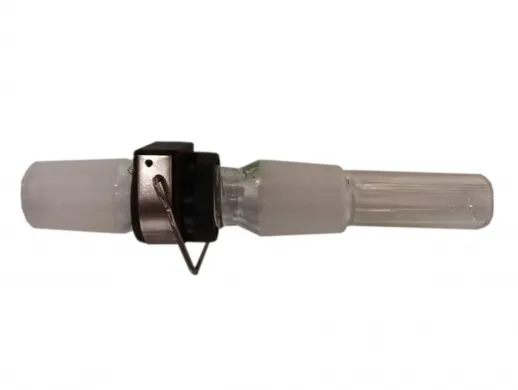
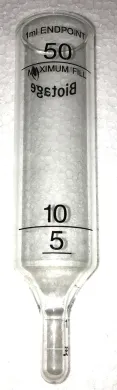
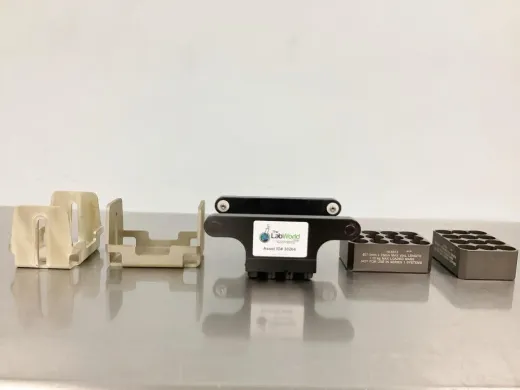
Biotage C128511 Evaporation Tube Set with Rack
- Category
- Evaporators
- Brand
- Biotage
- Suppliers
- 1 verified


Not the exact instrument you need?
Tell our scientists what you are after. We track it down, including off-market supply.
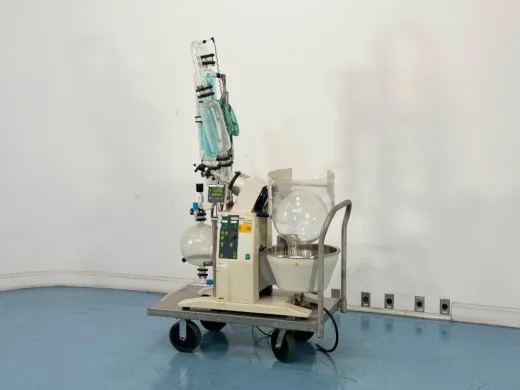
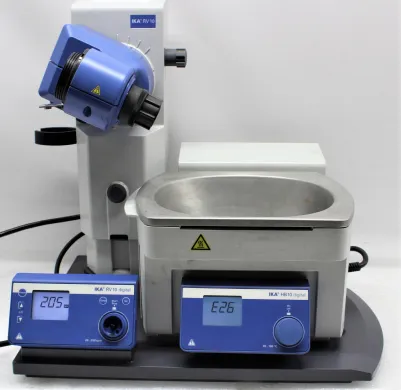
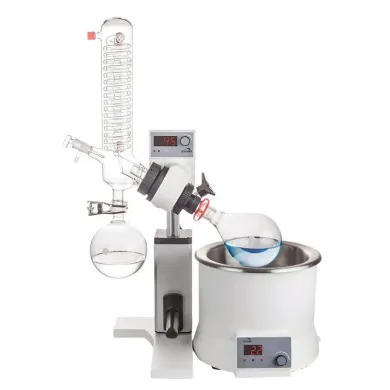
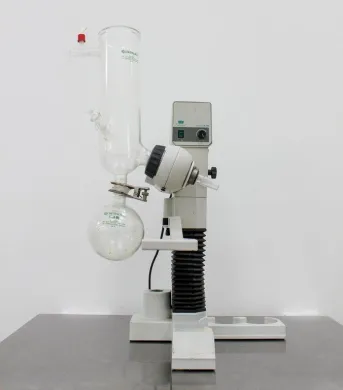
Not the exact instrument you need?
Tell our scientists what you are after. We track it down, including off-market supply.
Showing 1–40 of 192 listings
Show 40 more listingsBuying guide
What a rotary evaporator has to do before anything else matters
The single figure that settles most evaporator purchases is the solvent the instrument has to handle and the vacuum it can reach while doing so. A unit that evaporates ethanol comfortably at a modest vacuum will stall on water or high-boiling solvents such as DMSO unless the pump pulls deep enough and the condenser is cold enough to trap the vapour. So a buyer works backwards from the solvent: its boiling point sets the bath temperature and the vacuum level, and those two together decide whether a given rotary evaporator finishes a batch in twenty minutes or two hours. Flask size follows from throughput, and the condenser type, coil, cold-finger or dry-ice, follows from how volatile and how precious the solvent is.
What to verify on a used unit sits close behind the specification, because evaporation equipment leads a hard life. The glassware is the first thing to check: condensers crack, vapour ducts chip at the ground joint, and a replacement flask or condenser can cost a meaningful fraction of a cheap unit. The seal between the rotating flask and the vacuum line wears and is the usual cause of a system that will not hold vacuum, so confirm whether the seal has been replaced and whether the model's seal is still available. On a motorised lift, check that the drive raises and lowers under load and does not drift. The bath, where a separate heating bath is included, should hold temperature without hunting. On a used rotary evaporator the state of the glass and the seal tells you more than any line on the original datasheet.
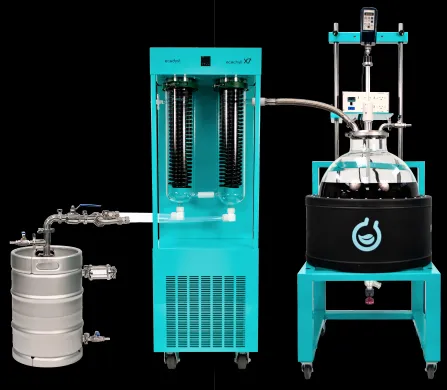
Price and supply are the last thing to weigh, and the spread here is wide. Prices run from EUR 16 to EUR 101.236, with an average around EUR 4.456. The low end covers bare heating baths, parts and simple concentrators; the high end covers large automated systems and parallel evaporation platforms. The brands that fill most of the catalogue are Buchi, BUCHI, IKA, Biotage, Heidolph, and their presence matters to a buyer in a practical way: these are the makers whose seals, glassware and spare flasks are easiest to source, and whose models are common enough that a comparison between two listings is straightforward. A used unit from one of these makers is more affordable than a new one of the same capability, and because the parts market behind it is active, the saving does not come at the cost of being stranded later. What a unit costs, what fits a budget and what is actually for sale are rarely the same question, and on evaporators the cheapest listing is often a bath or a set of glass rather than a working system.
Types of Evaporators
Which evaporator types are listed here?
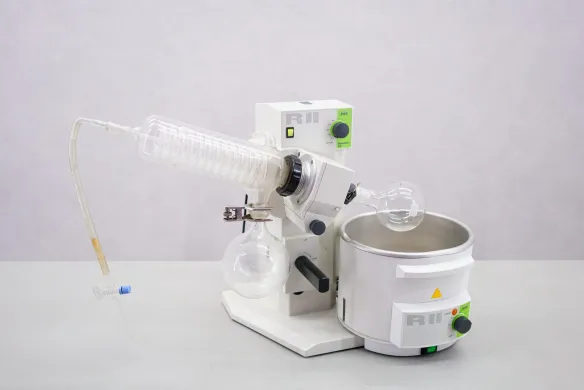
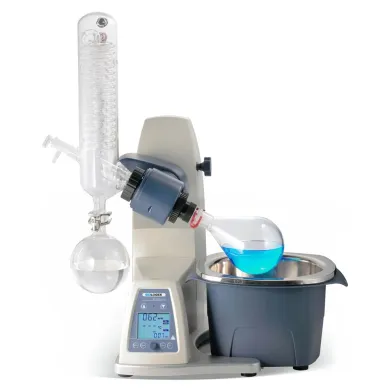
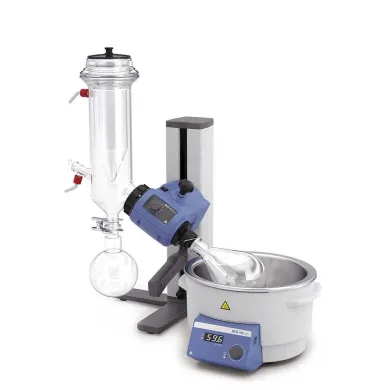
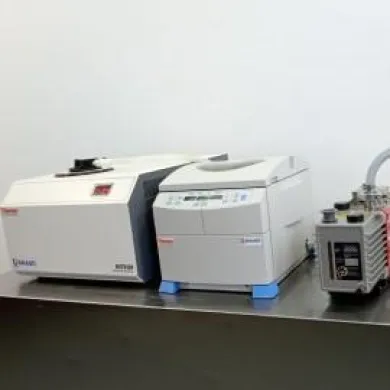
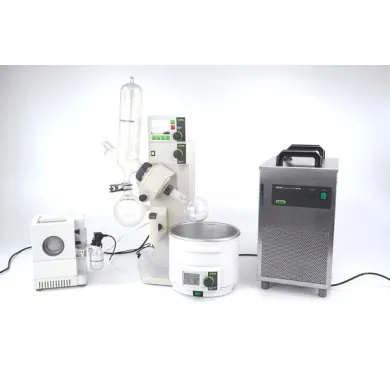
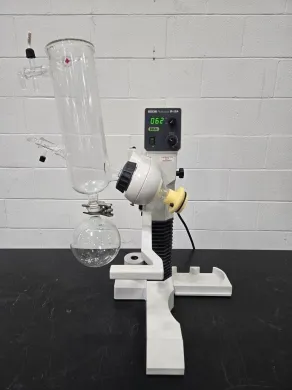
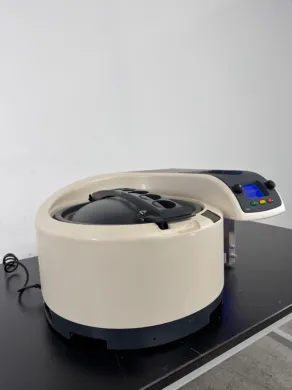
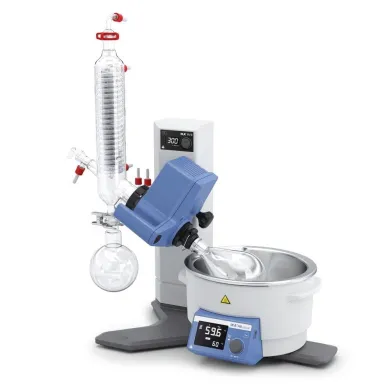
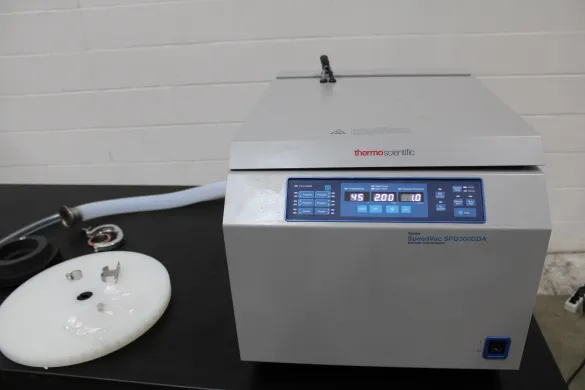
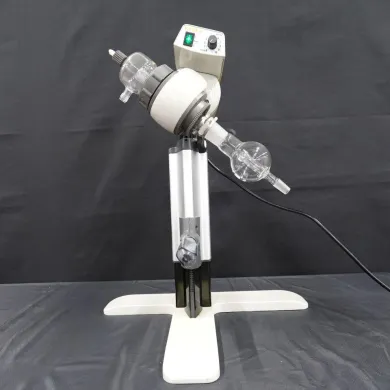
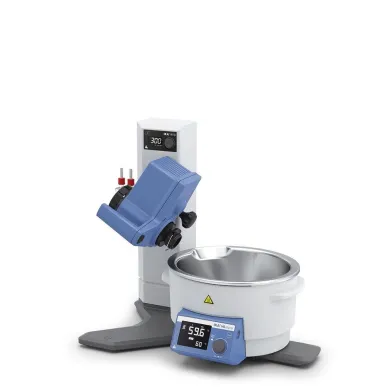
Among the listings that specify a type, the rotary evaporator dominates, and it is the form most people picture when they hear the word. A flask spins in a heated bath under vacuum while a condenser traps the vapour, which gives an even, gentle thin-film evaporation that protects heat-sensitive material. Alongside it sit broader laboratory evaporators, a category that takes in nitrogen blow-down units and centrifugal concentrators used where many small samples have to be dried at once rather than one large flask reduced slowly. Heating baths appear on their own as well, both as spares for rotary systems and as standalone temperature sources. Sample concentrators are built for exactly that, driving off solvent from arrays of tubes or plates, which makes them the tool reached for in sample preparation ahead of chromatography or an assay. Solvent evaporators and vacuum evaporators describe the same physics under different emphasis, the first named for what it recovers, the second for how it lowers the boiling point. These overlap in practice, and a given listing may answer to more than one of the terms above.
In molecular biology and life sciences the concentrator end of this range does real work. A centrifugal concentrator dries down nucleic acid pellets and reduces eluates in genomics and proteomics workflows, and the long-tail form, a sample concentrator for DNA and RNA prep, points straight at that bench. Rotary evaporation also sits upstream of protein purification and natural-product chemistry, concentrating extracts before purification begins, and nitrogen blow-down concentrators are also used for drying down samples ahead of mass spectrometry in metabolomics. The solvent recovery these units perform is routine in bioprocessing and in the formulation work that follows cell culture, wherever an aqueous or organic phase has to be reduced without cooking what is dissolved in it.
The brands behind the evaporator listings
Most of the catalogue sits with Buchi, BUCHI, IKA, Biotage, Heidolph. For a buyer that concentration is useful rather than limiting. These makers have been building rotary evaporators and concentrators long enough that replacement glassware, seals and flasks circulate freely, so a unit bought used does not become an orphan the first time a condenser cracks. Their models are also common enough that two listings can be compared on specification rather than guesswork, and a seal part number on one tends to mean the same thing on another of the same series. The price level tracks the maker: the established names hold their value, so a used instrument from one of them costs more than an unbranded equivalent and is correspondingly easier to resell or repair.
What a used evaporator costs here
The condition mix is weighted heavily toward pre-owned equipment: 88 percent of the listings are used. Prices range from EUR 16 to EUR 101.236, a spread that reflects how much this category contains, from a single heating bath or a box of glass at one end to a fully automated parallel evaporation system at the other. The average, around EUR 4.456, sits well below the top because the catalogue is full of complete but modest benchtop rotary evaporators rather than production rigs. Used and refurbished units are listed below the price of new, which for a standard benchtop system is where most practical buying happens.
Frequently asked questions
What is an evaporator?
An evaporator is a laboratory instrument that removes a solvent from a sample by lowering its boiling point under reduced pressure, leaving behind either a concentrated residue or a recovered distillate. It is the standard tool for concentrating extracts, recovering solvents for reuse, and drying down fractions.
What does evaporation mean in the lab?
Evaporation is the process of driving a solvent out of a sample so what remains is concentrated. In practice a chemist uses it to reduce an extract, recover a solvent, or dry a fraction before the next step in a workflow.
How do evaporators work?
A sample is held under vacuum, which lowers the solvent's boiling point so it vaporizes at a temperature that does not cook the material dissolved in it. The vapour is drawn off to a condenser and trapped, while heat from a bath or heating block keeps the process moving.
What types of evaporators are there?
The main forms listed are the rotary evaporator, laboratory evaporator, heating bath, sample concentrator, solvent evaporator, and vacuum evaporator. Rotary evaporators spin a flask in a heated bath under vacuum, while concentrators dry down arrays of small samples at once; solvent and vacuum evaporators describe the same physics under different emphasis.
What are evaporators used for?
They concentrate extracts, recover solvents for reuse, and dry down samples ahead of chromatography, mass spectrometry, or an assay. In life sciences a centrifugal concentrator reduces nucleic acid eluates and protein samples, and rotary evaporation concentrates extracts before purification begins.
How do I choose an evaporator?
Start with the solvent you need to remove: its boiling point sets the bath temperature and the vacuum level, and those two together decide how fast a batch finishes. Flask size follows from throughput, and the condenser type, coil, cold-finger or dry-ice, follows from how volatile and how precious the solvent is.
Refurbished versus used evaporator, what is the difference?
A used unit is sold in its current condition, while a refurbished unit has been checked and reconditioned before listing. On both, confirm the state of the glassware and the vacuum seal, since those wear with use and matter more than the original datasheet.
How much does an evaporator cost?
Prices in the catalogue range from EUR 16 to EUR 101.236, with an average around EUR 4.456. The low end covers bare heating baths, parts, and simple concentrators, while the high end covers large automated and parallel evaporation platforms.
Which evaporator brands are listed here?
The brands that fill most of the catalogue are Buchi, BUCHI, IKA, Biotage and Heidolph. These makers have built rotary evaporators and concentrators long enough that replacement glassware, seals and flasks circulate freely.
Can I get a warranty on a refurbished evaporator?
A warranty is often possible and is arranged in consultation for the specific listing. Terms depend on the individual unit and seller rather than a central policy, so check the listing you are considering.
Are parts available for evaporators?
Parts can be sourced via Questpair. The brands that dominate the catalogue are common enough that seals, glassware and spare flasks circulate on the second-hand market, so a used unit does not become an orphan the first time a condenser cracks.
How long does an evaporator last?
The electronics and motor of a well-maintained unit can run for many years; the parts that wear are the glassware and the vacuum seal. A cracked condenser or a worn seal is usually a replacement rather than a reason to retire the whole system.
New versus refurbished evaporator, which should I buy?
Used and refurbished units are listed at lower prices than new, which for a standard benchtop rotary evaporator is where most practical buying happens. On a used unit the condition of the glass and the seal matters most, so weigh the saving against what you verify in the listing.
Where can I buy an evaporator?
The Questpair catalogue holds 432 listings from 16 verified suppliers and distributors across 8 countries, in new, used and refurbished condition. You can compare units by specification and condition within the catalogue.
What is the lead time and shipping on an evaporator?
Lead time and shipping depend on the individual listing and the supplier's location across the 8 countries represented. The specifics are set per listing rather than centrally, so check the one you are interested in.
What maintenance does an evaporator need?
Routine care centres on the vacuum seal and the glassware: replace a worn seal when the system will not hold vacuum, and inspect condensers and vapour ducts for cracks or chipped joints. On a motorised lift, confirm the drive raises and lowers under load without drifting, and that the bath holds temperature without hunting.
Which evaporator types are listed most, and who reaches for each?
Among listings that specify a type, the rotary evaporator dominates and is the general-purpose tool for concentrating extracts and recovering solvent. Sample concentrators and centrifugal units go to benches drying many small samples at once, common in genomics, proteomics and sample preparation ahead of chromatography, while heating baths appear both as spares and as standalone temperature sources.
Which brands dominate this category, and what does that mean for a buyer?
Buchi, BUCHI, IKA, Biotage and Heidolph fill most of the catalogue. For a buyer that concentration is practical: their models are common enough that two listings can be compared on specification, a seal part number on one tends to mean the same on another of the same series, and the parts market behind them is active, so repairs are easier to source.
What separates the cheapest evaporator listings from the most expensive?
The low end of the range at EUR 16 is typically a bare heating bath, a set of glassware, or a simple concentrator rather than a complete working system. The top end at EUR 101.236 is a large automated system or a parallel evaporation platform, with complete benchtop rotary evaporators sitting in between, which is why the average around EUR 4.456 falls well below the ceiling.