

General laboratory equipment - other
We personally find you the right used, refurbished and new general laboratory equipment - other from verified suppliers.
General laboratory equipment covers the supporting hardware a lab runs on rather than a single instrument class: incubators, workbenches and furniture, mixers, centrifuge rotors and balances listed together under one heading. New, used and refurbished units appear here, and 94 percent of the listings are used, the remainder new. The Questpair catalogue holds 37786 listings in this category from 23 verified suppliers and distributors across 10 countries. Because the group gathers equipment that does not fit a tighter class, the range is wide, with laboratory prices running from EUR 1 to EUR 254.400. It is the category a buyer reaches for when the item is essential but hard to pigeonhole.
Updated:
General laboratory equipment - other product list


Not the exact instrument you need?
Tell our scientists what you are after. We track it down, including off-market supply.

Not the exact instrument you need?
Tell our scientists what you are after. We track it down, including off-market supply.
Showing 1–40 of 9,341 listings
Show 40 more listingsBuying guide
What settles a purchase here depends entirely on which piece of equipment you are after, because this category holds several unrelated things at once. For a laboratory incubator the controlled parameter decides everything: the temperature range, whether it holds CO2 or a defined humidity, and how tightly it stays there over a long run. For an analytical balance readability and the stated repeatability are the figures that matter, and a draught shield is not optional. For a laboratory mixer it is the capacity and the speed range against the viscosity of what you are moving. Start from the specification that governs YOUR item and the rest of the decision follows from it.
On a used unit the checks change with the type. A centrifuge rotor carries a service history that matters more than any line on a datasheet: how many cycles it has run, whether it has passed its derating date, and whether the maker still supports it. An incubator should be confirmed to reach and hold its setpoint before it ships, and a balance will need recalibration on installation whatever its condition. Laboratory furniture and workbenches are the simplest, where surface condition and chemical resistance are the whole of it. Match the verification to the equipment rather than running one checklist across all of it.
Price here spans further than in any tighter category, which is the consequence of grouping unlike things. What a unit costs ranges from EUR 1 to EUR 254.400, with an average near EUR 2.398. That spread covers a single bench clamp at one end and a large environmental chamber at the other, so the figure that fits your budget depends on which type you are pricing, not on the category as a whole. Refurbished and used units listed for sale are more affordable than new, and the dominant names in the mix, Eppendorf, Thermo Scientific, Various, Olympus, Leica, sit across that whole band rather than at one point on it. Comparing like with like means pricing a type, not the group.
Types of General laboratory equipment - other
Which equipment types are listed here?
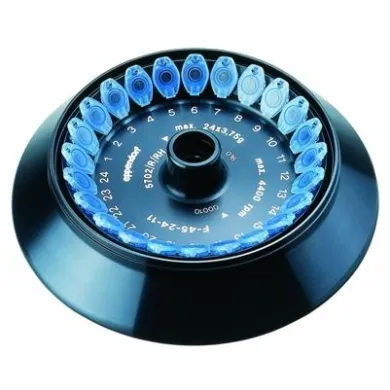
Among the listings that specify a type, the recurring ones are laboratory incubators, laboratory workbenches, laboratory furniture, laboratory mixers, centrifuge rotors and analytical balances. A laboratory incubator holds a controlled temperature, and often CO2 or humidity, for growing or maintaining samples; it is the workhorse of cell culture and microbiology, where cultures sit at a fixed condition for hours or days. Analytical balances do gravimetric analysis, resolving down to fractions of a milligram for sample preparation and formulation across almost every discipline. Laboratory mixers handle stirring and blending in that same sample preparation and formulation work, and are also used for buffer and reagent make-up in molecular biology and protein purification. Centrifuge rotors are the consumable heart of centrifugation, spinning tubes for cell harvesting and the separation steps that feed genomics and proteomics downstream. Workbenches and furniture carry none of that chemistry themselves; they are the fixed infrastructure the rest of the laboratory stands on, specified for load, surface and chemical resistance.
The brands behind these listings
The names that recur across the category are Eppendorf, Thermo Scientific, Various, Olympus, Leica. For a buyer, a familiar maker in the mix means parts are easier to source, a model is simpler to compare against its own siblings, and the pricing is anchored by a known reference rather than a one-off. The presence of a "Various" grouping reflects how broad this catalog is: much of the hardware here is generic enough that the maker matters less than the specification. Where a named brand does appear, it tends to sit on the instruments, the balances and incubators, more than on the furniture.
What a used unit costs here
The condition split runs heavily to used, with 35385 used listings against 2350 new, so 94 percent of the listings are used. Prices range from EUR 1 to EUR 254.400. That spread is the direct result of the category holding both small consumables and large chambers under one name, and the sterilisation and sterilization grades of the furniture sit at different points along it again. For a buyer it means the sensible comparison is always within a type, where the few hundred listings of one kind cluster far more tightly than the catalogue as a whole.
Frequently asked questions
What is general laboratory equipment classed as 'other'?
It is the group of benchtop and support apparatus a lab uses that does not belong to a single analytical discipline, such as incubators, workbenches, mixers, balances and rotor hardware. The 'other' label gathers devices every laboratory shares rather than ones that mark out a specific field.
What does 'General laboratory equipment - other' mean as a category?
It means a catchall grouping for general-purpose lab hardware that spans multiple disciplines and formats, from a single consumable accessory to a full environmental chamber. The breadth is the defining feature, which is why the listings cover both parts and complete instruments.
How does this equipment work?
There is no single mechanism because the category mixes device types: an incubator holds a controlled temperature and sometimes humidity or CO2, a mixer homogenises or stirs, and an analytical balance weighs to sub-milligram resolution. A centrifuge rotor is a spinning component matched to a specific machine rather than a standalone device.
What types are in this category?
Among listings that specify a type, six recur most: laboratory incubator, laboratory workbench, laboratory furniture, laboratory mixer, centrifuge rotor and analytical balance. They share little as devices, which is the point of the grouping.
What is this equipment used for?
Incubators support cell culture and microbiology, mixers belong to sample preparation and formulation, and balances underpin gravimetric reagent and standard preparation. Workbenches and furniture form the structural layer that organises a space and stages clean, vibration-stable stations for runs like immunoassays or electrophoresis.
How do I choose the right unit in this category?
With so broad a catalogue, filter by type first, then by condition and price. For a centrifuge rotor or a balance pan you also need to match the part to the specific instrument you already own.
What is the difference between refurbished and used?
Used units are sold in their existing condition, while refurbished units have been reconditioned before resale. Both are listed below new prices, and the exact scope of any refurbishment is described in the individual listing.
How much does this equipment cost?
Prices across the category run from EUR 1 to EUR 254.400, with an average of EUR 2.398. A used rotor or bench accessory sits at the low end, while a large incubator or furnished workstation sits well above the average.
Which brands come up most in this category?
The names that appear most are Eppendorf, Thermo Scientific, Various, Olympus and Leica. 'Various' reflects how mixed the catchall is, since a large share of the hardware here carries no single dominant maker.
Can I get a warranty on a refurbished unit?
A warranty is often possible and is arranged in consultation for the specific listing. Check the individual listing to see what condition and terms apply.
Are parts available for this equipment?
Parts can be sourced via Questpair. Centrifuge rotors in particular change hands independently of the centrifuges they fit, so a matching part can be found separately from the instrument.
How long does this equipment last?
Lifespan varies by device type and use, which is why rotors, balances and incubators often outlive and change hands independently of the machines around them. A unit's remaining service life depends on its history and condition, described in the listing.
Should I buy new or refurbished?
Used and refurbished units are listed at lower prices than new, which is the clearest practical difference. Where you have to weigh the two, check the individual listing and note that warranty is arranged in consultation.
Where can I buy this equipment?
It is available on Questpair through 23 verified suppliers and distributors across 10 countries. The current catalogue holds 37786 listings in this category.
What are the lead time and shipping like?
Lead time and shipping depend on the individual supplier and the item, since listings come from verified suppliers and distributors in 10 countries. The specific listing shows the details for that unit.
How are these units calibrated and maintained?
Calibration and maintenance depend on the device type, with analytical balances needing periodic calibration checks and incubators needing temperature verification. Questpair does not perform servicing, but parts for upkeep can be sourced via Questpair.
Which types are listed most, and who reaches for which?
Incubators recur for cell culture and microbiology teams, mixers for sample preparation and formulation, and analytical balances for molecular biology and proteomics reagent prep. Workbenches and furniture are reached for by anyone setting up a space, while centrifuge rotors are sought by labs replacing or matching a part to an existing machine.
Which brands dominate this category and what does that mean for a buyer?
Eppendorf and Thermo Scientific recur enough that parts and accessories are comparatively easy to source and models can be compared like for like across several listings. The 'Various' share matters when you are matching a rotor or a balance pan to an existing instrument, and Olympus and Leica appear chiefly through optical and bench accessories.
What separates the bottom of the price band here from the top?
The bottom holds single parts and bench accessories, such as a used rotor, while the top holds complete chambers and furnished workstations like a large incubator. The price range from EUR 1 to EUR 254.400 is wide precisely because the grouping spans both ends.