

Environmental growth chambers
We personally find you the right used, refurbished and new environmental growth chambers instruments & equipment from verified suppliers.
Environmental growth chambers are enclosed laboratory units that hold temperature, humidity, light and sometimes CO2 at set points so that biological material grows under controlled, repeatable conditions. They range from benchtop incubators to walk-in rooms, and the enclosure plus its control system is what separates a chamber from an open bench. On Questpair, 93 percent of the 2869 listings in this category are used, the remainder new. New, used and refurbished laboratory units are offered by 18 verified suppliers and distributors across 12 countries. Prices run from EUR 1 to EUR 258.267, covering small benchtop incubators through to large reach-in systems.
Updated:
Environmental growth chambers product list


Not the exact instrument you need?
Tell our scientists what you are after. We track it down, including off-market supply.
Not the exact instrument you need?
Tell our scientists what you are after. We track it down, including off-market supply.
Showing 1–40 of 1,201 listings
Show 40 more listingsBuying guide
For a growth chamber the specification that settles the purchase is the control envelope: the temperature range, how tightly the unit holds a set point, and whether it regulates humidity and light as well as heat. A plant-growth study wants programmable photoperiods and tight humidity control; a microbiology lab running a fixed incubation temperature needs neither, and paying for them is wasted. Read the datasheet for uniformity across the shelf space rather than the headline range alone, because a chamber that reaches 37 degrees at the sensor but varies two degrees corner to corner will not give repeatable results. Chamber volume and shelf configuration follow from the throughput you expect, not the other way round.
What to verify on a used unit sits next, and on this equipment it carries more weight than on most. The compressor, the door seals and the heating or refrigeration elements are the parts that age, and a chamber that no longer holds humidity or cycles its compressor hard is expensive to put right. Ask for recent temperature-mapping data where it exists, check that the controller and any logging software are intact, and confirm the shelving and internal fittings are present, since replacements are not always available for older models. A unit that has sat idle can need its seals and sensors checked before it will hold a set point again.
Price then tells you what class of chamber your budget reaches. Across this catalogue the range runs from EUR 1 to EUR 258.267, with an average around EUR 3.641. The low end covers small benchtop incubators and basic temperature-controlled boxes; the high end covers large reach-in and walk-in systems with full environmental control. Thermo Scientific, Thermo Fisher Scientific, VWR, Thermo, Pol-Eko account for much of what is listed, so a buyer comparing like for like has a reasonable field to work from. Used and refurbished chambers are listed for sale below new pricing, which is where most of the catalogue sits, so a buyer working to a fixed budget will usually find an affordable unit in the condition mix rather than at the new end. What a given chamber costs tracks its control sophistication and its volume more than its brand.
Types of Environmental growth chambers
Which chamber and incubator types are listed here?
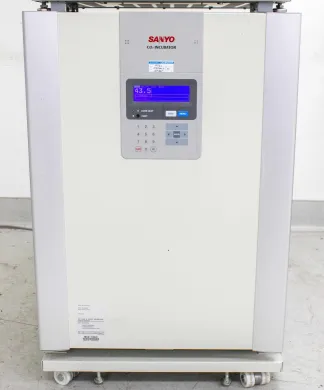
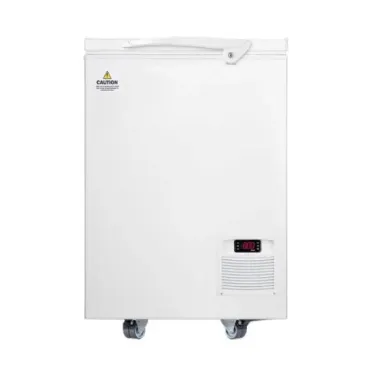
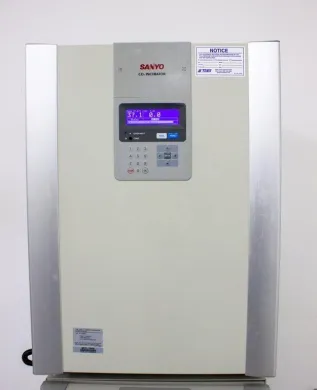
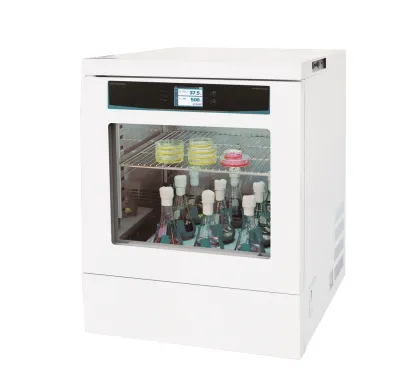
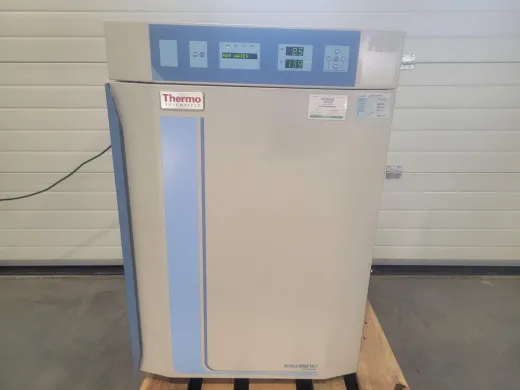
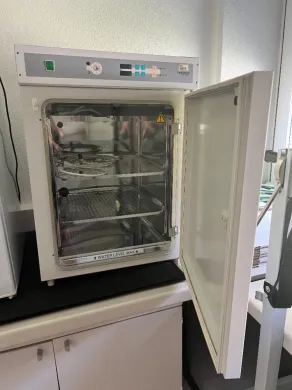
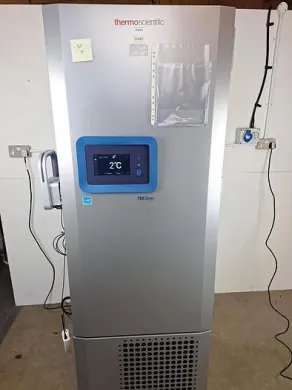
Among the listings that specify a type, the most common are laboratory incubators, cell culture incubators, CO2 incubators, temperature-controlled incubators, benchtop incubators and laboratory refrigerators. A laboratory incubator holds a steady temperature for general use and is the baseline against which the others add capability. A cell culture incubator adds humidity control to keep culture media from drying, and a CO2 incubator adds regulated carbon dioxide on top of that, maintaining the atmosphere that mammalian cell lines need. These last two are the growth chambers used for cell culture and cell imaging work in molecular biology and in bioprocessing, where a stable pH in the medium depends on holding CO2 at a fixed level. Temperature-controlled incubators and benchtop incubators are the smaller, simpler end, suited to microbiology plates and routine incubation, and they are also used for enzyme assays and short immunoassay steps that run at a set temperature. Laboratory refrigerators sit in the same catalogue because they share the controlled-enclosure principle, holding samples and reagents cold rather than warm. A CO2 incubator is the piece most often searched for by name in cell culture and genomics labs, and in biomanufacturing where a controlled atmosphere feeds into protein purification workflows downstream.
The brands behind the growth chamber listings
Thermo Scientific, Thermo Fisher Scientific, VWR, Thermo, Pol-Eko make up the larger share of what is offered. For a buyer that concentration matters in practical terms rather than as a ranking. A model from a well-represented maker is easier to compare, because several units of the same family tend to appear at once, and consumables and replacement shelving for a common line are easier to source through Questpair than for an orphan model. The Thermo Scientific and Thermo Fisher Scientific names cover a wide span of incubators and CO2 incubators, so a buyer searching within one maker can usually find more than one size and specification to weigh against each other.
What a used growth chamber costs here
93 percent of the listings are used. Prices run from EUR 1 to EUR 258.267. That spread reflects the gap between a small benchtop incubator and a large reach-in chamber with full environmental control, so the figure to watch is the specification behind a given price rather than the range itself. The average sits near EUR 3.641, which places most of the catalogue well below the top of the range.
Frequently asked questions
What is an environmental growth chamber?
It is an enclosed laboratory unit that holds temperature, and often humidity, light and CO2, at set points so biological material grows under controlled, repeatable conditions. The enclosure plus its control system is what separates a chamber from an open bench.
What does environmental growth chamber actually mean?
The term refers to any sealed unit that maintains a defined internal environment for growing or holding biological samples. It covers everything from a small benchtop incubator to a walk-in room, as long as the conditions inside are regulated rather than left to the surrounding air.
How do environmental growth chambers work?
A controller reads sensors inside the enclosure and drives heating, refrigeration, humidification and gas injection to hold each parameter at its set point. In CO2 and cell culture units the controller also regulates carbon dioxide and humidity so the internal atmosphere stays stable through the door openings and sample loads of normal use.
What types of growth chambers and incubators are there?
The listings here cover laboratory incubators, cell culture incubators, CO2 incubators, temperature-controlled incubators, benchtop incubators and laboratory refrigerators. They differ mainly in how many parameters they regulate, from temperature alone up to temperature, humidity and CO2 together.
What are environmental growth chambers used for?
They are used for cell culture, cell imaging, microbiology plate incubation, enzyme assays and short immunoassay steps, and in bioprocessing where a stable medium pH depends on holding CO2 fixed. Laboratory refrigerators in the same catalogue hold samples and reagents cold rather than warm.
How do I choose the right growth chamber?
Start with the control envelope: the temperature range, how tightly the unit holds a set point, and whether it regulates humidity and light as well as heat. Read the datasheet for uniformity across the shelf space, not just the headline range, because a chamber that varies corner to corner will not give repeatable results.
What is the difference between a refurbished and a used growth chamber?
A used chamber is sold in its current working condition, while a refurbished one has been checked and brought back toward working specification before listing. On this equipment that difference matters because the compressor, door seals and sensors age, so ask what was done and whether recent temperature-mapping data exists.
How much does a growth chamber cost?
Prices in this category run from EUR 1 to EUR 258.267, with an average around EUR 3.641. The low end covers small benchtop incubators and basic temperature-controlled boxes; the high end covers large reach-in systems with full environmental control.
Which brands make the growth chambers listed here?
Thermo Scientific, Thermo Fisher Scientific, VWR, Thermo and Pol-Eko make up the larger share of what is offered. The Thermo Scientific and Thermo Fisher Scientific names cover a wide span of incubators and CO2 incubators across several sizes and specifications.
Can I get a warranty on a refurbished chamber?
A warranty is often possible and is arranged in consultation for the specific listing. Terms are not set centrally, so check the individual listing for what applies to that unit.
Can I get replacement parts for these chambers?
Parts can be sourced via Questpair. Shelving and internal fittings are easier to find for widely represented lines than for older or orphan models, so confirm the fittings are present before buying a used unit.
How long does a growth chamber last?
Lifespan depends on the condition of the compressor, door seals and heating or refrigeration elements, which are the parts that age. A well-maintained chamber can run for many years, while a unit that has sat idle may need its seals and sensors checked before it holds a set point again.
Should I buy new or refurbished?
Used and refurbished chambers are listed below new pricing, which is the main difference you can count on. Where you have to weigh the two, compare the specification and condition of the individual listing, and note that warranty is arranged in consultation rather than fixed by condition.
Where can I buy an environmental growth chamber?
They are listed on Questpair by verified suppliers and distributors across 12 countries. The 2869 listings cover both new and used units from 18 suppliers.
What is the lead time and shipping for a growth chamber?
Lead time and shipping depend on the individual listing, the supplier and the size of the unit, since a benchtop incubator and a walk-in chamber ship very differently. Check the specific listing or contact the supplier through Questpair for details on a given unit.
What calibration and maintenance does a growth chamber need?
The routine items are checking temperature uniformity against mapping data, inspecting door seals, and verifying that the controller and any logging software read correctly. On a used unit that has been idle, have the seals and sensors checked before relying on a set point.
Which chamber types are listed most, and who reaches for which?
Laboratory incubators are the baseline for general fixed-temperature work, and temperature-controlled and benchtop incubators serve microbiology plates, enzyme assays and short immunoassay steps. Cell culture and CO2 incubators are the units cell culture, cell imaging and bioprocessing labs search for by name, because they add the humidity and regulated CO2 those workflows need.
Which brands dominate this category, and what does that mean for a buyer?
Thermo Scientific, Thermo Fisher Scientific, VWR, Thermo and Pol-Eko make up the larger share of the listings. That concentration makes like-for-like comparison easier, since several units of the same family often appear at once and consumables for a common line are simpler to source than for an uncommon model.
What separates the cheapest chambers here from the most expensive?
The low end is small benchtop incubators and basic temperature-controlled boxes that regulate heat alone; the high end is large reach-in and walk-in systems that control temperature, humidity and light together. What a given chamber costs tracks its control sophistication and its volume more than its brand.