

Rotary evaporators
We personally find you the right used, refurbished and new rotary evaporators instruments & equipment from verified suppliers.
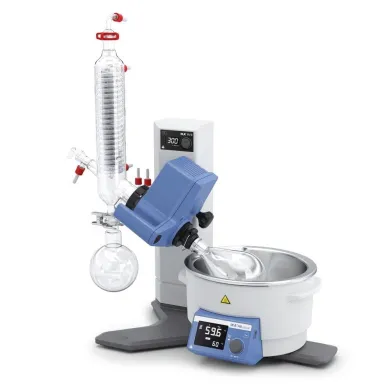
Rotary evaporators are laboratory instruments that remove solvents from a sample by lowering the pressure above a rotating flask and heating it gently in a water bath, so evaporation happens well below the solvent's normal boiling point. The rotating flask spreads the liquid into a thin film across its inner wall, which speeds the process and protects heat-sensitive compounds. On Questpair, 252 rotary evaporators are listed from 13 verified suppliers and distributors across 8 countries, in new, used and refurbished condition. Of those listings, 72 percent are used. Prices run from EUR 44 to EUR 47.349, so both compact benchtop units and large production-scale systems appear in the same laboratory catalogue.
Updated:
Rotary evaporators product list
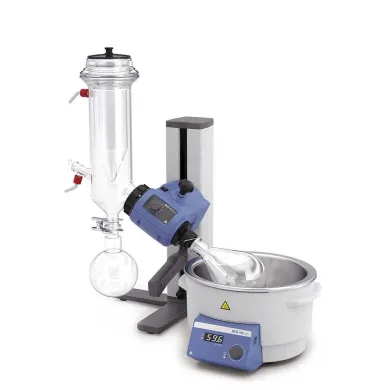


Not the exact instrument you need?
Tell our scientists what you are after. We track it down, including off-market supply.
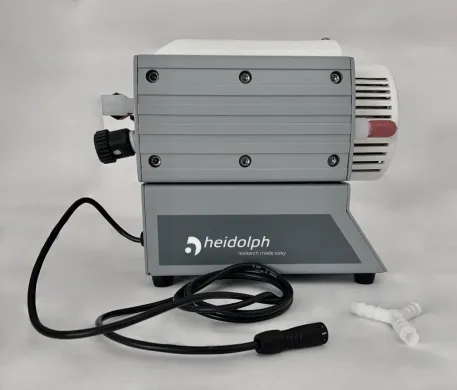
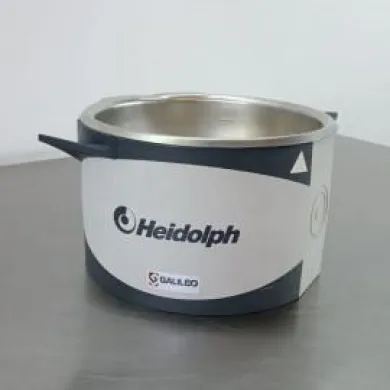
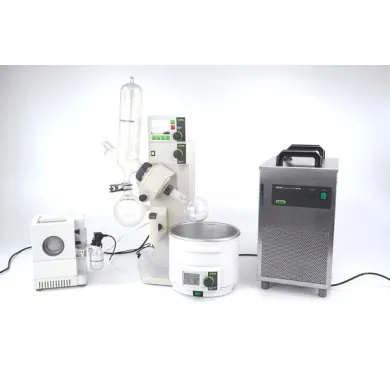
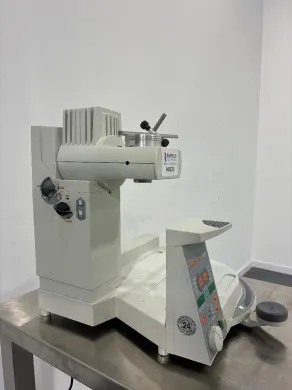
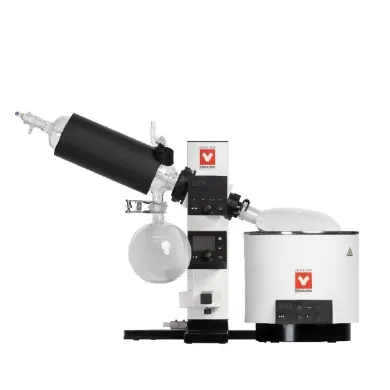
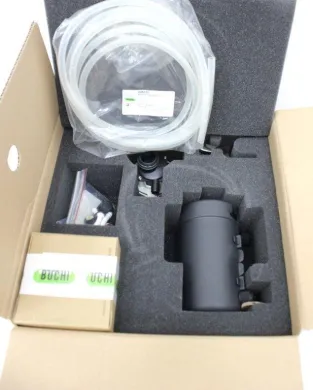
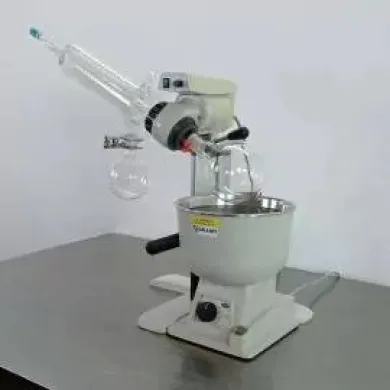
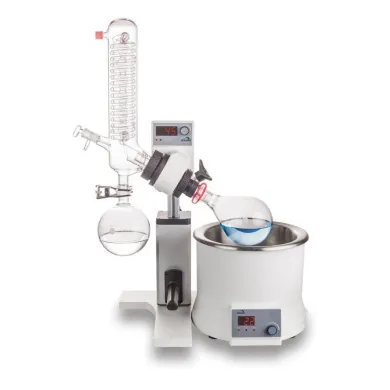
Stuart RE300 Rotary Evaporator
- Category
- Rotary evaporators
- Brand
- Stuart
- Suppliers
- 1 verified
Not the exact instrument you need?
Tell our scientists what you are after. We track it down, including off-market supply.
Showing 1–40 of 109 listings
Show 40 more listingsBuying guide
Matching the flask size and bath to the batch
The volume a rotary evaporator handles settles most purchases before any other specification. A benchtop unit built around a one or two litre evaporating flask suits routine solvent removal in synthesis and extraction work, while flasks of five to twenty litres move the machine into pilot and small production territory, where the frame, the lift mechanism and the condenser all scale up with it. The water bath temperature range and the diameter it accepts follow from that choice, and a flask that does not fit the bath is a mismatch no accessory corrects.
The vapour duty decides the rest. A condenser sized and cooled for the solvent at hand is what actually captures the distillate, and the vacuum level reachable at the flask sets the temperature you can work at. Low-boiling solvents such as dichloromethane need only a modest vacuum; higher boilers such as water or DMSO need a deeper one, supplied by a diaphragm liquid transfer pump matched to the condenser. A controller that holds a vacuum setpoint rather than a fixed pump speed makes a measurable difference to recovery on difficult mixtures.
A used evaporator rewards close inspection, because the parts that wear are the ones that cost. Check the glassware for cracks and the ground-glass joints for chips, since the condenser and the evaporating flask are the expensive items to replace. Confirm the vacuum seal holds, that the bath heats evenly and reaches its rated temperature, and that the lift and rotation run without play. A unit sold with its original pump and a complete glass set is worth more than its listed price suggests; one sold as the drive alone will need those sourced separately.
Price tracks that completeness. Across the catalogue, cost runs from EUR 44 for a bare benchtop drive or a glassware lot up to EUR 47.349 for a large automated system with pump and chiller, averaging EUR 3.172. A used unit in working order fits a tighter budget than a comparable new one, and a used rotary evaporator for sale is the usual route to a complete working setup below new pricing. The brands that fill this band are Buchi, IKA, Heidolph, LIQUIPORT, Büchi; which one you can justify depends on whether you need bare replacement glassware or a turnkey station.
Types of Rotary evaporators
Which rotary evaporator types are listed?
Among the listings that specify a type, the catalogue divides into a few recognisable groups. The complete rotary evaporator, drive, bath, condenser and glassware as one unit, is the core of the range and the form most buyers picture. Beside it sit broader laboratory evaporators and vacuum evaporators, terms that cover the same evaporation under reduced pressure but reach into related designs such as nitrogen blow-down and centrifugal concentrators. A further group is laboratory glassware sold on its own: evaporating flasks, receiving flasks and condenser coils, bought to repair or extend an existing machine. Solvent evaporation systems describe integrated stations where pump, chiller and controller ship together, and the diaphragm liquid transfer pump appears as the vacuum source paired with many of these setups.
Solvent evaporation under vacuum is routine work across molecular biology and the wider life sciences. Rotary evaporation concentrates extracts in natural product chemistry, dries down fractions after chromatography in protein purification workflows, and recovers solvent from reaction mixtures in synthetic biology and medicinal chemistry. A rotary evaporator for sample preparation in genomics and proteomics labs reduces aqueous and organic phases ahead of analysis, and a vacuum evaporator for solvent recovery in biomanufacturing handles the larger volumes that pilot-scale processes generate. These instruments also serve formulation and crystallisation, where controlled removal of solvent is the step that drives a compound out of solution.
The brands behind the listings are Buchi, IKA, Heidolph, LIQUIPORT, Büchi. Their presence shapes what a buyer can expect: the glassware joints, flask geometries and bath fittings on the common lines are well documented, so replacement parts can be sourced via Questpair and a used unit can be matched to spares with confidence. Models within these ranges are also easy to compare against one another, which narrows a decision faster than an unfamiliar make would. Pricing follows the brand and the completeness of the set rather than the name alone.
On condition and price, 72 percent of the listings are used. The range runs from EUR 44 to EUR 47.349, a spread that reflects the distance between a single evaporating flask and a fully automated solvent evaporation system with its own pump and chiller. A used rotary evaporator sits below the equivalent new one, which is the practical reason the used share is the larger of the two. Warranty, where it applies, is arranged in consultation for the specific listing.
Frequently asked questions
What is a rotary evaporator?
A rotary evaporator is a laboratory instrument that removes solvent from a sample by distillation under reduced pressure. It rotates a heated flask to spread the liquid into a thin film, which speeds evaporation and lets heat-sensitive compounds concentrate without thermal damage.
What does rotary evaporator mean?
The name describes the mechanism: a motorised evaporator that rotates the sample flask while applying vacuum and heat. The rotation increases the surface area of the liquid, and the reduced pressure lowers the solvent's boiling point so it evaporates at a gentler temperature.
How do rotary evaporators work?
A motor rotates a heated flask in a bath while a vacuum pump lowers the pressure inside the system. The reduced pressure drops the solvent's boiling point, the solvent vapour travels through a condenser where it cools back to liquid, and it collects in a receiving flask while the concentrated sample stays behind.
What types of rotary evaporators are there?
The listings sort into rotary evaporators, laboratory evaporators, vacuum evaporators, solvent evaporation systems, laboratory glassware and diaphragm liquid transfer pumps. The core instrument is the motorised bench unit, while the glassware entries cover replaceable wetted parts and the pump supplies the vacuum.
What is a rotary evaporator used for?
It concentrates extracts and recovers solvents after a reaction, a routine step in natural product chemistry, metabolomics and sample preparation. In genomics and proteomics it dries down nucleic acid and peptide fractions after elution so they can be resuspended at working concentration.
How do I choose a rotary evaporator?
Start with flask capacity and heating-bath range, since these settle the scale and footprint. A 1-litre flask on a bath reaching 95 degrees handles routine workup, while a 5-litre flask and a higher bath suit pilot-scale concentration or high-boiling solvents. Then match the vacuum source to the solvent you need to remove.
What is the difference between refurbished and used?
A used unit is sold in its existing condition, while a refurbished one has been checked and brought back to working order before listing. On a used rotary evaporator, inspect the glassware, seals, bath and lift mechanism yourself, since condition varies by listing.
How much does a rotary evaporator cost?
Prices in the catalogue range from EUR 44 to EUR 47.349, with an average around EUR 3.172. The spread reflects the gap between a manual bench unit and a fully automated system that bundles its own vacuum pump and chiller.
What are the main rotary evaporator brands?
The listings are dominated by Buchi, IKA, Heidolph, LIQUIPORT and Büchi. That concentration means replacement glassware, seals and condenser assemblies for these makers are widely stocked, and specifications map cleanly from one model to another.
Is there a warranty on a refurbished rotary evaporator?
A warranty is often possible and is arranged in consultation for the specific listing. Terms are not set centrally, so check the individual listing and raise the question with the supplier before purchase.
Can I get replacement parts for a rotary evaporator?
Glassware, seals and condenser assemblies are consumables, and for the dominant brands they are widely stocked. Parts can be sourced via Questpair when a listing arrives incomplete or a flask cracks.
How long does a rotary evaporator last?
The drive motor and bath can run for many years when the bearings and heating element are sound. The wetted parts, the glassware and PTFE seals, wear faster and are replaced as consumables, so the practical lifespan depends more on part availability than on the core unit.
Should I buy new or used?
Used and refurbished rotary evaporators are listed below new pricing, so a fixed budget can often reach a higher capacity or a bundled pump second-hand than the same budget buys new. Where warranty matters, it is arranged in consultation for the specific listing.
Where can I buy a rotary evaporator?
The Questpair catalogue lists 252 rotary evaporators from 13 verified suppliers and distributors across 8 countries, in new, used and refurbished condition.
What is the lead time and shipping?
Lead time and shipping depend on the individual listing, the supplier and their location. For a specific timeline, contact Questpair, where specialists respond within an hour.
What calibration and maintenance does a rotary evaporator need?
Routine care covers checking the PTFE seal between the rotating joint and vacuum line, inspecting glassware for cracks and etching, and confirming the bath heats evenly and the lift holds position. Questpair does not carry out servicing, but parts for these tasks can be sourced through it.
Which rotary evaporator types are listed most, and who reaches for which?
The rotary evaporator itself leads the listings, with laboratory evaporators and solvent evaporation systems alongside it for larger batch volumes or parallel throughput. Natural product and metabolomics labs reach for the bench units to remove extraction solvent, while formulation groups use the larger systems to strip volatiles during purification.
Which brands dominate this category, and what does that mean for a buyer?
Buchi, IKA, Heidolph, LIQUIPORT and Büchi account for the bulk of the listings. The practical effect is two-fold: replacement glassware and seals for these makers are easy to find, so a used unit missing a part is a quick fix, and matching capacity and vacuum rating across models stays straightforward.
What separates the cheapest rotary evaporators from the most expensive?
The bottom of the price band is a manual bench unit with a hand-operated lift and no bundled accessories. The top is an automated system with a motorised lift, an integrated vacuum controller and a recirculating chiller, which together drive both the price and the range of solvents it can handle.