

Rockers
We personally find you the right used, refurbished and new rockers instruments & equipment from verified suppliers.
Rockers are laboratory platform instruments that produce a slow, tilting or gentle gyratory motion to keep a liquid moving across the samples resting on them. The motion is gentler than orbital shaking, which is why it suits staining, blotting, washing and cell work where vigorous agitation would damage what is in the vessel. The Questpair catalogue holds 124 rocker listings from 12 verified suppliers and distributors across 7 countries. New, used and refurbished units are listed. 80 percent of the listings are used. Prices run from EUR 17 to EUR 1.446.
Updated:
Rockers product list
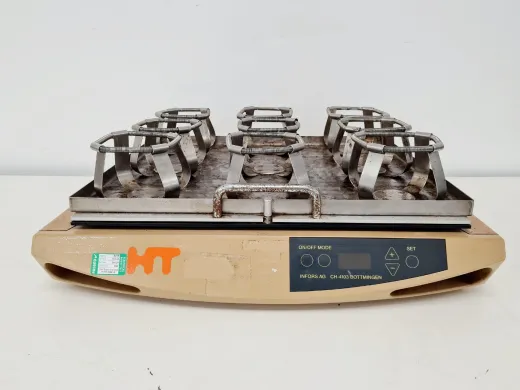
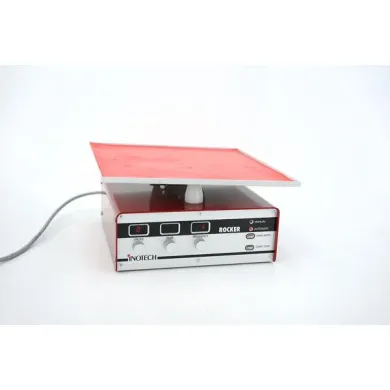
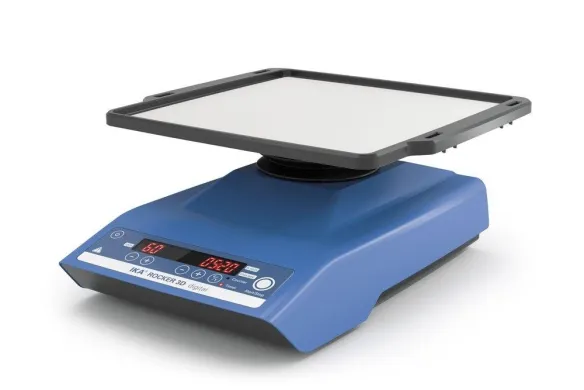
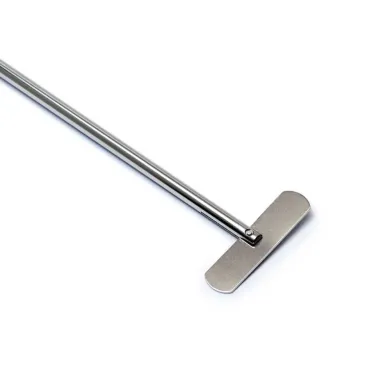


Not the exact instrument you need?
Tell our scientists what you are after. We track it down, including off-market supply.
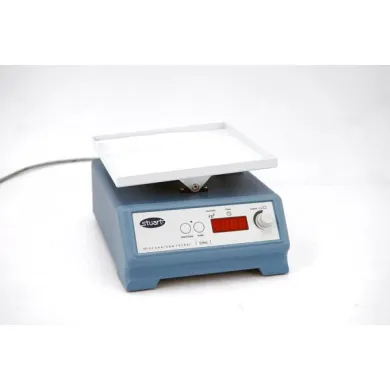
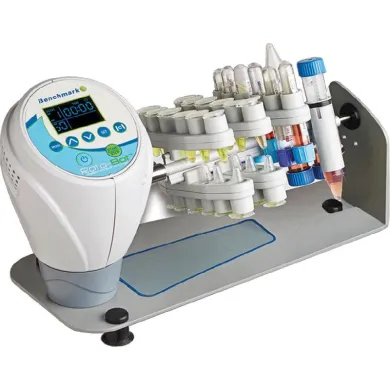
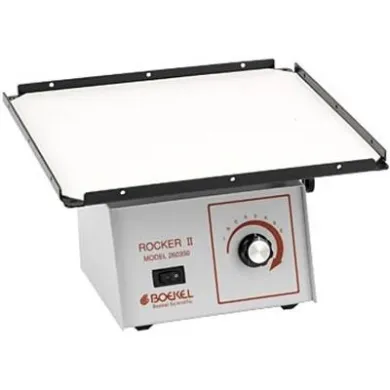
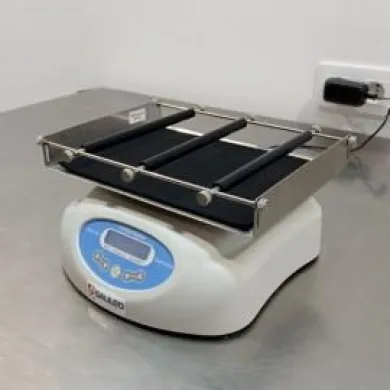
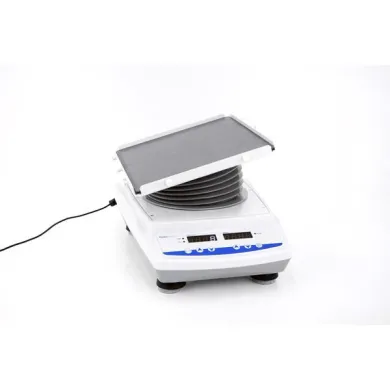
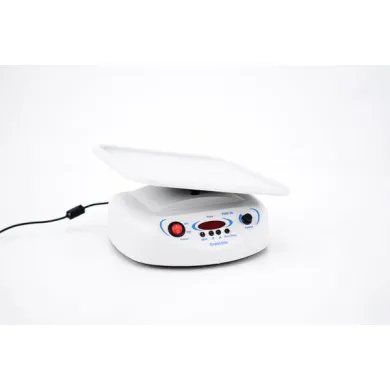
Grant-Bio PSU-10i Orbital Shaker
- Category
- Rockers
- Brand
- Grant instruments
- Suppliers
- 1 verified
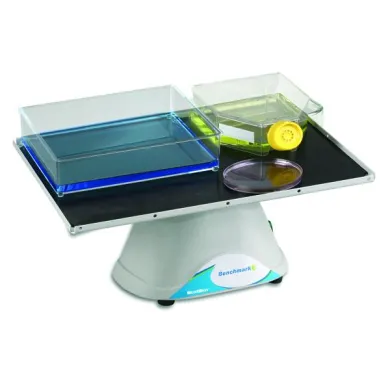
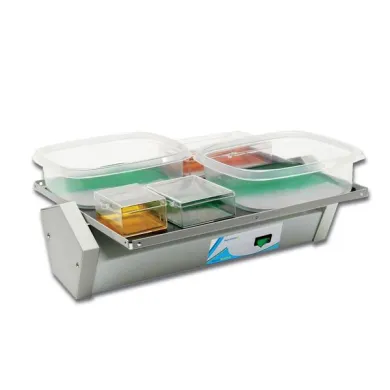
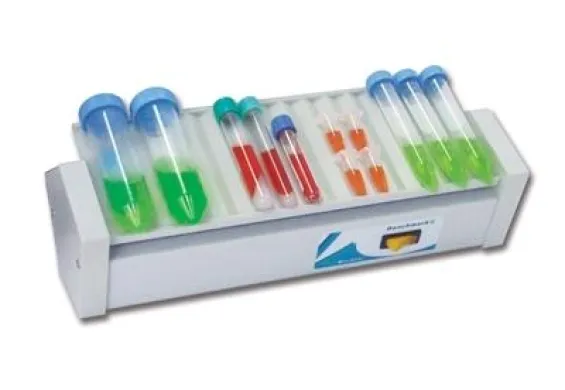
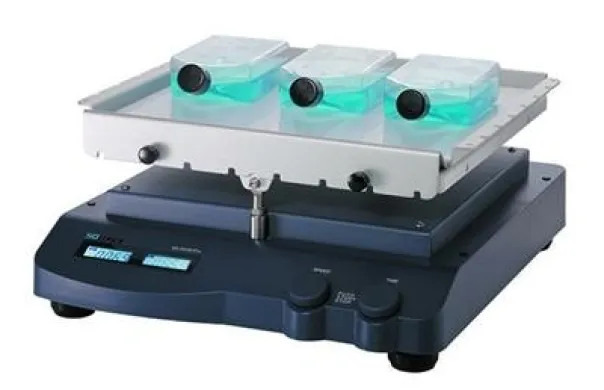
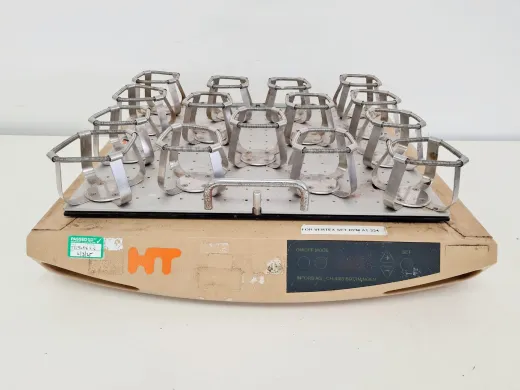
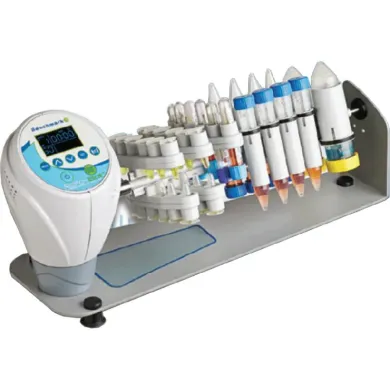
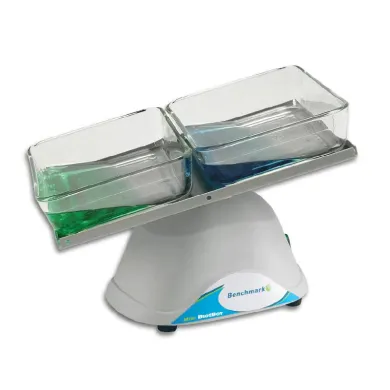
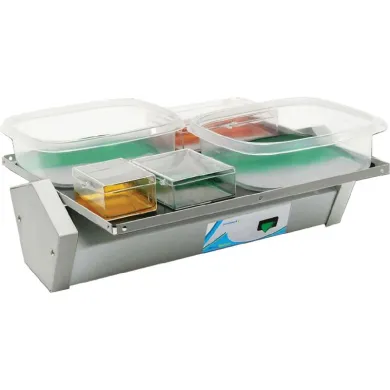
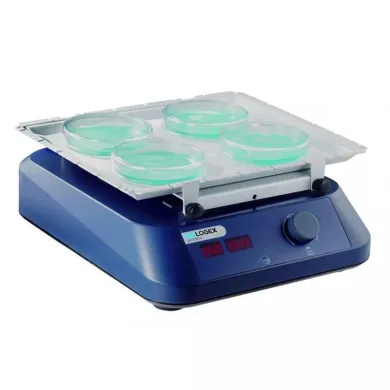
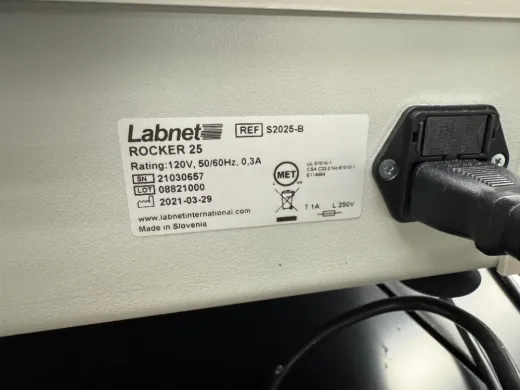
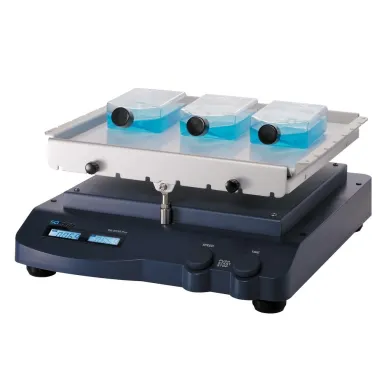
Not the exact instrument you need?
Tell our scientists what you are after. We track it down, including off-market supply.
Showing 1–40 of 115 listings
Show 40 more listingsBuying guide
What settles the choice of a rocker is the vessel it has to carry and the motion that vessel can tolerate, and those two decide each other. A nitrocellulose membrane in a tray wants a see-saw tilt that pushes buffer from end to end; a stack of culture plates wants a shallower gyratory wave that will not slop medium over the well walls; a single large dish of fixative wants slow and steady above all. So the first number to read is not the speed range but whether the platform tilts, orbits, or does both, and at what angle. A unit fixed at a steep tilt is wrong for open-well plates whatever else it offers.
Platform size and load follow from that. The deck has to hold the trays or flasks a protocol actually uses, with the non-slip mat or the dedicated stacking frame that holds them still, and the stated maximum load is for the whole assembly, not the empty platform. A rocker rated for a light membrane tray will labour under four racked culture flasks, and a labouring motor is the part that fails first.
Condition is where a used rocker needs more attention than its price suggests, because the mechanism is mechanical and the wear is not on the datasheet. On a used unit, run it through its full speed and tilt range before trusting it: listen for the motor stalling at the slow end, watch for a stutter or an uneven stroke, and check that the platform sits level and the mat or frame is present and not perished. A drive that hunts at low speed is the common fault and the one that matters most, since slow is the setting these instruments spend their lives at. Where a unit is destined for an incubator or a cold room, confirm it is rated for that environment, as not every benchtop model is.
On price, what a rocker costs here spans a wide band: listings run from EUR 17 to EUR 1.446, with an average around EUR 403. The low end is bare benchtop rockers with a small fixed-tilt platform; the upper end is programmable units with large decks, stacking capacity and incubator ratings. A buyer working to a budget will find that used and refurbished units are more affordable than new across that whole range, which is what makes a mid-sized rocker practical to keep as a second instrument. The brands occupying the band are VWR, Benchmark, Benchmark Scientific, Corning, Stuart, and a model from a name that recurs in the catalogue is easier to compare against another listing and easier to match a replacement mat or platform to.
Types of Rockers
Which rocker types are listed?
Among the listings that specify a type, the forms are laboratory rocker, laboratory shaker, platform rocker, cell culture rocker, laboratory mixer and benchtop rocker. The laboratory rocker and platform rocker are the core: a flat deck that tilts on a see-saw axis to wash the liquid back and forth, reached for in staining, destaining, membrane washing and gel equilibration. The laboratory shaker overlaps but implies a faster orbital motion for mixing rather than gentle washing, so it suits cultures and solubilisation where the rocker would be too slow. The laboratory mixer sits at that busier end again, used for blending and homogenising reagents. The benchtop rocker is a size class rather than a motion, the compact unit that fits beside a sink for routine work.
The cell culture rocker is the type that carries its own field. A gentle rocking platform keeps medium moving over an adherent monolayer or a suspension without the shear that damages cells, which is why it appears in cell culture and cell imaging prep, in wound-healing and perfusion work, and in the hybridisation and washing steps of immunoassay and electrophoresis blotting. In molecular biology a rocker does the overnight antibody incubation of a Western blot; in histology and immunohistochemistry it moves stain and buffer across tissue sections on slides; in microbiology it keeps liquid cultures and plates in slow motion. Rocking bioreactor platforms extend the same principle into bioprocessing and cell-based biomanufacturing, where a rocking bag replaces a stirred vessel for seed culture and small-batch production. A rocker for protein purification holds fractions in gentle agitation during binding and elution steps.
The brands behind the rocker listings
The names that recur are VWR, Benchmark, Benchmark Scientific, Corning, Stuart. For a buyer, a brand that appears repeatedly in the catalogue means two useful things: a replacement platform, mat or stacking frame is easier to source, since Questpair can locate parts for a model that others also list, and a given unit is easier to price, because there is another listing to compare it against. A rocker from a name that shows up only once offers neither, so its condition and completeness matter more. The brand itself tells you little about the motion; a platform rocker from one maker does much the same job as another, and it is the tilt range, deck size and load rating that separate them.
What a used rocker costs here
Used and refurbished units are listed at lower prices than new. 80 percent of the listings are used. The full range runs from EUR 17 to EUR 1.446, with the average near EUR 403. That spread covers everything from a small fixed-tilt benchtop rocker to a programmable platform with incubator rating and stacking capacity, which is why the band is wide rather than a reflection of condition alone.
Frequently asked questions
What is a rocker?
A rocker is a laboratory platform instrument that produces a slow tilting or gentle gyratory motion to keep liquid moving across samples sitting on its deck. The motion is gentler than orbital shaking, which suits staining, blotting, washing and cell work.
What does rocker mean in a lab context?
It refers to a bench instrument whose platform rocks back and forth on a see-saw axis, or moves in a shallow gyratory wave, to wash a liquid across the vessels on it. The term describes the gentle motion rather than the brand or size.
How do rockers work?
A motor drives the platform through a tilting or gyratory stroke at a set speed, so the liquid in each tray or dish flows back and forth across the samples. Slow is the setting these instruments spend most of their lives at, which is why low-speed drive behaviour matters most.
What types of rockers are there?
The listings here cover laboratory rocker, platform rocker, cell culture rocker, laboratory shaker, laboratory mixer and benchtop rocker. The rocker and platform rocker use a see-saw tilt for washing; the shaker and mixer imply faster orbital motion for mixing; benchtop describes a size class rather than a motion.
What is a rocker used for?
It is used for membrane washing, staining and destaining, gel equilibration, overnight antibody incubation in Western blotting, moving stain across tissue sections in histology, and keeping medium moving over cell cultures. The common thread is gentle agitation where vigorous shaking would damage the sample.
How do I choose a rocker?
Start with the vessel and the motion it can tolerate: a membrane tray wants a see-saw tilt, open-well plates want a shallow gyratory wave, and a fixed steep tilt is wrong for anything that can slop over. Then check deck size and that the stated maximum load covers the full assembly, not the empty platform.
What is the difference between a refurbished and a used rocker?
A used unit is sold as it comes, while a refurbished one has been checked or reconditioned before listing. Both are listed below the price of new, and the specific condition is described in the individual listing.
How much does a rocker cost?
Listings run from EUR 17 to EUR 1.446, with the average near EUR 403. The band is wide because it spans small fixed-tilt benchtop units through to programmable platforms with large decks, stacking capacity and incubator ratings.
Which brands make rockers?
The names that recur in the catalogue are VWR, Benchmark, Benchmark Scientific, Corning and Stuart. The brand tells you little about the motion itself; tilt range, deck size and load rating are what separate one platform rocker from another.
Can I get a warranty on a refurbished rocker?
A warranty is often possible and is arranged in consultation for the specific listing. Terms are tied to the individual unit rather than set across the category.
Are spare parts available for rockers?
Parts such as a replacement platform, non-slip mat or stacking frame can be sourced via Questpair. A model that recurs in the catalogue is easier to match a part to, since there is another listing of the same unit to reference.
How long does a rocker last?
The limiting part is the drive mechanism, and the motor is the first thing to fail when a platform is run overloaded. A unit rated for the load it actually carries, run within its speed range, lasts longer than one that labours.
Should I buy a new or a refurbished rocker?
Used and refurbished units are listed at lower prices than new across the whole range, which is what makes a mid-sized rocker practical as a second instrument. Where you have to weigh the two, check the individual listing for condition, and note that warranty is arranged in consultation.
Where can I buy a rocker?
The Questpair catalogue holds 124 rocker listings from 12 verified suppliers and distributors across 7 countries. New, used and refurbished units are listed.
What are the lead time and shipping for a rocker?
Lead time and shipping depend on the individual listing and the supplier holding it, since the units come from 12 separate sellers. The specific listing states what applies to that unit.
Does a rocker need calibration or maintenance?
A rocker has no measurement output to calibrate, but the mechanism benefits from checking: run it through its full speed and tilt range, listen for the motor stalling at the slow end, watch for an uneven stroke, and confirm the platform sits level with its mat present and not perished. Questpair does not offer repair or servicing.
Which rocker types are listed most, and who reaches for which?
Laboratory rocker and platform rocker are the core, reached for in staining, destaining, membrane washing and gel equilibration. The cell culture rocker serves adherent and suspension cultures where shear would damage cells, while the laboratory shaker and mixer suit faster mixing and solubilisation where a rocker would be too slow.
Which brands dominate the rocker listings, and what does that mean for a buyer?
VWR, Benchmark, Benchmark Scientific, Corning and Stuart recur across the listings. A brand that appears repeatedly is easier to price against another listing and easier to source a replacement mat or platform for, while a unit from a name that shows up only once makes condition and completeness matter more.
What separates a cheap rocker from an expensive one here?
The low end is bare benchtop rockers with a small fixed-tilt platform and a fixed or narrow speed range. The upper end is programmable units with large decks, stacking capacity for multiple trays, and a rating for incubator or cold-room use, so the spread reflects capability rather than condition alone.