

Ultrasonic cleaners
We personally find you the right used, refurbished and new ultrasonic cleaners instruments & equipment from verified suppliers.
Ultrasonic cleaners are benchtop devices that remove contaminants from laboratory glassware, instruments and small parts by passing high-frequency sound waves through a liquid bath, where the resulting cavitation bubbles dislodge residue from surfaces that brushing cannot reach. The Questpair catalogue lists 443 ultrasonic cleaners from 17 verified suppliers and distributors across 10 countries, offered new, used and refurbished. 82 percent of the listings are used. Prices range from EUR 36 to EUR 32.971, a spread that separates a small jewellery-sized tank from a large laboratory console. A buyer searching for a used laboratory ultrasonic cleaner, a refurbished bath or a new unit will find all three conditions represented here.
Updated:
Ultrasonic cleaners product list
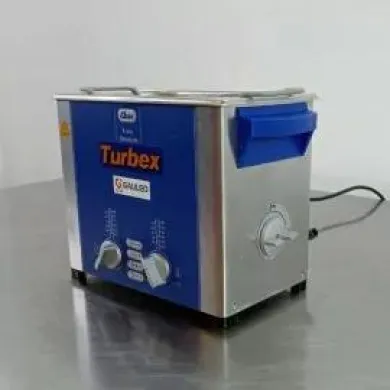


Not the exact instrument you need?
Tell our scientists what you are after. We track it down, including off-market supply.

Not the exact instrument you need?
Tell our scientists what you are after. We track it down, including off-market supply.
Showing 1–40 of 197 listings
Show 40 more listingsBuying guide
Tank volume and the frequency of the transducer settle most ultrasonic cleaner purchases, and the two pull in opposite directions. Volume is the obvious figure: a small benchtop tank holds a litre or two and suits pipette tips, vials and watch parts, while a laboratory console runs to fifteen litres or more for trays of glassware. Frequency is the one buyers overlook. A low frequency around 25 to 40 kHz produces large, energetic cavitation bubbles that strip heavy soils and baked-on residue fast, but can pit soft metals and delicate optics. A higher frequency near 80 to 130 kHz produces finer bubbles that clean gently into blind holes and fine threads without damaging the surface. Match the frequency to what you clean, not to the price, because a unit tuned for engine parts will mark a lens.
Heating and a timer matter next. Many cleaning agents only work warm, so a bath with a thermostatically controlled heater and a digital timer covers more protocols than a bare tank with a mechanical dial. Degassing, a short pre-run that drives dissolved air out of fresh solution, is worth looking for where the work involves sensitive electronics or sample preparation, since trapped air blunts cavitation.
On a used unit, the transducer and the tank are what to verify. Transducers bonded to the tank floor degrade over years of thermal cycling, and a weak one leaves the bath running quietly while cleaning poorly, which no visual check reveals. Ask whether the unit has been tested under power, inspect the tank for pitting and perforation around the weld seams, and confirm the heater still reaches its set point. A bath that looks clean can still have a tired transducer, and that is the single part most likely to have aged.
Price tracks size and capability closely. A compact benchtop cleaner costs little and fits almost any budget; a heated, multi-frequency laboratory console sits near the top of the range. Branson, Crest and VWR occupy the mid band of general cleaning baths, while Covaris sits higher, its focused-acoustic systems built for sample preparation rather than parts washing. Used and refurbished units listed for sale run below new, which is where the catalogue spread is widest, since a well-kept older console can undercut a new compact tank while doing far more work. Decide the frequency first, size the tank to the largest batch you run, and let the condition and the brand follow from there.
Types of Ultrasonic cleaners
Which ultrasonic cleaner types are listed?
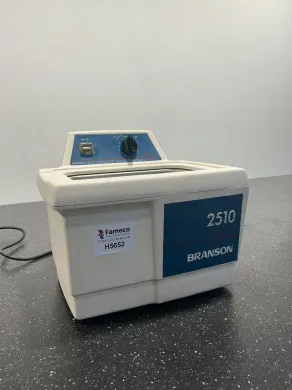
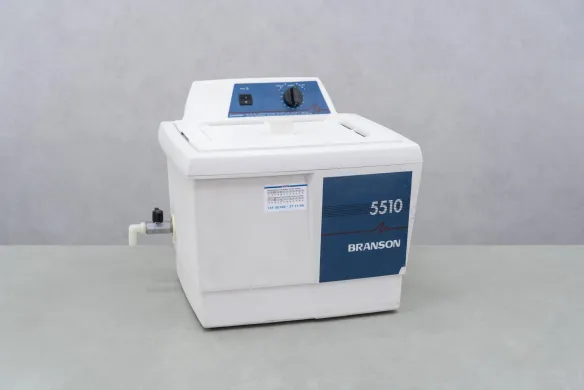
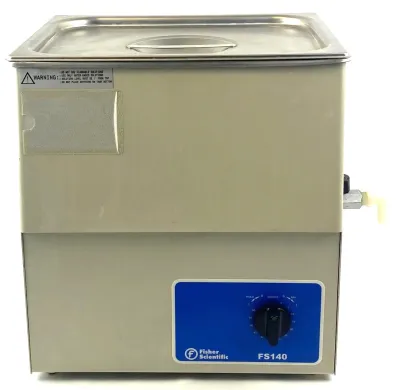
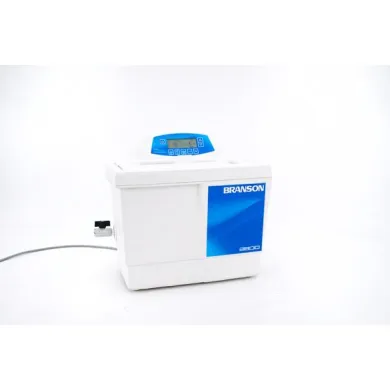
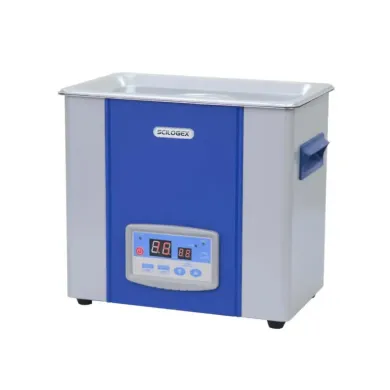
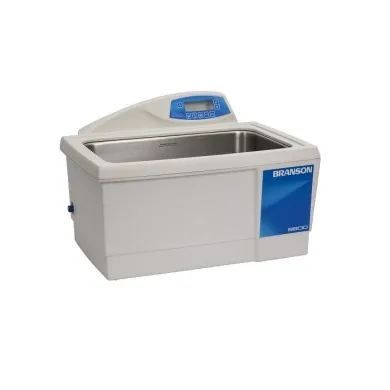
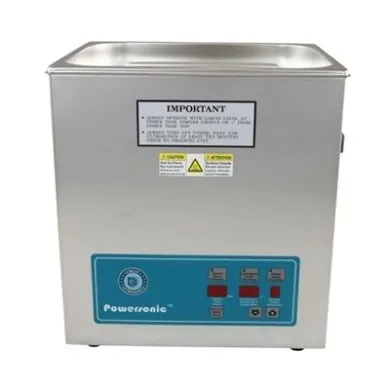
Among the listings that specify a type, the range runs from simple cleaning baths to instruments that do far more than clean. A benchtop ultrasonic cleaner is the general-purpose workhorse: a heated tank with a timer, sized for glassware, instruments and small parts, and the form most laboratories reach for first. Broader laboratory cleaning equipment covers the same cavitation principle applied to trays, baskets and specialised holders. The list also carries sample preparation equipment, where the ultrasonic energy is not cleaning anything but driving a process. Two entries, the ultrasonic homogenizer and the cell disruptor, belong to that second group and work differently from a bath: instead of a tank, a probe is dipped into a sample and delivers acoustic energy directly, lysing cells and breaking up particles.
That second group is where ultrasonic equipment crosses into biotechnology and life sciences. An ultrasonic homogenizer performs cell lysis and particle size reduction, and a cell disruptor releases intracellular contents for protein purification and nucleic acid extraction, which is why a researcher searching for an ultrasonic cell disruptor for cell culture or a probe sonicator for protein extraction lands on this category rather than on a bath. Benchtop baths are also used for degassing buffers and dissolving samples ahead of molecular biology and genomics work. The sonication of samples for DNA shearing is a routine step in library preparation, and focused-acoustic instruments carry it out with tight reproducibility.
The brands behind the ultrasonic cleaner listings
The names that recur most are Branson, VWR, Covaris, Crest, Branson Ultrasonics Corporation. For a buyer, that mix is useful rather than incidental. Branson and Crest are long-established makers of cleaning baths, so parts, baskets and service references are easy to find and used units are straightforward to compare model against model. VWR supplies the general-laboratory tier of tanks and consumables, which keeps prices in the accessible band. Covaris sits apart: its focused-acoustic sonicators are sample-preparation instruments, so a Covaris listing signals a higher price point and a different job than a parts-washing tank. Knowing which camp a brand sits in tells you more about a listing than the price alone.
What a used ultrasonic cleaner costs here
New, used and refurbished units are all listed. 82 percent of the listings are used. Prices range from EUR 36 to EUR 32.971. That spread covers the gap between a compact single-frequency tank and a heated, multi-litre console or a focused-acoustic sample-preparation system, and used and refurbished units listed for sale are more affordable than new. Where a buyer has to weigh a used unit against a new one, the individual listing carries the detail, and a warranty is arranged in consultation for that listing.
Frequently asked questions
What is an ultrasonic cleaner?
An ultrasonic cleaner is a laboratory instrument that removes contaminants from solid surfaces using cavitation, where high-frequency sound waves create and collapse microscopic bubbles in a liquid bath. The collapsing bubbles dislodge residue from glassware, metal parts and small components.
What does ultrasonic cleaning actually mean?
It refers to cleaning by cavitation rather than scrubbing or soaking alone. Sound waves agitate a liquid so that tiny bubbles form and implode against the surface of a part, lifting off soils that mechanical methods struggle to reach in crevices and fine features.
How do ultrasonic cleaners work?
A transducer bonded to the tank base converts electrical energy into high-frequency vibration, which travels through the liquid and generates cavitation bubbles. When those bubbles collapse they release energy at the surface of the submerged part, breaking the bond between contaminant and substrate.
What types of ultrasonic cleaners are there?
The listings split into cleaning baths and acoustic processing instruments. Benchtop ultrasonic cleaners handle parts washing and degassing, while ultrasonic homogenizers and cell disruptors apply the same energy to the sample itself to break cells and shear material rather than to clean a surface.
What are ultrasonic cleaners used for?
Cleaning baths handle parts washing, degassing of solvents, and routine cleaning of pipette tips, vials and surgical instruments. The processing instruments in this category are used for cell lysis, DNA shearing, emulsion preparation, nanoparticle dispersion and sample preparation for proteomics and genomics.
How do I choose an ultrasonic cleaner?
Start by deciding whether you need a bath that cleans or a homogenizer that processes a sample, because they do different work. For baths, match tank volume to your parts and pick a frequency to suit the job: lower frequencies cut heavier soils, higher frequencies treat delicate or finely featured parts more gently.
What is the difference between refurbished and used ultrasonic cleaners?
A used unit is sold in its current condition, while a refurbished unit has been checked and brought back to working order before listing. Both are listed below the price of new on Questpair, and the specifics of condition are stated in the individual listing.
How much does an ultrasonic cleaner cost?
Listed prices range from EUR 36 to EUR 32.971, with an average of EUR 2.001. The low end covers small single-frequency benchtop baths, and the high end reflects large-capacity tanks or specialised acoustic processing systems.
Which ultrasonic cleaner brands show up most here?
The recurring names are Branson, VWR, Covaris, Crest and Branson Ultrasonics Corporation. Branson and Crest are established in cleaning baths and probe systems, VWR supplies baths across a range of tank sizes, and Covaris focuses on acoustic sample preparation rather than general washing.
Can I get a warranty on a refurbished ultrasonic cleaner?
A warranty is often possible and is arranged in consultation for the specific listing. Check the listing itself and raise the question before purchase so the terms are clear.
Can I get spare parts like tanks, transducers and horns?
Parts can be sourced via Questpair. Branson and Crest are well represented in the catalogue, which tends to make spare tanks, transducers and horns easier to find and models easier to compare against each other.
How long does an ultrasonic cleaner last?
Lifespan depends on how hard the unit is run and how well the tank and transducer are maintained. The transducer bond and the tank itself are the wear points on a bath, while on a homogenizer the horn is a consumable that degrades with use and is replaced periodically.
Should I buy new or refurbished?
The clearest difference is price: used and refurbished units are listed below new. Where you need to weigh the two, compare the individual listing for condition and ask about warranty, which is arranged in consultation for that specific unit.
Where can I buy an ultrasonic cleaner?
On Questpair, 443 ultrasonic cleaners are listed from 17 verified suppliers and distributors across 10 countries. New, used and refurbished units appear side by side so you can compare condition and price in one place.
What are the lead time and shipping like?
Lead time and shipping depend on the individual supplier and the unit's location, which can span 10 countries. The listing is the place to confirm both, and Questpair specialists respond within one hour if you need help clarifying a listing.
How are ultrasonic cleaners calibrated and maintained?
Baths need the tank kept clean, the solution changed as it loads up with soil, and periodic checks that cavitation is still even across the tank. Homogenizers need the horn inspected for pitting and replaced when worn, since a degraded tip reduces energy transfer to the sample.
Which types are listed most and who reaches for which?
Benchtop cleaning baths are the common form and serve parts washing and routine lab cleaning for a broad set of users. The homogenizers and cell disruptors go to molecular biology, microbiology and proteomics workflows, where the goal is to open cells or shear material rather than clean a surface.
Which brands dominate this category and what does that mean for me as a buyer?
Branson, Crest and VWR carry the weight in cleaning baths, while Covaris sits apart as a specialist in acoustic sample preparation. Where a brand is well represented you get a deeper pool of listings to compare and a better chance of matching an exact tank volume or frequency, plus easier sourcing of common parts.
What separates the cheapest ultrasonic cleaners from the most expensive here?
At EUR 36 you are looking at small single-frequency benchtop baths with a tank, a transducer and a basic timer. Toward EUR 32.971 the units are large-capacity baths or specialised acoustic processing systems such as focused-acoustic shearing instruments, which do a narrower job at a different price level.