

NMR spectrometers
We personally find you the right used, refurbished and new nmr spectrometers instruments & equipment from verified suppliers.
NMR spectrometers are analytical instruments that measure the response of atomic nuclei to a magnetic field, resolving molecular structure from the resonance frequencies that result. The technique sits at the centre of synthetic chemistry and structural biology, where it identifies compounds and maps how atoms connect within them. On Questpair, 234 NMR spectrometers are listed, in new, used and refurbished condition, from 10 verified suppliers and distributors across 6 countries. 100 percent of the listings are used. Prices span a wide range, from EUR 128 to EUR 201.000, because the field covers everything from benchtop units to high-field superconducting magnets. That spread is what any buyer has to place themselves within first.
Updated:
NMR spectrometers product list


Not the exact instrument you need?
Tell our scientists what you are after. We track it down, including off-market supply.
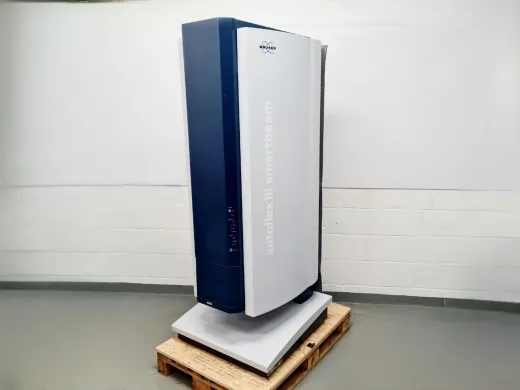
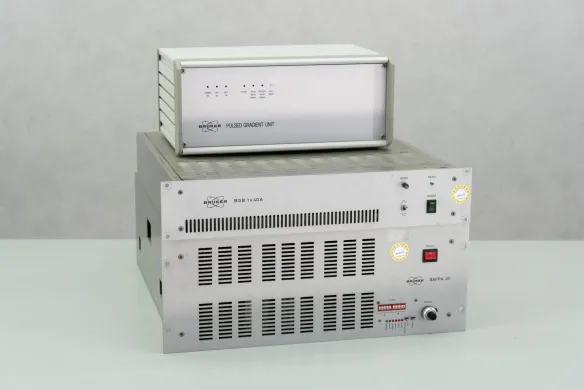
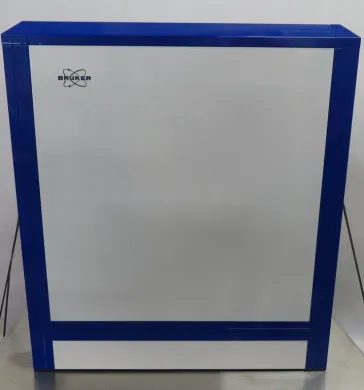
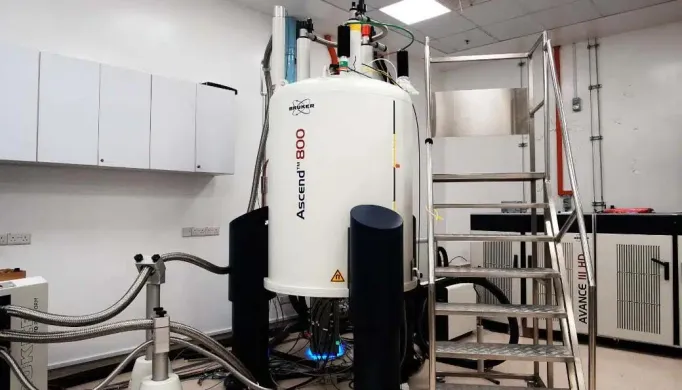
Not the exact instrument you need?
Tell our scientists what you are after. We track it down, including off-market supply.
Showing 1–40 of 74 listings
Show 34 more listingsBuying guide
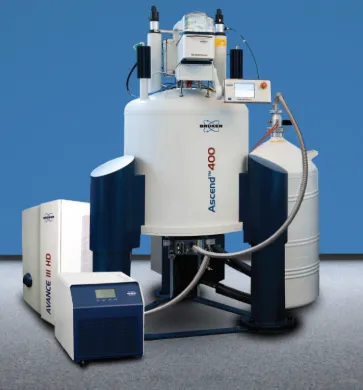
Field strength settles an NMR purchase before any other specification, because it fixes what the instrument can resolve. It is quoted either in tesla or as the proton resonance frequency in megahertz, and the two track each other: a higher field spreads peaks further apart and lifts the limit of detection, which is why structural biology reaches for 600 MHz and above while routine reaction monitoring is content at 60 to 100 MHz. Sensitivity rises with field as well, so a weaker magnet needs more sample or more scans to reach the same signal. Decide what you need to separate before you look at anything else; a magnet that cannot resolve your overlapping signals is the wrong instrument at any price.
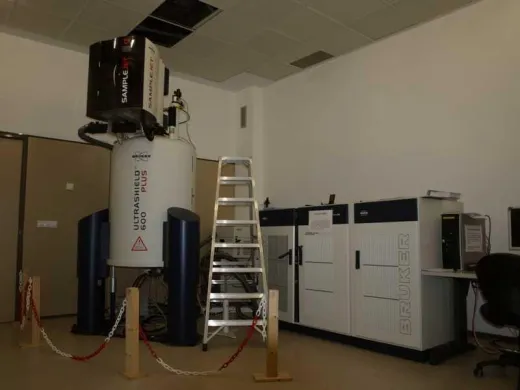
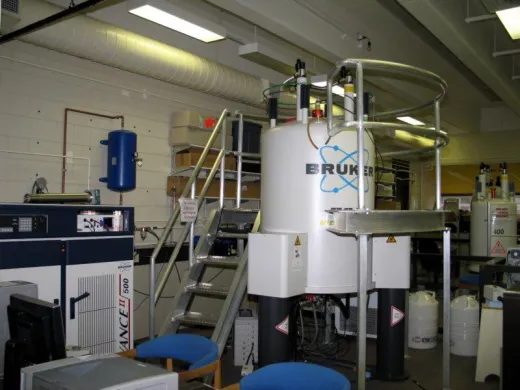
A superconducting magnet is the part of a used system that rewards the most scrutiny, because it is the part that cannot simply be replaced. Ask whether the magnet is still at field or has been allowed to quench, and whether the cryogen history is documented, since a magnet that has sat warm may not recover. Confirm what probes come with it, as a probe tuned to the wrong nuclei narrows what the instrument can do, and ask after the console and the software, which on older spectroscopy platforms can be the hardest elements to support. On a benchtop permanent-magnet unit these concerns shrink, which is one reason that class has grown: there are no cryogens to manage and far less to go wrong. What to verify always follows from the magnet type, so establish that first.
Price on Questpair reflects this division directly. The range runs from EUR 128 to EUR 201.000, with an average near EUR 7.950. The low end covers benchtop and accessory listings, while a complete high-field system with a current console sits near the top. What a unit costs is driven far more by field strength and magnet condition than by brand, so a buyer working to a budget should set the field they can accept and then look for the best-maintained instrument within it. Refurbished and used NMR spectrometers listed for sale are more affordable than new, which is most of what this marketplace carries. The brands that recur, Bruker, Perkin Elmer, Thermo Scientific, Varian, Waters, each have a different depth of installed base, which affects how readily a comparable model turns up for sale.
Types of NMR spectrometers
Which instrument types appear in the NMR listings?
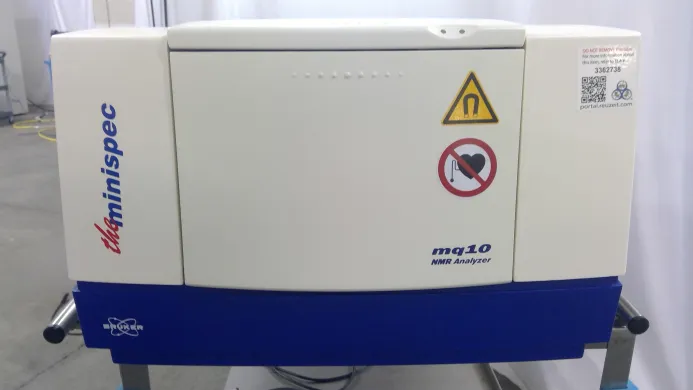
Among the listings that specify a type, the labels recorded are analytical instrument, mass spectrometer, laboratory equipment, optical instrument, laboratory spectrometer, spectrometer. These overlap because an NMR spectrometer is first an analytical instrument and a laboratory spectrometer, and the catalogue records both the broad class and the specific one. The genuine division within the listings is by magnet: superconducting high-field systems, which dominate research settings and demand cryogenic upkeep, and permanent-magnet benchtop units, which trade resolution for a far simpler installation. A chemist running reaction monitoring reaches for the benchtop; a structural biologist resolving a protein fold needs the high field. The appearance of mass spectrometer among the types reflects how often NMR and mass spectrometry sit side by side in a structural workflow, each answering a question the other cannot.
NMR spectroscopy carries real weight in life sciences, and the terms a specialist searches follow the work. In structural biology it determines protein structure in solution, a method that complements crystallography for proteins that resist the crystal. It underpins metabolomics, where the resonance pattern of a biofluid fingerprints its small-molecule content, and it verifies the identity and purity of synthesised compounds in molecular biology and drug discovery. Used also for natural-product characterisation and for confirming the structure of biomanufacturing intermediates, the technique reaches wherever molecular identity has to be proven rather than assumed.
The brands behind the NMR listings
The recurring names are Bruker, Perkin Elmer, Thermo Scientific, Varian, Waters. Bruker holds the deepest installed base in high-field NMR, which for a buyer means more used systems reach the market and more models can be compared against one another. Varian instruments appear often as earlier-generation platforms, where console support and software age become the real question rather than the magnet itself. The presence of several makers across the listings widens what can be matched to a given field strength and budget, and keeps parts and probes in circulation.
What a used NMR spectrometer costs here
100 percent of the listings are used. Prices range from EUR 128 to EUR 201.000, an unusually wide band that reflects the gap between an accessory or benchtop unit and a complete superconducting system. The average near EUR 7.950 sits well below the top of the range, a sign that most of what is listed falls short of the highest-field research instruments. Parts can be sourced via Questpair, and where a warranty matters it is arranged in consultation for the specific listing.
Frequently asked questions
What is an NMR spectrometer?
An NMR spectrometer is an analytical instrument that measures nuclear magnetic resonance, the response of atomic nuclei in a strong magnetic field to radiofrequency pulses. It records a signal that maps the chemical environment of each nucleus, which a chemist reads back into a molecular structure.
What does NMR stand for?
NMR stands for nuclear magnetic resonance. The name refers to the physical effect the instrument measures: atomic nuclei placed in a magnetic field absorb and re-emit radiofrequency energy at frequencies that depend on their chemical surroundings.
How do NMR spectrometers work?
The sample sits inside a strong magnet, and the instrument sends radiofrequency pulses through a probe to excite the nuclei. As the nuclei relax back, they emit a signal that the console records and converts into a spectrum, where each peak corresponds to a nucleus in a particular chemical environment.
What types of NMR spectrometers are there?
The listings resolve into a few overlapping classes: analytical instrument, laboratory spectrometer, mass spectrometer, optical instrument, laboratory equipment and spectrometer. The core distinction is the magnet, with benchtop permanent-magnet systems running at low field and superconducting cryomagnet systems running at high field and needing cryogen fills.
What are NMR spectrometers used for?
They determine molecular structure and composition without destroying the sample, which makes them central to synthetic chemistry, molecular biology and metabolomics. Common tasks include small-molecule structure confirmation, protein NMR in solution, quantitative profiling of cell culture extracts, and reaction monitoring in flow chemistry and bioprocessing.
How do I choose an NMR spectrometer?
Match the magnet to the work: a benchtop permanent-magnet unit suits reaction monitoring and routine teaching, while structural and protein work needs a high-field superconducting system. Then check field strength, probe fit, age and documented service history, and confirm the space and cryogen handling a superconducting magnet requires.
What is the difference between refurbished and used NMR spectrometers?
A used unit is sold in its current condition as retired from service, while a refurbished unit has been checked and brought back to working order before listing. Both are priced below new; the condition description and service history on the individual listing tell you which you are looking at.
How much does an NMR spectrometer cost?
Prices here range from EUR 128 to EUR 201.000, with an average of EUR 7.950. The low end covers benchtop permanent-magnet instruments and standalone probes or consoles, while the high end covers complete high-field superconducting systems with the magnet still charged.
Which brands make NMR spectrometers?
The makers that recur in these listings are Bruker, Perkin Elmer, Thermo Scientific, Varian and Waters. Bruker holds the largest installed base in high-field NMR, while Perkin Elmer and Thermo Scientific appear more often on the benchtop and bundled-analyser end.
Can I get a warranty on a refurbished NMR spectrometer?
A warranty is often possible and is arranged in consultation for the specific listing. Terms are not set across the catalogue, so check the individual unit you are considering.
Can I get parts for an NMR spectrometer?
Parts can be sourced via Questpair. Availability is strongest for brands with a large installed base, and parts for discontinued Varian lines are worth confirming by model before you commit, since availability varies.
How long does an NMR spectrometer last?
Superconducting systems can run for many years provided the magnet stays charged and cryogen fills are maintained, which is why complete high-field units continue to reach the market as installed systems are retired. Benchtop permanent-magnet instruments have fewer consumables to manage and no cryogen dependency.
Should I buy a new or a used NMR spectrometer?
The main difference you can act on here is price: used and refurbished units list below new. Work from the condition and service history on the individual listing, and where a warranty matters, note that it is arranged in consultation for that specific unit.
Where can I buy an NMR spectrometer?
Questpair lists 234 NMR spectrometers from 10 verified suppliers and distributors across 6 countries. The listings span new, used and refurbished units, from standalone probes and consoles to complete systems.
What are the lead time and shipping like for an NMR spectrometer?
Lead time and shipping depend on the individual unit and its location across the 6 countries represented here, and a superconducting magnet adds handling requirements a benchtop unit does not. The listing and the supplier hold the specifics for that system.
What calibration and maintenance does an NMR spectrometer need?
Routine work includes shimming the magnetic field, tuning and matching the probe, and periodic checks against a reference sample, with superconducting systems also requiring scheduled cryogen fills. Questpair does not perform servicing, but parts for maintenance can be sourced through it.
Which instrument types are listed most, and who buys which?
The bulk of listings are described as analytical instruments or laboratory spectrometers, the label used when a console, magnet and probe sell together. Entries tagged as mass spectrometer or optical instrument usually mark bundled lots or lab clearances where NMR hardware sits alongside other equipment, which appeal to buyers assembling a lab rather than replacing one unit.
Which brands dominate the listings, and what does that mean for a buyer?
Bruker recurs most on the high-field side because of its large installed base, which makes probes, consoles and shim sets easier to source and service history easier to find. That concentration also simplifies comparison: two consoles from the same family can be set side by side on field strength, probe fit and age with little guesswork.
What separates the cheapest NMR spectrometers from the most expensive?
The bottom of the band, near EUR 128, covers benchtop permanent-magnet instruments and individual probes or consoles sold on their own. The top, near EUR 201.000, covers complete high-field superconducting systems with the magnet still charged, which also carry the cryogen and space requirements that benchtop units avoid.