Price on request
In stock
Can't find what you're looking for?
Used, in good condition
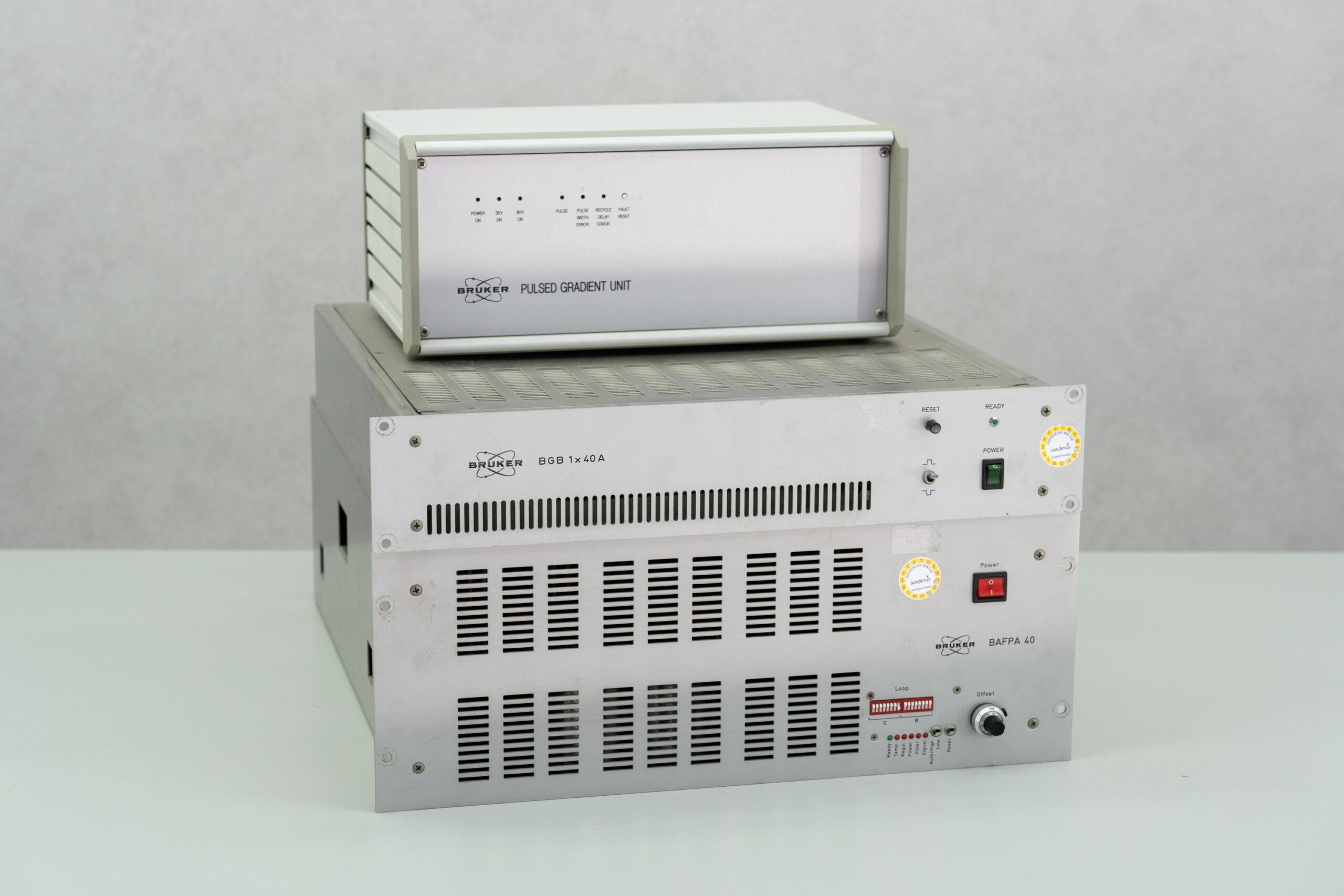
Interface designed for enhanced HPLC integration with NMR and MS systems.
The Bruker LC-NMR-MS Interface, model BNMI-HP, is expertly crafted to harmonize an HPLC system with NMR spectroscopy and MS units. Typically installed atop the mass spectrometer setup, it streamlines integration through a sophisticated design that includes three medium-pressure syringe pumps (>60 Bar), a 1:20 splitter, an 8-port valve, and three mixing chambers (T-Pieces), all augmented by essential control and interface electronics.
This advanced interface enables modification of HPLC separation flow to the MS unit by incorporating additional solvent via syringe pumps, significantly enhancing MS peak detection and optimizing split separation times. The design facilitates storage and later retrieval of separations triggered by MS or UV absorption peak detection.
The device achieves fluid division from the HPLC in a precise 1:20 ratio, funneling approximately 5% to the MS, with the remainder diverted to the NMR probehead for immediate or deferred analysis using the BPSU36 storage cassette.
A critical feature involves the mixing chamber (T-Piece), where fluid for the MS is amalgamated with solvent from the syringe pumps. The left-side pumps operate alternately to ensure a steady 'makeup' flow, while the right-side pump handles calibration fluid delivery for MS adjustment at the start and end of measurement cycles.
Control hinges on the HyStar program accessed via an Ethernet interface. This relays commands to the BNMI Control Board, which adjusts operations like pump starts, flow rate changes, and 8-port valve actuation. While the fixed 1:20 splitter ratio is mechanically set, alternative ratios such as 1:100 are available to accommodate high-concentration samples, thereby making this interface an indispensable asset for precise, efficient analytical processes.
Lab equipment markets are fragmented. Buyers spend weeks calling distributors, comparing quotes, and verifying supplier reliability. Sellers struggle to reach global research labs.
We built Questpair to fix this. Every supplier on the platform is verified before listing. Every quote you receive comes from a real, vetted seller. AI prepares your case in minutes, then a real specialist takes over.
We're an independent team based in The Netherlands, working with research labs and procurement teams across Europe and worldwide.
With a service contract, ten to fifteen years is normal for most benchtop instruments. Detectors and pumps are the parts that wear first.
Yes. Every verified supplier states which service partners cover the instrument, and we list that alongside the offer.
Ask a scientist through the request button. Parts are often available even when the instrument itself is discontinued.
Two to six weeks, depending on refurbishment scope and whether calibration is included.
We ship to 38 countries. Crating and customs handling are quoted with the instrument.
Tell us what you need and a scientist finds it for you, usually within the hour.
Last updated 19 October 2026