

Particle counters
We personally find you the right used, refurbished and new particle counters instruments & equipment from verified suppliers.
Particle counters are instruments that measure the number and size of airborne or liquid-borne particles in a sampled volume, most working by drawing a known flow past a laser beam and sizing each particle from the light it scatters. They are the core measurement tool for cleanroom classification, environmental monitoring and contamination control in pharmaceutical, semiconductor and electronics production. On Questpair, 269 laboratory particle counters are listed from 16 verified suppliers and distributors across 7 countries, covering new, used and refurbished units. Of those listings, 99 percent are used. Prices run from EUR 59 to EUR 63.295.
Updated:
Particle counters product list
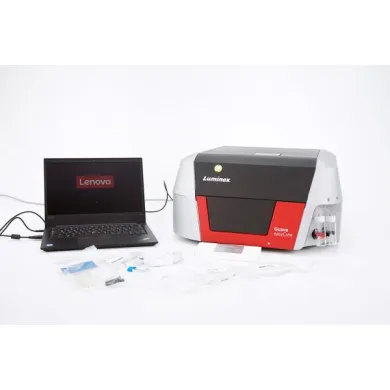
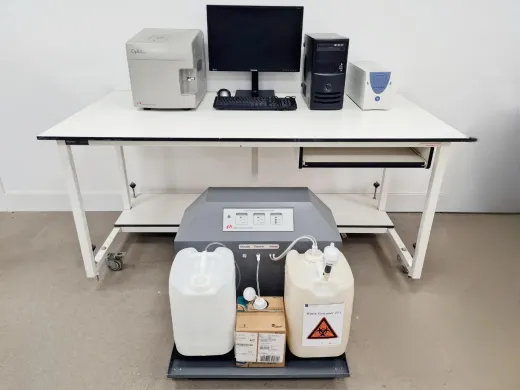
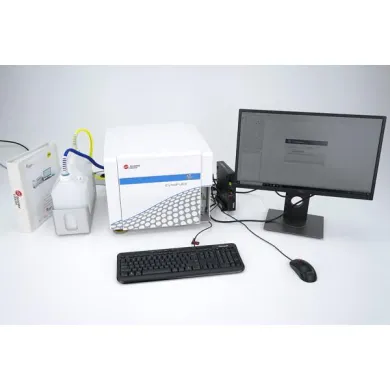
DakoCytomation CyAn ADP Flow Cytometer System
- Category
- Flow cytometers
- Brand
- Dako
- Suppliers
- 1 verified
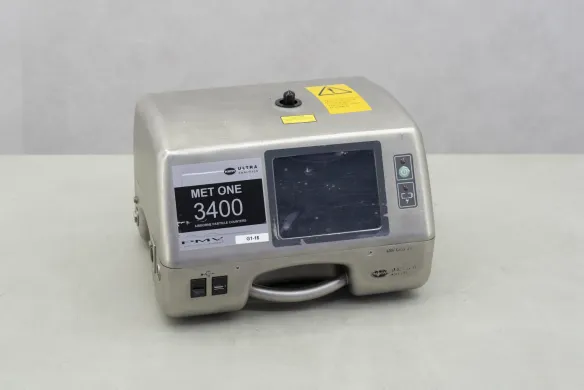


Not the exact instrument you need?
Tell our scientists what you are after. We track it down, including off-market supply.
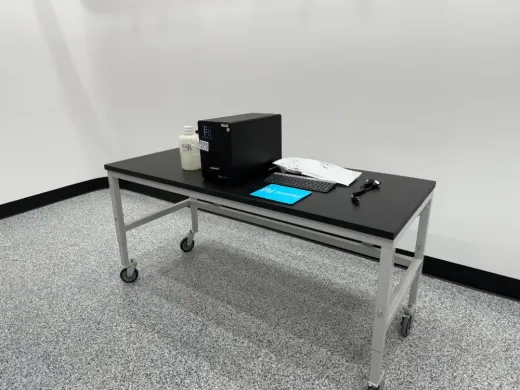
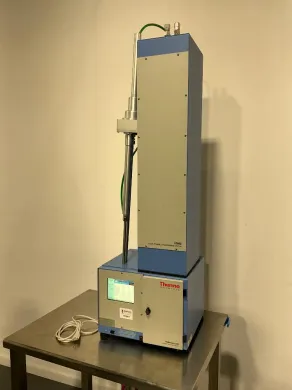
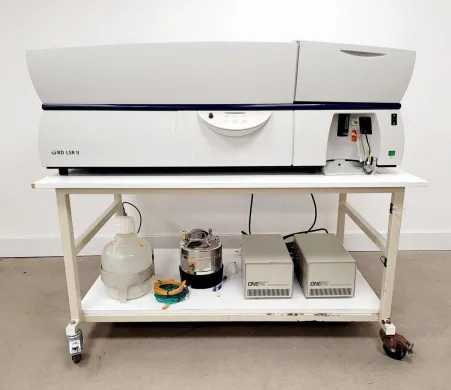
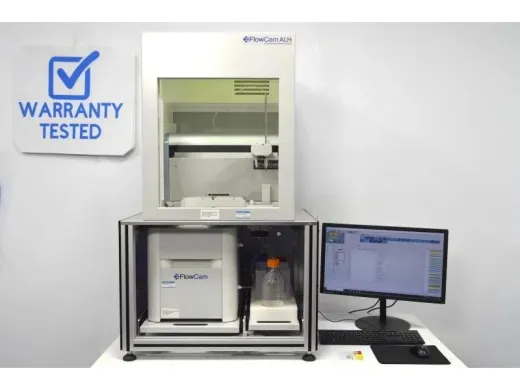
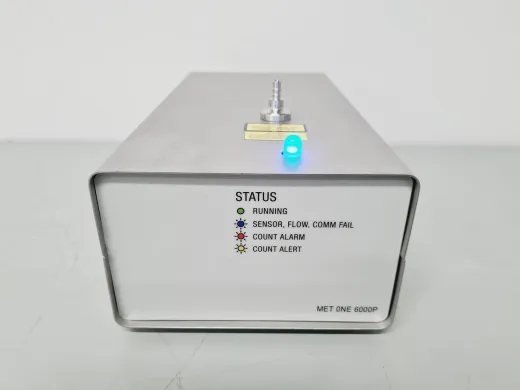
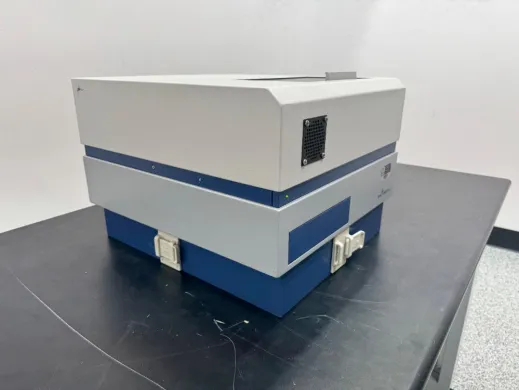
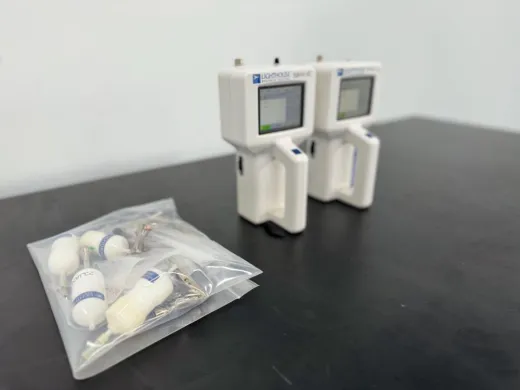
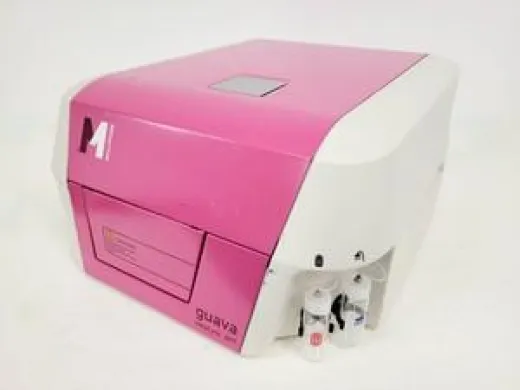
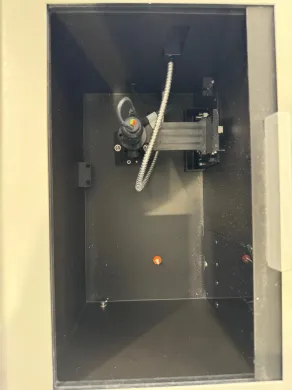
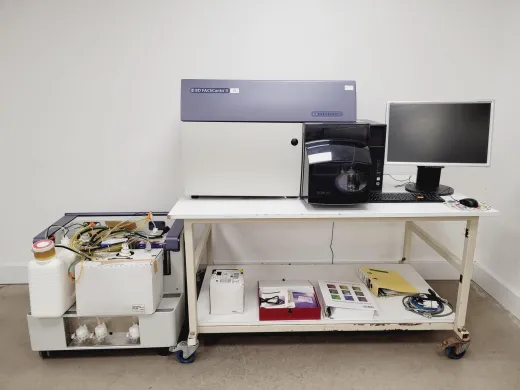
Not the exact instrument you need?
Tell our scientists what you are after. We track it down, including off-market supply.
Showing 1–40 of 81 listings
Show 40 more listingsBuying guide
What the particle size channels decide
The specification that settles most purchases is the smallest particle size the instrument can resolve and the channels it splits the count into. A cleanroom classified to ISO 14644-1 is verified at defined size thresholds, commonly 0.5 micrometre and above for most grades, and down to 0.1 micrometre for the strictest semiconductor environments. An instrument that cannot see the threshold your classification requires cannot certify the room, however well it performs at larger sizes. Alongside the lower size limit sits the sample flow rate, usually expressed in cubic feet per minute or litres per minute, because the flow fixes how long a run takes to sample the volume a standard demands. A 1.0 CFM unit samples a cubic foot in one minute; a lower flow stretches every measurement. Match both the smallest channel and the flow to the standard you report against before weighing anything else.
Condition is the second thing to resolve, and on a used counter it turns almost entirely on calibration. A particle counter is a metrological instrument, and its count is only trusted while its calibration certificate is current, typically on an annual cycle traceable to a recognised standard. Ask what the last calibration date was and whether the pump, the laser and the optics have been serviced, because a drifting laser or a worn pump changes the count without any outward sign. The flow sensor matters as much as the optics here: an instrument reading the wrong volume reports the wrong concentration even when every particle is sized correctly. Verify that a recalibration can be arranged before a used unit goes into certification work.
Price spans a wide band on this market, and the band maps onto capability. The listings run from EUR 59 to EUR 63.295, with an average of EUR 5.316, and that spread separates a basic handheld spot-check tool from a networked cleanroom monitoring system with remote sensors and data logging. A modest budget buys a portable counter for periodic checks; a larger one buys continuous monitoring infrastructure. Beckman Coulter, Climet, Hach Met One, Lighthouse, Hach occupy the brands behind these listings, and comparing like with like means comparing instruments of the same flow rate and smallest channel rather than headline price. Used and refurbished counters listed for sale are more affordable than new, which is the main reason this market exists for a buyer working to a fixed budget. What a given listing costs tells you little on its own until you read it against its size range and flow.
Types of Particle counters
Which particle counter types are listed?
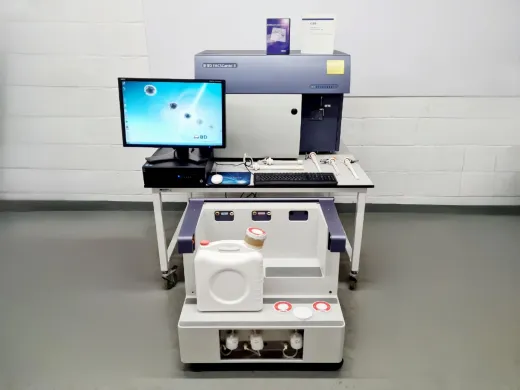
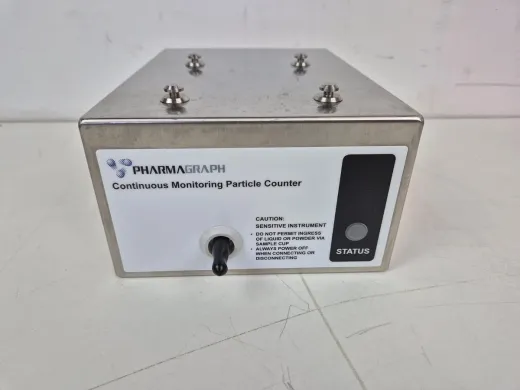
Among the listings that specify a type, the airborne particle counter is the most common, the general instrument for counting and sizing particles suspended in air. The environmental monitoring instrument overlaps with it but is built for continuous, often networked operation, logging particle concentration over time rather than taking a single spot reading. Portable particle counters trade some flow rate and channel depth for a handheld form that a technician carries from room to room, while cleanroom monitoring instruments are fixed installations wired into a facility monitoring system. The laser particle counter names the detection principle most of these share, sizing each particle from scattered laser light. The flow cytometer sits slightly apart: it counts and characterises cells and particles in a liquid stream and belongs to cell biology and immunology work. Flow cytometry is a core technique in immunology, haematology and cell culture research, used for cell counting, immunophenotyping and apoptosis assays. These instruments do flow cytometry in molecular diagnostics and in cell imaging workflows, so a flow cytometer for immunophenotyping is a distinct search from an airborne cleanroom counter even though both appear under this heading.
The brands behind the particle counter listings
Beckman Coulter, Climet, Hach Met One, Lighthouse, Hach are the makers most represented here. Their presence shapes what a buyer can actually do: a widely sold instrument has a deeper used market, so comparing two listings of the same model is realistic, and consumables such as isokinetic probes, sample tubing and filters are easier to source. A instrument from a maker with a thin presence on the second-hand market is harder to price-check and harder to match a calibration service to. Where several listings share a brand and model, a buyer can judge a fair price from the spread rather than a single figure.
What a used particle counter costs here
Of the current listings, 99 percent are used. Prices range from EUR 59 to EUR 63.295, averaging EUR 5.316, and that spread covers everything from a handheld spot-checker to a networked monitoring installation. Used and refurbished units are listed below new prices; a warranty is possible and is arranged in consultation for the individual listing.
Frequently asked questions
What is a particle counter?
A particle counter is an instrument that measures the number and size of particles in a sampled volume of air or liquid. Most draw a known flow of the sample past a laser beam and size each particle from the light it scatters.
What does a particle counter actually measure?
It measures particle concentration, the count of particles per sampled volume, split into size bins called channels. Each particle is sized from the amount of light it scatters as it crosses the beam.
How do particle counters work?
A pump draws a fixed flow of air or liquid through a measurement cell where a laser beam illuminates the stream. Each particle scatters light, and the instrument counts the pulses and sorts them by size based on scatter intensity.
What types of particle counters are there?
Listed types include airborne particle counters for general air sampling, environmental monitoring instruments for continuous networked logging, portable handheld counters, and fixed cleanroom monitoring instruments wired into a facility system. The laser particle counter names the detection principle most of these share, while a flow cytometer counts and characterises particles and cells in a liquid stream for cell biology work.
What are particle counters used for?
They are the core tool for cleanroom classification, environmental monitoring and contamination control in pharmaceutical, semiconductor and electronics production. A cleanroom classified to ISO 14644-1 is verified by counting particles at defined size thresholds.
How do I choose a particle counter?
Start with the smallest particle size the instrument can resolve and the channels it splits counts into, then match the sample flow rate to the standard you report against. An instrument that cannot see the threshold your classification requires cannot certify the room, regardless of its performance at larger sizes.
What is the difference between refurbished and used?
A used unit is sold in its existing condition, while a refurbished unit has been checked and brought back toward working specification before listing. On a particle counter, both hinge on calibration, so ask for the last calibration date either way.
How much does a particle counter cost?
On Questpair, prices range from EUR 59 to EUR 63.295, averaging EUR 5.316. That spread separates a basic handheld spot-check tool from a networked cleanroom monitoring system with remote sensors and data logging.
Which brands make particle counters?
The makers most represented in these listings are Beckman Coulter, Climet, Hach Met One, Lighthouse and Hach. A widely sold instrument has a deeper second-hand market, which makes price-checking a given model and sourcing consumables more realistic.
Is there a warranty on a refurbished particle counter?
A warranty is often possible and is arranged in consultation for the specific listing. Terms are not set centrally, so check the individual listing.
Can I get parts for a particle counter?
Parts such as isokinetic probes, sample tubing and filters can be sourced via Questpair. Instruments from makers with a broad presence on the second-hand market tend to have easier parts sourcing.
How long does a particle counter last?
Lifespan depends mainly on the pump, laser and optics, each of which can wear or drift over years of use. The count stays trustworthy only while the calibration certificate is current, so service history matters more than age alone.
New versus refurbished particle counter, which should I buy?
Used and refurbished counters are listed at lower prices than new, which is the main reason to consider them on a fixed budget. Weigh the two by reading the individual listing, and note that warranty is arranged in consultation for either.
Where can I buy a particle counter?
Questpair lists particle counters from 16 verified suppliers and distributors across 7 countries, covering new, used and refurbished units. The listings total 269 instruments.
What is the lead time and shipping on a particle counter?
Lead time and shipping depend on the individual listing and the supplier's location across the 7 countries represented. Questpair specialists respond to enquiries within one hour.
How is a particle counter calibrated and maintained?
A particle counter is a metrological instrument, and its count is trusted only while calibration is current, typically on an annual cycle traceable to a recognised standard. The flow sensor matters as much as the optics, since an instrument reading the wrong volume reports the wrong concentration even when every particle is sized correctly.
Which particle counter types are listed most, and who uses each?
Among listings that specify a type, the airborne particle counter is the most common, used as the general tool for sampling air. Technicians carry portable counters room to room for spot checks, contamination-control teams run fixed cleanroom monitoring instruments for continuous logging, and immunology or haematology labs reach for a flow cytometer to count and immunophenotype cells in a liquid stream.
Which brands dominate this category and what does that mean for me as a buyer?
Beckman Coulter, Climet, Hach Met One, Lighthouse and Hach are the makers most represented here. Where several listings share a brand and model, you can judge a fair price from the spread rather than a single figure, and matching a calibration service or consumables is more straightforward than for a maker with a thin presence.
What separates the cheapest particle counters from the most expensive here?
The band maps onto capability: a modest budget buys a portable counter for periodic checks, while a larger one buys continuous monitoring infrastructure with remote sensors and data logging. The two specifications that drive the gap are the smallest particle size the instrument can resolve and the sample flow rate, so compare instruments of the same channel depth and flow rather than headline price.