
Food & Environmental Testing
We personally find you the right new, used and refurbished food & environmental testing instruments & equipment from verified suppliers.
Testing food and water means proving a sample meets a limit, and the limit sets the instrument. A pesticide residue measured in parts per billion needs chromatography with a mass detector; a turbidity reading for drinking water needs a bench meter and little else. Most of the work is the preparation that gets a messy matrix into a form an analyser can read, which is why a lab here runs a chain of equipment rather than a single machine. The Questpair catalogue carries 37310 listings across the categories this work draws on, from sample prep up to the instruments that produce the final number on a certificate.
Updated:
Food & Environmental Testing product list


Not the exact instrument you need?
Tell our scientists what you are after. We track it down, including off-market supply.
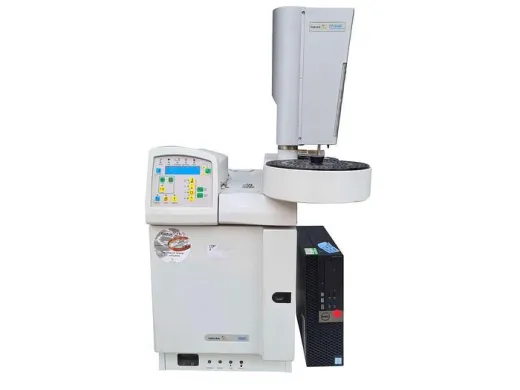
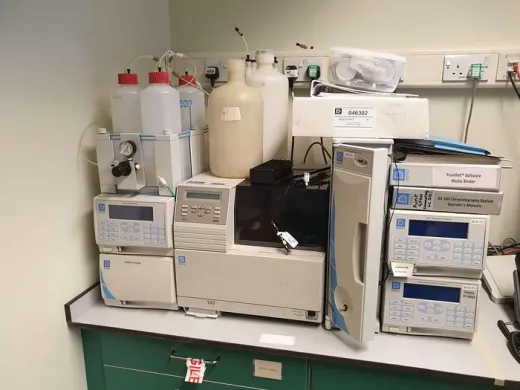
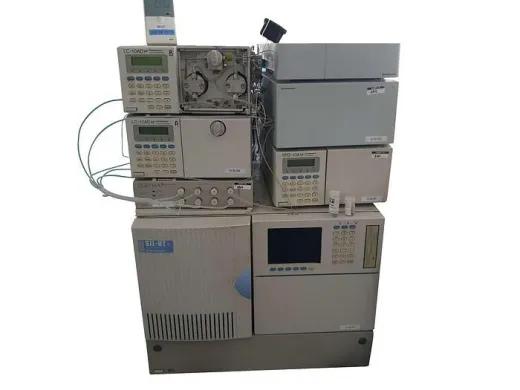
Shimadzu SIL-HT HPLC System with Accessories
- Category
- Hplc systems
- Brand
- Shimadzu
- Suppliers
- 1 verified
Not the exact instrument you need?
Tell our scientists what you are after. We track it down, including off-market supply.
Showing 1–40 of 17,028 listings
Show 40 more listingsBuying guide
Because this work spans sample prep, chromatography, spectroscopy and a full range of water and air instruments, the span of prices is wider than on any single category page. Prices run from EUR 1 to EUR 756.418. The low end is consumables and simple bench meters, a turbidity meter or a basic flowmeter, the kind of thing a sampling programme gets through in quantity. The high end is where the final number comes from: a chromatograph with a mass detector, complete with its data system, is the instrument that carries a certificate and the one that costs most to buy and to keep running.
Condition is where most of the value sits. Used and refurbished instruments are listed well below new, and 86 percent of the listings are used. For established analytical platforms that is often the sensible route, since a chromatograph or a spectrophotometer that has been serviced performs to the same specification it did new, and the method it runs has not changed. Where a buyer is weighing a used unit against a new one, the clearest difference is price, and warranty is arranged in consultation for the specific listing rather than set across the board, so the individual listing is where that question gets answered. Parts for older platforms can be sourced via Questpair. The catalogue draws on 374 verified suppliers and distributors, which matters more here than on a narrower page, because a lab fitting out a full testing chain is buying across several of these categories at once rather than a single instrument.
Types of Food & Environmental Testing
Food and environmental testing covers two kinds of sample, the thing people eat and the water or air around them, and both pass through chromatography, spectrophotometry, moisture and particle measurement, and a long run of sample preparation before any of it. The regulated limit decides which of those a given test needs. The work runs as a sequence, and these are its stages.
How does a sample become something an instrument can read?
A food matrix is rarely ready to measure. A grain, a fish fillet or a jar of honey has to be homogenised, extracted into a solvent, cleaned of the fats and pigments that would foul a column, and often concentrated before the target compound is present at a level the detector sees. This is where the bulk of the category sits: sample preparation equipment, and the food processing line that reduces raw material to a workable state, the dicers, shredders, slicers, washers and strainers that turn a sample into something uniform.
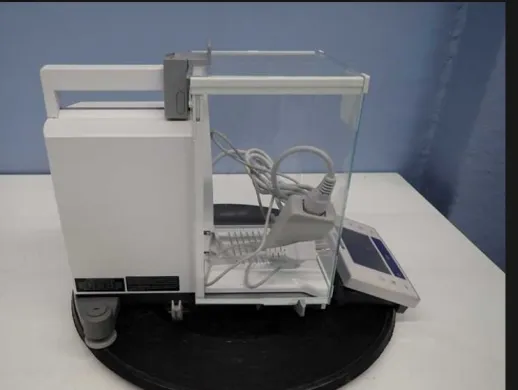
Moisture analysers belong here too, and they double as a measurement in their own right. Water content is itself a specification for many foods, so the same instrument that dries a sample for gravimetric work also reports a figure that goes on a label. Get this stage wrong and everything downstream inherits the error, because an extraction that loses half the analyte cannot be recovered by a better detector.
Which instruments produce the final number?
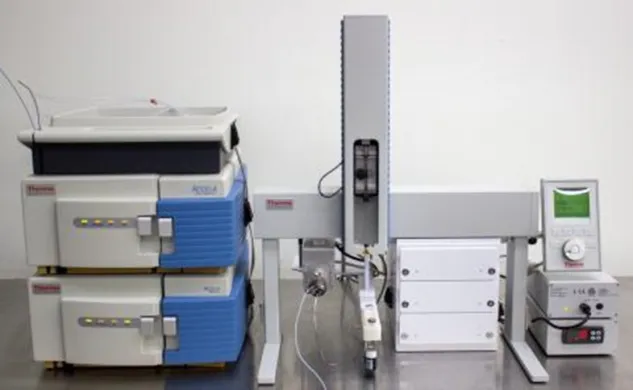
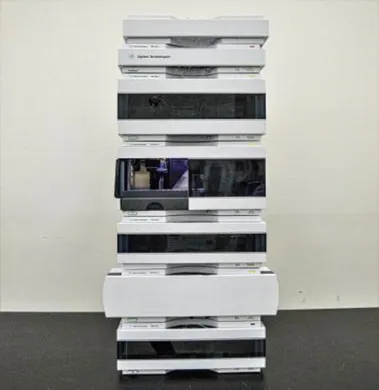
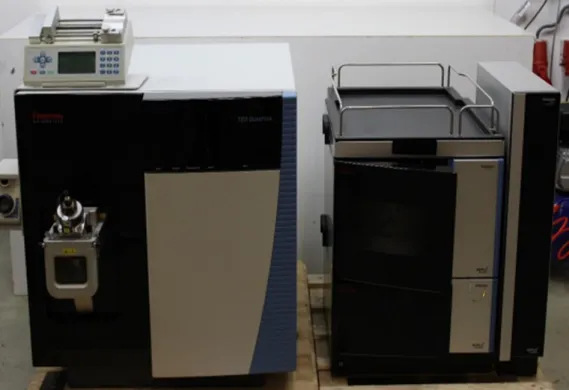
For organic contaminants, pesticide residues, veterinary drugs, additives, the answer is chromatography. A liquid or gas chromatograph separates the mixture into its components and a detector quantifies each one, and for trace work that detector is usually a mass spectrometer. The chromatography data systems and data processing systems in the category are the software side of the same work: they integrate the peaks, apply the calibration and generate the record an auditor later reads.
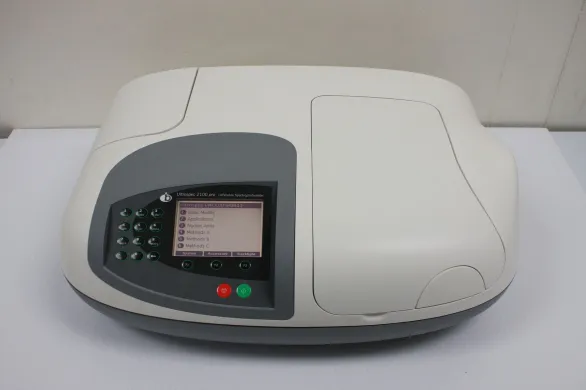
Spectrophotometers in the UV, visible and fluorescence range cover the colorimetric and enzymatic assays, the classic measurements for things like nitrate, phosphate or a protein content. Where the target is an element rather than a molecule, the analysers and gas analysers take over. TOC analysers sit slightly apart, reporting total organic carbon as a single number that stands in for overall water quality rather than naming any one compound.
What does water and air testing need that food does not?
Environmental samples are often cleaner but held to tighter limits, and the equipment reflects that. Turbidity meters, flow injection analysers and the suite of water purification, filtration and reverse osmosis equipment serve a double role: some of it measures the sample, some of it produces the ultrapure water the rest of the lab depends on. An analytical result is only as good as the blank, and the blank is only as good as the water it was made with.
Air work draws on its own set, the air sampling equipment, air velocity and flow instruments, particle counters, barometers and humidity generators. Here the sample does not arrive in a bottle; it is captured onto a filter or into a trap over a measured volume, which is why flowmeters and the flow devices matter as much as the analyser that reads what was caught. Wastewater treatment and the broader water treatment equipment close the loop, dealing with what the process itself discharges.
Frequently asked questions
What equipment do you need at minimum to start food and environmental testing?
The minimum depends entirely on the limit you are testing against, because the specification sets the instrument. A drinking water turbidity reading needs only a bench turbidity meter, while a trace pesticide result needs the full chain: sample prep, a chromatograph, a detector and the data system that produces the record. Start from the test you are legally required to run and buy the instrument that method names.
Which step is the most expensive to set up?
The instrument that produces the final number is the costly part, specifically a chromatograph fitted with a mass detector and its data system. Sample preparation and simple bench meters sit at the low end of the range, while the chromatography platform carries both the highest purchase price and the highest running cost. Prices across the categories this work draws on range from EUR 1 to EUR 756.418.
What can be bought used and what is better new?
Established analytical platforms like chromatographs and spectrophotometers are a reasonable used purchase, since a serviced unit performs to the same specification and the method it runs has not changed. Used and refurbished units are listed below new, and 86 percent of the listings are used. Detectors with consumable or ageing components, such as mass spectrometer sources, are worth checking more closely on a used unit because their condition affects sensitivity directly.
What has to match between the steps in a testing chain?
The extraction solvent and cleanup have to suit the column and detector that follow, so a sample prepared for liquid chromatography is not interchangeable with one prepared for gas chromatography. The data system has to support the chromatograph and detector it integrates, and the ultrapure water feeding your blanks has to meet the sensitivity of the final measurement. A mismatch at any link caps the result at the weakest point in the sequence.
Roughly what does a complete setup cost?
A full testing chain spans sample prep, chromatography or spectroscopy, and the water and air instruments around them, so the total depends on which tests the chain covers. Individual listings range from EUR 1 to EUR 756.418, with consumables and bench meters at the low end and a chromatograph with mass detector plus data system at the high end. A lab fitting out a complete chain buys across several categories at once rather than a single instrument.
Where does cutting the budget cost you later?
Cutting on sample preparation is the trap, because an extraction that loses half the analyte cannot be recovered by a better detector downstream. The same applies to water purification: an analytical result is only as good as the blank, and the blank is only as good as the water it was made with. Saving on the front of the chain undermines the expensive instrument at the end of it.
Which equipment is shared with other lab work?
Water purification, filtration and reverse osmosis equipment serve both as a measurement tool and as the source of ultrapure water that every other instrument depends on, so they are rarely dedicated to one test. Moisture analysers also double up, since the same instrument that dries a sample for gravimetric work reports a water content figure that goes on a label. Chromatography data systems and spectrophotometers carry across any assay that uses them.
What should I check on used equipment for this work?
Confirm the instrument holds calibration and that its detector still delivers the sensitivity the method needs, since trace work depends on it. Check that the data system version supports the chromatograph and that consumable parts for the platform remain available; parts for older platforms can be sourced via Questpair. Warranty is arranged in consultation for the specific listing, so the condition detail and that question are both settled on the individual listing.
About Questpair
Questpair is the European marketplace for lab equipment, where AI-prepared cases and personal specialists guide every purchase. We work with 247 verified suppliers across 38 countries to find buyers the right new, used or refurbished instruments, with response within 1 hour and significant savings vs buying new.
Personal · Fast · Reliable · Affordable