
Clinical & Diagnostic Labs
We personally find you the right new, used and refurbished clinical & diagnostic labs instruments & equipment from verified suppliers.
Clinical and diagnostic work runs on turnaround and traceability: a sample arrives, and a result has to come back correct, documented and fast enough to act on. That constraint binds every choice downstream, because a batch analyser that clears a morning's samples in one run changes how the whole bench is staffed. Questpair lists 4092 items for this work from 182 verified suppliers and distributors, spanning the instruments a routine lab leans on daily and the specialised counters a reference lab adds for the rare assay. The spread between those two is wide, and most of the figure below sits well under the ceiling.
Updated:
Clinical & Diagnostic Labs product list


Not the exact instrument you need?
Tell our scientists what you are after. We track it down, including off-market supply.



Not the exact instrument you need?
Tell our scientists what you are after. We track it down, including off-market supply.
Showing 1–40 of 1,460 listings
Show 40 more listingsBuying guide
Across the categories this work covers, prices run from EUR 1 to EUR 120.137. That ceiling belongs to the high-throughput analysers, a fully automated immunoassay or haematology system built for a hospital's daily volume, where the instrument is only part of what a buyer eventually commits to. The floor is a different kind of item entirely: consumables, accessories and the plate washers and readers that sit at the manual end of the bench. A lab fitting out a plate-based assay station spends toward the bottom of that range; one replacing a central analyser spends near the top.
Condition tracks that split. 98 percent of the listings are used. For an analyser that has run in a working lab, that history can be read in its service record, and a used instrument is priced below an equivalent new one. Where the two are genuinely interchangeable for the assay in question, the difference comes down to price and to what the specific listing offers, so the individual listing is where that call gets made rather than any general rule.
Equipment for this work is offered by verified suppliers and distributors, and the catalogue reflects what a clinical bench actually assembles rather than one manufacturer's line. Where a listing raises a question about warranty, that is arranged in consultation for the specific item.
Types of Clinical & Diagnostic Labs
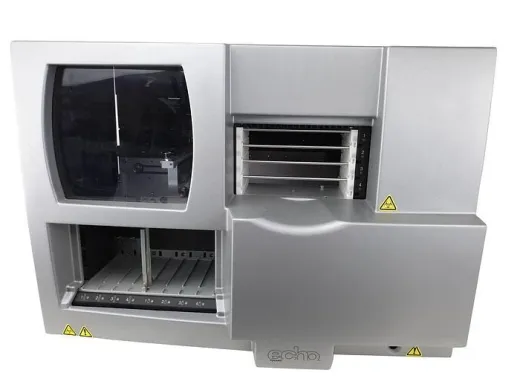
Clinical and diagnostic labs draw on a narrow, well-defined set of instruments: haematology analysers, immunoassay systems, coagulation and blood analysers, cell counters, microplate readers and washers, and the radioactivity counters a reference lab keeps for specialist assays. Diagnostic testing is less a single workflow than a set of parallel benches, each built around one class of analyser, so the stages below are the lines a sample can take rather than one sequence it follows start to finish.
How does a sample move from receipt to result?
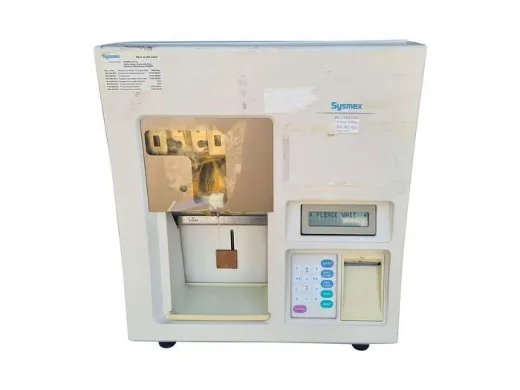
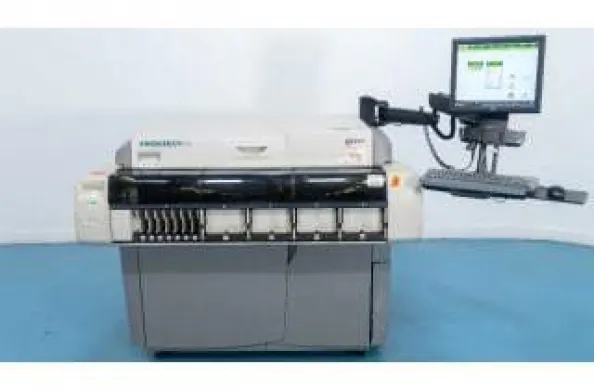
A specimen reaches the lab, gets logged, and is routed to the bench that runs its assay. On the haematology line the sample goes to an analyser that counts and sizes blood cells; a complete blood count is the highest-volume test most clinical labs run, which is why these instruments are built for continuous batch work rather than single tubes. Coagulation testing sits nearby and often shares staff, with its own analysers measuring clotting times on plasma.
Where these steps constrain each other is throughput against footprint. An analyser that clears two hundred samples an hour frees the bench but demands the sample prep to keep pace, so a lab that upgrades one analyser often finds the limit has simply moved to the centrifuge feeding it. That dependency is what a single category page cannot show: it knows the analyser, not the bench it has to fit.
Which instruments handle immunoassay and plate-based testing?
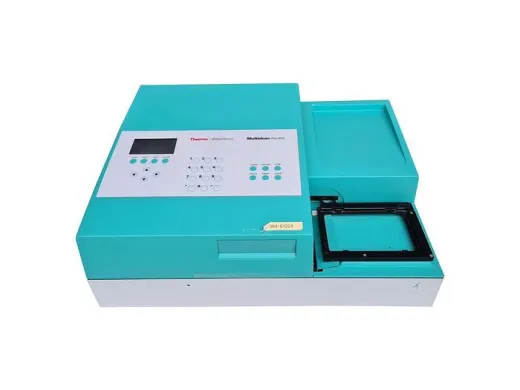
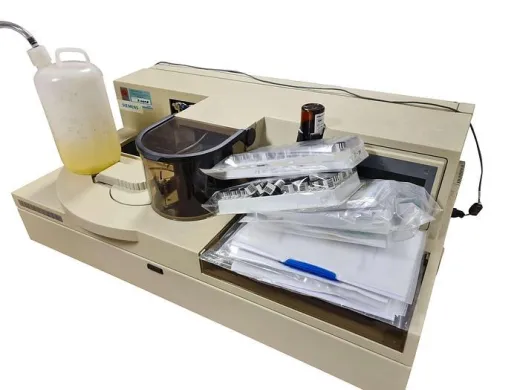
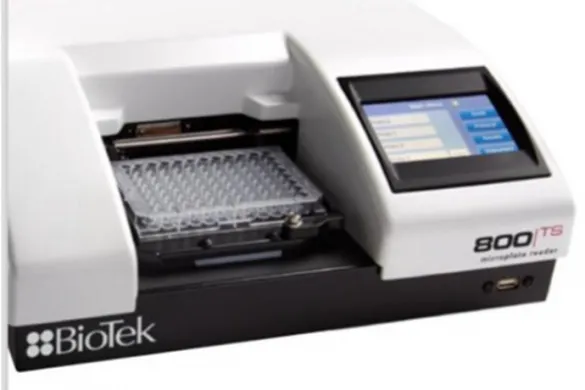
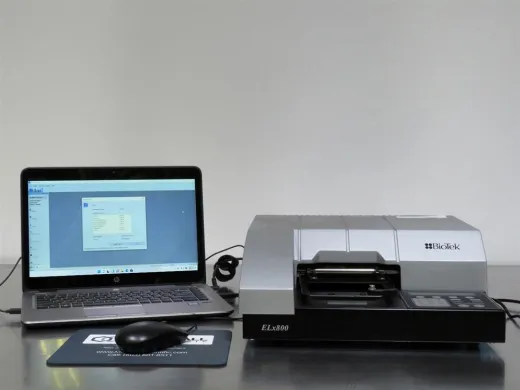
A large share of diagnostic chemistry runs on immunoassay, detecting a specific protein or hormone by its binding to a labelled antibody. Dedicated immunoassay systems automate the whole cycle; the more manual route uses a microplate reader to measure the signal across a 96-well plate and a microplate washer to clear unbound reagent between steps. The reader and the washer are a pair in practice, because a wash step that leaves residue skews every well the reader then measures.
Cell counters belong to this group too, used where a test needs a count rather than a full haematology profile. For a lab building a plate-based assay from parts, the question is less which reader than whether the reader, washer and the assay's detection chemistry agree: a luminescence assay needs a reader that measures luminescence, and a reader bought for absorbance will not do it.
What about the specialist radioactivity bench?
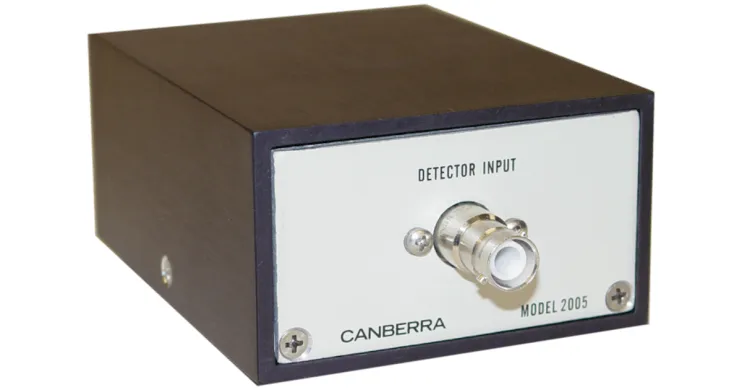
A reference lab running radioimmunoassay or similar keeps a separate corner for radioactivity work: gamma counters, scintillation counters and the shielding they sit behind. This is a smaller line, carried for assays that have no non-radioactive equivalent, and it is largely independent of the main chemistry benches. A lab that does not run these assays skips the whole category; one that does cannot substitute anything else for it.
These counters are listed here because the marketplace carries them, but among the listings that specify a type they are a minority behind the analysers above. Naming the step does not imply a routine lab needs it.
Frequently asked questions
What equipment do you need at minimum to start a clinical lab?
A routine lab is built around the analyser for its highest-volume test, which for most benches means a haematology analyser for the complete blood count, plus a centrifuge to prepare samples. A plate-based bench instead needs a microplate reader and a washer as a pair. Everything beyond that is added per assay the lab actually runs.
Which step is the most expensive to set up?
The central analyser is where the money goes: a fully automated immunoassay or hematology system built for hospital daily volume sits near the top of the range, from EUR 1 to EUR 120.137. The plate readers and washers at the manual end sit toward the floor.
What can I buy used and what is better bought new?
Used and refurbished analysers are listed below the price of an equivalent new unit, and for an instrument that has run in a working lab the service record is readable, which makes the high-value analysers a reasonable used purchase. The price difference is the claim that holds across the two; warranty is arranged in consultation for the specific listing, so the individual listing is where that call gets made.
What has to match between the instruments on a plate-based bench?
The reader, the washer and the assay's detection chemistry all have to agree. A luminescence assay needs a reader that measures luminescence, and an absorbance reader will not do it; a washer that leaves residue skews every well the reader then measures.
Roughly what does a complete setup cost?
Across the categories this work covers, prices run from EUR 1 to EUR 120.137, with 4092 items listed from 182 verified suppliers and distributors. A plate-based assay station is assembled toward the bottom of that range; replacing a central analyser spends near the top.
Where does cutting the budget on setup cost you later?
The common trap is upgrading the analyser without matching the sample prep that feeds it, so a two-hundred-sample-an-hour instrument just moves the bottleneck to the centrifuge. Spending on throughput you cannot feed buys capacity the rest of the bench cannot use.
Which instruments get shared across different diagnostic work?
Haematology and coagulation benches often share staff and sit near each other, and the centrifuge that preps samples feeds more than one line. Cell counters cross over too, used where a test needs a count rather than a full haematology profile.
What should I check on a used analyser before buying it for this work?
Look at the service record, since a used instrument's history in a working lab can be read from it, and confirm the throughput matches the volume the bench actually runs. For plate instruments, verify the reader's detection mode fits your assays before anything else; if a listing raises a documentation question, Questpair specialists respond within an hour.
About Questpair
Questpair is the European marketplace for lab equipment, where AI-prepared cases and personal specialists guide every purchase. We work with 247 verified suppliers across 38 countries to find buyers the right new, used or refurbished instruments, with response within 1 hour and significant savings vs buying new.
Personal · Fast · Reliable · Affordable