53k+ listingsShips to NLResponse within one hour+31 73 711 4717info@questpair.com
Procurable · sourced on request

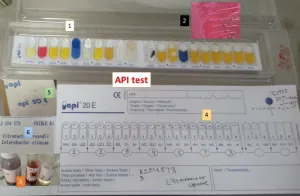
bioMérieux API 20E

UsedbioMérieuxPrimary and cultured cellsNetherlands
Procurable

Not in stock, available to order through our sourcing team

Not in stock, but we can get it for you

We source this model through our supplier network. Request a quote and we'll come back within one hour.

  1. Request a quote
  2. We confirm price and lead time
  3. You approve, we ship to you
Volume
0.03 m³
Width
250 mm
Length
400 mm
Height
300 mm
Number of Microtubes
20
Availability
Procurable
Lead time
Confirmed with your quote
All 16 specifications
  • Ships to NL
  • Response within 1 hour
  • Warranty available. Buy without worry
  • Support from a scientist

Specifications 16

Brands
bioMérieux
New/Used
Used
Weight
1.8 kg
Volume
0.03 m³
Width
250 mm
Length
400 mm
Height
300 mm
Number of Microtubes
20
Rehydration Medium
5 ml 0.85% NaCl
Additional Reagents
TDA, James, VP1 + VP2, NIT1 + NIT2, Zinc
Incubation Time
18 to 24 hours
Identification Time
18 to 24 hours
Incubation Temperature
37°C
Identification Database
Over 690 species
Availability
Procurable
Lead time
Confirmed with your quote

Product description

Standardized system with 20 microtubes for rapid ID of Enterobacteriaceae and gram-negative rods in 18-24 hours.

API 20E is a standardised identification system designed for the rapid and accurate identification of Enterobacteriaceae and other non-fastidious, Gram-negative rods. This system is widely utilised in clinical microbiology laboratories to diagnose infections and guide treatment decisions.

Key features include:

  • Comprehensive Biochemical Testing: The system comprises 20 microtubes containing dehydrated substrates that assess various metabolic activities, such as carbohydrate fermentation and enzyme production.
  • Rapid Results: After inoculation and incubation, results are typically available within 18 to 24 hours, facilitating timely clinical decisions.
  • User-Friendly Design: The compact strip format simplifies the testing process, making it accessible for laboratories of varying sizes.
  • Extensive Database: The system's database has expanded over time, enhancing its accuracy and reliability in identifying a broad range of bacterial species.

API 20E is predominantly applied in:

  • Clinical Microbiology: Identifying pathogens responsible for infections such as urinary tract infections, respiratory infections, and gastrointestinal diseases.
  • Food Microbiology: Detecting potential contaminants in food products to ensure safety and compliance with health regulations.
  • Veterinary Diagnostics: Diagnosing bacterial infections in animals, aiding in effective treatment and management.
  • Epidemiological Surveillance: Monitoring the spread of bacterial strains to inform public health interventions.

Commonly used in:

  • Clinical Laboratories: Hospitals and diagnostic centres rely on this system for routine bacterial identification.
  • Food Safety Laboratories: Ensuring the microbiological quality of food products.
  • Veterinary Clinics: Identifying bacterial pathogens in animal health diagnostics.
  • Research Institutions: Studying bacterial taxonomy and epidemiology.

Introduced in the early 1970s, API 20E has remained a relevant and reliable tool in microbiological diagnostics, with its database and applications continually updated to meet evolving laboratory needs.

Why Questpair exists

Lab equipment markets are fragmented. Buyers spend weeks calling distributors, comparing quotes, and verifying supplier reliability. Sellers struggle to reach global research labs.

We built Questpair to fix this. Every supplier on the platform is verified before listing. Every quote you receive comes from a real, vetted seller. AI prepares your case in minutes, then a real specialist takes over.

We're an independent team based in The Netherlands, working with research labs and procurement teams across Europe and worldwide.

Frequently asked questions

How long does laboratory equipment typically last?

With a service contract, ten to fifteen years is normal for most benchtop instruments. Detectors and pumps are the parts that wear first.

Can I get service for older equipment?

Often, yes. Verified suppliers frequently work with service partners converting the instrument. If applicable, we can list servicing options alongside the offer.

Where can I buy parts?

Ask a scientist through the request button. Parts are often available even when the instrument itself is discontinued.

What is the typical lead time for refurbished equipment?

Two to six weeks, depending on refurbishment scope and whether calibration is included.

Does laboratory equipment ship internationally?

We ship to 38 countries. Crating and customs handling are quoted with the instrument.

Reply in one hour

Can't find the exact configuration?

Tell us what you need and a scientist finds it for you, usually within the hour.

Last updated 2 November 2026