

Ion chromatography
We personally find you the right used, refurbished and new ion chromatography instruments & equipment from verified suppliers.
Ion chromatography is a liquid chromatography technique that separates ions and polar molecules based on their affinity for a charged stationary phase, with detection most often by suppressed conductivity. A complete setup pairs a pump, a separation column and a detector, and the Questpair catalogue holds 114 such listings from 12 verified suppliers and distributors across 6 countries. Of those, 98 percent of the listings are used. New, used and refurbished laboratory units appear here, with prices from EUR 86 to EUR 137.475. The method quantifies anions such as chloride, nitrate and sulphate, cations, and organic acids at trace levels, which is why it remains a fixture in water, environmental and pharmaceutical laboratories.
Updated:
Ion chromatography product list


Not the exact instrument you need?
Tell our scientists what you are after. We track it down, including off-market supply.
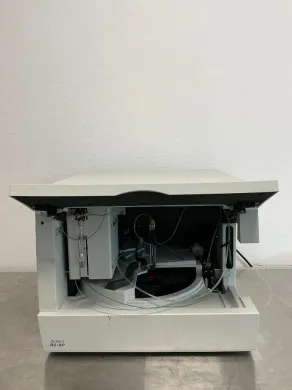

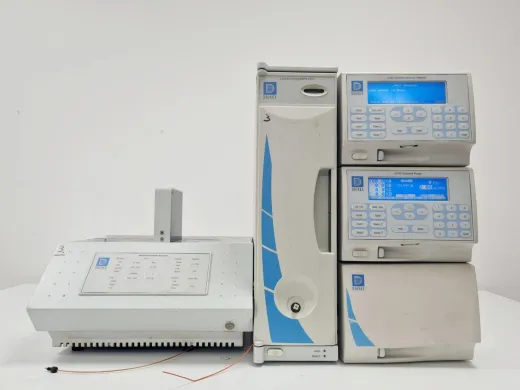
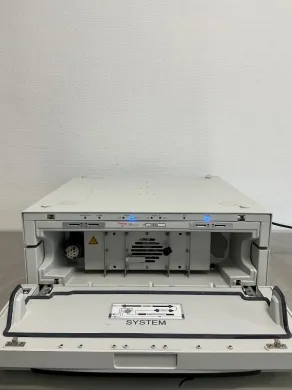
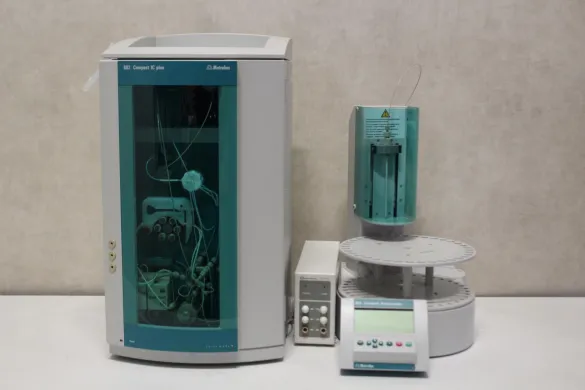
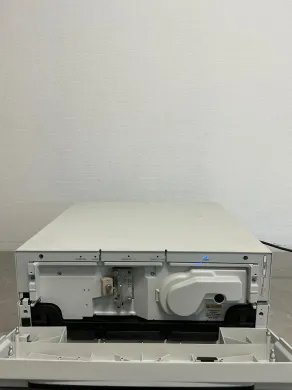
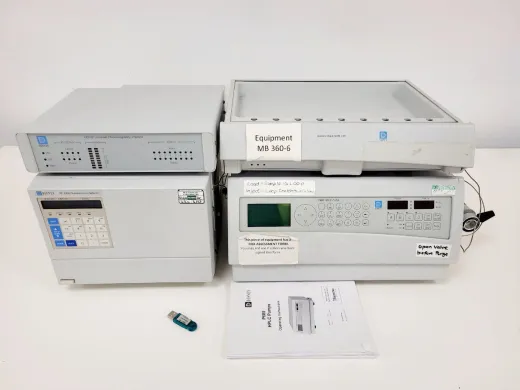

Not the exact instrument you need?
Tell our scientists what you are after. We track it down, including off-market supply.
Showing 1–40 of 76 listings
Show 36 more listingsBuying guide
What decides an ion chromatography purchase before anything else is the analyte and its concentration range, because that sets the column chemistry and the detector you need. Anion work on chloride, nitrate, fluoride and sulphate runs on an anion-exchange column with a hydroxide or carbonate eluent; cation work needs a cation-exchange column and a different eluent entirely. Trace analysis at parts-per-billion levels calls for suppressed conductivity detection, where a suppressor strips the eluent background before the detector sees the sample. Higher concentrations tolerate non-suppressed conductivity or UV detection. A system matched to one application class is rarely a drop-in replacement for another, so read the configuration of a listing against the ions you actually measure, not against the brand name.
On a used instrument, the parts that wear are the ones to verify. The suppressor is a consumable with a finite lifetime and is expensive to replace, so its age and type matter more than the age of the chassis. Pump seals and check valves degrade with eluent exposure, and a column that has seen years of carbonate buffer may have lost plate count. Ask what columns ship with the unit and whether the suppressor is electrolytic or chemical, since that changes both running cost and compatibility. Software and firmware version decide whether the detector still talks to a current workstation, a real obstacle on older analytical instrumentation. A unit that powers up and produces a stable baseline tells you more than a datasheet.
Price covers a wide span here, and the spread reflects what a listing actually includes. Prices run from EUR 86 to EUR 137.475. At the low end sit single modules, detectors and autosamplers; complete, recently serviced systems with columns and software sit near the top. The average across the catalogue is EUR 6.128. What a full system costs depends heavily on whether it arrives application-ready or as a chassis needing a column and a suppressor, and a budget that looks adequate for the instrument can be short once consumables are added. Refurbished and used units listed for sale are more affordable than new, which is where almost all of this catalogue sits. The brands that dominate, Thermo Scientific, Dionex, Thermo Fisher Scientific, Metrohm, Fisher Scientific, hold the bulk of listings, so finding a comparable second unit or a spare module is more realistic for those than for a rare maker.
Types of Ion chromatography
Which ion chromatography types are listed?
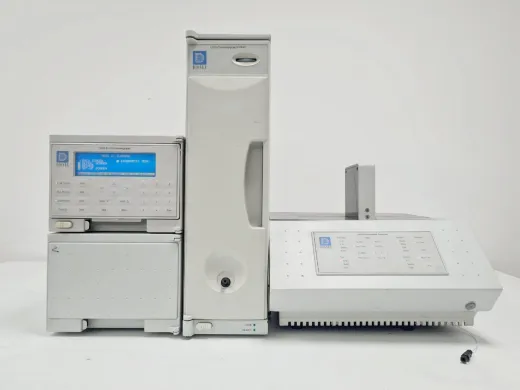
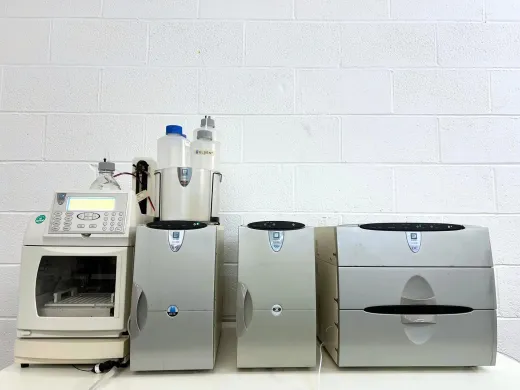
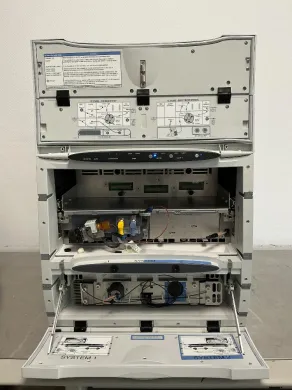
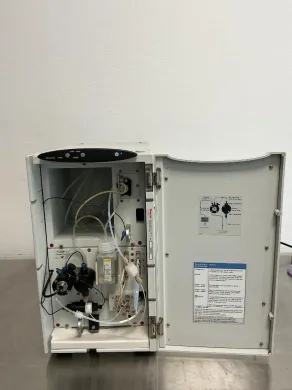
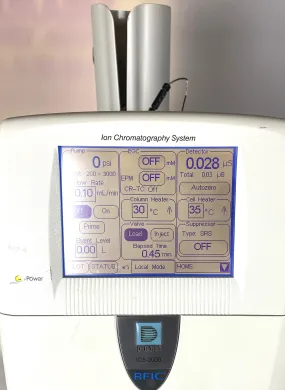
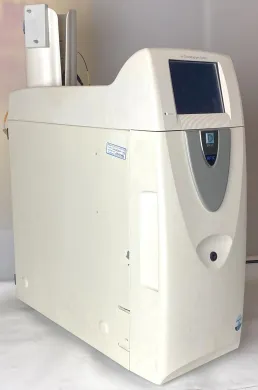
Among the listings that specify a type, the catalogue divides into complete systems and the modules that make them up. An ion chromatography system is the full stack, pump, eluent delivery, injection, column oven and detector, sold ready to run. An ion chromatograph often means the same thing but is listed by labs that bought the analyser as one unit. The conductivity detector appears on its own, both as a spare and as the core of a trace-ion setup, and it is the detector that defines the technique for most anion and cation work. Autosamplers turn a manual bench method into an unattended overnight sequence and are listed separately because they are swapped and shared between instruments. Analytical chromatography instruments cover the broader analysers that sit alongside IC in the same lab, and electrolytic sample preparation systems handle eluent generation and in-line matrix removal, the front end that keeps a suppressed system reproducible.
Ion chromatography does the quantitative ion analysis behind much of environmental monitoring and water testing, and it reaches into life sciences wherever charged species need separating. In molecular biology and biomanufacturing it supports bioprocessing by tracking buffer ions and counterions, and it serves protein purification and glycan work through anion-exchange separation of charged biomolecules. Laboratories running carbohydrate and oligosaccharide analysis use high-performance anion-exchange chromatography for exactly this reason. These analysers are also used for amino acid profiling and for the ion and organic-acid assays that sit under microbiology and metabolite studies.
The brands behind the ion chromatography listings
The names that recur are Thermo Scientific, Dionex, Thermo Fisher Scientific, Metrohm, Fisher Scientific. Their weight on the catalogue is practical rather than reputational: a dominant brand means more comparable units on offer, a realistic chance of finding a matching column or suppressor, and a second-hand price you can sanity-check against other listings. Dionex systems, now under Thermo Scientific, are the reference platform for suppressed conductivity, so parts and columns for them circulate widely. Metrohm occupies the other large share and uses its own eluent and suppressor chemistry, which is worth knowing when you cost out consumables. A buyer gains leverage from this concentration: comparing two listings of the same family is straightforward, whereas a one-off maker leaves you with nothing to compare against.
What a used ion chromatography system costs here
Condition and price track each other closely. 98 percent of the listings are used. Prices span EUR 86 to EUR 137.475, with an average of EUR 6.128, and that range covers everything from a lone conductivity detector to a serviced, column-equipped system. The low figures are modules and spares; the high figures are complete instrumentation ready for an application. Parts can be sourced via Questpair, and where warranty matters it is arranged in consultation for the specific listing, so read each entry on its own rather than the band as a whole.
Frequently asked questions
What is ion chromatography?
Ion chromatography is a separation technique that resolves ions and polar molecules in a liquid sample by passing them through a column packed with an ion-exchange resin, then measuring each species as it elutes. It is used for anion and cation analysis, as well as for polar compounds that carry a charge in solution.
What does ion chromatography mean in practice?
In practice it means separating a mixed sample into its individual charged components so each can be identified and quantified. A pump drives an eluent through an ion-exchange column, the column separates the ions by their affinity for the resin, and a detector records them one after another as they come off the column.
How does ion chromatography work?
A sample is injected into a stream of eluent that carries it onto an ion-exchange column, where ions bind to the resin and release at different rates depending on their charge and size. As each ion elutes it passes a detector, usually a conductivity detector, which produces a peak whose area corresponds to the amount present.
What types of ion chromatography equipment are listed here?
The catalogue covers complete ion chromatography systems and ion chromatographs, plus the separate modules that build them: conductivity detectors, autosamplers, broader analytical chromatography instruments, and electrolytic sample preparation systems. A conductivity detector is the component most often listed on its own, bought to replace a failed unit or to extend an existing stack.
What is ion chromatography used for?
It is used for anion and cation analysis in water, for nucleotide and oligonucleotide separation in molecular biology, for protein fractionation run as ion-exchange chromatography, and for carbohydrate and glycan profiling where pulsed amperometric detection reads sugars. In bioprocessing it handles counter-ion and excipient analysis for cell culture media testing and final-product release.
How do I choose an ion chromatography system?
Start with the ion-exchange chemistry, since anion and cation analysis use different column resins and eluents, and a system set up for one does not switch to the other without changing the column and often the suppressor. Once the ion class is fixed, pick the detection method: suppressed conductivity for routine inorganic work, or electrochemical and UV detectors for sugars, iodide and species conductivity reads poorly.
What is the difference between refurbished and used ion chromatographs?
A used unit is sold in its existing condition, while a refurbished unit has been serviced or reconditioned before sale. Both are listed below the price of new equipment, and the listing itself states what was done to a refurbished unit, so read it to see whether the pump, detector and suppressor were checked or replaced.
How much does an ion chromatography system cost?
Prices on Questpair run from EUR 86 to EUR 137.475, with an average of EUR 6.128. The lower end covers individual modules such as a bare conductivity detector or an autosampler, while the upper end covers complete, recently serviced platforms.
Which brands make ion chromatography equipment?
The makers behind most of these listings are Thermo Scientific, Dionex, Thermo Fisher Scientific, Metrohm and Fisher Scientific. These are the names a laboratory is most likely to already run, which makes a second-hand unit easier to fold into an existing method.
Is a warranty available on a refurbished ion chromatograph?
A warranty is often possible and is arranged in consultation for the specific listing. Because terms are set per listing rather than centrally, check the individual unit you are considering.
Can I get parts for an ion chromatography system?
Parts can be sourced via Questpair. For the leading platforms, columns, suppressors and eluent cartridges remain in regular supply, so a used system can be kept running without hunting for discontinued consumables.
How long does an ion chromatography system last?
The instrument frame and detector can run for many years, while the pump seals, check valves and suppressor are consumables with a finite life. Electrolytic suppressors in particular wear out and a replacement is a real cost, so lifespan depends more on how these parts are maintained than on the age of the chassis.
Should I buy new or used ion chromatography equipment?
Used and refurbished units are listed at lower prices than new ones, and the saving is largest when a single module can be added to an existing stack rather than replacing a whole system. Where you need to weigh the two, compare the specific listing and note that warranty is arranged in consultation.
Where can I buy an ion chromatography system?
The listings on Questpair come from 12 verified suppliers and distributors across 6 countries, covering 114 listings for this technique. Because the listings cluster around a handful of makers, you can compare one model against another on completeness and condition rather than across incompatible designs.
What is the lead time and shipping on a used ion chromatograph?
Lead time and shipping depend on the individual supplier and the unit's location, which spans 6 countries. The listing shows who holds the instrument, and Questpair specialists respond within one hour if you need to confirm availability.
What calibration and maintenance does an ion chromatograph need?
On a used instrument, verify the pump and detector first, since both wear and drift, and ask whether the seller ran a recent calibration and whether a certificate exists. A conductivity detector that sat unused can look stable on paper but show elevated noise once eluent is flowing, and pump seals and check valves are routine replacements on a system that has pumped hundreds of litres.
Which types in this category are listed most, and who buys which?
Complete ion chromatography systems and ion chromatographs are bought by laboratories setting up or replacing a full analysis, while conductivity detectors are the single module listed most often, bought to replace a failed unit or extend a stack. Autosamplers go to labs running unattended overnight sequences, and electrolytic sample preparation systems handle inline matrix elimination and eluent generation ahead of the column.
Which brands dominate this category, and what does that mean for a buyer?
Thermo Scientific, Dionex, Thermo Fisher Scientific, Metrohm and Fisher Scientific account for most of what is listed. That concentration means columns, suppressors and replacement parts are easier to find, and that a used unit is likely to match a method a laboratory already runs, so it can be folded in rather than revalidated from scratch.
What separates the cheapest ion chromatography listings from the most expensive?
The lower end covers individual modules, such as a bare conductivity detector or an autosampler sold on its own, while the upper end covers complete, recently serviced platforms from the established makers. Completeness and brand matter more than age: a system with an impressive datasheet limit is worth little if its pump cannot hold a steady flow.