53k+ listingsShips to NLResponse within one hour+31 73 711 4717info@questpair.com
Procurable · sourced on request

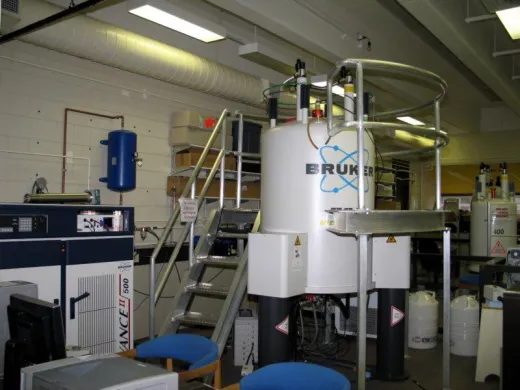
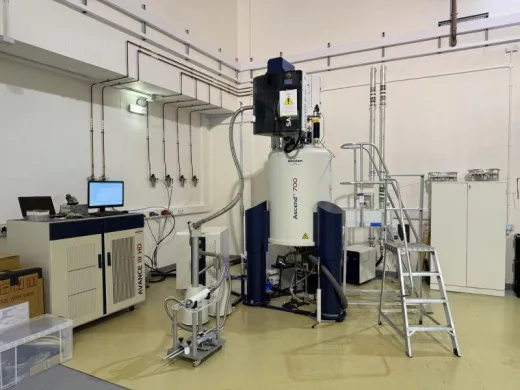
Varian Unity/INOVA

UsedVarianMolecular imaging devicesNetherlands
Procurable

Not in stock, available to order through our sourcing team

Not in stock, but we can get it for you

We source this model through our supplier network. Request a quote and we'll come back within one hour.

  1. Request a quote
  2. We confirm price and lead time
  3. You approve, we ship to you
Magnet Field Strength
14.1 T
Pulsed Field Gradient Strength
30 G/cm
Spectral Width
500 kHz
Magnet Bore Diameter
51 mm
Magnet Hold Time
120 days
Availability
Procurable
Lead time
Confirmed with your quote
All 36 specifications
  • Ships to NL
  • Response within 1 hour
  • Warranty available. Buy without worry
  • Support from a scientist

Specifications 36

Brands
Varian
New/Used
Used
Magnet Field Strength
14.1 T
Pulsed Field Gradient Strength
30 G/cm
Spectral Width
500 kHz
Magnet Bore Diameter
51 mm
Magnet Hold Time
120 days
Temperature Control Range
-150°C to +200°C
Temperature Control Stability
0.1°C
Temperature Control Precision
0.1°C
Number of RF Channels
2
ADC Resolution
16-bit
Memory
16 MB
Operating System
VxWorks™
Software
VNMRJ 2.1B
Waveform Generator Amplitude Control
60 dB
Waveform Generator Phase Control
0.5°
Waveform Generator Timing Resolution
50 ns
Waveform Generator Minimum Event Time
100 ns
Waveform Generator Memory
64 kwords
RF Attenuation
79 dB
RF Attenuation Steps
1 dB
RF Amplifier Power
50 W
ADC Sampling Rate
500 kHz
Digital Filter Bandwidth
500 kHz
Locking Mechanism
2H fully automatic adaptive lock with Autolock®
Sample Spin
Automated
Sample Eject/Insert
Automated
Remote Status Module
Included
Pulsed Field Gradient Module
Performa X,Y,Z PFG Module, U+600MHz
PFG Gradient Strength
30 G/cm
PFG Gradient Channels
X, Y, Z
PFG Gradient Type
Z-axis
PFG Gradient Compatibility
Varian X,Y,Z PFG probe
Availability
Procurable
Lead time
Confirmed with your quote

Product description

High-resolution multinuclear NMR spectrometer with variable temperature and pulsed field gradients for liquid and solid samples.

The Varian Unity/INOVA is a high-resolution nuclear magnetic resonance (NMR) spectrometer designed for detailed molecular analysis in both liquid and solid states. Introduced in the late 1990s, this instrument has been integral to various scientific investigations, particularly in the field of biotechnology.

Key features include:

  • Multinuclear capability: Supports a wide range of nuclei, including ¹H, ¹³C, ¹⁵N, ¹⁹F, and ³¹P, facilitating diverse experimental applications.
  • Variable temperature control: Enables experiments across a broad temperature range, essential for studying temperature-dependent molecular behaviours.
  • Pulsed field gradients (PFG): Enhances the quality of multidimensional NMR experiments and diffusion measurements.
  • Versatile probe options: Accommodates various probes for both liquid and solid-state analyses, expanding its research capabilities.

This spectrometer is widely utilised in:

  • Structural biology: Determining the three-dimensional structures of proteins and nucleic acids.
  • Bioprocessing: Monitoring metabolic pathways and assessing product purity in biomanufacturing.
  • Synthetic biology: Characterising engineered biomolecules and their interactions.
  • Molecular diagnostics: Identifying biomarkers and studying disease mechanisms at the molecular level.

Commonly found in university laboratories, biomedical research centres, and biotechnology companies, the Varian Unity/INOVA has been a cornerstone in advancing molecular research. While newer models have emerged, many institutions continue to rely on this robust instrument for its precision and versatility.

Why Questpair exists

Lab equipment markets are fragmented. Buyers spend weeks calling distributors, comparing quotes, and verifying supplier reliability. Sellers struggle to reach global research labs.

We built Questpair to fix this. Every supplier on the platform is verified before listing. Every quote you receive comes from a real, vetted seller. AI prepares your case in minutes, then a real specialist takes over.

We're an independent team based in The Netherlands, working with research labs and procurement teams across Europe and worldwide.

Frequently asked questions

How long does laboratory equipment typically last?

With a service contract, ten to fifteen years is normal for most benchtop instruments. Detectors and pumps are the parts that wear first.

Can I get service for older equipment?

Often, yes. Verified suppliers frequently work with service partners converting the instrument. If applicable, we can list servicing options alongside the offer.

Where can I buy parts?

Ask a scientist through the request button. Parts are often available even when the instrument itself is discontinued.

What is the typical lead time for refurbished equipment?

Two to six weeks, depending on refurbishment scope and whether calibration is included.

Does laboratory equipment ship internationally?

We ship to 38 countries. Crating and customs handling are quoted with the instrument.

Reply in one hour

Can't find the exact configuration?

Tell us what you need and a scientist finds it for you, usually within the hour.

Last updated 6 November 2026