

DNA sequencers
We personally find you the right used, refurbished and new dna sequencers instruments & equipment from verified suppliers.
DNA sequencers are instruments that determine the order of nucleotide bases in a DNA sample, reading adenine, thymine, guanine and cytosine along a strand so that genetic information can be analysed. On Questpair, 364 DNA sequencer listings are offered by 11 verified suppliers and distributors across 8 countries. New, used and refurbished laboratory units are listed together, and 99 percent of the listings are used. Prices run from EUR 34 to EUR 301.311, a spread that separates small benchtop readers from large production-scale systems. The catalogue draws on brands including Illumina, Applied Biosystems, Thermo Fisher Scientific, PacBio, Life Technologies, spanning capillary electrophoresis instruments and the massively parallel platforms used in genomics and molecular diagnostics work.
Updated:
DNA sequencers product list
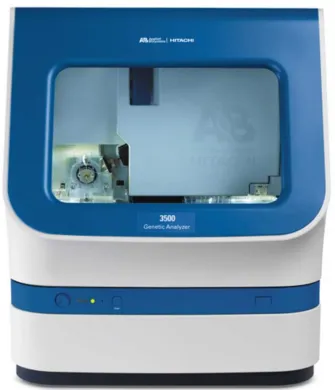
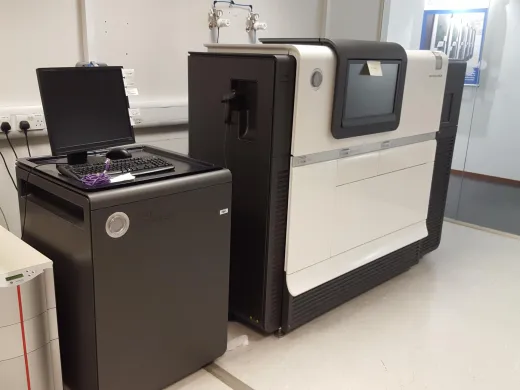
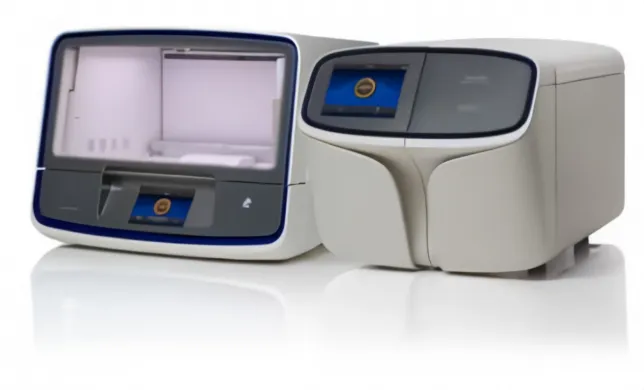
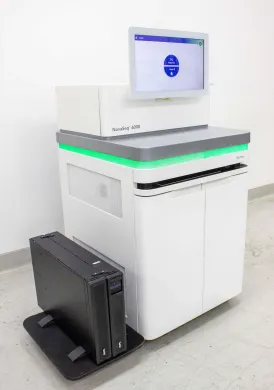


Not the exact instrument you need?
Tell our scientists what you are after. We track it down, including off-market supply.
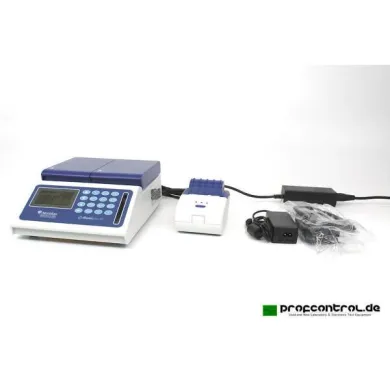
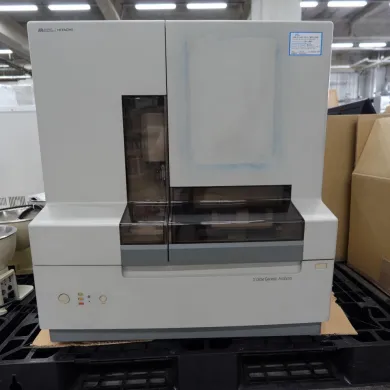
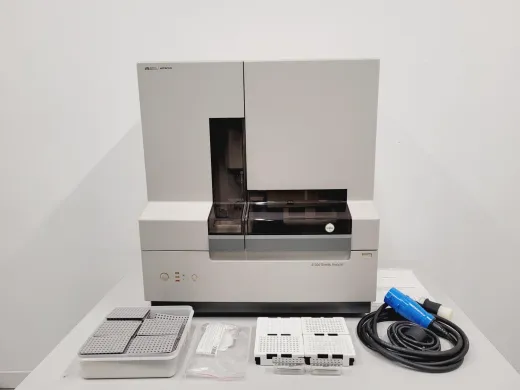
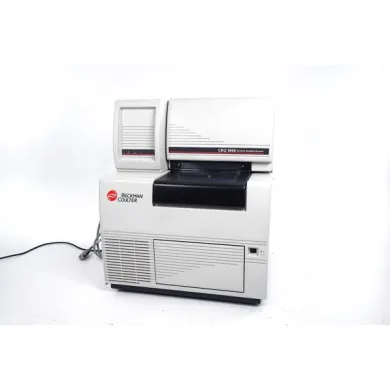
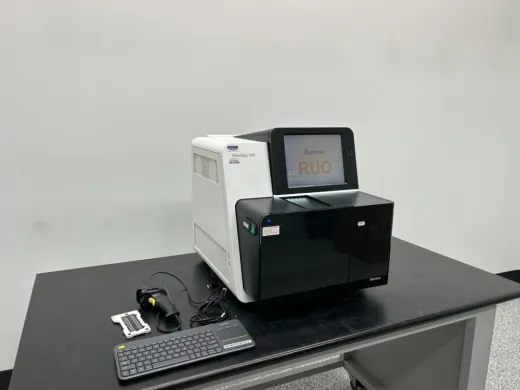
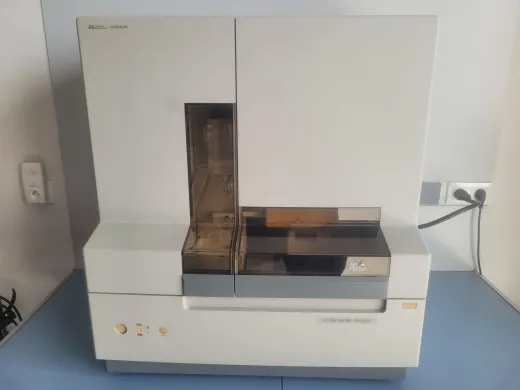
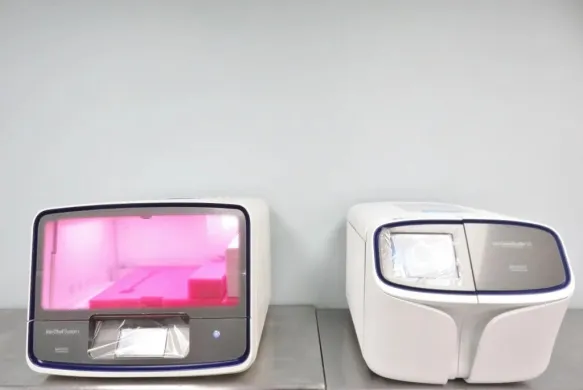
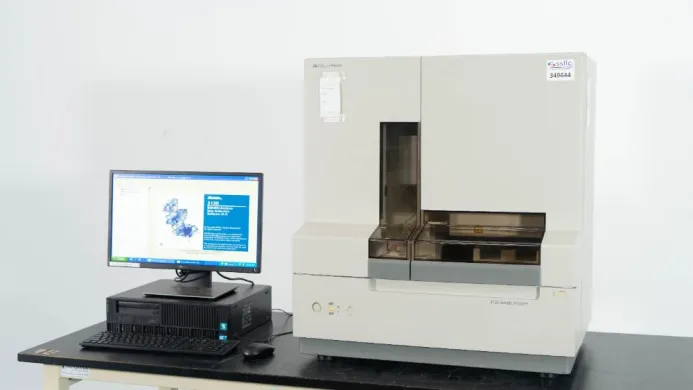
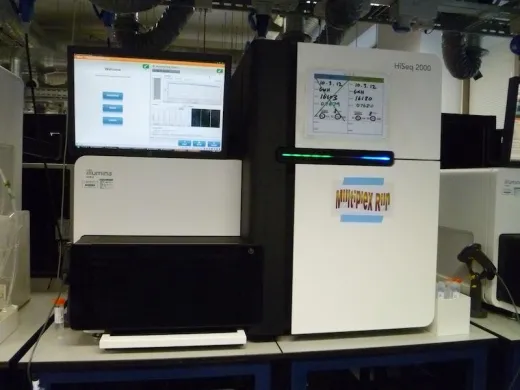
Not the exact instrument you need?
Tell our scientists what you are after. We track it down, including off-market supply.
Showing 1–40 of 218 listings
Show 40 more listingsBuying guide
What settles a DNA sequencer purchase is throughput: how much sequence the instrument reads per run, and at what read length. A capillary system reads a handful of samples at high accuracy over short fragments, which suits Sanger confirmation, fragment analysis and variant checking. A massively parallel platform reads billions of fragments at once, which is what genomics, whole-genome studies and large molecular diagnostics panels demand. The two are not interchangeable, and a buyer who sizes the wrong one either pays for capacity that sits idle or runs out of reads mid-project. Decide the scale of the work first, because read length, run cost and consumable format all follow from it.
Verification matters more on a used sequencer than on almost any other laboratory instrument, because 99 percent of the listings are used and the optics and fluidics wear. Ask for recent run metrics: cluster density or loading efficiency, error rate, and the number of runs on the flow cell interface or capillary array. Confirm which consumable version the unit still accepts, since older reagent kits are discontinued and a platform locked to a retired kit is a platform you cannot feed. Check that the control software and any required licence transfer with the instrument. Where a listing leaves these open, Questpair specialists respond within an hour, and a warranty can be arranged in consultation for the specific listing.
Price is where the condition mix shows itself. Costs run from EUR 34 at the entry end to EUR 301.311 for production platforms, with an average near EUR 14.149. The low end covers capillary readers, fragment analysers and components; the high end covers high-output systems sold complete. A buyer working to a budget will find the used and refurbished units, which make up almost the whole catalogue, listed below new pricing for comparable configurations. Many of the systems for sale are prior-generation platforms that still deliver production-grade data, and they are often the most affordable route into high-throughput work. Match the configuration to the run you actually have, not to the headline specification.
Types of DNA sequencers
Which DNA sequencer types are listed here?
Among the listings that specify a type, the catalogue divides along one line: short-read massively parallel platforms and the capillary and single-molecule instruments around them. Illumina-style sequencing-by-synthesis systems dominate the high-throughput end, reading billions of short fragments per run and underpinning whole-genome sequencing, exome panels and RNA-seq. Capillary electrophoresis sequencers handle Sanger reads, variant confirmation and fragment sizing, where accuracy on a few samples beats raw volume. Single-molecule long-read platforms read very long fragments without amplification, which resolves structural variants and repetitive regions the short-read method struggles with. These systems also appear as molecular diagnostics equipment, configured for clinical panels and pathogen detection.
The field each type serves is where the search terms sit. High-throughput platforms do the bulk of genomics and proteomics-adjacent sequencing, from cancer genome profiling to microbial genomics. They are the core of DNA sequencing for molecular diagnostics and of library-based NGS for cell and tissue studies. Capillary instruments remain the standard for Sanger sequencing confirmation and for forensic and parentage fragment analysis. Long-read systems carry much of de novo genome assembly and transcript isoform work. Across all three, buyers searching for a next generation sequencing platform for clinical genomics, or a benchtop DNA sequencer for microbiology, find the equipment under these type names.
The brands behind the DNA sequencer listings
The catalogue is led by Illumina, Applied Biosystems, Thermo Fisher Scientific, PacBio, Life Technologies. For a buyer, this concentration is practical: parts, flow cells and reagent formats for the dominant platforms are the most widely available, and listings are easy to compare because so many describe the same model families. Illumina and Applied Biosystems between them cover both the short-read and the capillary ends, while PacBio represents the long-read class. Where a part is needed for any of these, it can be sourced via Questpair rather than hunted separately. Parts availability and reagent lifespan vary by platform generation, so the brand tells you roughly where a listing sits on price and on how long it stays supportable.
What a used DNA sequencer costs on Questpair
New, used and refurbished units are listed together, and 99 percent of the listings are used. Prices run from EUR 34 to EUR 301.311, with an average near EUR 14.149. That spread covers bare components and capillary readers at the low end and complete production platforms at the high end, so the range reflects configuration as much as condition. Used and refurbished systems are listed below new pricing for comparable builds, which is what makes the second-hand route the practical one at this scale of instrument.
Frequently asked questions
What is a DNA sequencer?
A DNA sequencer is an instrument that determines the order of nucleotide bases, adenine, thymine, guanine and cytosine, along a DNA strand. Reading that order lets genetic information be analysed for research, diagnostics and identification work.
What does DNA sequencer mean?
The term refers to any machine that reads the base sequence of a DNA sample and outputs it as data. It covers both capillary electrophoresis instruments that read a handful of samples and massively parallel platforms that read billions of fragments per run.
How do DNA sequencers work?
Capillary sequencers separate labelled DNA fragments by size through a gel-filled capillary and read the fluorescent signal at each base. Massively parallel platforms fragment the DNA into a library, amplify it, and read millions to billions of short fragments at once, while single-molecule systems read long fragments directly without amplification.
What types of DNA sequencers are there?
The main divisions are short-read massively parallel platforms, capillary electrophoresis instruments for Sanger reads, and single-molecule long-read systems. On Questpair the listed types include dna sequencer, high-throughput sequencer, next generation sequencing system and molecular diagnostics instrument, which map onto those three classes.
What are DNA sequencers used for?
They are used for whole-genome sequencing, exome and gene panels, RNA-seq, variant confirmation, microbial genomics, forensic and parentage fragment analysis, and clinical molecular diagnostics. Which instrument fits depends on how many samples and what read length the work requires.
How do I choose a DNA sequencer?
Start from throughput: decide how much sequence you need per run and at what read length, because run cost and consumable format follow from that. A capillary system suits a few high-accuracy Sanger reads, while a massively parallel platform suits genomics and large diagnostic panels, and the two are not interchangeable.
What is the difference between refurbished and used?
A used sequencer is sold in its current condition as it came from the prior lab, while a refurbished unit has been checked and returned to working order before listing. Both are listed below new pricing for comparable builds, so ask for recent run metrics and the consumable version the unit accepts either way.
How much does a DNA sequencer cost?
Prices on Questpair range from EUR 34 to EUR 301.311, with an average near EUR 14.149. The low end covers capillary readers, fragment analysers and components, while the high end covers high-output platforms sold complete, so the figure reflects configuration as much as condition.
What are the main DNA sequencer brands?
The catalogue is led by Illumina, Applied Biosystems, Thermo Fisher Scientific, PacBio and Life Technologies. Illumina and Applied Biosystems cover the short-read and capillary ends, while PacBio represents the long-read class.
Is there a warranty on a refurbished DNA sequencer?
A warranty is often possible and is arranged in consultation for the specific listing. Questpair does not set support terms centrally, so check what the individual listing states and raise warranty with the supplier before purchase.
Can I get parts for a DNA sequencer?
Parts, flow cells and reagent formats for the dominant platforms are among the most widely available because so many listings describe the same model families. Parts can be sourced via Questpair when a specific component is needed.
How long does a DNA sequencer last?
Lifespan depends on the wear on the optics and fluidics and on whether the platform still accepts a current consumable version. A unit locked to a discontinued reagent kit cannot be fed, so the supportable life is tied to reagent availability as much as to mechanical condition.
Should I buy new or refurbished?
Used and refurbished units are listed at lower prices than new ones for comparable configurations, and they make up a large share of this catalogue. Where you need to weigh the two, compare the individual listing and arrange warranty in consultation, since many prior-generation platforms still deliver production-grade data.
Where can I buy a DNA sequencer?
Questpair lists DNA sequencers from 11 verified suppliers and distributors across 8 countries. The listings put new, used and refurbished units together so the same model families can be compared side by side.
What is the lead time and shipping?
Lead time and shipping depend on the individual supplier and the location of the unit, which spans 8 countries. The listing or the supplier gives the specific timing, and Questpair specialists respond within an hour where a listing leaves it open.
What calibration and maintenance does a DNA sequencer need?
Routine upkeep covers optics checks, fluidics cleaning, capillary or flow cell replacement, and verifying run metrics such as cluster density, loading efficiency and error rate. Questpair does not perform servicing, but it can source the parts and consumables these procedures require.
Which DNA sequencer types are listed most, and who reaches for each?
Short-read massively parallel platforms sit at the high-throughput end and carry genomics, exome panels and RNA-seq, so genomics and clinical diagnostics labs reach for them. Capillary instruments go to labs doing Sanger confirmation and forensic fragment analysis, while long-read systems serve de novo assembly and transcript isoform work.
Which brands dominate this category, and what does that mean for a buyer?
Illumina, Applied Biosystems, Thermo Fisher Scientific, PacBio and Life Technologies lead the listings here. That concentration means parts and reagent formats for these platforms are widely available and listings are easy to compare, since so many describe the same model families.
What separates the cheapest DNA sequencers here from the most expensive?
The low end of the range at EUR 34 covers capillary readers, fragment analysers and bare components, while the top at EUR 301.311 covers complete high-output production platforms. The gap reflects throughput and configuration first, then condition, with used and refurbished units listed below new for comparable builds.