53k+ listingsShips to NLResponse within one hour+31 73 711 4717info@questpair.com
Procurable · sourced on request

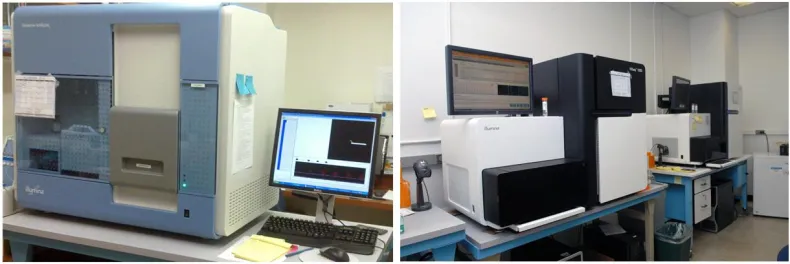
Illumina Genome Analyzer II

UsedIlluminaDNA sequencersNetherlands
Procurable

Not in stock, available to order through our sourcing team

Not in stock, but we can get it for you

We source this model through our supplier network. Request a quote and we'll come back within one hour.

  1. Request a quote
  2. We confirm price and lead time
  3. You approve, we ship to you
Dimensions (W x D x H)
550 x 650 x 600 mm
Temperature Range
15°C to 30°C
Humidity Range
20% to 80% relative humidity, non-condensing
Power Supply
100–240 V AC, 50/60 Hz
Power Consumption
900 W
Availability
Procurable
Lead time
Confirmed with your quote
All 29 specifications
  • Ships to NL
  • Response within 1 hour
  • Warranty available. Buy without worry
  • Support from a scientist

Specifications 29

Brands
Illumina
New/Used
Used
Dimensions (W x D x H)
550 x 650 x 600 mm
Weight
141 kg
Temperature Range
15°C to 30°C
Humidity Range
20% to 80% relative humidity, non-condensing
Power Supply
100–240 V AC, 50/60 Hz
Power Consumption
900 W
Laser Wavelengths
449 nm, 523 nm, 820 nm
Instrument Control Computer
2U Microserver located inside the instrument
Memory
288 GB
Hard Drive
3.8 TB SSD
Operating System
Linux CentOS 7.6
Instrument Input Voltage
100–240 V AC
Instrument Input Frequency
50/60 Hz
Safety Classification
Class 1 Laser Product
Compliance
NRTL certified IEC 61010-1, CE marked, FCC/IC approved
Sequencing Chemistry
Sequencing by Synthesis (SBS)
Read Lengths Supported
36 bp, 50 bp, 75 bp, 100 bp, 150 bp
Sequencing Technology
Sequencing by Synthesis (SBS)
Base Call Accuracy
Exceeds 99% for more than 85% of bases
Data Output per Run
Up to 150 Gb
Sequencing Output per Run
Up to 150 Gb
Flow Cell Type
Single-read and paired-end
Bandwidth for Network Connection
200 Mb/s per instrument for internal network uploads
Bandwidth for BaseSpace Sequence Hub Uploads
200 Mb/s per instrument
Bandwidth for Instrument Operational Data Uploads
5 Mb/s per instrument
Availability
Procurable
Lead time
Confirmed with your quote

Product description

High-throughput NGS system with SBS chemistry, paired-end sequencing, and >99% accuracy for up to 150 Gb/run.

Illumina GAII was a pioneering next-generation sequencing (NGS) system that significantly advanced genomic research in the early 2010s. Launched in 2009, this instrument offered high-throughput and accurate sequencing capabilities, making it a valuable tool for various applications in biotechnology and related fields.

Key features of the GAII included:

  • Enhanced optics and detection: Incorporated refined optics, lasers, and a more sensitive CCD camera, improving signal-to-noise ratios and accuracy.
  • Increased cluster density: Achieved higher cluster densities on the flow cell surface, enabling a significantly higher sequencing output per run.
  • Paired-end sequencing capability: Introduced paired-end sequencing, generating reads from both ends of a DNA fragment, enhancing genome assembly and structural variant detection.
  • Sequencing by Synthesis (SBS): Employed SBS chemistry, where fluorescently labeled nucleotides are sequentially incorporated, with images captured after each flow cycle to determine the added base.
  • Bridge amplification: Utilized proprietary bridge amplification to create dense clusters of identical DNA templates on the flow cell, amplifying signals for detectable output.
  • High data quality: Achieved base call accuracy exceeding 99% for more than 85% of bases, with the ability to produce up to 150 gigabases of sequencing data per run.

The GAII was widely adopted in genomics, molecular biology, and biotechnology research, facilitating applications such as:

  • Whole genome sequencing: For both human and model organism research.
  • Resequencing: Targeting and sequencing specific genomic regions of interest.
  • Transcriptome sequencing (RNA-Seq): Analyzing gene expression patterns.

Commonly utilized in university laboratories, biomedical research centres, and biotechnology companies, the GAII played a crucial role in advancing genomic studies. Although discontinued in 2014, its legacy continues to influence current sequencing technologies.

Why Questpair exists

Lab equipment markets are fragmented. Buyers spend weeks calling distributors, comparing quotes, and verifying supplier reliability. Sellers struggle to reach global research labs.

We built Questpair to fix this. Every supplier on the platform is verified before listing. Every quote you receive comes from a real, vetted seller. AI prepares your case in minutes, then a real specialist takes over.

We're an independent team based in The Netherlands, working with research labs and procurement teams across Europe and worldwide.

Frequently asked questions

How long does laboratory equipment typically last?

With a service contract, ten to fifteen years is normal for most benchtop instruments. Detectors and pumps are the parts that wear first.

Can I get service for older equipment?

Often, yes. Verified suppliers frequently work with service partners converting the instrument. If applicable, we can list servicing options alongside the offer.

Where can I buy parts?

Ask a scientist through the request button. Parts are often available even when the instrument itself is discontinued.

What is the typical lead time for refurbished equipment?

Two to six weeks, depending on refurbishment scope and whether calibration is included.

Does laboratory equipment ship internationally?

We ship to 38 countries. Crating and customs handling are quoted with the instrument.

Reply in one hour

Can't find the exact configuration?

Tell us what you need and a scientist finds it for you, usually within the hour.

Last updated 6 November 2026