58k+ listingsShips to NLResponse within one hour+31 73 711 4717info@questpair.com
Procurable · sourced on request

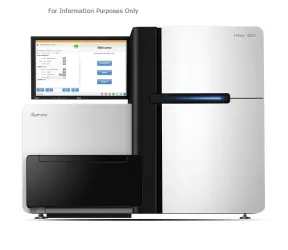
Illumina HiSeq 3000

UsedIlluminaDNA sequencersNetherlands
Procurable

Not in stock, available to order through our sourcing team

Not in stock, but we can get it for you

We source this model through our supplier network. Request a quote and we'll come back within one hour.

  1. Request a quote
  2. We confirm price and lead time
  3. You approve, we ship to you
Data Yield per Run (2 × 150 bp)
650–750 Gb
Data Yield per Run (2 × 75 bp)
325–375 Gb
Data Yield per Run (1 × 50 bp)
105–125 Gb
Clusters Passing Filter per Flow Cell (8 lanes)
up to 2.5 billion single reads or 5 billion paired-end reads
Quality Scores (2 × 50 bp)
≥ 85% bases above Q30
Availability
Procurable
Lead time
Confirmed with your quote
All 18 specifications
  • Ships to NL
  • Response within 1 hour
  • Warranty available. Buy without worry
  • Support from a scientist

Specifications 18

Brands
Illumina
New/Used
Used
Data Yield per Run (2 × 150 bp)
650–750 Gb
Data Yield per Run (2 × 75 bp)
325–375 Gb
Data Yield per Run (1 × 50 bp)
105–125 Gb
Clusters Passing Filter per Flow Cell (8 lanes)
up to 2.5 billion single reads or 5 billion paired-end reads
Quality Scores (2 × 50 bp)
≥ 85% bases above Q30
Quality Scores (2 × 75 bp)
≥ 80% bases above Q30
Quality Scores (2 × 150 bp)
≥ 75% bases above Q30
Daily Throughput
> 200 Gb
Run Time
< 1–3.5 days
Human Genomes per Run
up to 6
Exomes per Run
up to 48
Transcriptomes per Run
up to 50
Sequencing Technology
Sequencing by Synthesis (SBS)
Flow Cell Technology
Patterned Flow Cell Technology
Availability
Procurable
Lead time
Confirmed with your quote

Product description

High-throughput NGS system using SBS tech, generates up to 750 Gb/run with 2×150 bp reads in under 3.5 days.

Illumina HiSeq 3000

The Illumina HiSeq 3000 is a high-throughput next-generation sequencing (NGS) system designed to deliver rapid and accurate genomic data for large-scale projects. Utilising Sequencing by Synthesis (SBS) technology, this instrument provides exceptional data quality and throughput, making it ideal for a variety of genomic applications.

Key features:

  • High throughput: Capable of generating up to 750 gigabases (Gb) of data per run, facilitating the sequencing of multiple human genomes simultaneously.
  • Patterned flow cell technology: Incorporates billions of nanowells at fixed locations, enhancing cluster density and data output.
  • Flexible read lengths: Supports read lengths up to 2 × 150 base pairs (bp), accommodating diverse sequencing needs.
  • Efficient run times: Completes sequencing runs in less than 3.5 days, accelerating time-to-results for large-scale studies.

Applications:

  • Whole genome sequencing (WGS): Enables comprehensive analysis of entire genomes, essential for identifying genetic variations and mutations.
  • Exome sequencing: Focuses on protein-coding regions, facilitating the study of disease-associated genetic variants.
  • RNA sequencing (RNA-Seq): Allows for transcriptome profiling to understand gene expression patterns and regulatory mechanisms.
  • Epigenetic studies: Supports research into DNA methylation and histone modifications, crucial for understanding gene regulation.

The HiSeq 3000 is widely adopted in biotechnology, genomics, and molecular biology research. It is commonly utilised in university laboratories, biomedical research centres, and clinical research institutions. Released in January 2015, the system has been discontinued, with support and reagent supply ending on February 28, 2023. Despite its discontinuation, the HiSeq 3000 remains a significant milestone in high-throughput sequencing, having contributed extensively to advancements in genomic research.

Why Questpair exists

Lab equipment markets are fragmented. Buyers spend weeks calling distributors, comparing quotes, and verifying supplier reliability. Sellers struggle to reach global research labs.

We built Questpair to fix this. Every supplier on the platform is verified before listing. Every quote you receive comes from a real, vetted seller. AI prepares your case in minutes, then a real specialist takes over.

We're an independent team based in The Netherlands, working with research labs and procurement teams across Europe and worldwide.

Frequently asked questions

How long does laboratory equipment typically last?

With a service contract, ten to fifteen years is normal for most benchtop instruments. Detectors and pumps are the parts that wear first.

Can I get service for older equipment?

Often, yes. Verified suppliers frequently work with service partners converting the instrument. If applicable, we can list servicing options alongside the offer.

Where can I buy parts?

Ask a scientist through the request button. Parts are often available even when the instrument itself is discontinued.

What is the typical lead time for refurbished equipment?

Two to six weeks, depending on refurbishment scope and whether calibration is included.

Does laboratory equipment ship internationally?

We ship to 38 countries. Crating and customs handling are quoted with the instrument.

Reply in one hour

Can't find the exact configuration?

Tell us what you need and a scientist finds it for you, usually within the hour.

Last updated 22 October 2026