

Industrial chillers
We personally find you the right used, refurbished and new industrial chillers instruments & equipment from verified suppliers.
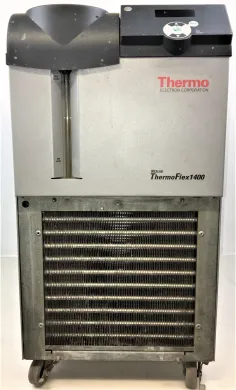
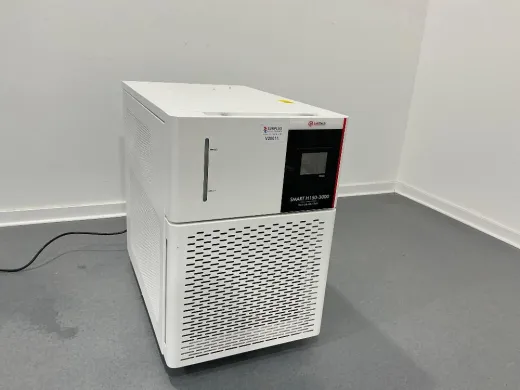
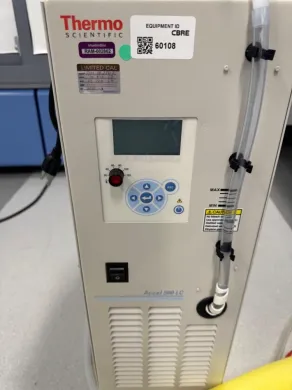
Industrial chillers are closed-loop refrigeration units that remove process heat from laboratory and production equipment by circulating a cooled fluid, usually water or a water-glycol mix, through a pump and heat exchanger. They hold a setpoint under a fluctuating heat load, which is what separates a chiller from a passive cooler. On Questpair, 163 industrial chillers are listed from 14 verified suppliers and distributors across 8 countries. New, used and refurbished units appear together, and 94 percent of the listings are used. Prices span a wide range, from compact laboratory models to larger process systems, reflecting cooling capacity rather than condition alone.
Updated:
Industrial chillers product list
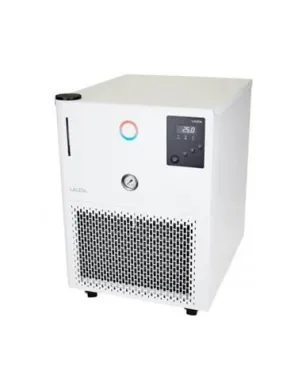
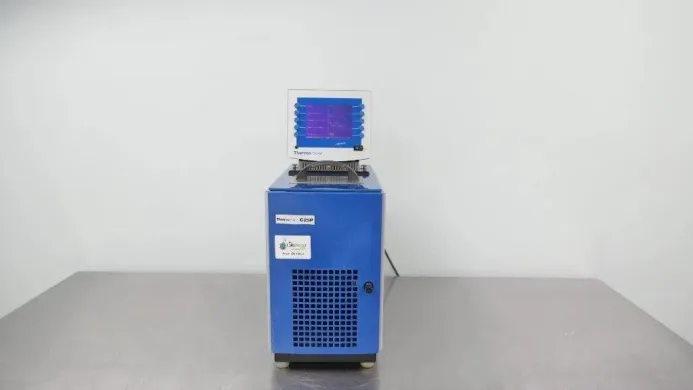
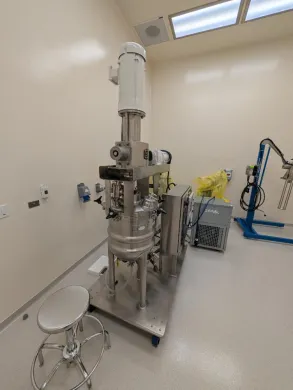
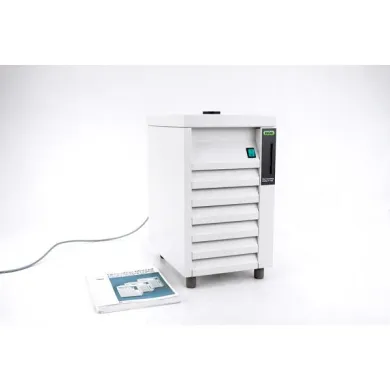


Not the exact instrument you need?
Tell our scientists what you are after. We track it down, including off-market supply.
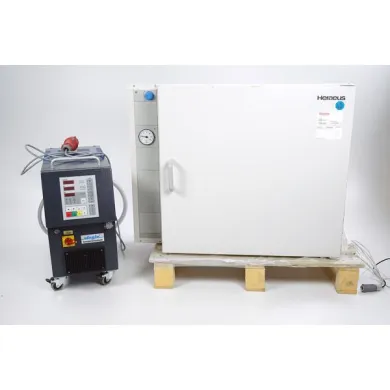
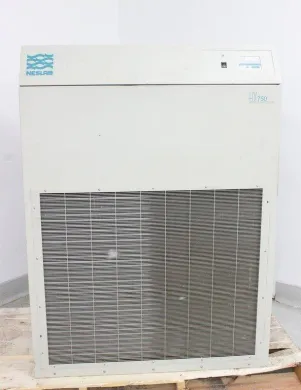
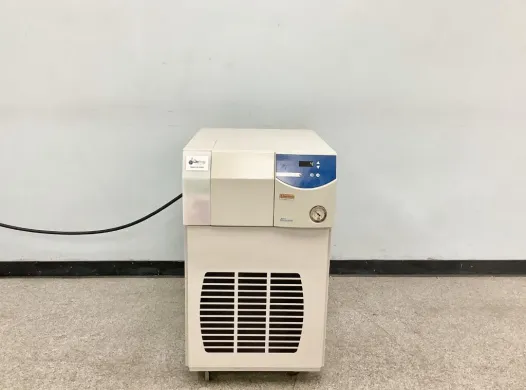
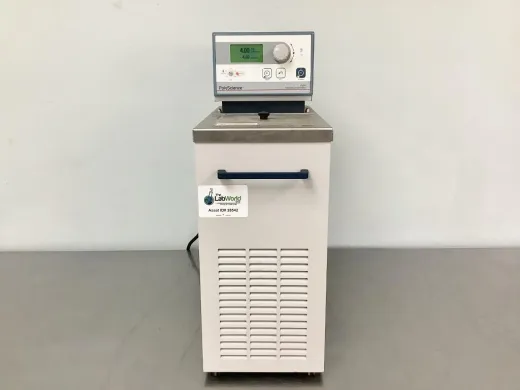
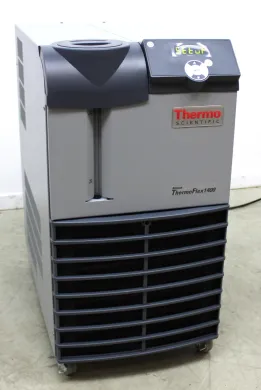
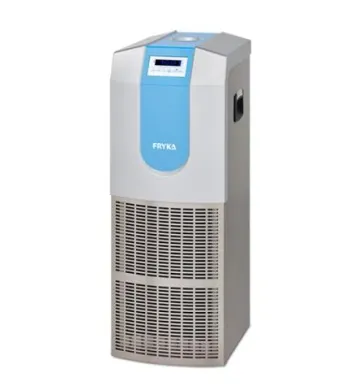
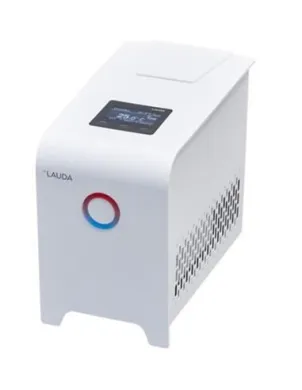
Not the exact instrument you need?
Tell our scientists what you are after. We track it down, including off-market supply.
Showing 1–40 of 81 listings
Show 40 more listingsBuying guide
Cooling capacity at the working temperature is the figure that settles a chiller purchase, and it has to be read at the temperature the process actually runs, not at the headline number. A unit rated for a given wattage at 20 degrees delivers noticeably less at 5 degrees, because the compressor works against a smaller temperature difference with the ambient. Match the rated capacity to the heat your equipment rejects, add margin for ambient temperature and for any glycol in the loop, and confirm the pump can move the required flow against the pressure drop of your apparatus. A chiller that cools adequately but cannot push fluid through a long or restricted line will not hold the setpoint.
On a used unit the refrigeration circuit is where the risk sits, and it is not visible from the outside. A low refrigerant charge, a tired compressor or a fouled condenser all present as a system that cools but cannot reach or hold its lowest setpoint under load. Ask whether the unit has run recently and at what temperature, whether the pump seals are intact, and whether the reservoir and plates show scale or corrosion from an old fluid. These are the questions that matter more than the datasheet on a second-hand purchase, because the specification describes what the machine did when new, not what it does now. Where documentation is thin, Questpair's specialists respond within an hour and parts can be sourced through the marketplace.
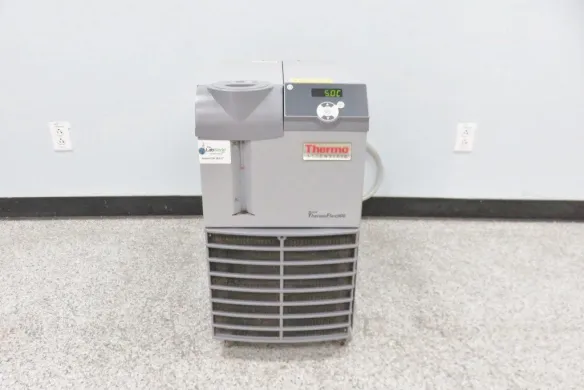
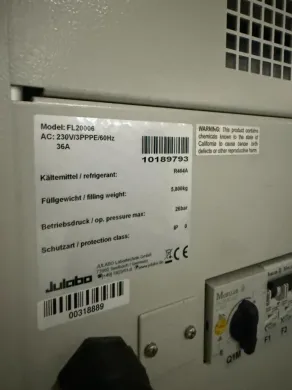
Price tracks capacity and build before anything else. Benchtop recirculating units sit at the low end, large process chillers at the high end, and the listed range runs from EUR 65 to EUR 38.740. Used and refurbished units are listed below new, which is the main reason a buyer on a budget looks at this market, and the cost of a given cooling capacity second-hand is well under the new figure. The brands that occupy the band are Lauda, Thermo Scientific, Thermo Neslab, Julabo, Huber, with the German and American makers clustering in the mid to upper range and the simpler benchtop models holding the affordable end. Several listings are offered for sale as complete working systems with pump and reservoir, which is worth confirming before you compare prices, since a bare chiller and a full temperature control package are not the same purchase.
Types of Industrial chillers
Which chiller types are listed here?
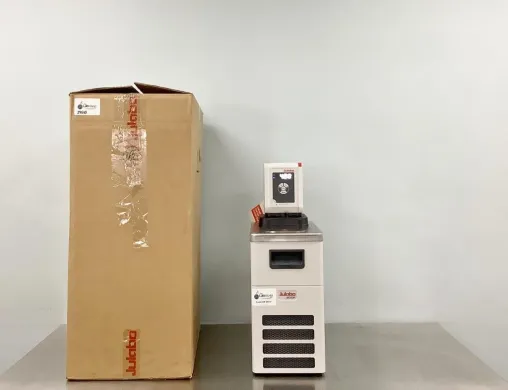
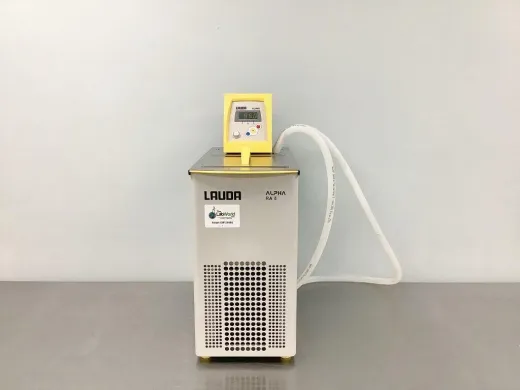
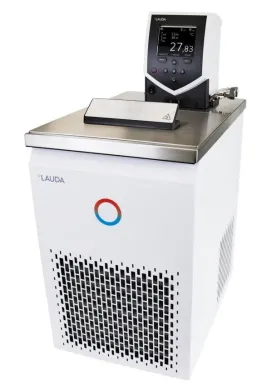
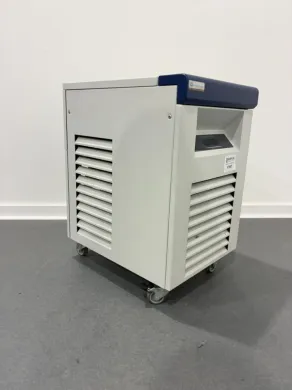
Among the listings that specify a type, the catalogue is built mostly from recirculating chillers, temperature control units, laboratory cooling systems and benchtop chillers. A recirculating chiller pumps cooled fluid out to the load and takes the warmed fluid back, running a continuous loop rather than drawing fresh water, which is what makes it the standard choice where water conservation or a stable setpoint matters. A temperature control unit adds precise regulation around a target, holding a reaction or instrument at one temperature rather than simply removing heat, and is reached for in process work where drift is the enemy. Benchtop chillers are the compact end, sized for a single instrument on a laboratory bench, while the broader laboratory cooling systems and cooling systems cover the larger floor-standing units feeding several pieces of equipment at once. The distinction that matters to a buyer is capacity and footprint: these units span from a device beside one analyser to a system cooling a whole rig.
In the life sciences, recirculating chillers serve the work that generates heat and demands a stable temperature at the same time. They cool rotary evaporators and reactors in protein purification, hold lasers and detectors steady in cell imaging and flow cytometry, and feed the jacketed vessels used in bioprocessing and biomanufacturing. A temperature control unit is also used for controlled cooling in sample preparation and in the fermentation loops of synthetic biology, where a culture is held at one setpoint for days. Where molecular biology instruments reject heat continuously, a laboratory chiller is the component that keeps them inside their operating window.
The brands behind the industrial chiller listings
The makers that dominate the listings are Lauda, Thermo Scientific, Thermo Neslab, Julabo, Huber. For a buyer that presence has practical consequences beyond the name. The German and American manufacturers in that group are long-established in laboratory temperature control, which means service literature and spare components are comparatively easy to find, and a given model number can be compared directly against its specification sheet. A deep second-hand population of a few well-known makers also makes like-for-like comparison straightforward, since several listings of the same family let a buyer judge a fair price. Parts for these units can be sourced via Questpair where a listing arrives incomplete.
What a used industrial chiller costs here
New, used and refurbished units are listed together, and 94 percent of the listings are used. Prices run from EUR 65 to EUR 38.740. That spread is wide because it covers everything from a small benchtop recirculator to a floor-standing process chiller, so condition is only one part of what moves a price within it. The used and refurbished units are listed below the cost of new, which is what brings most budget-conscious buyers to this market in the first place.
Frequently asked questions
What is an industrial chiller?
An industrial chiller is a closed-loop refrigeration unit that removes process heat from laboratory or production equipment by circulating a cooled fluid, usually water or a water-glycol mix, through a pump and heat exchanger. It holds a setpoint under a changing heat load, which is the difference between a chiller and a passive cooler.
What does the term industrial chiller mean?
It refers to an active cooling unit that pumps a temperature-controlled fluid to equipment and returns the warmed fluid back for cooling, running continuously rather than drawing fresh water. The word industrial distinguishes it from a simple cooler, because it regulates to a target temperature under load.
How do industrial chillers work?
A compressor-driven refrigeration circuit cools a reservoir of fluid, and a pump circulates that fluid out to the equipment and back. A controller measures the return temperature and adjusts cooling to hold the setpoint, so the unit compensates as the heat load rises or falls.
What types of industrial chillers are there?
The listings here include recirculating chillers, temperature control units, laboratory cooling systems, laboratory chillers, cooling systems and benchtop chillers. The practical difference between them is cooling capacity and footprint, from a benchtop unit beside one instrument to a floor-standing system feeding a whole rig.
What are industrial chillers used for?
They cool equipment that generates heat but needs a stable temperature, such as rotary evaporators, reactors, lasers, detectors and jacketed vessels. In the life sciences they feed bioprocessing vessels, hold imaging and flow cytometry instruments steady, and run the fermentation loops in synthetic biology where a culture stays at one setpoint for days.
How do I choose an industrial chiller?
Read the cooling capacity at the temperature your process actually runs, not the headline figure, because a unit rated at 20 degrees delivers less at 5 degrees. Match that capacity to the heat your equipment rejects, add margin for ambient temperature and any glycol in the loop, and confirm the pump can move the required flow against the pressure drop of your apparatus.
What is the difference between refurbished and used chillers?
A used unit is sold in its current working condition, while a refurbished unit has been checked and brought back toward working order before sale. On either one, ask whether it has run recently and at what temperature, since the refrigeration circuit carries the risk that a datasheet does not describe.
How much does an industrial chiller cost?
Prices here range from EUR 65 to EUR 38.740, with an average around EUR 4.423. The spread is wide because it covers everything from a small benchtop recirculator to a large floor-standing process chiller, so capacity moves the price more than condition does.
Which brands make industrial chillers?
The makers behind the listings include Lauda, Thermo Scientific, Thermo Neslab, Julabo and Huber. These are long-established in laboratory temperature control, which is why service literature and spare components for their models are comparatively easy to find.
Is there a warranty on a refurbished chiller?
A warranty is often possible and is arranged in consultation for the specific listing. Because terms are set per listing rather than centrally, check what a given seller offers before you buy.
Can I get parts for an industrial chiller?
Parts can be sourced through Questpair when a listing arrives incomplete or needs a component replaced. The deep second-hand population of a few well-known makers also helps, since common spares for those families circulate more widely.
How long does an industrial chiller last?
Lifespan depends on the condition of the refrigeration circuit and the pump, and on how hard the unit was run. A low refrigerant charge, a tired compressor or a fouled condenser all shorten the usable life, which is why run history matters more than age alone on a used purchase.
Should I buy new or refurbished?
Used and refurbished chillers are listed at lower prices than new, which is the main reason a buyer on a budget looks at this market. Where you have to weigh the two, compare the individual listing and remember that warranty is arranged in consultation rather than set centrally.
Where can I buy an industrial chiller?
On Questpair, 163 industrial chillers are listed from 14 verified suppliers and distributors across 8 countries. New, used and refurbished units appear together in the same catalogue.
What is the lead time and shipping on a chiller?
Lead time and shipping depend on the individual seller and the unit's location, since listings come from suppliers and distributors across 8 countries. Check the specific listing for its availability, and contact Questpair where the detail is not stated, as specialists respond within an hour.
What maintenance does an industrial chiller need?
Routine care centres on keeping the condenser clean, checking the pump seals, and replacing the circulating fluid before scale or corrosion builds up in the reservoir and plates. Questpair does not carry out servicing, but parts for maintenance can be sourced through the marketplace.
Which chiller types are listed most here, and who reaches for each?
Recirculating chillers, temperature control units, laboratory cooling systems and benchtop chillers make up the bulk of the catalogue. A recirculating chiller suits work where a stable setpoint or water conservation matters, a temperature control unit is reached for in process work where temperature drift is the problem, and a benchtop chiller fits a single instrument on a laboratory bench.
Which brands dominate this category, and what does that mean for a buyer?
Lauda, Thermo Scientific, Thermo Neslab, Julabo and Huber account for much of the catalogue. For a buyer this means a given model number can be checked against its specification sheet, and several listings of the same family let you judge a fair price by direct comparison.
What separates the cheapest chillers from the most expensive here?
Capacity and build set the price band more than condition does. Benchtop recirculating units sit at the low end, large floor-standing process chillers at the high end, and a bare chiller is a different purchase from a full package with pump and reservoir, which is worth confirming before you compare two prices.