

Material handling equipment
We personally find you the right used, refurbished and new material handling equipment from verified suppliers.
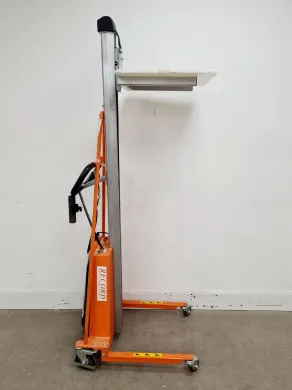
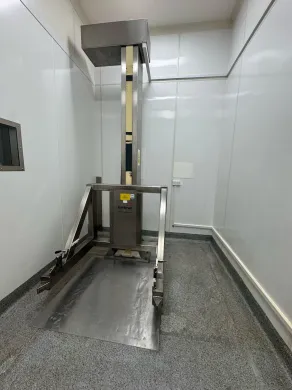
Material handling equipment is the class of carts, trolleys and transport fixtures that move instruments, samples and consumables around a laboratory. In the Questpair catalogue it covers laboratory utility carts, equipment transport carts, gas cylinder trolleys and stainless steel lab carts, listed new, used and refurbished. Of the current listings, 97 percent are used. Prices run from EUR 43 to EUR 55.958, a spread wide enough to separate a single-shelf utility cart from a heavy-duty transport system. The equipment is bought less for performance figures than for load rating, surface material and manoeuvrability, which is why a buyer in this group reads condition and build quality before anything else.
Updated:
Material handling equipment product list


Not the exact instrument you need?
Tell our scientists what you are after. We track it down, including off-market supply.
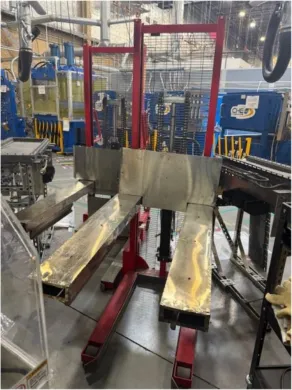
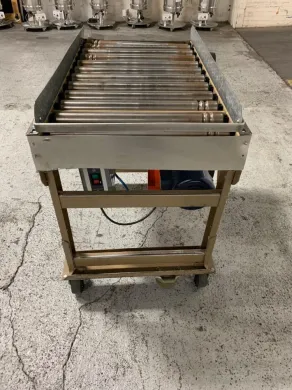
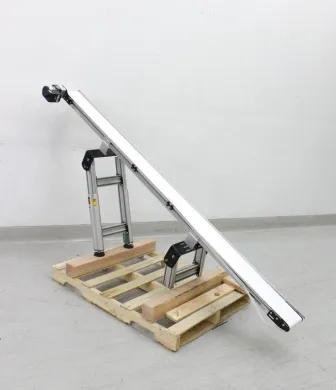
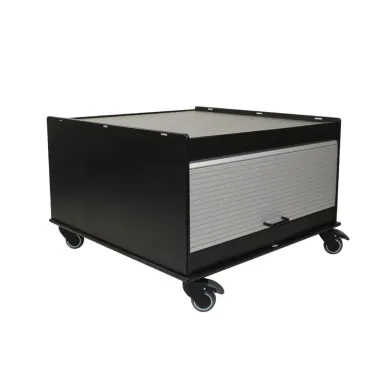
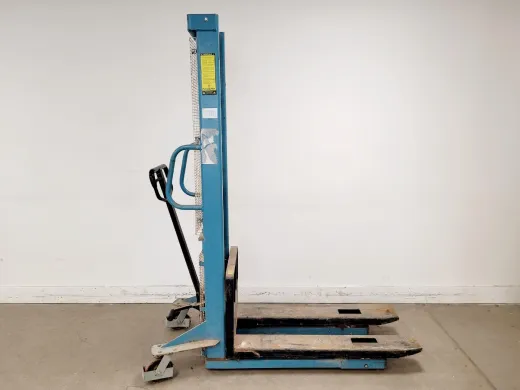
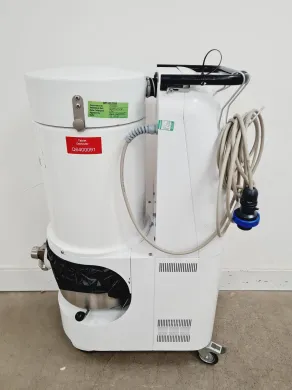

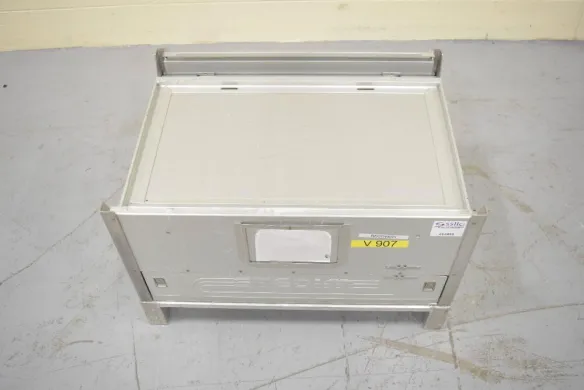
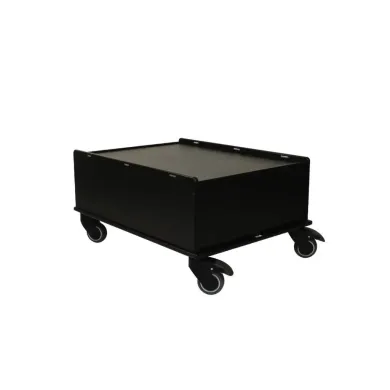
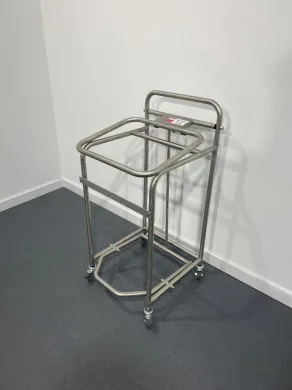

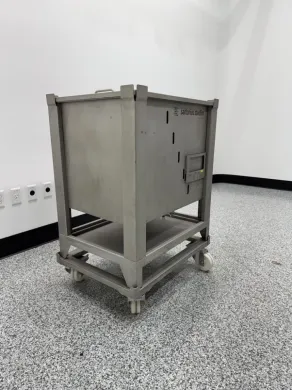

Not the exact instrument you need?
Tell our scientists what you are after. We track it down, including off-market supply.
Showing 1–40 of 74 listings
Show 34 more listingsAbout Material handling equipment
Our take, based on listings data and supplier feedback.
What it is. Material handling equipment is a key category of laboratory instrumentation, used across clinical, pharmaceutical, environmental, and academic research labs for a wide range of analytical and sample-handling applications.
Common instrument types. The material handling equipment category spans several instrument families and configurations, each suited to specific throughput, sensitivity, and budget requirements, from entry-level benchtop units to high-end systems.
Buying via Questpair. Refurbished and used material handling equipment instruments hold their value thanks to robust build quality and global service networks. Sourcing through Questpair gives buyers verified supplier credentials, standardized condition reporting, and side-by-side offers from multiple distributors, so you can compare price, condition, and warranty in one place.
Best for. Material handling equipment is an excellent fit for analytical chemistry, pharmaceutical QC, environmental and food testing, and high-throughput research labs that need reliable instrumentation with strong long-term serviceability.
Types of Material handling equipment
Which material handling carts are listed here?
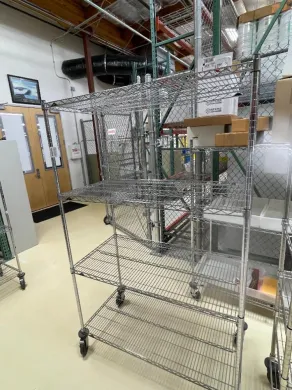
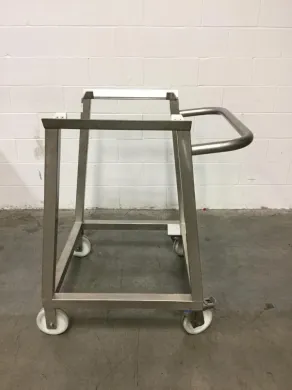
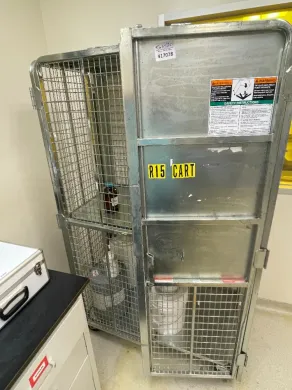
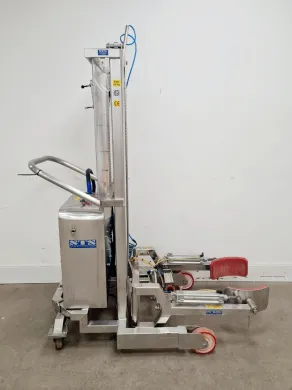
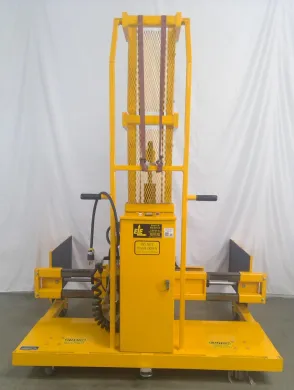
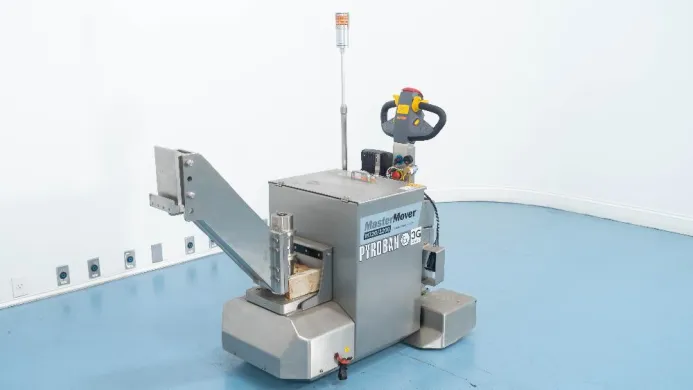
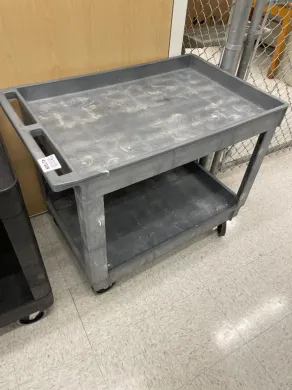
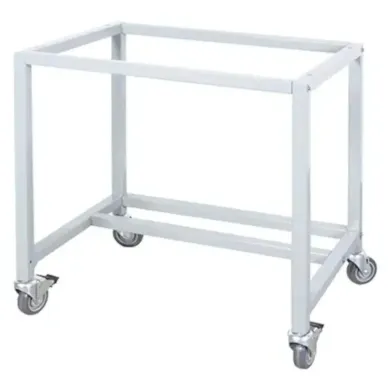
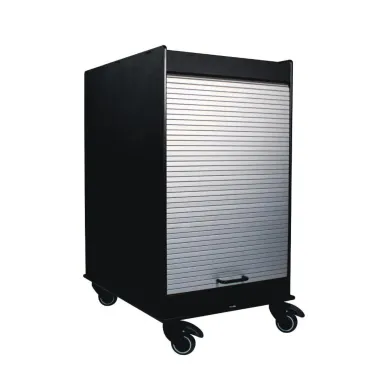
Among the listings that specify a type, the laboratory utility cart is the most common form, a multi-shelf unit on casters used to carry glassware, reagents and small instruments between benches. The laboratory equipment cart and the equipment transport cart sit close to it in function but are built heavier, sized to move a balance, a centrifuge or a sealed enclosure without lifting it by hand. A gas cylinder trolley is a different object entirely: a frame with a strap or chain that secures a compressed-gas cylinder upright while it is wheeled from a store to a point of use, where tipping is the hazard that matters. The stainless steel lab cart is defined by its surface rather than its shape, chosen where the cart enters a cleanroom, a wet lab or an area that is washed down, because a welded stainless frame resists corrosion and takes repeated disinfection.
These carts support work in cell culture, microbiology and histology without being analytical instruments themselves, since the samples and the sterile consumables they carry have to reach a bench without contamination. A stainless steel lab cart suited to a cleanroom is the form a bioprocessing or biomanufacturing suite reaches for, where wash-down surfaces meet the hygiene standard the room is held to. Gas cylinder trolleys also serve molecular biology and genomics benches that run CO2 or nitrogen lines to incubators and freezers.
The brands behind the material handling listings
The supplier mix here, Various, Unknown, ULINE, Abovo, Metro, is led by generic and unbranded entries rather than by a single dominant maker, which is typical of utility equipment where the frame matters more than the badge. ULINE, Abovo and Metro appear as named makers a buyer can match a model to. For the buyer this means parts such as casters, shelves and straps are broadly interchangeable across the generic listings, comparison rests on load rating and material rather than on model lineage, and price is set more by size and construction than by brand premium. Replacement parts can be sourced via Questpair where a specific component is needed.
What a used material handling cart costs here
Of the listings, 97 percent are used, drawn from 11 verified suppliers and distributors across 5 countries. Prices range from EUR 43 to EUR 55.958. That range covers everything from a light single-shelf utility cart to a large stainless transport system, so the figure a buyer lands on depends chiefly on size, load rating and whether the frame is painted steel or welded stainless. Used and refurbished units are listed below the price of new, and where warranty matters it is arranged in consultation for the specific listing.
Frequently asked questions
What is material handling equipment in a lab setting?
It is the class of carts, trolleys and transport fixtures that move instruments, samples, reagents and gas cylinders around a laboratory. These are supporting fixtures rather than measuring instruments, so they are chosen on capacity, footprint and surface material.
What does material handling equipment mean here?
In this category it refers to wheeled and mobile fixtures used to transport laboratory loads between rooms, benches and storage. It covers utility carts, equipment transport carts, gas cylinder trolleys and stainless steel lab carts.
How do these carts and trolleys work?
They carry a load on one or more shelves or a braced base mounted on castors, with brakes to hold position and chains or straps on gas cylinder models to secure the bottle. The frame material and wheel size are matched to the rated load so the cart stays stable when moved.
What types are there?
The listed types include laboratory utility carts, laboratory equipment carts, equipment transport carts, gas cylinder trolleys and stainless steel lab carts. Utility carts handle glassware and reagents, equipment carts carry heavier instruments, and gas cylinder trolleys are built around a securing chain and tilted base.
What is material handling equipment used for?
It moves sample batches, reagents, instruments and compressed-gas bottles through a lab. A stainless cart carries plates and media flasks between an incubator and a hood, equipment transport carts move centrifuges or imaging units between shared rooms, and gas cylinder trolleys bring CO2 and nitrogen bottles from a store to the point of use.
How do I choose the right cart?
Start with the load it carries and the route it travels, since rated capacity sets the frame, shelf count and wheel size. Then measure the narrowest doorway on the route, and pick the surface material based on whether aggressive reagents are in play.
Refurbished versus used, what is the difference for a cart?
Both are offered below the price of a new equivalent. For a fixture that carries no calibration and wears predictably at the castors, the practical difference comes down to the condition described in the individual listing rather than a formal grading.
How much does material handling equipment cost?
Prices range from EUR 43 to EUR 55.958, averaging around EUR 1.089. The low end covers bare two-shelf utility carts and the high end covers heavy stainless assemblies built for a specific instrument, so the figure reflects load rating and surface material.
What brands are listed?
The names that recur are Various, Unknown, ULINE, Abovo and Metro. Many listings carry a generic or unattributed maker, which reflects how these carts are sold as commodity fixtures rather than branded instruments.
Is there a warranty on a refurbished cart?
A warranty is often possible and is arranged in consultation for the specific listing. Because a cart carries no calibration, the condition of the castors, welds and brakes matters more than a warranty term on these fixtures.
Can I get replacement parts like castors or shelves?
Parts for these fixtures can be sourced via Questpair. Castors and locking shelves are the components most likely to wear, and a replacement set of wheels is cheap enough to budget for when buying used.
How long does a lab cart last?
These fixtures stay serviceable for years because they carry no calibration and wear predictably. The castors are the first part to go, and a stainless frame holds up where solvents and repeated cleaning would corrode painted steel.
New or used, which should I buy?
Used and refurbished carts are listed below the price of a new equivalent. For a fixture that wears at the castors and needs no calibration certificate, used is the straightforward choice at almost every point in the price range; check the individual listing for condition and warranty terms.
Where can I buy material handling equipment?
The catalogue lists 236 items from 11 verified suppliers and distributors across 5 countries. New, used and refurbished units are listed together.
What are the lead time and shipping like?
Lead time and shipping depend on the individual listing and the supplier handling it. The product page for a given cart states what applies to that unit.
Does a lab cart need calibration or maintenance?
No calibration applies, since these are supporting fixtures and not measuring instruments. Maintenance is limited to the castors and brakes: wheels seize or lose their brakes over time, and a replacement set restores the cart.
Which types are listed most and who reaches for each?
The laboratory utility cart is the common workhorse, used to move glassware and reagents between benches. Equipment transport carts suit labs moving heavier instruments like centrifuges, gas cylinder trolleys go to anyone handling compressed-gas bottles, and stainless steel lab carts are reached for in cleanroom and wet-chemistry areas.
Which brands dominate and what does that mean for me?
A large share of listings carry a generic or unattributed maker, with recognised names like ULINE, Abovo and Metro appearing among them. For a buyer this means comparison runs on capacity, shelf count, surface material and castor quality rather than on the badge, though a recognised name can make matching shelves and castors easier to source later.
What separates the cheap carts from the expensive ones?
The bottom of the range is a simple two-shelf utility cart in polymer or powder-coated steel, suited to dry storage and general transport. The top is a heavy stainless assembly braced for a specific instrument, where the material resists solvents and repeated cleaning and the frame carries a higher rated load.