
Immunology & Antibody Research
We personally find you the right new, used and refurbished immunology & antibody research instruments & equipment from verified suppliers.
Immunology work hinges on detecting a specific protein against a background of thousands, and nearly every step turns on whether a given antibody binds its target and nothing else. That demand runs through the whole bench: the reagent that tags the antigen, the instrument that reads the signal, the cold chain that keeps the reagent from degrading between runs. Questpair carries 5348 listings for this work from 135 suppliers. Specificity and sensitivity are the two properties everything is measured against, and a setup that gets one right can still miss the other, which is why the choice of detection method shapes the rest.
Updated:
Immunology & Antibody Research product list


Not the exact instrument you need?
Tell our scientists what you are after. We track it down, including off-market supply.

Not the exact instrument you need?
Tell our scientists what you are after. We track it down, including off-market supply.
Showing 1–40 of 2,213 listings
Show 40 more listingsBuying guide
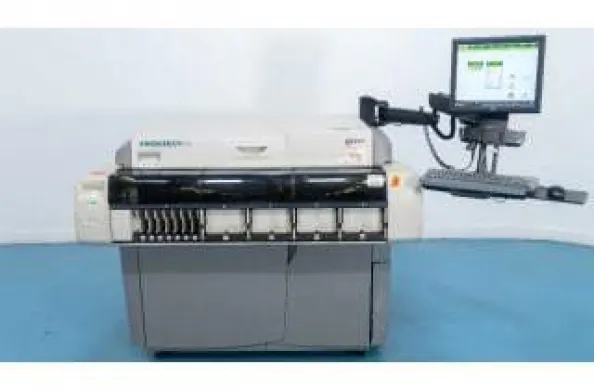
Price here spans more than any one category on its own, because the set runs from a single vial of reagent to a complete multi-laser instrument. At the low end, listings start at EUR 1, which is where individual antibody aliquots, cytokine standards and blotting consumables sit. At the high end, EUR 177.981 belongs to the detection hardware, a flow cytometer or an automated immunoassay platform with the fluidics and optics that command most of the cost. Everything in between is reader-grade equipment: microplate readers, cell counters and blotting systems, where price tracks channel count, automation and sensitivity.
The catalogue weights heavily toward used equipment. 99 percent of the listings are used. For the reagent end that matters in a specific way, because an antibody and a cytokine standard both degrade, so condition on a vial is a question of storage and remaining shelf life rather than wear. For the instrument end it is the familiar trade: a used cytometer or plate reader is listed below a new one, and warranty is arranged in consultation for the individual listing rather than set across the catalogue.
Across 135 suppliers in 75 countries, the practical split is worth holding in mind when budgeting. The reagents are the recurring cost and the instruments the capital one, and a setup that looks affordable on the hardware can still be carried by what the assays consume. Where two listings cover the same method, the one that states its conjugate, its clone or its laser configuration is the one you can actually match to the rest of the bench.
Types of Immunology & Antibody Research
This field draws on antibodies and the reagents that go with them, flow cytometers, western blotting apparatus, immunoassay systems, cell counters, microplate readers, immunohistochemistry staining equipment and cytokine standards. Immunology and antibody research is not a single procedure but a set of detection methods, each built around reading where and how much of a target protein sits in a sample. The classes below are the ones the marketplace carries, and they divide by what the question is: how many cells carry a marker, how much of a protein is present, or where in a tissue it sits.
Which method answers which question?
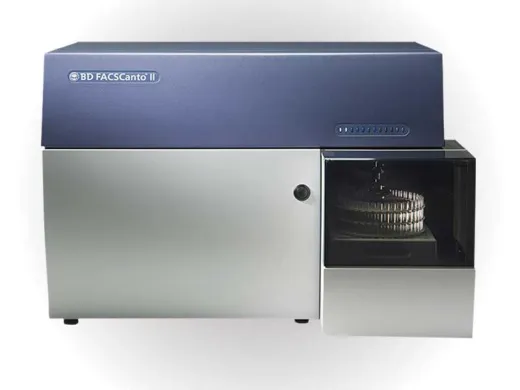
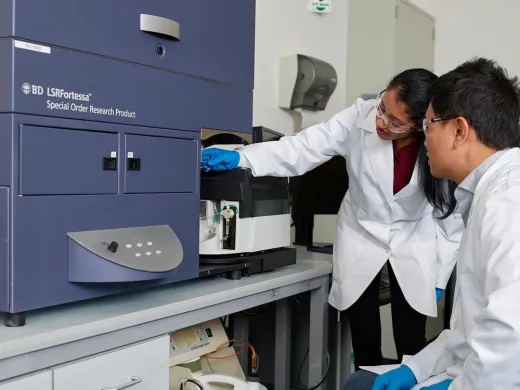
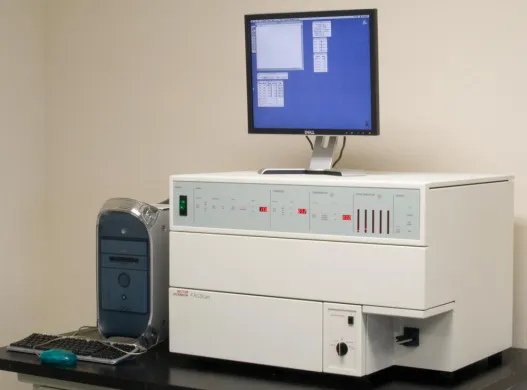
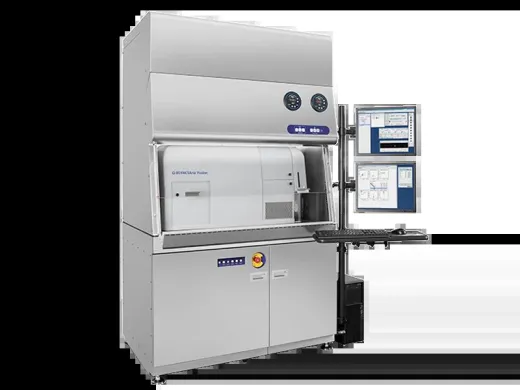
The choice between techniques comes down to what you need to know, not to preference. When the question is what fraction of a mixed population expresses one or several markers, the work runs through a flow cytometer: cells pass single file through a laser, and fluorophore-conjugated antibodies bound to surface or intracellular targets light up as each cell crosses the beam. Flow cytometry antibodies are sold pre-conjugated for exactly this, matched to the detector's excitation lines.
When the question is how much of a protein is in a lysate and at what molecular weight, the work runs through western blotting. Proteins are separated by size, transferred to a membrane and probed with a primary antibody, then a labelled secondary. The readout is a band whose position confirms identity and whose intensity estimates quantity.
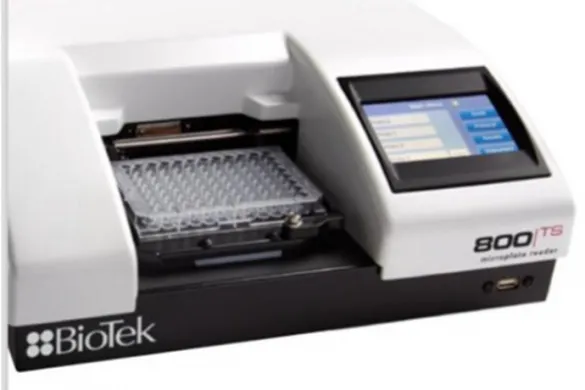
When the question is a concentration across many samples at once, immunoassay systems and microplate readers take over. An ELISA on a plate captures the antigen, builds up a labelled sandwich and develops a colour or luminescence that a plate reader turns into a number against a standard curve. Cytokine standards supply the known concentrations that curve is built from.
Where the steps constrain each other
The methods share a dependency that a single category page cannot show: the antibody is the common part, and its format decides which instrument can read it. A clone sold unconjugated suits a western blot, where a secondary does the labelling, but it will not run on a cytometer without a fluorophore attached to the right emission channel. Buying the detection instrument and the reagent separately, without checking that the conjugate matches the reader, is how a setup ends up with a cytometer and antibodies it cannot excite.
Sample counting sits upstream of all of it. A cell counter sets the input number so that a cytometry run or a plate assay starts from a known density, because both read ratios and concentrations that only mean something against a defined starting population. Immunohistochemistry runs on a different axis again: the question there is location, so the antibody stains a tissue section and the readout is a microscope image rather than a signal from an instrument. A single antigen can be followed from counted cells, through a quantified lysate, to a stained section, and each leg wants its own reagent format even when the clone is the same.
Frequently asked questions
What equipment do you need at minimum to start immunology and antibody work?
At minimum you need a detection method matched to your question and the antibody format it reads: a plate reader with an ELISA kit for concentration work, or a western blotting system with primary and secondary antibodies for protein identity at a given molecular weight. A cell counter is the common upstream piece, since both cytometry and plate assays read against a known starting density. Cold storage to hold reagents between runs is part of that minimum, because antibodies and cytokine standards degrade.
Which step is the most expensive to set up?
The detection hardware carries most of the capital cost, with flow cytometers and automated immunoassay platforms at the top because of their fluidics and optics. Listings reach up to EUR 177.981 at that end. A western blotting setup or a microplate reader costs far less than a multi-laser cytometer.
What can I buy used and what is better bought new?
Instruments such as cytometers, plate readers and blotting systems are commonly bought used, and used or refurbished units are listed below new ones. Reagents are a different case: an antibody or cytokine standard degrades, so a used vial is a question of storage history and remaining shelf life rather than wear, and a listing that states those details is the one you can judge. Warranty on any used instrument is arranged in consultation for the specific listing.
What has to match between the antibody and the instrument?
The antibody's format decides which instrument can read it. An unconjugated clone suits a western blot, where a secondary does the labelling, but it will not run on a cytometer unless a fluorophore is attached to an emission channel the detector can excite. Check the conjugate against the reader's excitation lines before buying the two separately, or you end up with a cytometer and antibodies it cannot read.
Roughly what does a complete setup cost?
Prices across this work run from EUR 1 for a single antibody aliquot, cytokine standard or blotting consumable up to EUR 177.981 for a flow cytometer or automated immunoassay platform. In between sit microplate readers, cell counters and blotting systems, where price tracks channel count, automation and sensitivity. Hardware is the capital cost and reagents are the recurring one, so a setup that looks affordable on the instrument can still be carried by what the assays consume.
Where does cutting the budget cost you later?
Specificity and sensitivity are the two properties everything is measured against, and a cheaper instrument or reagent that gets one right can still miss the other. Saving on a reagent whose conjugate, clone or laser configuration is not stated can leave you unable to match it to the rest of the bench. The recurring reagent cost is also where an underspecified budget runs short, since the assays consume reagents on every run while the instrument is paid once.
Which equipment is shared with other lab work?
The cell counter sits upstream of many assays and is used anywhere a defined starting density matters, not only in immunology. Microplate readers run colorimetric and luminescent assays beyond ELISA, and cold storage holds reagents across most molecular work. The antibody itself is the part specific to the target, and the same clone can be followed from counted cells through a lysate to a tissue section if each leg has the right reagent format.
What should I check on used equipment for this work?
On an instrument, confirm the laser or detector configuration and channel count match the reagents you plan to run, since a cytometer is only useful with fluorophores it can excite. On reagents, check storage conditions and remaining shelf life rather than physical wear, because antibodies and cytokine standards degrade over time. For both, a listing that states its clone, conjugate or optics is the one you can actually match to the rest of the bench, and warranty is arranged in consultation for the specific listing.
About Questpair
Questpair is the European marketplace for lab equipment, where AI-prepared cases and personal specialists guide every purchase. We work with 247 verified suppliers across 38 countries to find buyers the right new, used or refurbished instruments, with response within 1 hour and significant savings vs buying new.
Personal · Fast · Reliable · Affordable