

Antibodies and reagents
We personally find you the right used, refurbished and new antibodies and reagents instruments & equipment from verified suppliers.
Antibodies and reagents are consumable biological materials used to detect, label, isolate and manipulate specific molecules in life sciences research. The category covers antibodies raised against defined targets, enzymes, stains, culture media, cell lines and the molecular tool kits used in genome work. On the Questpair catalogue, 2276 listings sit under this heading, of which 99 percent are listed as used. New, used and refurbished items appear across 19 verified suppliers and distributors in 13 countries. Prices span a wide laboratory range, from EUR 12 for a single consumable to EUR 172.178 for instrument-grade kits and systems. The listings split into primary cells, immunohistochemistry, genome editing tools and several more specialised reagent groups.
Updated:
Antibodies and reagents product list


Not the exact instrument you need?
Tell our scientists what you are after. We track it down, including off-market supply.
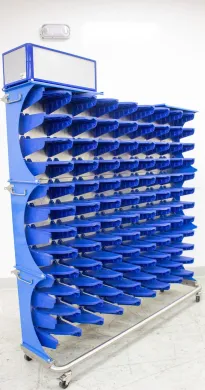
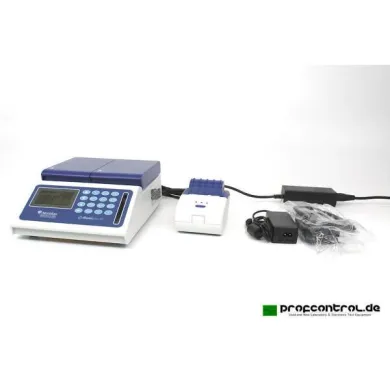
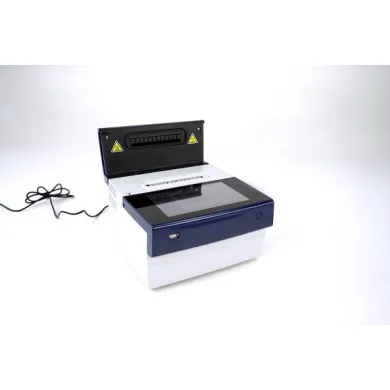
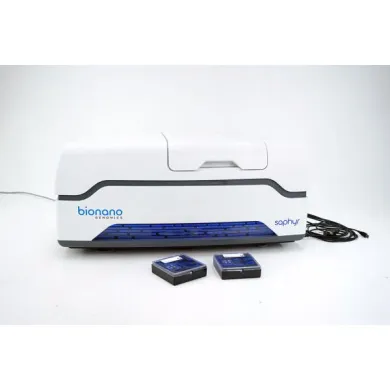
Not the exact instrument you need?
Tell our scientists what you are after. We track it down, including off-market supply.
Showing 1–40 of 1,373 listings
Show 40 more listingsBuying guide
What decides a reagent purchase?
With antibodies and reagents, the question that settles the purchase is not the format of the vial but whether the material will do what the protocol asks of it. An antibody validated for western blotting may perform poorly in flow cytometry, and a cell line authenticated for one passage history behaves nothing like the same line after forty passages. So the first thing to pin down is the intended application, and from there the host species, the clonality, the conjugate, and the lot. Everything else on the datasheet follows from that one decision.
That emphasis on provenance is what makes condition unusual in this category. Most laboratory equipment is mechanical, and a used unit is judged on wear. A reagent is judged on whether it is still active and still what the label says. On a used listing, the points to verify are the storage history, the remaining shelf life, the lot number against any published validation, and for cells the authentication and mycoplasma status. A reagent that has been through an uncontrolled freeze-thaw cycle can be worthless whatever the datasheet once promised, so the chain of custody matters more here than any specification.
Price in this category spans an enormous range, because the heading holds both a single antibody aliquot and a complete cell isolation system. A buyer will see cost run from EUR 12 to EUR 172.178. That spread covers everything from a budget consumable a single project can absorb to instrument-grade kits that need a capital line. Refurbished and used items listed for sale sit below their new equivalents, so a buyer working to a fixed budget can often find the same reagent family listed at a lower figure from a verified supplier. Where warranty or support matters on the instrument-grade listings, those terms are arranged in consultation against the specific listing rather than set across the catalogue, so the individual listing is where the real comparison happens. The 19 suppliers behind these listings include large reagent houses, which makes a given antibody clone straightforward to compare across sources.
Types of Antibodies and reagents
Primary and cultured cells
Primary and cultured cells are the living material a reagent protocol is tested on, and this is the largest group among the listings that specify a type. The distinction within it is between primary cells, taken directly from tissue and limited in how many times they divide, and established cell lines that proliferate indefinitely. Researchers in cell culture reach for established lines when they need a reproducible, scalable population, and for primary cells when physiological fidelity matters more than longevity. These populations underpin cell imaging, drug screening and the whole of functional cell biology, and much of molecular diagnostics development begins with a characterised line.
Immunohistochemistry
Immunohistochemistry reagents stain specific proteins in intact tissue sections, so that a pathologist or researcher can see where a target sits within the architecture of a sample rather than merely that it is present. The group covers the primary and secondary antibodies, the detection systems and the counterstains that make up a histology workflow. What separates these from blotting reagents is that the antibody must work on fixed, often paraffin-embedded tissue, a far harsher context than a lysate. Immunohistochemistry is central to histology and to tissue-based molecular diagnostics, and a buyer specifies antibodies validated for formalin-fixed material.
Genome editing and molecular tools
Genome editing and molecular tools are the enzymes, guide constructs and delivery reagents used to cut, insert or rewrite DNA. The group spans CRISPR components, nucleases, ligases and the cloning kits that assemble them. What distinguishes these reagents is that they act on nucleic acids rather than detecting proteins, so sequence specificity and enzymatic activity are the figures that matter. They are the working materials of gene editing and synthetic biology, and feed into the construction work behind biomanufacturing and much of molecular biology, where a research group builds and modifies the genetic parts a project depends on.
Western blotting
Western blotting reagents separate proteins by size, transfer them to a membrane and probe them with target-specific antibodies. The group holds the gels, transfer buffers, blocking agents and the primary and secondary antibodies that produce a band. What sets them apart from immunohistochemistry reagents is that the protein is denatured and immobilised on a membrane, so an antibody validated for blotting may recognise a linear epitope it would miss in intact tissue. Electrophoresis and protein purification workflows lean on these materials, and western blotting remains a standard confirmation step across proteomics and molecular biology.
Flow cytometry antibodies
Flow cytometry antibodies are conjugated to fluorescent dyes so that individual cells can be counted and sorted by the markers on their surface. The group is defined by its conjugates, since a panel is built by matching each antibody to a fluorophore the instrument can resolve without spectral overlap. That conjugate choice, rather than the antibody clone alone, is what a buyer specifies here. Flow cytometry sits at the centre of immunology and haematology, and these antibodies drive immunophenotyping, cell sorting and the single-cell analysis behind much of cell biology and molecular diagnostics.
Immunofluorescence
Immunofluorescence reagents attach a fluorescent label to a target antibody so that the protein can be located by microscope within a fixed cell or tissue. The group overlaps with immunohistochemistry in intent but differs in detection: the signal is read as fluorescence under a microscope rather than as a coloured precipitate. That makes it the natural choice when several targets must be imaged at once in different colours. Immunofluorescence underpins cell imaging and subcellular localisation studies, and is a routine tool across cell biology and the microscopy side of molecular diagnostics.
Cell isolation equipment
Cell isolation equipment separates a wanted cell population from a mixed sample, using magnetic beads, antibody coatings or density gradients. The group differs from the antibody reagents around it because it includes the hardware and the consumable kits that physically partition cells rather than label them. A buyer chooses between positive selection, which tags and retains the target, and negative selection, which removes everything else. This equipment is foundational to immunology and to any cell culture or bioprocessing workflow that needs a pure starting population, and it feeds directly into downstream immunoassay and functional work.
Cell culture media and reagents
Cell culture media and reagents are the nutrient formulations, sera, supplements and buffers that keep cells alive and growing. This is the smallest group among the listings that specify a type, and it is defined by chemistry rather than by a target: the formulation determines which cell type will thrive and how it behaves. The distinction a buyer draws is between serum-containing and defined, serum-free media, the latter demanded wherever reproducibility or regulatory clarity matters. These reagents support all of cell culture and are the quiet foundation beneath bioprocessing, biomanufacturing and cell-based immunoassay work.
Frequently asked questions
What are antibodies and reagents?
They are consumable biological materials used to detect, label, isolate and manipulate specific molecules in life sciences research. The category covers antibodies raised against defined targets, enzymes, stains, culture media, cell lines and the molecular tool kits used in genome work.
What does the term antibodies and reagents actually mean on this page?
It is a broad heading grouping consumables and small instruments that share a biological function rather than a single format. In practice it spans primary cells, immunohistochemistry stains, genome editing enzymes, blotting materials, flow cytometry conjugates and culture media.
How do antibodies and reagents work?
An antibody binds a defined target through its clone and host species, and a label or conjugate makes that binding visible or sortable. Enzymes and molecular tools act instead on nucleic acids, cutting, joining or rewriting sequence, while media supply the chemistry that keeps cells alive.
What types of antibodies and reagents are there?
The listings split into primary and cultured cells, immunohistochemistry, genome editing and molecular tools, western blotting reagents, flow cytometry antibodies, immunofluorescence, cell isolation equipment, and cell culture media and reagents. Each is defined by its application rather than by a shared vial format.
What are antibodies and reagents used for?
They support detection, labelling, isolation and modification of specific molecules across immunology, haematology, histology, proteomics and molecular biology. Concrete uses include immunophenotyping, protein confirmation by western blot, tissue staining, gene editing and keeping cell populations alive and growing.
How do I choose the right reagent?
Start with the intended application, because an antibody validated for western blotting may perform poorly in flow cytometry. From there pin down the host species, the clonality, the conjugate and the lot, since everything else on the datasheet follows from the application.
What is the difference between refurbished and used in this category?
For the instrument-grade listings such as cell isolation hardware or flow cytometers, the distinction follows normal equipment terms, with condition stated on the listing. For the consumable reagents themselves, the meaningful question is storage history, remaining shelf life and lot provenance rather than mechanical wear.
How much do antibodies and reagents cost?
Prices range from EUR 12 to EUR 172.178, with an average around EUR 12.802. That spread covers everything from a single antibody aliquot to instrument-grade cell isolation kits and systems.
Which are the best-known brands here?
The listings include Invitrogen, Miltenyi Biotec, BD, Beckman Coulter and Thermo Fisher Scientific. These are large reagent and instrument houses, so a given antibody clone or kit is often available from more than one of them.
Is there a warranty on refurbished items?
A warranty is often possible and is arranged in consultation against the specific listing rather than set across the catalogue. For the consumable reagents, what matters more is the stated shelf life and storage condition than any warranty.
Can I get parts for the instrument-grade listings?
Parts can be sourced via Questpair. This applies to the hardware in the category, such as cell isolation and flow cytometry instruments.
What is the shelf life or lifespan of these items?
Reagents carry a defined shelf life printed on the label, and that figure depends heavily on correct storage and avoiding uncontrolled freeze-thaw cycles. On a used listing, check the remaining shelf life and storage history, because a reagent that has degraded is worthless whatever the datasheet once promised.
New versus refurbished, which should I buy?
Used and refurbished items are listed at lower prices than their new equivalents, so a fixed budget can often reach the same reagent family or instrument from a verified supplier. Where warranty or support matters, those terms are arranged in consultation on the specific listing, so compare at that level.
Where can I buy antibodies and reagents?
The 2276 listings under this heading come from 19 verified suppliers and distributors across 13 countries on the Questpair catalogue. New, used and refurbished items appear across those suppliers.
What are the lead time and shipping like?
Lead time and shipping depend on the individual listing and the supplier holding the stock, since reagents often need temperature-controlled transport. Contact Questpair with the listing for details, and specialists respond within an hour.
Do these reagents need calibration or maintenance?
Consumable reagents are not calibrated; they are stored, aliquoted and used before expiry. The instrument-grade items in the category, such as flow cytometers and cell counters, do require routine calibration and maintenance according to the unit's own procedures.
Which types are listed most, and who reaches for which?
Primary and cultured cells form the largest group among listings that specify a type, and cell culture media and reagents the smallest. Cell biologists and screening groups reach for cell lines, pathologists for immunohistochemistry, immunologists and haematologists for flow cytometry antibodies, and gene editing teams for the molecular tools.
Which brands dominate this category and what does that mean for a buyer?
Invitrogen, Miltenyi Biotec, BD, Beckman Coulter and Thermo Fisher Scientific run through the listings, and several of these are large reagent houses. That breadth makes a given antibody clone straightforward to compare across sources, which matters when you need to match a conjugate or validation to your protocol.
What separates the cheapest listings from the most expensive?
The bottom of the band is a single consumable such as an antibody aliquot that one project can absorb, near EUR 12. The top, near EUR 172.178, is instrument-grade kits and systems like a complete cell isolation setup that needs a capital line, which is why the range runs so wide.