
Ohaus laboratory equipment
We personally find you the right new, used and refurbished ohaus laboratory equipment from verified suppliers.
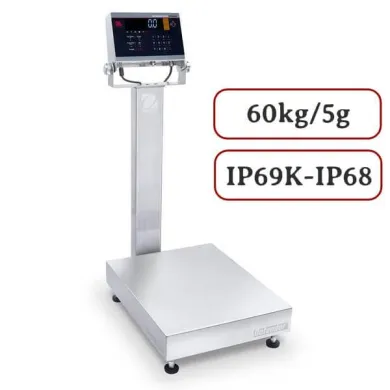
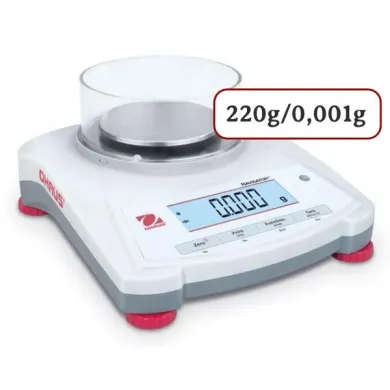
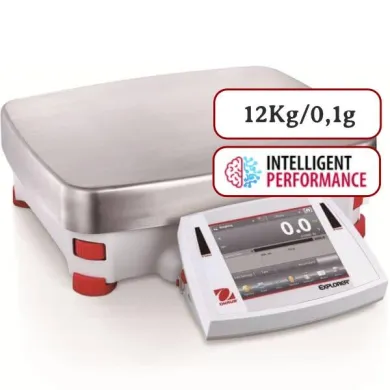
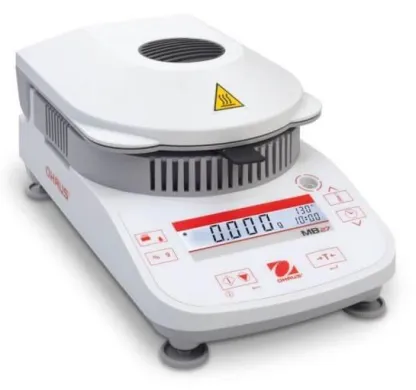
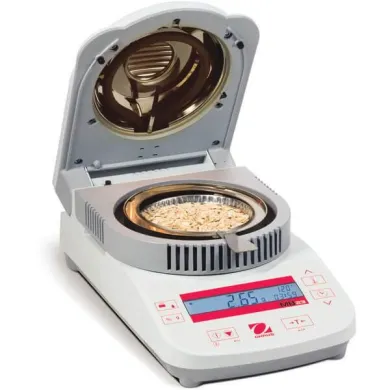
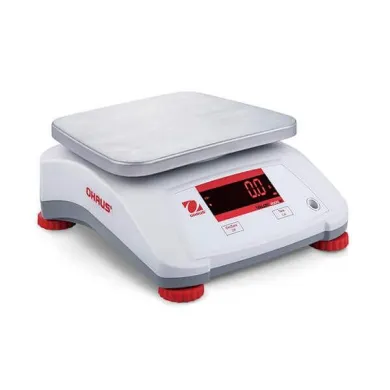
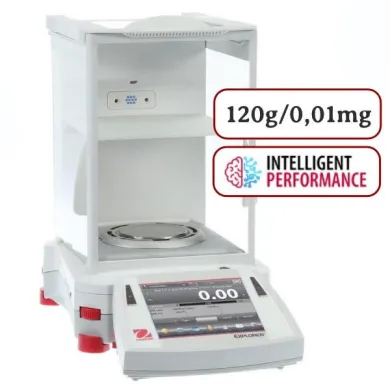
Ohaus balances on Questpair run the length of the maker's range, from the research-grade Explorer and Pioneer analytical lines to the Scout and Navigator portable scales built for routine bench work. The listings sit at the weighing end of the catalogue: among the entries that specify a type, the spine is analytical balances, precision balances and general laboratory scales, with density determination and parts counting units alongside them. Across the Questpair catalogue 1986 of these are listed from 18 verified suppliers and distributors, spread over 7 countries. Prices reach from EUR 1 to EUR 14.505, the lower figures covering accessories and spares rather than complete instruments. The spread is wide because a four-decimal analytical head and a plastic-pan field scale answer two different jobs under one maker's name.
Updated:
Ohaus Laboratory equipment product list
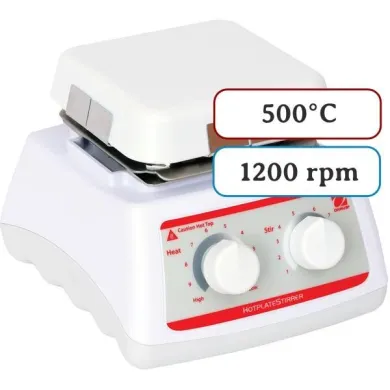
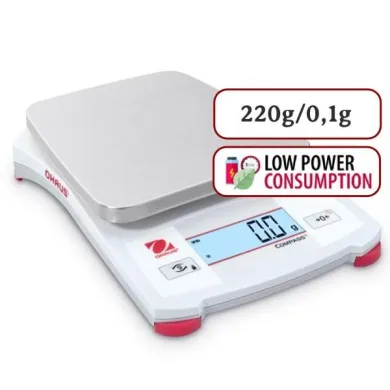


Not the exact instrument you need?
Tell our scientists what you are after. We track it down, including off-market supply.
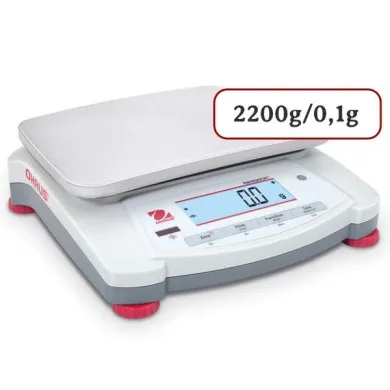
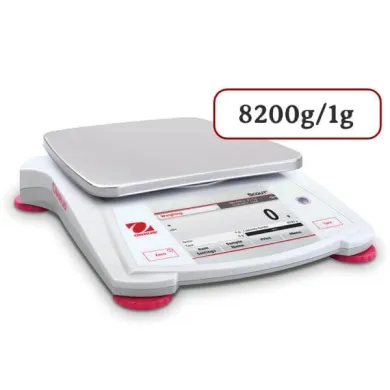
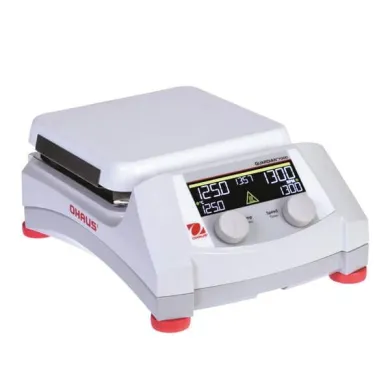
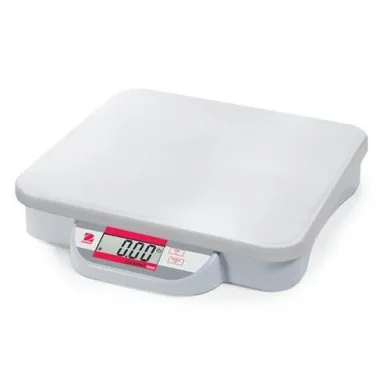
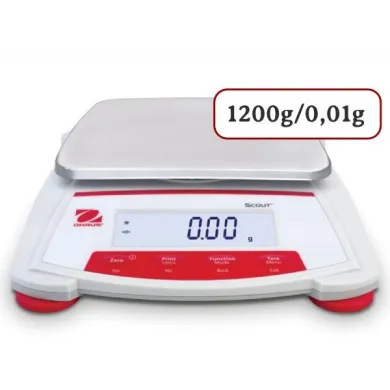
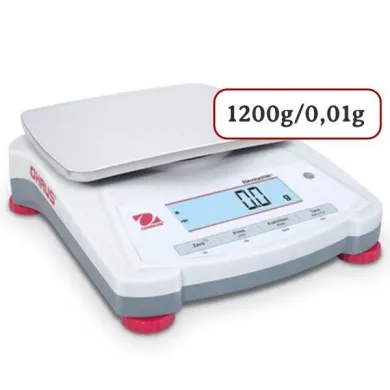
Not the exact instrument you need?
Tell our scientists what you are after. We track it down, including off-market supply.
Showing 1–40 of 1,585 listings
Show 40 more listingsBuying guide
Choosing an Ohaus laboratory balance
The first decision is readability, and with Ohaus it is also the decision that splits the catalogue. Fix the decimal places from your method's tolerance before you look at anything else: four or five decimals point you at Explorer or Pioneer, one to three at Adventurer or Scout. Only then weigh capacity, because an analytical head that resolves 0.1 mg will carry a few hundred grams at most, and a precision balance that clears several kilograms cannot read below 0.001 g. Buying for the wrong end of that trade is the common mistake in this range.
Calibration is where Explorer and Pioneer part on a used unit. An Explorer calibrates internally with a motorised weight, so verify that mechanism actually cycles and settles; a Pioneer calibrates externally, so confirm the correct class weights come with it or budget for them. On any used balance of this maker, check the draft shield for cracked or missing panels, confirm the levelling feet and bubble are intact, and ask the seller for a recent linearity and repeatability check across the range, not a single point. The load cell is the part with a service life worth asking about, and drift or a sticking pan points at it.
On price, the band is wide because spares list alongside instruments, so read what a low figure actually covers before reading it as a bargain. A used Explorer often sits below a new lower-spec Pioneer, which makes condition worth more than series name here. Compatibility traps are mostly Ohaus's own accessories: density kits, in-use covers, auxiliary displays and printer cables are specified per series and per generation, so confirm a kit matches the exact model rather than the line. Where a used listing needs a weight set or a replacement shield, those parts can be sourced through Questpair, and a warranty is arranged in consultation on the individual listing.
Which Ohaus weighing series are listed?
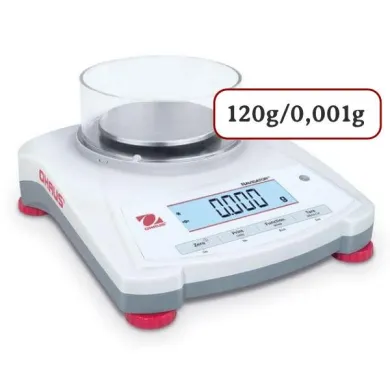
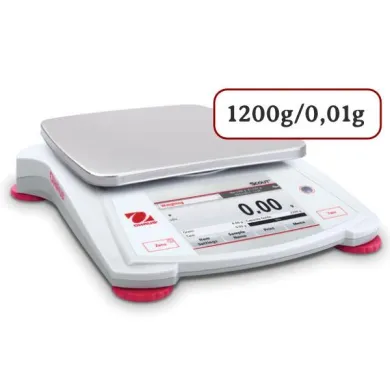
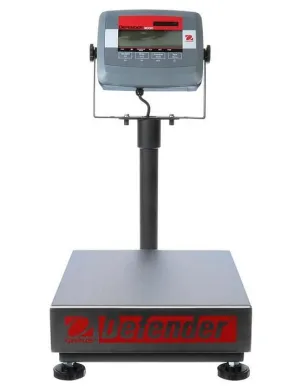
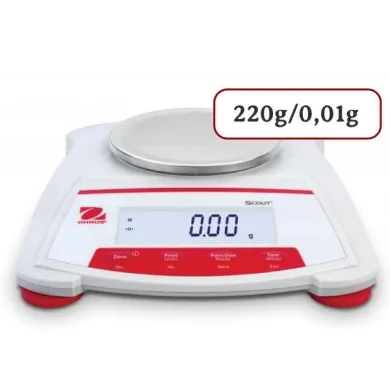
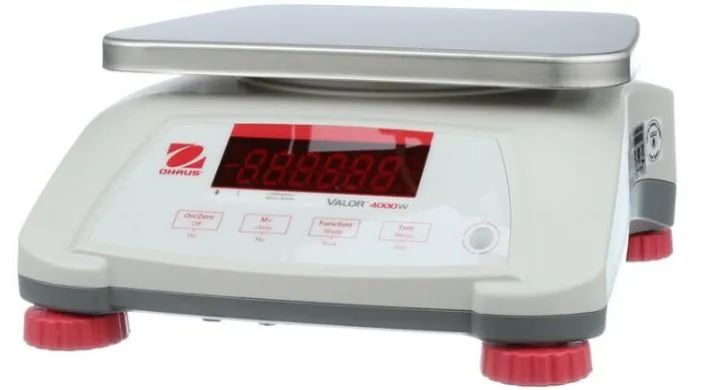
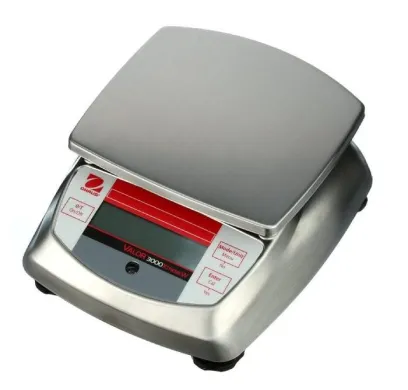
Among the listings that specify a type, the intersection is built from analytical balances, precision balances, general laboratory scales, and smaller counts of density determination and parts counting units. The series map onto these cleanly. Analytical work, readability to four or five decimal places, belongs to Explorer and Pioneer, Ohaus's enclosed-chamber lines with draft shields. Precision weighing, one to three decimals over a larger capacity, is where Adventurer and Scout sit; the Adventurer carries a colour touchscreen and internal calibration, the Scout a simpler keypad for teaching and routine labs. Ranger and Defender are bench and floor scales rather than balances, and turn up here where a listing classes them as a laboratory scale. Navigator and Valor are portable, Navigator for the lab, Valor for washdown and food handling. The density determination entries are usually an Explorer or Adventurer fitted with the maker's density kit rather than a separate model.
Where the Explorer and Pioneer diverge
The deciding specification across the Ohaus range is readability against capacity, and the two analytical lines show it best. An Explorer analytical head reads to 0.1 mg with capacities around 120 to 320 g and adds automatic internal calibration, a motorised draft shield on some models, and a wider menu set. Pioneer covers the same readability band but with external or semi-automatic calibration and a fixed shield, which is why it lists below the Explorer for the same decimal places. Step down to precision and the trade reverses: Adventurer and Scout read to 0.001 or 0.01 g but carry capacities from a few hundred grams up to several kilograms, the figure that matters when you are weighing bulk reagent rather than a sample. For parts counting, the deciding number is the smallest piece weight the balance can resolve, which ties back to readability again; a Scout counting head and a Navigator differ mainly in how fine that floor sits. Match the decimal places to the tolerance your method states, then confirm the capacity clears your heaviest routine load, because an analytical head that reads to 0.1 mg will top out long before a precision balance does.
How price and condition break down
Across these listings 56 percent are used. The price band runs from EUR 1 to EUR 14.505, and the two ends describe different things. The floor covers draft shield panels, calibration weights, pan supports and other spares that carry a listing of their own. Complete balances cluster well above that, with the enclosed analytical lines sitting highest and the portable precision scales lowest. The average across everything is EUR 1.764. A used Explorer in working order typically lists below a new Pioneer of lower specification, so condition and series both pull on the final figure. Used and new units appear side by side here; the used ones are listed at lower prices than their new equivalents.
Frequently asked questions
Which Ohaus balance series are made for the lab?
The listed range covers Explorer and Pioneer for analytical work, Adventurer and Scout for precision weighing, Ranger and Defender as bench and floor scales, and Navigator and Valor as portable units. Among the listings that specify a type, the entries fall into analytical balances, precision balances, general laboratory scales, and smaller counts of density determination and parts counting balances.
How do the Explorer and Pioneer differ from Adventurer and Scout?
Explorer and Pioneer read to 0.1 mg with capacities around 120 to 320 g, so they suit samples that need four or five decimal places. Adventurer and Scout read to 0.001 or 0.01 g but carry capacities up to several kilograms, which is what you want for bulk reagent rather than a small sample.
How much does a used Ohaus balance cost?
Across the Questpair catalogue prices range from EUR 1 to EUR 14.505, with the average at EUR 1.764. The low end covers spares such as draft shield panels and calibration weights, while complete used balances sit higher, and used units are listed below their new equivalents.
Are refurbished Ohaus units available, and do they cost less?
Used and refurbished balances appear in the listings alongside new ones, and they are priced below new equivalents. Of these listings 56 percent are used, so the condition breakdown varies by what is on offer at a given time.
Which Ohaus model suits parts counting or density work?
For parts counting, the deciding figure is the smallest piece weight the balance can resolve, so a Scout counting head or a Navigator is matched to how fine that floor needs to sit. Density determination entries are usually an Explorer or Adventurer fitted with the maker's density kit rather than a separate model, so confirm the kit is included.
What should I check before buying a used Ohaus balance?
On an Explorer, confirm the internal calibration mechanism cycles and settles; on a Pioneer, confirm the correct class weights are included or budget for them. Check the draft shield for cracked or missing panels, verify the levelling feet and bubble, and ask for a recent linearity and repeatability check across the range rather than a single point.
Do Ohaus accessories carry over between the series?
Compatibility traps are mostly Ohaus's own accessories: density kits, in-use covers, auxiliary displays and printer cables are specified per series and often per generation. Confirm a kit matches the exact model rather than the line, and where a used listing needs a weight set or replacement shield, those parts can be sourced via Questpair.
How does Ohaus compare to other balance makers in this category?
Within the Ohaus range the split is readability against capacity: Explorer and Pioneer resolve to 0.1 mg at low capacity, Adventurer and Scout trade decimals for kilograms, and Pioneer sits below Explorer because its calibration is external rather than internal. The practical comparison is between those series and their calibration and capacity specs, so match the decimal places to your method tolerance and confirm the capacity clears your heaviest load before weighing one maker against another.