
Agilent laboratory equipment
We personally find you the right new, used and refurbished agilent laboratory equipment from verified suppliers.
Agilent laboratory equipment on Questpair runs along two instrument families above all: chromatography systems and the detectors, autosamplers and column compartments that feed them. The intersection holds 1866 listings from 22 verified suppliers and distributors across 11 countries. Among the listings that specify a type, the spine is gas chromatographs and high-performance liquid chromatography systems, with autosamplers and analytical instruments close behind and diode array detectors filling out the rest. This is where the InfinityLab LC line and the 8890 and Intuvo 9000 gas chromatographs sit alongside the modules that complete a bench, so a buyer here is usually assembling or replacing part of an analytical chain rather than buying a single standalone box.
Updated:
Agilent Laboratory equipment product list
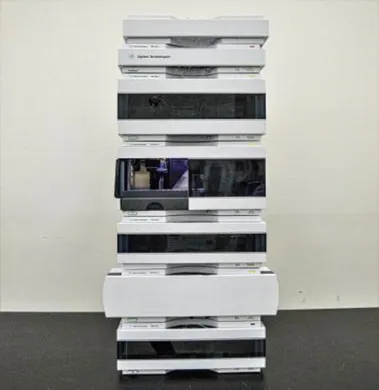
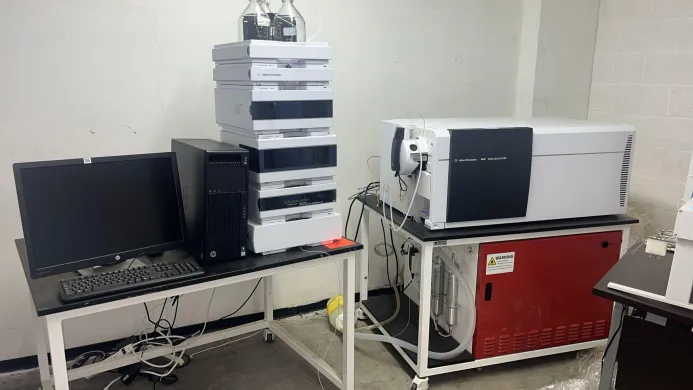


Not the exact instrument you need?
Tell our scientists what you are after. We track it down, including off-market supply.

Not the exact instrument you need?
Tell our scientists what you are after. We track it down, including off-market supply.
Showing 1–40 of 1,180 listings
Show 40 more listingsBuying guide
Choosing an Agilent laboratory instrument
The first decision is whether you are buying a complete analytical chain or filling a gap in one, because Agilent's LC and GC platforms are sold as modules on this marketplace and a listing named "InfinityLab" may be a single pump or a full stack. Read the configuration in the listing, not the family name, and confirm that a pump, autosampler, column compartment and detector are all present before treating a price as the cost of a working system.
Between gas chromatographs, let throughput decide: the Intuvo 9000's direct-heating design cycles faster than the 8890's conventional oven, but the 8890 takes standard J&W coiled columns while the Intuvo requires its planar-column consumables, which is a running-cost difference worth pricing before committing. On the liquid side, check the pressure rating against the columns you intend to run, since a 600 bar module cannot drive the sub-two-micron columns that a 1300 bar configuration can.
On a used unit, the wear points are specific. On a GC, ask for the service history of the EPC flow modules and the injector, and check the column-oven cycle count where available. On an LC, the pump seals and the autosampler needle and injection valve are the consumable-adjacent parts that age, so a seller should be able to show recent pressure-stability and injection-precision records. A diode array detector should come with a recent lamp-hours figure.
Compatibility traps sit inside Agilent's own range. MassHunter software versions are tied to instrument firmware, so confirm the data system matches the hardware generation. GC/MS pairings require the MSD to match the gas chromatograph's interface, and InfinityLab modules of different pressure classes should not be mixed in one stack. Parts can be sourced via Questpair when a module needs completing.
Agilent chromatography families on the bench
Among the listings that specify a type, the catalogue sorts into chromatographs and the modules around them. The gas chromatographs centre on the 8890 GC System and the Intuvo 9000, Agilent's two current GC architectures, with older platforms still appearing. The liquid side runs on the InfinityLab LC Series, which arrives as separate modules rather than a sealed unit: a pump, a column compartment, an autosampler and a detector stacked together. That modularity is why autosamplers and column compartments show up as their own listing types here, and why a diode array detector is often sold on its own. Mass spectrometry reaches this pair through the MSD and triple quadrupole GC/MS systems, which couple to the same gas chromatographs.
Where the 8890, the Intuvo and the InfinityLab modules diverge
The deciding parameter differs by family. Between the two gas chromatographs, the 8890 keeps the conventional capillary-column oven and takes J&W columns in the familiar coiled format, while the Intuvo 9000 uses a planar-column and direct-heating design that removes the oven ramp as the rate limiter, so run-to-run throughput is the axis that separates them rather than peak resolution. On the liquid side the dividing line is pressure rating: standard InfinityLab modules operate to roughly 600 bar, the higher UHPLC configurations to around 1300 bar, which decides whether a given module can drive sub-two-micron columns at all. Within detectors, a diode array unit captures a full UV-visible spectrum per data point where a single-wavelength detector does not, so the choice turns on whether method development needs spectral confirmation or only quantitation. Autosamplers separate on injection volume range and vial capacity rather than on precision, which is close across the current modules.
How condition and price break down for Agilent instruments here
Prices run from EUR 6 to EUR 163.733. That span covers everything from a single consumable or a bare detector module at the low end to a complete GC/MS or fully populated LC stack at the top, with the average sitting at EUR 11.477. 98 percent of the listings are used. Because InfinityLab systems and the GC platforms are sold module by module here, two listings at very different prices can both be labelled the same instrument family, so the figure to read is the configuration in the individual listing, not the family name. Used and refurbished units are listed below new pricing, and where a warranty matters it is arranged in consultation for the specific listing.
Frequently asked questions
Which Agilent chromatography and MS series are on Questpair?
The listings centre on the InfinityLab LC series for liquid chromatography, the 8890 and Intuvo 9000 gas chromatographs, and the single-quadrupole MSD and triple quadrupole GC/MS systems that attach to a GC front end. Among the listings that specify a type, the common items are autosamplers, gas chromatographs, HPLC systems, column compartments and diode array detectors.
How do the 8890 and Intuvo 9000 gas chromatographs differ?
The main difference is the flow path: the Intuvo 9000 uses planar chip-based connections that remove the need to cut and ferrule columns, while the 8890 is the conventional fitting-based platform. That difference changes maintenance routine rather than raw chromatographic range, so the choice often comes down to which maintenance model your lab prefers.
How much does a used Agilent instrument cost?
Prices across the brand run from EUR 6 to EUR 163.733, with an average around EUR 11.477. The low end is consumables and single modules such as columns or a bare detector, and the high end is a complete, configured instrument with sampler, pump and detection in one stack.
Are refurbished Agilent units available, and how do they compare to new?
Used and refurbished units are listed alongside new ones, and both used and refurbished carry lower prices than new. The price difference is the one reliable claim here; any warranty is arranged in consultation for the specific listing, so check what each listing bundles rather than assuming terms from the condition label.
Which Agilent model suits which application?
For gas chromatography, pick the 8890 for conventional fittings or the Intuvo 9000 for the chip-based flow path, then match the detector: a flame ionisation detector gives retention-time data, while an MSD or triple quadrupole GC/MS adds compound identification and higher sensitivity. For liquid chromatography, assemble an InfinityLab sampler, column compartment and diode array detector from compatible generations, chosen on injection volume, temperature ceiling and data rate for your peak widths.
What should I check before buying a used Agilent instrument?
On liquid chromatography, ask about sampler needle and seat injection history, pump piston and check valve solvent hours, and the deuterium lamp hours on a diode array detector, ideally with a recent intensity test. On the 8890 and Intuvo gas chromatographs, confirm the inlet liner and flow path condition; for the Intuvo specifically, verify the state of the planar chip and its guard, since replacing one is the defining maintenance cost of that platform.
Are modules and parts interchangeable across the InfinityLab series?
Not always: modules from different Infinity generations do not reliably control together, so a sampler that will not drive from your existing software costs more than the saving. Verify the module revisions against what you already run, and note that replacement parts can be sourced through Questpair when you need them.
How does Agilent compare to other chromatography brands in this category?
What distinguishes the Agilent lines here is the modular InfinityLab approach on the liquid side and the chip-based Intuvo flow path on the gas side, so the selection problem is assembling a communicating stack rather than ranking single boxes. Compare on the specifics that matter for your technique, injection volume and carryover for samplers, temperature ceiling and column count for compartments, path length and data rate for detectors, since those govern what each configuration can actually resolve.