
VWR laboratory equipment
We personally find you the right new, used and refurbished vwr laboratory equipment from verified suppliers.
VWR laboratory equipment on Questpair centres on the spin and controlled-temperature instruments that run under its own branded lines and the makers it distributes: benchtop centrifuges, laboratory incubators, microcentrifuges, mixers and the small mini and personal units that sit beside them. Among the listings that specify a type, those classes form the bulk of what the intersection holds. The catalogue carries 1945 items from 16 verified suppliers and distributors across 7 countries. VWR acts here less as a single factory than as a label spanning a range of instrument tiers, from a pocket mini centrifugation unit to a floor-standing incubator, which is why the type list runs as broad as it does.
Updated:
VWR Laboratory equipment product list


Not the exact instrument you need?
Tell our scientists what you are after. We track it down, including off-market supply.
Not the exact instrument you need?
Tell our scientists what you are after. We track it down, including off-market supply.
Showing 1–40 of 509 listings
Show 40 more listingsBuying guide
Choosing a VWR laboratory equipment
The first decision with a VWR listing is reading the model code rather than the brand, because VWR spans entry-level and research tiers that look alike in a photo. A VWR centrifuge marked as a microcentrifuge and one marked benchtop differ by an order of magnitude in rpm and by their rotor format; confirm the maximum relative centrifugal force in g, not just the rpm figure, since g depends on rotor radius and two units at the same rpm can differ sharply. If your protocol needs temperature control, check explicitly for refrigeration, as a large share of the mini and basic benchtop VWR units are ambient-only and will not hold a cold spin.
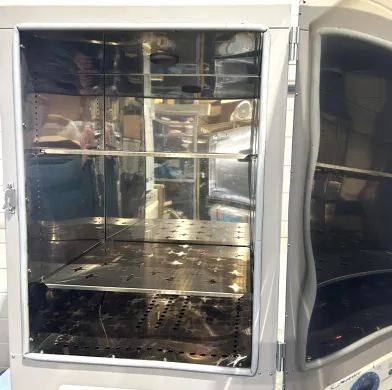
On a used VWR centrifuge the parts that wear are the drive motor bearings and the lid latch and safety interlock; ask the seller to confirm the unit reaches rated speed without vibration and that the lid locks and releases cleanly, since a failed interlock will stop the machine entirely. Rotors have a service life and can be sold separately from the drive, so verify the listing includes the rotor you need and that it is within its rated use. For incubators, the door seal and the CO2 sensor are the components that degrade; a seller should be able to show the unit holds temperature across the chamber.
Price breaks along the tier line. The floor of the range covers mini centrifuges and simple mixers; the middle covers general benchtop centrifugation and gravity incubators; the top covers refrigerated and CO2-regulated instruments. A compatibility trap worth checking: VWR rotors and adaptors are keyed to specific drive models, so a rotor from one VWR centrifuge will not always seat in another. Where you need a rotor, adaptor or spare, those can be sourced via Questpair.
VWR centrifuge and incubator ranges listed here
Among the listings that specify a type, VWR's presence in this category falls into two groups. The first is centrifugation: benchtop centrifuges built for tubes and plates in a general lab, microcentrifuges aimed at the 1.5 and 2 mL tube formats that dominate molecular work, and the mini and personal spin-down units that clear a sample floor in seconds rather than resolving it. The second is controlled-temperature and motion: laboratory incubators for cell culture and microbiology, and laboratory mixers for sample homogenisation and suspension. Because VWR labels instruments across several manufacturing tiers rather than a single engineering family, a listing marked VWR may be an entry-level benchtop unit or a refrigerated research instrument, and the model code matters more than the name on the front.
Where the centrifuge tiers diverge
The sharpest divide inside the VWR centrifuge listings is between the mini units and the full benchtop machines. A mini or personal spin-down runs a fixed speed, usually in the low thousands of rpm, with no temperature control and no programmable protocol; it exists to pellet, not to separate. A benchtop VWR centrifuge pushes considerably higher, into the tens of thousands of rpm on a dedicated microcentrifuge rotor, and the research-grade units add Peltier or compressor cooling to hold a set temperature for heat-sensitive samples. Capacity is the other axis: a microcentrifuge takes a rotor of 1.5 mL tubes, while a swing-out benchtop rotor accepts conical tubes, plates and sometimes blood bags. On the incubator side the deciding specification is whether the unit offers CO2 and humidity regulation for cell culture or plain gravity-convection warming for microbiology, and the two are not interchangeable.
What a used VWR unit costs and how condition falls
Across the VWR equipment listings, prices run from EUR 6 to EUR 12.014. The average sits at EUR 515. That spread tracks the tier gap described above: a mini centrifuge or a basic mixer sits near the floor, while a refrigerated benchtop centrifuge or a CO2 incubator reaches the upper end. 99 percent of the listings are used. The catalogue distinguishes new and used only, so a buyer weighing a cheaper used unit against a new one should treat the individual listing as the source of truth on condition and on warranty, which is arranged in consultation for that specific item.
Frequently asked questions
Does VWR make named equipment series, or how is the range organised?
VWR sells this equipment under its own house brand rather than distinct named series, so the dividing lines run by format and by what the rotor or chamber is built to handle. The types that appear here are benchtop centrifuges, laboratory incubators, microcentrifuges, laboratory mixers, mini centrifuges, and the broader laboratory centrifuge class.
How do the microcentrifuge, mini centrifuge and benchtop formats differ?
A mini centrifuge tops out at a few thousand g and suits quick spin-downs of 1.5 and 2 ml microtubes, while a microcentrifuge reaches into the tens of thousands of g and can hold a set temperature. The benchtop units sit between the two on force but carry far more volume, taking swing-out or fixed-angle rotors for larger tubes or plates, so the choice there is throughput and tube size rather than speed.
How much does a used VWR laboratory instrument cost?
Prices across this pairing run from EUR 6 to EUR 12.014, with the average at EUR 515. The low end covers mini centrifuges and simple bench accessories, while the upper band reaches refrigerated benchtop instruments and CO2 incubators, and 99 percent of the listings are used.
Are refurbished VWR units available, and are they cheaper than new?
Used and refurbished units appear in this catalogue alongside new ones, and they are listed at lower prices than new. Where you have to weigh a used or refurbished unit against a new one, check the individual listing, since warranty is arranged in consultation for the specific item.
Which VWR model suits which application?
Match the force and volume to your protocol first: a mini centrifuge for quick spin-downs, a refrigerated microcentrifuge for thermally sensitive nucleic-acid or protein work, and a benchtop frame when you need larger tubes or plate throughput. For sample conditioning, a general bench incubator holds ambient-plus-a-few-degrees up toward sixty, while a CO2-capable chamber adds gas control for cell lines.
What should I check before buying a used VWR centrifuge or incubator?
On a centrifuge, confirm it reaches set speed without vibration and, on a refrigerated model, that it pulls down to its stated temperature and holds it; ask for the rotor's age and run history, since rotors carry a service life. On an incubator, check the chamber seals and door gasket, because a tired seal costs temperature stability, and confirm which rotor and tube adaptors ship with any centrifuge.
Are rotors and parts interchangeable across VWR instruments?
A VWR rotor is matched to a specific VWR drive, so a cheaper spare rotor only helps if it fits the exact model you hold, and the formats themselves are not interchangeable. Parts can be sourced via Questpair when a listing does not already include what you need.
How does VWR compare with other laboratory equipment brands in this category?
VWR covers the general bench work a teaching or QC lab runs daily rather than the high-force preparative range, with the spin products split between full benchtop frames and the compact micro and mini formats. Because VWR sells by format rather than named series, the practical comparison point is whether a given listing holds temperature and carries the force and volume your protocol needs, which you confirm per listing rather than per series.