

Chromatography
We personally find you the right used, refurbished and new chromatography instruments & equipment from verified suppliers.
Chromatography is the laboratory technique that separates a mixture into its components by passing it through a medium that holds each compound back by a different amount, and the equipment that performs it covers the pumps, columns, detectors and sample handling that make that separation measurable. On the Questpair catalogue this category runs to 3757 listings from 22 verified suppliers and distributors across 20 countries. Both new and used instruments are listed, and 96 percent of the listings are used, which shapes the prices far more than any single specification does. High-performance liquid chromatography dominates the mix, from standalone modules to complete systems.
Updated:
Chromatography product list


Not the exact instrument you need?
Tell our scientists what you are after. We track it down, including off-market supply.
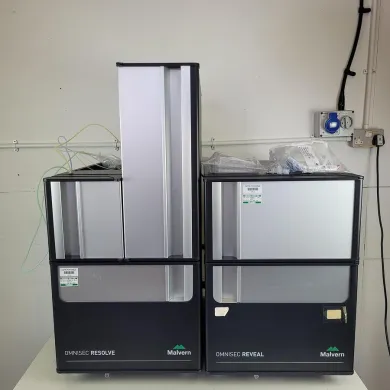
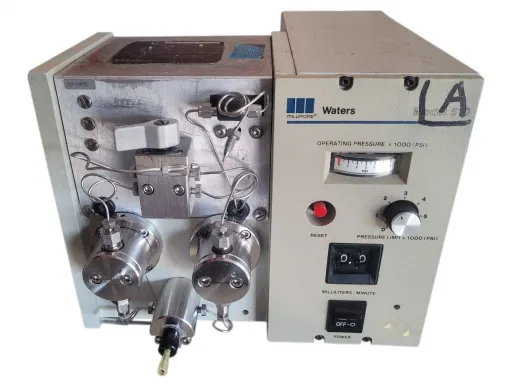
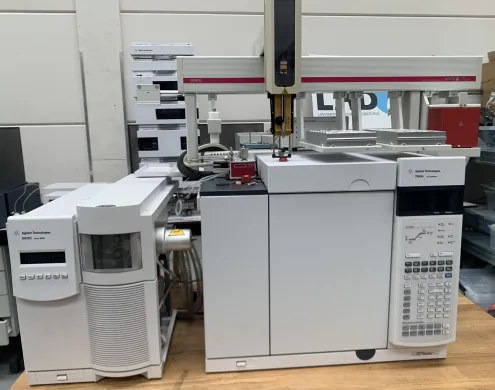
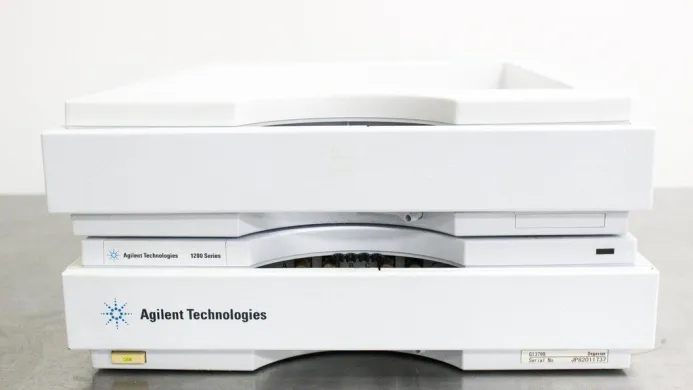
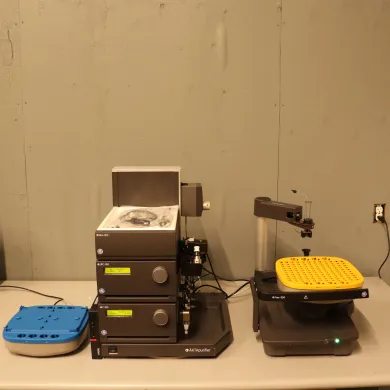
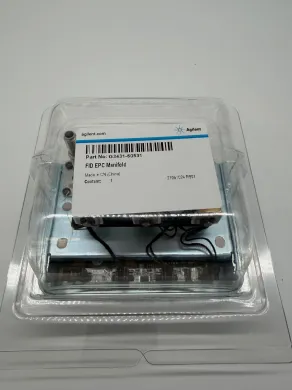
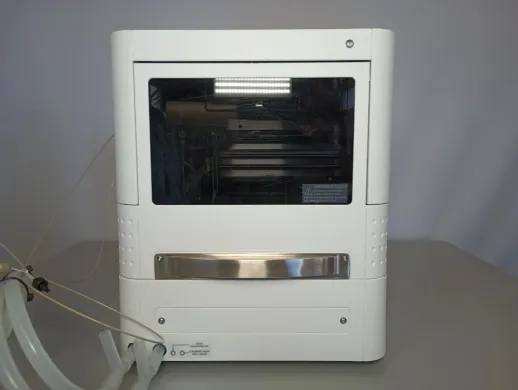
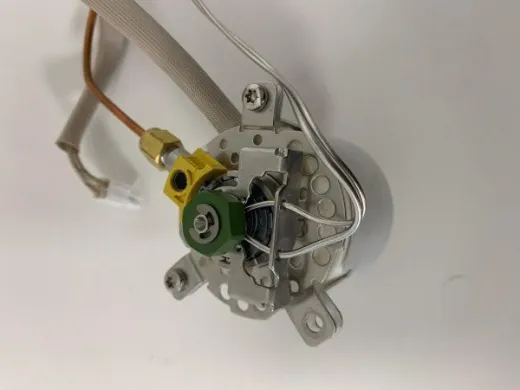
Not the exact instrument you need?
Tell our scientists what you are after. We track it down, including off-market supply.
Showing 1–40 of 2,498 listings
Show 40 more listingsBuying guide
The first thing to settle in chromatography is pressure, because it sets the boundary every other choice falls inside. An analytical HPLC pump rated to a few hundred bar runs the columns most laboratories use day to day; step up to UHPLC pressures and the columns, fittings and detectors all have to match, and a system assembled from mismatched pressure classes leaks or will not reach the flow a method needs. Decide the pressure range the separations demand before looking at anything else, because a pump chosen for the wrong class cannot be upgraded into the right one.
Flow stability and detector type follow from that decision rather than competing with it. A pump that holds a steady flow at low rates gives reproducible retention times, which is what a quantitative method stands or falls on; the detector then determines what the system can actually see, whether a UV or diode-array detector for compounds that absorb, a refractive-index detector for those that do not, or a mass detector where identity matters as much as quantity.
On a used unit, none of that is verifiable from the datasheet. With 96 percent of the listings used, condition is where most of the real risk sits. Ask for the pump's seal and piston history, confirm the detector lamp hours and whether a spare lamp comes with it, and check that an autosampler's needle and injection valve have been serviced. A column listed as used tells you little without its efficiency on a recent test; chromatography media and medium pressure columns are consumable by nature, so treat them as fresh stock rather than as instruments.
Price spans the whole catalogue here. Listings run from EUR 1 to EUR 236.745, with an average around EUR 7.808. The low end covers accessories, fittings and consumables, the high end complete systems with mass detection. What a unit costs depends mostly on whether it is a single module or a full stack, and refurbished and used instruments listed for sale are more affordable than new, which is why most of what fits a modest budget is pre-owned. Agilent and Waters recur most often, so a buyer comparing within those lines has the easiest time matching a replacement module to an existing bench.
Types of Chromatography
Among the listings that specify a type, chromatography on the Questpair catalogue breaks down into eight subtypes, weighted heavily toward high-performance liquid chromatography and its component modules.
HPLC pumps
HPLC pumps are the largest group, the modules that drive the mobile phase through the column at a controlled flow and pressure. They divide chiefly by pressure class, standard analytical pumps against the higher-pressure units built for UHPLC columns, and by the number of solvent channels, isocratic for a fixed mobile phase against quaternary or binary for gradient work. A buyer reaches for a pump when replacing a worn unit in an existing stack or building a system module by module. Pump reliability underpins almost every form of liquid chromatography used in analytical instrumentation, from routine quality control to proteomics and metabolomics, where reproducible gradients separate complex peptide and small-molecule mixtures.
HPLC systems
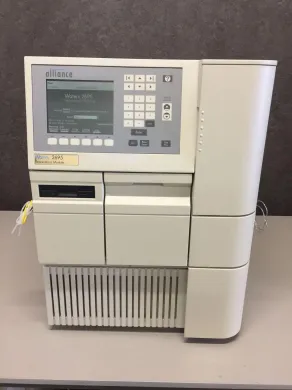
HPLC systems are complete, integrated instruments, pump, autosampler, column compartment and detector sold and configured to run as one. They suit a laboratory that wants a working method out of the box rather than a bench assembled from parts, and they appeal to groups standing up a new workflow in molecular diagnostics or pharmaceutical analysis. Systems differ by the detector built in and by their pressure rating, which decides whether they handle conventional or sub-two-micron columns. A full system also used for protein purification and electrophoresis-adjacent fractionation work carries the whole chain of custody for one price, which simplifies both validation and comparison.
HPLC accessories
HPLC accessories gather the fittings, tubing, valves, seals, filters and vials that keep a system running between major service intervals. They are the consumable and semi-consumable layer, the parts that wear and get swapped rather than the modules that define the instrument. A buyer comes here to restock rather than to specify, so what matters is compatibility with the pump, column and autosampler already on the bench. Accessories carry no field of their own, but they are also used for leak-free plumbing across every liquid chromatography method a laboratory runs, from microbiology workflows to genomics sample cleanup.
HPLC autosamplers
HPLC autosamplers inject measured volumes of sample from a tray without an operator present, which is what turns a manual separation into an unattended batch run. They differ by sample capacity, injection volume range and whether they offer temperature control for sensitive samples. A laboratory running high-throughput sequences, say a screening workflow in molecular biology or immunoassay sample preparation, depends on an autosampler for both precision and walk-away time. The injection valve and needle seat are the parts to scrutinise on a used unit, since they set the carryover and the volume accuracy a quantitative method relies on.
Medium pressure columns
Medium pressure columns sit between gravity-fed open columns and high-pressure analytical columns, handling the preparative and semi-preparative separations where the goal is to collect purified fractions rather than to quantify a trace. They run at pressures their larger cartridges and wider bores can tolerate, and they are chosen by stationary-phase chemistry and column volume. This is the form chromatography takes in protein purification and in synthetic biology and biomanufacturing, where isolating a compound in usable quantity, not measuring it, is the point. Buyers match the column to the scale of the target rather than to a detector.
HPLC detectors
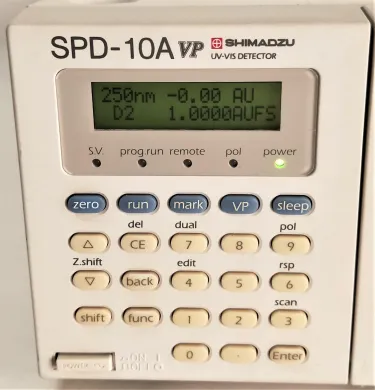
HPLC detectors register the separated compounds as they leave the column and convert them into a signal. They divide by detection principle: UV and diode-array detectors for light-absorbing compounds, refractive-index detectors for those that do not absorb, fluorescence detectors for sensitive trace work, and mass-spectrometric detectors where identity is needed alongside quantity. The choice decides what a method can see, so a buyer matches the detector to the chemistry of the analyte. Detectors anchor the quantitative side of analytical instrumentation across molecular diagnostics and pharmaceutical quality control. Lamp hours and flow-cell condition are the figures to confirm on a used detector.
HPLC columns
HPLC columns hold the stationary phase that does the actual separating, so despite their small listing count they are the component a method is often built around. They are specified by phase chemistry, reversed-phase, normal-phase, ion-exchange or size-exclusion, and by particle size, pore size and dimensions. A buyer selects a column to match the separation, which is why phase and particle size matter more than brand. Columns underpin liquid chromatography across proteomics, where size-exclusion and reversed-phase separations resolve protein and peptide mixtures. A used column is worth little without a recent efficiency test, so treat most listed columns as fresh consumables.
Chromatography media
Chromatography media are the loose stationary-phase materials, resins, gels and packing, that fill columns the user packs themselves, most often for preparative and process-scale separations. They are classified by separation mode, ion-exchange, affinity, size-exclusion or hydrophobic-interaction, and by bead size and binding capacity. This is the material layer of chromatography in bioprocessing and biomanufacturing, where affinity and ion-exchange media carry out protein purification at scale. A buyer selecting media is defining the chemistry of the separation itself rather than buying an instrument, so binding capacity and resolving power for the target molecule are the specifications that decide the purchase.
Frequently asked questions
What is chromatography?
Chromatography is a laboratory technique that separates a mixture into its components by passing it through a medium that holds each compound back by a different amount. In instrument terms, the category covers the pumps, columns, detectors and sample-handling modules that make that separation measurable.
What does chromatography mean in practice?
In practice it means pushing a sample through a stationary phase with a mobile phase, so each compound travels at its own speed and emerges separately. The separated compounds are then read by a detector that turns them into a measurable signal.
How does chromatography work?
A pump drives the mobile phase through a column packed with a stationary phase, an autosampler injects the sample, and compounds separate according to how strongly each interacts with the stationary phase. A detector at the column outlet records each compound as it leaves, producing the peaks a method is read from.
What types are listed in this category?
The catalogue breaks into eight subtypes: HPLC pumps, HPLC systems, HPLC accessories, HPLC autosamplers, medium pressure columns, HPLC detectors, HPLC columns and chromatography media. The listings weigh heavily toward high-performance liquid chromatography and its component modules.
What is chromatography used for?
It separates and quantifies compounds across quality control, pharmaceutical analysis, proteomics, metabolomics and molecular diagnostics. At preparative and process scale it is used for protein purification and fraction collection rather than measurement.
How do I choose the right chromatography equipment?
Settle the pressure class first, since an analytical pump rated to a few hundred bar and a UHPLC pump built for sub-two-micron columns demand different columns, fittings and detectors. After pressure, match the detector to the chemistry of your analyte and confirm flow stability for reproducible retention times.
What is the difference between refurbished and used units here?
Both are pre-owned, but refurbished units have usually been serviced and tested before listing, while used covers a wider range of condition. For either, ask for the specific service history, because condition rather than the label is what you are paying for.
How much does chromatography equipment cost?
Listings run from EUR 1 to EUR 236.745, with an average around EUR 7.808. The low end covers accessories, fittings and consumables; the high end is complete systems with mass detection.
Which brands come up most in this category?
Agilent, Waters, Thermo Scientific, Agilent Technologies and Shimadzu recur most often across the listings. A buyer comparing within the Agilent or Waters lines has an easier time matching a replacement module to an existing bench.
Is a warranty available on a refurbished instrument?
A warranty is often possible and is arranged in consultation for the specific listing. Terms are not set centrally, so check what the individual listing states.
Can I get parts for these instruments?
Parts can be sourced via Questpair. For wear items like pump seals, pistons, detector lamps and autosampler needle seats, confirm what the specific listing includes before purchase.
How long does chromatography equipment last?
Service life depends on the module and how it is maintained: pumps and detectors run for years with seal, piston and lamp replacement, while columns and media are consumable by nature. Treat listed columns and media as fresh stock rather than durable instruments.
New versus refurbished, which should I buy?
Used and refurbished units are listed at lower prices than new, which is why most of what fits a modest budget is pre-owned. Where you have to weigh the two, compare the individual listing's condition and the warranty available in consultation.
Where can I buy chromatography equipment?
This category lists 3757 items from 22 verified suppliers and distributors across 20 countries. Both new and used instruments appear, with 96 percent of the listings used.
What about lead time and shipping?
Lead time and shipping depend on the individual seller and the item, since listings come from verified suppliers and distributors in different countries. Check the specific listing or contact Questpair, where specialists respond within one hour.
What calibration and maintenance does chromatography equipment need?
Routine maintenance covers pump seals and pistons, detector lamp replacement, flow-cell cleaning and autosampler needle and valve servicing, plus column efficiency checks. Questpair does not perform servicing, so confirm a used unit's service history and the condition of its wear parts before you buy.
Which types are listed most, and who reaches for which?
HPLC pumps are the largest group, used by buyers replacing a worn module or building a stack piece by piece, while complete HPLC systems suit a laboratory that wants a working method out of the box. Autosamplers go to high-throughput labs, detectors anchor quantitative analysis, and medium pressure columns and media serve preparative and process-scale purification.
Which brands dominate the category and what does that mean for a buyer?
Agilent, Agilent Technologies and Waters recur most often, followed by Thermo Scientific and Shimadzu. A deep presence in those lines makes it easier to find a compatible replacement module, while a less common brand may narrow the pool of matching parts and accessories.
What separates the cheapest listings from the most expensive?
The bottom of the band is accessories, fittings, vials and consumables that wear and get swapped. The top is complete systems carrying pump, autosampler, column compartment and a mass-spectrometric detector, where you pay for the whole measurement chain rather than a single module.