

HPLC pumps
We personally find you the right used, refurbished and new hplc pumps instruments & equipment from verified suppliers.
HPLC pumps are the fluid-delivery component of a high-performance liquid chromatography system, driving solvent through the column at the controlled, high-pressure flow that separation depends on. Across the Questpair catalogue, 1146 HPLC pumps and related modules are listed from 14 verified suppliers and distributors in 14 countries. The marketplace carries new, used and refurbished laboratory units, and 99 percent of the listings are used. Prices run from EUR 1 to EUR 107.611, a span that covers bare pump heads at one end and complete chromatography systems at the other. A pump is rated by its flow range, its pressure ceiling, and whether it mixes solvents on the low or high pressure side of the column.
Updated:
HPLC pumps product list


Not the exact instrument you need?
Tell our scientists what you are after. We track it down, including off-market supply.
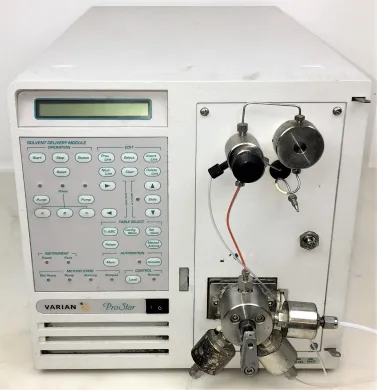
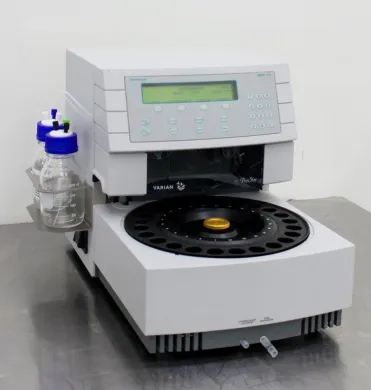
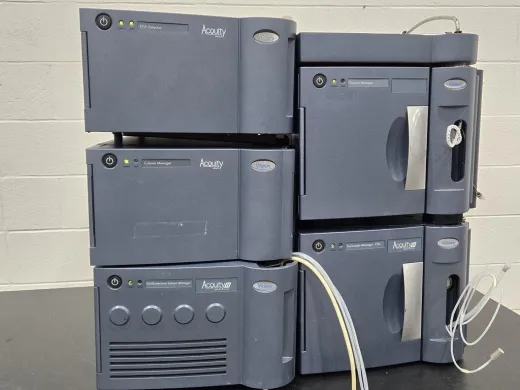
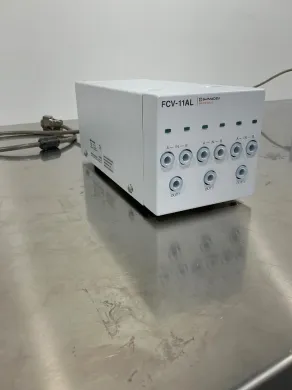
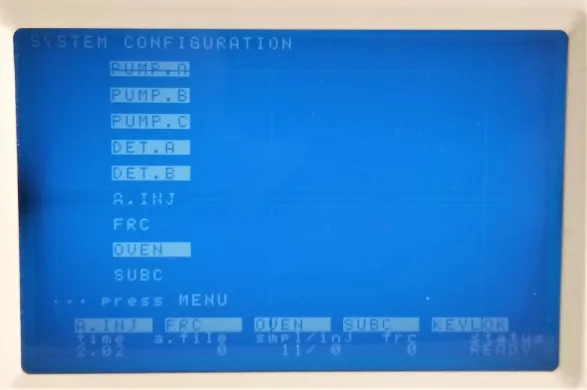
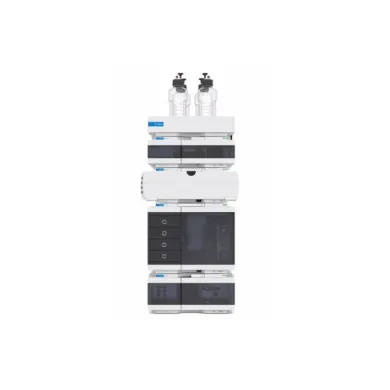
Not the exact instrument you need?
Tell our scientists what you are after. We track it down, including off-market supply.
Showing 1–40 of 491 listings
Show 40 more listingsBuying guide
The flow and pressure envelope settles most of this purchase before anything else is considered. A pump specified for analytical work typically delivers in the microlitre to few millilitre per minute range against pressures of several hundred bar, while preparative and UHPLC duty push those numbers in opposite directions, higher pressure for ultra-high-performance separations, higher volume for prep. Match the pump to the columns and the back-pressure your method actually generates, because a unit sized for the wrong regime either cavitates at low flow or tops out its pressure ceiling mid-gradient. Gradient capability follows directly: a binary or quaternary pump blends solvents on a programmed ramp, an isocratic pump holds one composition, and the two are not interchangeable for a method written around a gradient.
On a used unit, the wear parts are where the money and the risk sit. Pump seals, check valves and pistons degrade with every hour of operation and with the solvents that passed through them, so ask what has been replaced and when. A seal leak shows up as flow-rate drift and unstable retention times, a worn check valve as pressure ripple. Where the listing covers a module from a larger high-performance liquid chromatography system, confirm it is the pump you need and not an adjacent component; the type split here mixes pumps with autosamplers and accessories. A used chromatography pump that has been serviced and pressure-tested costs more than one sold as-is, and the gap reflects exactly that verification.
The price band runs from EUR 1 to EUR 107.611, with an average around EUR 7.657. What a pump costs within that range tracks its pressure class, its gradient channels, and whether it ships as a standalone module or part of a stack, so a budget stretches furthest when matched against a specific flow and pressure target rather than a brand name. The brands occupying this catalogue, Agilent, Waters, Thermo Scientific, Agilent Technologies, Shimadzu, hold the bulk of the listings, which keeps model comparison and parts availability straightforward across the field. Refurbished and used units listed for sale are more affordable than new, and with 99 percent of the catalogue used, that is where most of the choice lies.
Types of HPLC pumps
Which pump and module types are listed in HPLC pumps?
Among the listings that specify a type, the catalogue groups into a few recognisable classes. The HPLC pump and liquid chromatography pump are the core items, the modules that generate the controlled high-pressure flow a separation runs on. The binary pump is a distinct build within that group, mixing two solvents on a programmed gradient for methods whose composition changes across the run, where an isocratic unit would hold one. A full high-performance liquid chromatography (hplc) system appears where a listing covers the complete stack rather than the pump alone. Autosamplers and liquid chromatography accessories round out the set; they are not pumps but share the catalogue because they attach to the same instrument. HPLC pumps do the solvent delivery behind liquid chromatography across analytical chemistry, and that work reaches deep into the life sciences: they drive the mobile phase in proteomics and metabolomics workflows, in protein purification, and in the molecular diagnostics and quality-control assays that depend on reproducible chromatographic separation of complex biological mixtures. Reversed-phase and ion-exchange HPLC separations in biopharmaceutical analysis and bioprocessing run on exactly this class of pump.
The brands behind the HPLC pump listings
The names that dominate here are Agilent, Waters, Thermo Scientific, Agilent Technologies, Shimadzu. Their concentration matters to a buyer in practical terms rather than reputational ones. Where a handful of makers hold most of the catalogue, seals, check valves and piston assemblies for their common models circulate widely, so a worn part is easier to source and a serviced unit easier to keep running. It also makes models directly comparable: pressure ratings, flow ranges and gradient configurations are documented in familiar terms, and a buyer weighing two listings is usually comparing variants of well-known platforms rather than guessing at an orphan design.
What a used HPLC pump costs here
The split is heavily toward pre-owned: 1131 of the listings are used against 15 new, 99 percent of the catalogue. Prices span EUR 1 to EUR 107.611, with the average near EUR 7.657. That spread covers everything from an individual pump head or spare component at the low end to a complete, serviced chromatography system at the top, which is why the range is as wide as it is. Supply comes through 14 verified suppliers and distributors across 14 countries.
Frequently asked questions
What is an HPLC pump?
An HPLC pump is the fluid-delivery component of a high-performance liquid chromatography system. It drives solvent through the separation column at a controlled, high-pressure flow rate.
What does HPLC pump mean?
HPLC stands for high-performance liquid chromatography, and the pump is the module that generates the pressurised, metered solvent flow that the separation depends on. Without it, the mobile phase could not be pushed through a packed column at the required pressure.
How do HPLC pumps work?
A piston driven by a precision motor draws solvent in and pushes it out through check valves that enforce one-way flow, delivering a steady volume per minute against high back-pressure. Seals keep the high-pressure side sealed while the piston cycles, and the flow rate is set by the stroke frequency and volume.
What types of HPLC pumps are there?
The main distinction is between isocratic pumps, which hold one solvent composition, and gradient pumps such as binary and quaternary units, which blend two or more solvents on a programmed ramp. Mixing can happen on the low-pressure or high-pressure side of the column, and pumps are also split by analytical, preparative and UHPLC duty.
What are HPLC pumps used for?
They deliver the mobile phase for liquid chromatography across analytical chemistry and the life sciences, including proteomics, metabolomics, protein purification and molecular diagnostics. Reversed-phase and ion-exchange separations in biopharmaceutical analysis and bioprocessing run on this class of pump.
How do I choose the right HPLC pump?
Start from the flow and pressure envelope your method generates, matching the pump to the columns and back-pressure rather than to a brand. Then confirm gradient capability: a binary or quaternary pump is needed for a method written around a gradient, while an isocratic pump holds a single composition.
What is the difference between a refurbished and a used HPLC pump?
A refurbished unit has been serviced and typically pressure-tested, with wear parts such as seals and check valves replaced, while a used unit may be sold as-is. The serviced unit costs more, and that gap reflects the verification work done on it.
How much does an HPLC pump cost?
Prices in the catalogue range from EUR 1 to EUR 107.611, with the average near EUR 7.657. The low end covers a bare pump head or spare component, the high end a complete, serviced chromatography system.
Which brands make HPLC pumps?
The names behind the listings here are Agilent, Waters, Thermo Scientific, Agilent Technologies and Shimadzu. Because a handful of makers hold the bulk of the catalogue, their common models are directly comparable on pressure rating, flow range and gradient configuration.
Can I get a warranty on a refurbished HPLC pump?
A warranty is often possible and is arranged in consultation for the specific listing. Terms are not set centrally, so check the individual listing you are considering.
Can I get parts for an HPLC pump?
Parts can be sourced via Questpair. Because Agilent, Waters, Thermo Scientific and Shimadzu hold the bulk of the listings, seals, check valves and piston assemblies for their common models circulate widely, which makes a worn part easier to source.
How long does an HPLC pump last?
Service life depends on hours of operation and the solvents that pass through the wear parts. Pump seals, check valves and pistons degrade with use, and replacing them keeps a well-built pump running for many years.
Should I buy a new or a refurbished HPLC pump?
Used and refurbished units are listed at lower prices than new, and the pre-owned side is where more of the choice sits, at 99 percent of the catalogue. Where you have to weigh the two, compare the specific listing and note that warranty is arranged in consultation.
Where can I buy an HPLC pump?
The Questpair catalogue lists 1146 HPLC pumps and related modules from 14 verified suppliers and distributors across 14 countries. You can compare new, used and refurbished units in one place.
What are the lead time and shipping for an HPLC pump?
Lead time and shipping depend on the individual supplier and the unit's location across the 14 countries represented. Check the specific listing for its dispatch and delivery terms.
How are HPLC pumps calibrated and maintained?
Maintenance centres on the wear parts: replacing seals, check valves and pistons on schedule keeps flow rate stable and retention times reproducible. Flow accuracy is verified by measuring delivered volume against the set rate, and a seal leak shows up as flow-rate drift, a worn check valve as pressure ripple.
Which pump and module types are listed most here, and who reaches for each?
The HPLC pump and liquid chromatography pump are the core items, with the binary pump as a gradient build for methods whose composition changes across the run. Full high-performance liquid chromatography systems appear where a listing covers the whole stack, while autosamplers and liquid chromatography accessories attach to the same instrument and suit buyers completing a bench rather than replacing a pump.
Which brands dominate this category, and what does that mean for a buyer?
Agilent, Waters, Thermo Scientific, Agilent Technologies and Shimadzu account for the bulk of the listings. For a buyer that concentration keeps model comparison straightforward and makes wear parts for their common models easier to source, so a serviced unit is easier to keep running.
What separates the cheapest HPLC pumps here from the most expensive?
What a pump costs tracks its pressure class, its number of gradient channels and whether it ships as a standalone module or part of a complete stack. A bare pump head or spare component sits at the low end, a complete, serviced chromatography system at the top, which is why the band runs from EUR 1 to EUR 107.611.