
NMR Spectroscopy
We personally find you the right new, used and refurbished nmr spectroscopy instruments & equipment from verified suppliers.
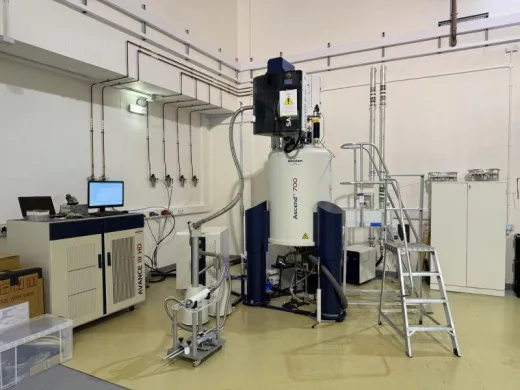
Nuclear magnetic resonance work turns on field strength and field stability, and the two drag the rest of the setup behind them. A sample read at 60 MHz on a permanent magnet asks little of the room; one read at 500 MHz or above asks for cryogen handling, a stable supply and bench space cleared of anything ferromagnetic. The catalogue reflects that split: 21345 listings run from shielded benchtop units to superconducting floor systems, offered by 123 verified suppliers and distributors across 82 countries. What the structural work demands of the magnet is the first decision, and the sample handling, the console and the data side follow from it.
Updated:
NMR Spectroscopy product list
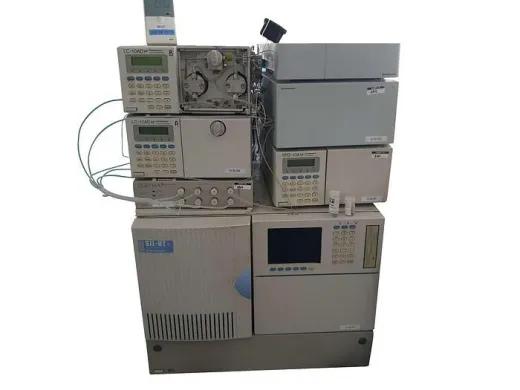
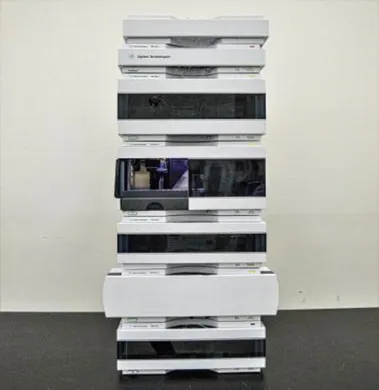
Shimadzu SIL-HT HPLC System with Accessories
- Category
- Hplc systems
- Brand
- Shimadzu
- Suppliers
- 1 verified


Not the exact instrument you need?
Tell our scientists what you are after. We track it down, including off-market supply.

Not the exact instrument you need?
Tell our scientists what you are after. We track it down, including off-market supply.
Showing 1–40 of 10,384 listings
Show 40 more listingsBuying guide
Price here spans a wider gap than on any single category page, because the set runs from a sealed benchtop instrument to a superconducting floor system with its cooling and siting. Listings start at EUR 1 and reach EUR 266.971. The low end is not a working spectrometer so much as a part, an accessory or a probe; a complete benchtop unit sits well above it, and the superconducting systems account for the top of the range, where the field strength and the magnet itself carry most of the cost. When weighing a used unit against a new one, the clearest fact is price: 80 percent of the listings are used, and used and refurbished units are listed below new. What that saving is worth depends on the magnet. A permanent magnet changes little with age, so a shielded benchtop unit carries a modest condition risk. A superconducting magnet is a different question, because its value sits in a cooled state that has to be maintained, and here the specifics belong to the individual listing. Warranty is often possible and is arranged in consultation for the specific listing, so the terms are read there rather than assumed from the price. Parts, including probes and sample hardware, can be sourced via Questpair. Across the set, the figure that matters is less the headline number than which part of the work it buys: a console, a probe and a magnet are priced as separate things even when they arrive as one instrument.
Types of NMR Spectroscopy
NMR spectroscopy draws on a short list of equipment: a spectrometer built around a magnet, the probe and sample hardware that sit inside it, a console that drives the pulses and reads the signal, and the analytical instruments that sit alongside it when a structure needs more than one technique to pin down. The work is not a single sequence so much as a set of stages that repeat per sample, and these are them.
Which magnet does the work set?
The magnet is the decision everything else answers to. Benchtop spectroscopy uses a permanent magnet, typically in the 40 to 100 MHz range, sealed and shielded enough to sit on an ordinary bench without a dedicated room. These suit reaction monitoring, teaching and routine identity checks, where resolving power matters less than having a result in minutes beside the fume hood. The superconducting systems are a different proposition. Field strengths from 300 MHz upward need a cooled magnet, which means liquid helium and nitrogen, periodic refills and a siting survey for stray field. The higher the field, the finer the signal separation, which is what structural elucidation of a complex molecule turns on. A lab choosing between the two is really choosing between a self-contained instrument and a facility.
Preparing and loading the sample
Between the magnet and the result sits the sample. For solution-state work the compound goes into a thin-walled tube in a deuterated solvent, and the choice of solvent is not incidental: it sets the lock signal the instrument uses to hold the field steady, and it leaves residual peaks that have to be read around. Tube quality matters more than it looks, because a tube that is out of round or dirty degrades the shim and widens every line on the spectrum. On the superconducting systems an autosampler feeds tubes in sequence, which is where throughput comes from; on a benchtop unit loading is usually by hand, one tube at a time.
How do the stages constrain each other?
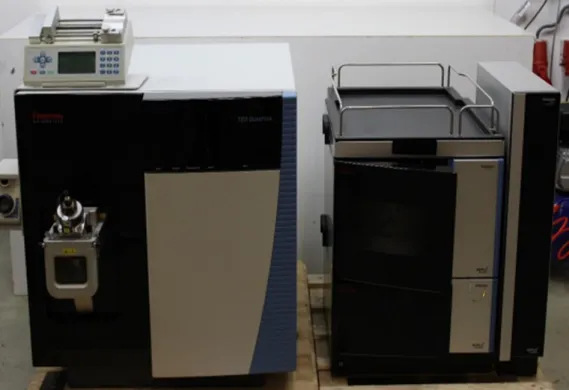
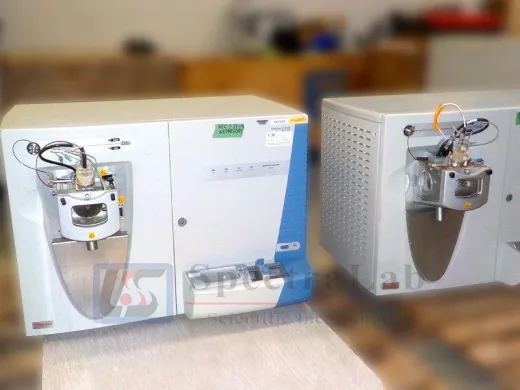
This is where a single-category view falls short. A high-field magnet buys resolution, but it also sets the probe that can go inside it, the sample volume that probe wants, and the console bandwidth needed to excite the wider range of frequencies that comes with the field. Push the field up and the siting, cooling and running cost rise with it, so the resolution a project genuinely needs, rather than the most it could have, is the honest starting point. Where one technique leaves a structure ambiguous, a mass spectrometer settles the molecular weight and a chromatography step confirms the sample was pure going in, which is why these sit in the catalogue beside the spectrometers rather than apart from them.
Reading the result
The signal the console records is a decay in time, and it only becomes a spectrum after processing. That step is part of the instrument, not an afterthought: phasing, baseline correction and integration are where a clean acquisition is either preserved or spoiled. A benchtop unit ships this as a closed software package; a research system gives more control and expects more from the operator.
Frequently asked questions
What do you need at minimum to start NMR spectroscopy?
A working setup needs a spectrometer built around a magnet, a probe and sample hardware that sit inside it, and a console that drives the pulses and reads the signal. For a benchtop permanent-magnet unit that is close to the whole requirement, since it is sealed and self-contained; a superconscouting system adds cryogen handling, a stable supply and a siting survey before it can run.
Which part of an NMR setup is the most expensive to set up?
The magnet carries most of the cost on a superconducting system, and its field strength is what drives the price toward the top of the range. On a benchtop unit the gap is smaller because a permanent magnet is sealed and needs no cooling, so the expense moves away from the magnet and siting entirely.
What can you buy used in NMR and what is better bought new?
Used and refurbished units are listed at lower prices than new, and the saving is worth more on a permanent magnet, which changes little with age, so a shielded benchtop unit carries a modest condition risk. A superconducting magnet is a different question because its value sits in a cooled state that has to be maintained, and those specifics belong to the individual listing.
What has to match between the magnet, the probe and the console?
The magnet sets the probe that can go inside it, the sample volume that probe wants, and the console bandwidth needed to excite the wider range of frequencies that comes with a higher field. Pushing the field up raises all three along with siting, cooling and running cost, so the resolution a project genuinely needs is the honest starting point rather than the most it could have.
How much does a complete NMR setup cost?
Across the Questpair catalogue, listings range from EUR 1 to EUR 266.971. The low end is a part, accessory or probe rather than a working spectrometer; a complete benchtop unit sits well above that, and superconducting floor systems account for the top of the range.
Where does cutting the budget on an NMR setup cost you later?
Under-specifying the field strength caps your resolution, so a magnet bought cheap may not separate the signals a complex structure needs, and that is not something a better console or probe can recover. Skimping on tube quality has a smaller but recurring cost: a tube that is out of round or dirty degrades the shim and widens every line on the spectrum.
Which NMR equipment is shared with other analytical work?
A mass spectrometer and a chromatography step are listed alongside the spectrometers because they settle molecular weight and confirm sample purity when NMR alone leaves a structure ambiguous, and both serve plenty of work outside NMR. Sample preparation hardware such as tubes and deuterated solvents is specific to the technique, though autosamplers and general bench instruments carry over to other methods.
What should you check on a used NMR spectrometer?
On a permanent-magnet benchtop unit, confirm the condition of the probe and sample hardware and the state of the processing software, since the magnet itself ages little. On a superconducting system the question is the cooled state of the magnet and its cryogen history, which the individual listing should describe; parts including probes and sample hardware can be sourced via Questpair, and a warranty is arranged in consultation for the specific listing.
About Questpair
Questpair is the European marketplace for lab equipment, where AI-prepared cases and personal specialists guide every purchase. We work with 247 verified suppliers across 38 countries to find buyers the right new, used or refurbished instruments, with response within 1 hour and significant savings vs buying new.
Personal · Fast · Reliable · Affordable