
X-Ray & Crystallography equipment
We personally find you the right new, used and refurbished x-ray & crystallography instruments & equipment from verified suppliers.
X-ray crystallography is the determination of a crystal's atomic structure from the pattern of X-rays diffracted by its ordered lattice. Single-crystal diffractometers solve the structures of small molecules and macromolecules, while powder diffraction identifies crystalline phases, polymorphs and crystallinity in bulk samples, which is central to pharmaceutical and materials research. X-ray fluorescence complements diffraction by measuring elemental composition, and thermal analysis and calorimetry describe how solid forms change on heating, which matters when a crystal form must stay stable through processing and storage. Questpair lists new, used and refurbished laboratory equipment for crystallography from verified suppliers and distributors.
Updated:
X-Ray & Crystallography product list


Not the exact instrument you need?
Tell our scientists what you are after. We track it down, including off-market supply.
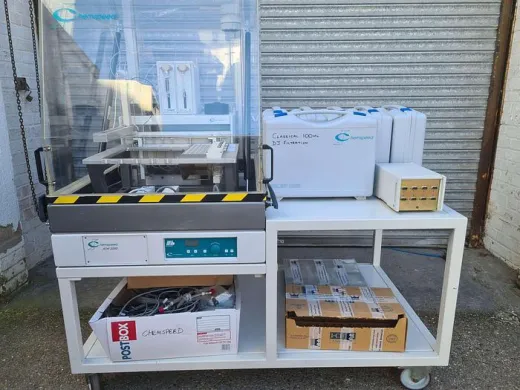
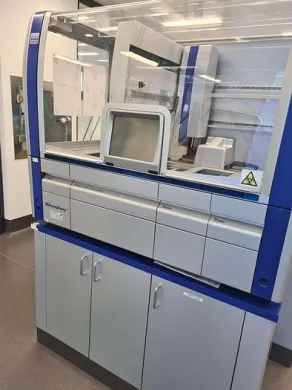
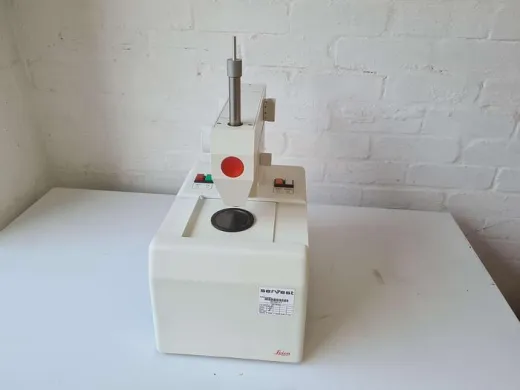
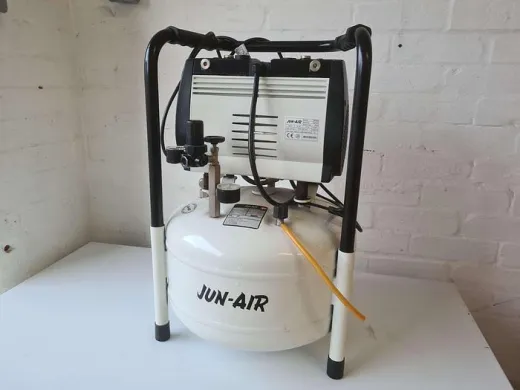
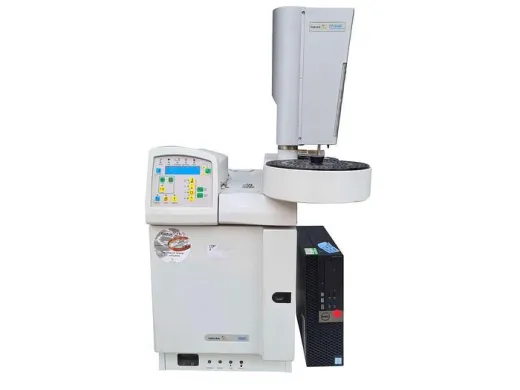
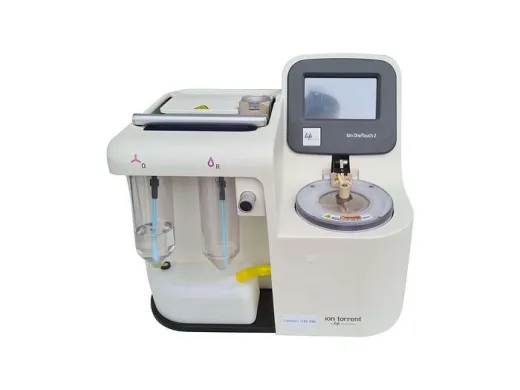
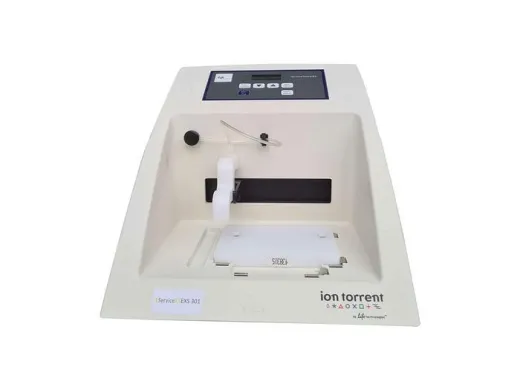
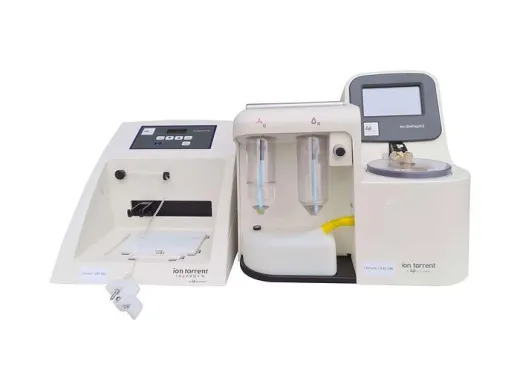
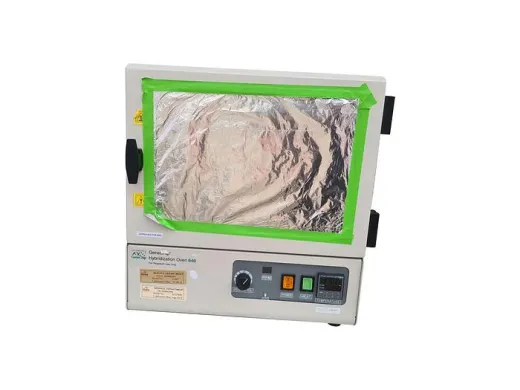
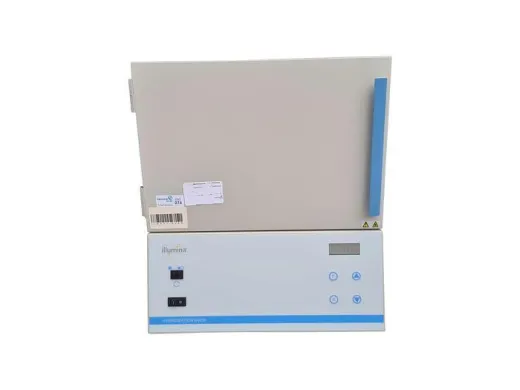
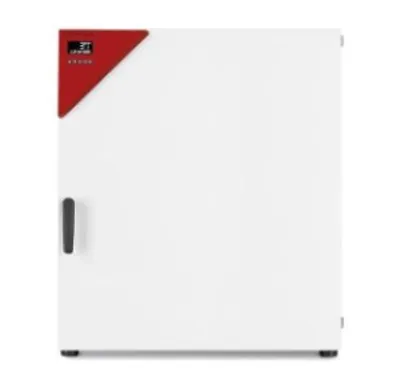
Illumina Boekel 230401 - 21LL Hybridization Oven
- Category
- Furnaces
- Brand
- Illumina
- Suppliers
- 1 verified
Not the exact instrument you need?
Tell our scientists what you are after. We track it down, including off-market supply.
Showing 1–40 of 54,278 listings
Show 40 more listingsBuying guide
The sample form decides the instrument. A single crystal of sufficient size and quality goes to a single-crystal diffractometer, where the full three-dimensional structure is solved. Polycrystalline powders go to a powder diffractometer, which identifies phases, distinguishes polymorphs and salts and measures crystallinity, the questions most often asked in pharmaceutical solid-form work. Thin films and coatings need grazing incidence or reflectometry options, and elemental composition is a job for fluorescence spectrometry.
For single-crystal work, the source and wavelength come first. Copper radiation gives strong diffraction from light-atom organic crystals and helps determine absolute configuration, molybdenum suits heavier atoms and strongly absorbing samples, and dual-source instruments carry both. Microfocus sealed tubes and rotating anodes differ in brightness and maintenance demands, and the detector, goniometer type and a cryogenic nitrogen stream for cooling crystals complete the core specification. Macromolecular groups often combine a home source for screening crystals with synchrotron access for final data. For powder instruments, the beam geometry, detector, sample changer and non-ambient stages for temperature or humidity studies decide what can be measured unattended.
Radiation safety is part of every purchase. Enclosures must have working interlocks, and in most jurisdictions the instrument has to be registered with or licensed by the radiation authority before use.
On a used instrument, ask for tube hours and tube age, the generator and detector history, and a recent alignment check with a reference standard, with peak positions and widths recorded. A radiation leak survey after installation, the state of the cooling water circuit and the software version belong in the handover. For single-crystal systems, check goniometer movement and the condition of the cryo system.
Thermal analysis, calorimetry and spectroscopy sit around diffraction rather than competing with it, adding transition temperatures, energies and bonding information that a diffraction pattern alone does not give.
Used and refurbished diffractometers and fluorescence spectrometers are listed for sale on Questpair alongside new systems. The pre-owned units are more affordable than new, which suits a lab adding a dedicated powder instrument for routine phase identification. The cost of replacement tubes, detector upgrades and installation should be weighed with the purchase price. A budget should also include radiation surveys and shielding checks at the new site.
Types of X-Ray & Crystallography
X-ray analytical devices (XRD, XRF)
This category holds the core instruments: single-crystal diffractometers for structure determination, powder diffractometers for phase identification and quantification, thin-film systems, and fluorescence spectrometers that measure elemental composition from the characteristic radiation a sample emits. Energy-dispersive XRF is compact and fast, while wavelength-dispersive XRF gives higher resolution for complex matrices. Diffraction answers how atoms are arranged, and fluorescence answers which elements are present. Typical buyers are pharmaceutical solid-form and structure groups, materials and mineralogy labs, cement and mining QC, and university crystallography facilities.
Analytical instruments
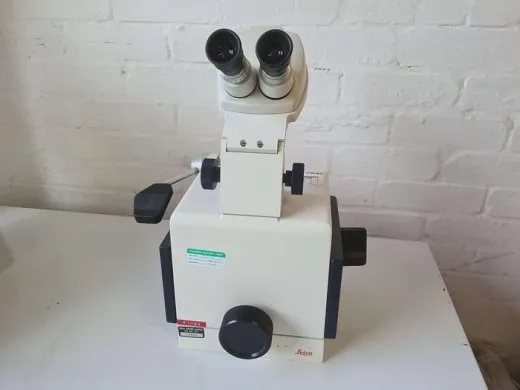
Analytical instruments in a crystallography lab prepare and qualify crystals and support the structure result: stereo microscopes for selecting crystals, crystal growth imagers and plate hotels for protein crystal trials, liquid handlers for setting up crystal screens, and particle size and surface area instruments for powders. Automated screening matters most in macromolecular work, where many conditions may be tried before a usable crystal appears. The difference from the diffractometers lies in preparing or complementing the measurement rather than making it. Typical buyers are structural biology groups, pharmaceutical solid-form screening teams and small-molecule structure services.
Spectroscopy
Spectroscopy supports diffraction by describing bonding and molecular environment in solid samples. Raman and FT-IR distinguish polymorphs and hydrates through shifts in vibrational bands, solid-state NMR probes local structure in amorphous or disordered material, and UV-Vis follows the dissolution of crystals. These techniques also work on amorphous samples that give no useful diffraction pattern, which is where they add the most. Set beside diffraction instruments, this category is distinguished by measuring short-range rather than long-range order. Typical buyers are pharmaceutical solid-form groups, polymer labs and materials researchers studying disordered phases.
Materials testing equipment
Materials testing equipment measures mechanical and physical properties that depend on crystal structure: hardness testers, universal testing machines for tensile and compression tests, impact testers and residual stress measurement. In metallurgy and materials research, phase and texture results from diffraction are read together with these mechanical results to explain how processing changes performance. Typical buyers are metallurgy, ceramics and polymer labs, and manufacturing QC groups. The category differs from the analytical instruments in measuring how a material behaves under load rather than what it is made of.
Laboratory equipment
Laboratory equipment covers the general items a diffraction lab needs around its instruments: mortar and pestle sets and mills for grinding powders to a uniform particle size, sample holders and zero-background plates, balances, desiccators and drying ovens, and recirculating chillers for the generators. Grinding and mounting affect preferred orientation and peak intensities in powder work, so preparation hardware has a direct effect on data quality. This category supports daily operation rather than measurement. Typical buyers are lab managers and technicians setting up or maintaining a diffraction lab.
Calorimeters
Calorimeters measure heat flow. In solid-form work, differential scanning calorimetry detects melting, glass transitions and polymorphic transitions, and indicates which crystal form is stable at a given temperature. Isothermal titration and microcalorimetry measure the energetics of binding and the stability of proteins, and solution calorimetry compares the energy of different solid forms. Paired with diffraction, calorimetry links a structure to its thermal properties. The difference from Thermal analysis lies in focusing on energy rather than mass or dimension. Typical buyers are pharmaceutical preformulation groups, protein biophysics labs and materials researchers.
Thermal analysis
Thermal analysis tracks how a sample changes with temperature: thermogravimetric analysis for mass loss from solvent, water or decomposition, thermomechanical and dilatometric analysis for dimensional change, dynamic mechanical analysis for viscoelastic properties, and simultaneous instruments that combine TGA with DSC or with evolved gas analysis. In crystallography, TGA confirms how much solvent or water a solvate or hydrate contains, and variable-temperature diffraction is read together with these results. Heating rate, temperature range and purge gas options define each instrument. Typical buyers are pharmaceutical solid-form, polymer, ceramics and battery materials labs.
About Questpair
Questpair is the European marketplace for lab equipment, where AI-prepared cases and personal specialists guide every purchase. We work with 247 verified suppliers across 38 countries to find buyers the right new, used or refurbished instruments, with response within 1 hour and significant savings vs buying new.
Personal · Fast · Reliable · Affordable