
Thermo Fisher Scientific general laboratory equipment
We personally find you the right new, used and refurbished thermo fisher scientific general laboratory equipment from verified suppliers.
Thermo Fisher Scientific general laboratory equipment on Questpair centres on temperature control and sample separation: cell culture and CO2 incubators under the Thermo Scientific Heratherm and Heracell lines, ultra-low and laboratory freezers under TSX and Forma, and benchtop centrifuges under the Sorvall and Heraeus families. The intersection runs to 7506 items from 23 verified suppliers and distributors across 17 countries. Among the listings that specify a type, the spread covers laboratory incubators, cell culture and CO2 incubators, laboratory freezers and benchtop centrifuges, which means a single maker here answers both the warm end of a cell culture workflow and the cold storage and spin-down steps that bracket it.
Updated:
Thermo Fisher Scientific General laboratory equipment product list


Not the exact instrument you need?
Tell our scientists what you are after. We track it down, including off-market supply.
Not the exact instrument you need?
Tell our scientists what you are after. We track it down, including off-market supply.
Showing 1–40 of 3,263 listings
Show 40 more listingsBuying guide
Choosing a Thermo Fisher Scientific general laboratory equipment
Start from the group, because the deciding specification is not shared across incubators, freezers and centrifuges. For a Heracell CO2 incubator, decide the sensing type first: infrared sensors recover faster after a door opening and tolerate humidity better than thermal conductivity sensors, which matters for sensitive cultures. Then match chamber volume to how many flasks or plates run at once, and confirm whether the unit carries a high-temperature decontamination cycle if contamination history is a concern. On a used Heracell, verify the CO2 sensor still calibrates, check the door gasket and the humidity pan for degradation, and ask the seller for the running temperature and CO2 logs if available.
For a Forma or TSX freezer, the set-point decides almost everything. An ultra-low cabinet that has run for years is worth buying only if the compressor pull-down time is close to specification; a seller should be able to show how long the empty cabinet takes to reach set-point, since a slow pull-down signals a tiring compressor. Inspect the door seals and the vacuum relief port, and factor energy draw into the running cost rather than the purchase price alone.
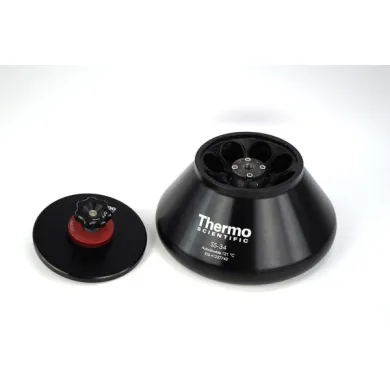
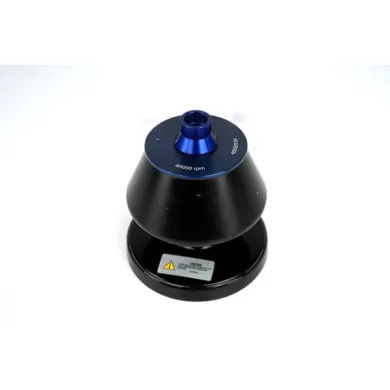
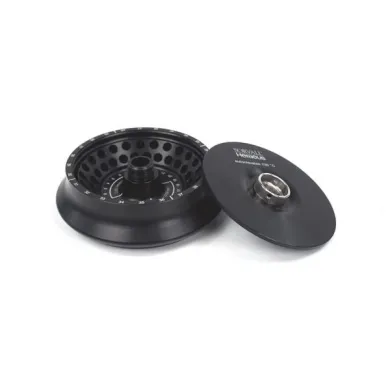
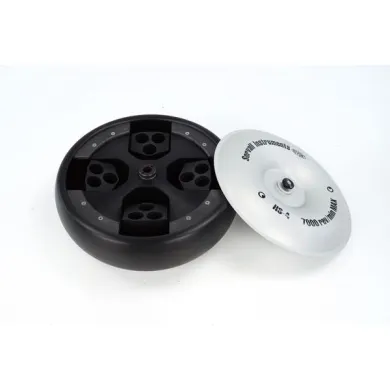
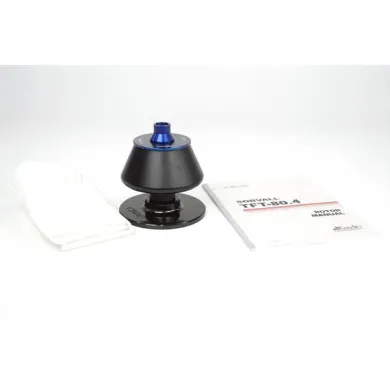
For a Sorvall or Heraeus benchtop centrifuge, the trap is the rotor. Match the rotor to the tubes and the g-force the protocol needs, and confirm the rotor is present and within its service life, because rotors are rated for a fixed number of cycles and a seller should state the cycle count or the rotor's age. On a refrigerated unit, check that cooling holds during a run, not just at rest.
Across all three, components do not cross model lines freely: a rotor, a shelf kit or a CO2 sensor fits a specific family, so confirm the part number against the exact model before buying. Parts can be sourced via Questpair, and warranty on a used unit is arranged in consultation for the specific listing.
Thermo Fisher incubator, freezer and centrifuge series
Among the listings that specify a type, this maker's presence in general laboratory equipment falls into three groups of work. Incubation is the largest: cell culture incubators and CO2 incubators appear under the Heracell line, while microbiological and general-purpose warming sits with Heratherm. Cold storage covers two bands, laboratory freezers around and below conventional temperatures under the Forma and TSX names, and the deeper ultra-low cabinets that hold a sample bank. Separation runs through the Sorvall and Heraeus benchtop centrifuges, sized for the bench rather than the floor. The three groups are not separate purchases for many labs; a cell culture operation typically needs a Heracell, a freezer for reagents and stocks, and a Sorvall to pellet cells, which is why one maker spans the whole pair.
Where the Heracell, Forma and Sorvall models diverge
The deciding specification changes with the group. For CO2 incubators the split is contamination control and chamber recovery: Heracell models differ in CO2 sensing (thermal conductivity against infrared), in whether a high-temperature decontamination cycle is built in, and in chamber volume, which ranges from compact units for a single project to larger cabinets for shared facilities. For freezers the parameter is set-point and pull-down: a Forma laboratory freezer holding a conventional low temperature is a different machine from a TSX ultra-low cabinet, and the ultra-low units further differ in cabinet size and in energy draw, which matters when one runs continuously for years. For benchtop centrifuges the separating figures are maximum speed in rpm or relative centrifugal force, rotor capacity, and whether the unit is refrigerated. A Sorvall refrigerated benchtop built for cell pelleting is specified differently from a small clinical spinner, so the question is which rotor and which temperature the protocol demands rather than top speed alone.
What a used Heracell or Sorvall costs here
Prices run from EUR 1 to EUR 266.971. The average sits at EUR 2.705, which reflects how far apart a small accessory and a large ultra-low cabinet sit within the same catalogue. 99 percent of the listings are used.
Frequently asked questions
Which Thermo Fisher Scientific general laboratory equipment series are available here?
The catalogue covers two incubator lines, Heratherm for general microbiology and drying and Heracell for CO2 cell culture, alongside the Sorvall, Heraeus and Multifuge centrifuge families and the Forma and TSX cold storage ranges. These map onto the listed types: laboratory incubator, cell culture incubator, co2 incubator, laboratory freezer, laboratory centrifuge and benchtop centrifuge.
How do the centrifuge and incubator series differ from each other?
Among centrifuges, Sorvall reaches into high-speed and preparative work while Heraeus and Multifuge cover the benchtop and low-to-mid speed range, with rotor choice usually deciding the job rather than the drive. For incubators, Heratherm runs at ambient-plus temperatures with no gas control, whereas Heracell adds CO2 regulation and humidity for culture viability.
How much does a used Thermo Fisher general lab unit cost?
Prices across the brand range from EUR 1 to EUR 266.971, with an average of EUR 2.705. The band is wide because small benchtop spinners sit at the bottom and floor-standing preparative centrifuges and ultra-low freezers sit at the top, so the figure depends heavily on the type and scale of the unit.
Are refurbished units available, and are they cheaper than new?
Used and refurbished units are listed, and they carry lower prices than new units. Where you are weighing a used or refurbished unit against a new one, check the individual listing for its condition and arrange warranty in consultation for that specific item.
Which model suits which application?
For cell culture you need a Heracell, since its CO2 and humidity control is the feature the Heratherm line lacks, while Heratherm fits general microbiology and drying up to around 75 degrees C. For spins, match the rotor to the task: a Heraeus Megafuge with swing-out buckets handles plates and tubes, a Sorvall floor model handles litre-scale preparative runs, and Forma or TSX cover ultra-low sample storage toward minus 86 degrees C.
What should I check before buying a used centrifuge or incubator?
On a centrifuge, ask for drive hours, rotor run counts and the rotor log (fixed-angle aluminium rotors carry a service life and a derating schedule), and confirm the lid interlock and imbalance cutout work. On an incubator, verify door seal integrity, the CO2 sensor type and its last calibration, and on Heracell units whether the high-temperature decontamination cycle still completes; on a freezer, compressor hours and gasket condition decide remaining life.
Are parts and rotors interchangeable across the Thermo series?
Rotors are keyed to specific heads and drive series, so a Heraeus rotor is not a drop-in for a Sorvall drive and a drive sold bare needs a compatible rotor bought separately. Confirm which rotors are included and which are compatible for a given listing, and watch the same traps with Heracell gas fittings specified for CO2 versus tri-gas and freezer racking sized to one chamber generation. Parts can be sourced via Questpair.
How does Thermo Fisher compare with other brands in this category?
Within this catalogue the decision is usually between Thermo's own lines rather than against other makers, and the deciding parameter differs by type: g-force and rotor for a spin, gas control for culture, set point for storage. The practical point is that two near-identical listings separate on those figures, so read the deciding parameter for your task before comparing on brand name.