

Climate-controlled cabinets and enclosures
We personally find you the right used, refurbished and new climate-controlled cabinets and enclosures instruments & equipment from verified suppliers.
Climate-controlled cabinets and enclosures are laboratory units that hold a set temperature, and in many cases humidity, around stored samples, reagents or biological material. The class covers refrigerators, freezers and ultra-low temperature storage, from benchtop coolers to walk-in cold rooms, each built to keep its interior within a specified band regardless of the room around it. On Questpair, 1039 such units are listed from 17 verified suppliers and distributors across 9 countries, in new, used and refurbished condition. Of those listings, 92 percent are used. Prices run from EUR 9 to EUR 44.167, a spread that separates a small sample refrigerator from a validated biomedical freezer.
Updated:
Climate-controlled cabinets and enclosures product list
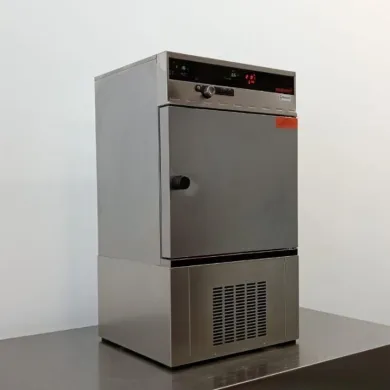
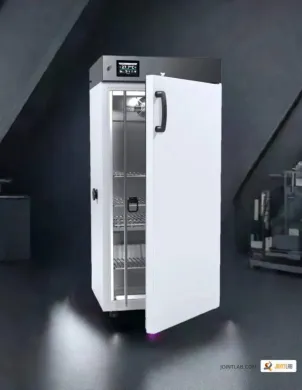
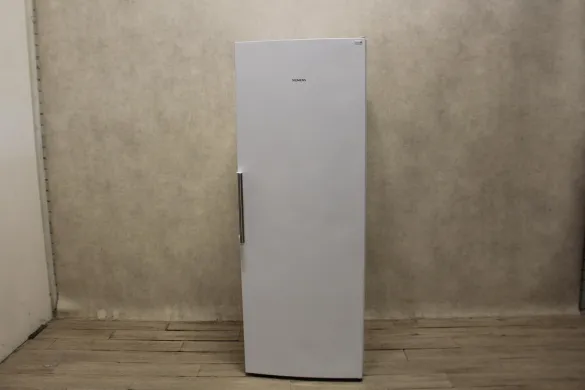
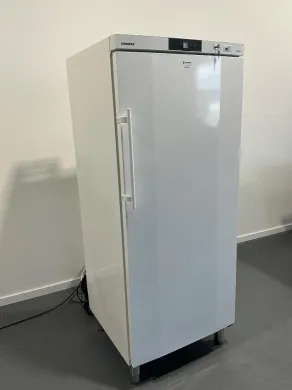


Not the exact instrument you need?
Tell our scientists what you are after. We track it down, including off-market supply.
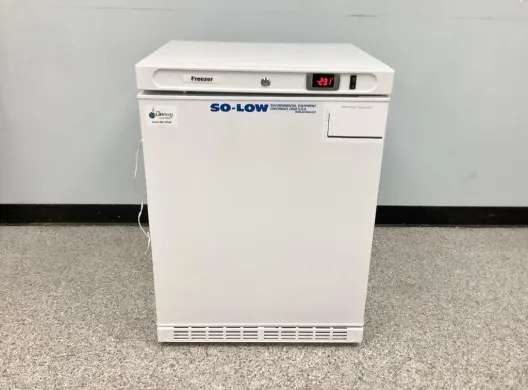
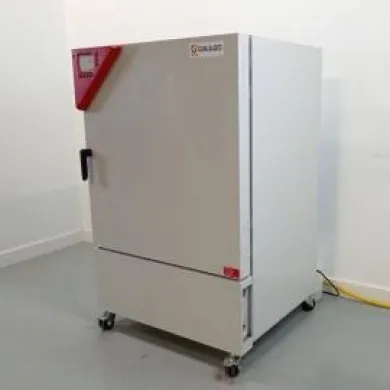
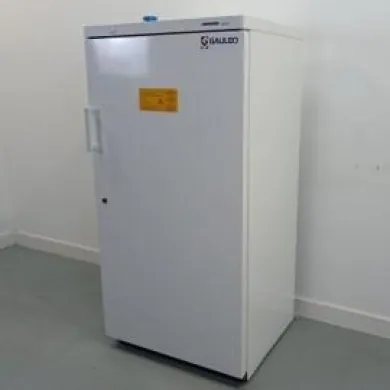
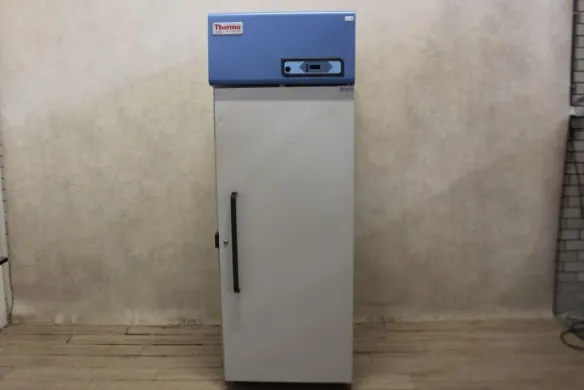
Not the exact instrument you need?
Tell our scientists what you are after. We track it down, including off-market supply.
Showing 1–40 of 289 listings
Show 40 more listingsBuying guide
The temperature a unit holds, and how tightly it holds it, settles most of this purchase before anything else. A cabinet rated to +4°C for reagent storage, a biomedical freezer at -30°C, and an ultra-low freezer reaching -80°C are not interchangeable, and the gap between them is not only the setpoint but the uniformity and recovery after a door opening. For stored cell lines, serum or vaccines, the specification that matters is how far the interior drifts from setpoint across shelves and how quickly it recovers, because that drift is what a stability protocol is validated against. Work out the band the stored material actually requires first, then match the class to it.
Once the class is fixed, a used cabinet has to be verified on the points that do not appear on a datasheet. The compressor and its run hours, the condition of the door seals, and whether the unit still holds uniform temperature under load are what separate a working instrument from one that will drift. Ask whether the unit was run recently and at what setpoint, and whether any temperature mapping or calibration record exists. A used climate-controlled cabinet that has sat idle may need its seals and its refrigeration circuit checked before it will hold a validated band again.
Price follows the class directly. What a unit costs on Questpair ranges from EUR 9 to EUR 44.167, with an average near EUR 2.479. The low end covers small sample refrigerators and spare components; the upper end covers large biomedical and ultra-low freezers with validated performance. Used and refurbished units are listed below new prices, which is what keeps a validated freezer within a modest budget, and the bulk of what is for sale here is used. The brands that occupy this catalogue, among them Thermo Fisher Scientific and Liebherr, hold most of the price range, so a buyer can usually find both a budget-grade cold storage unit and a validated biomedical cabinet under the same name.
Types of Climate-controlled cabinets and enclosures
Which cabinet and freezer types are listed?
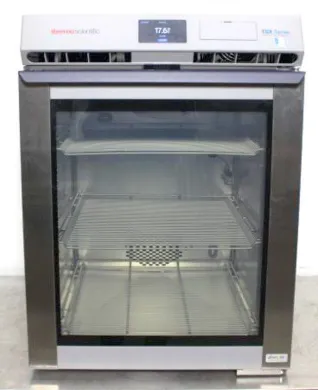
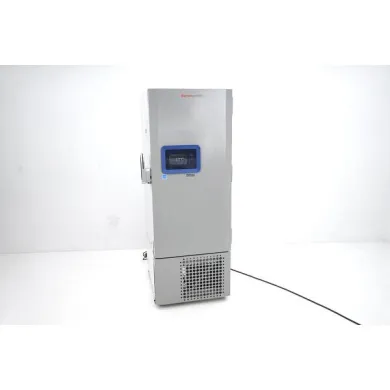
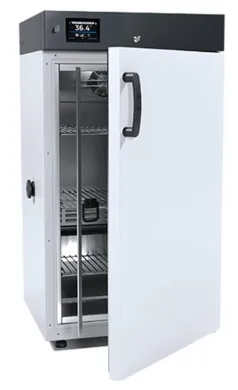
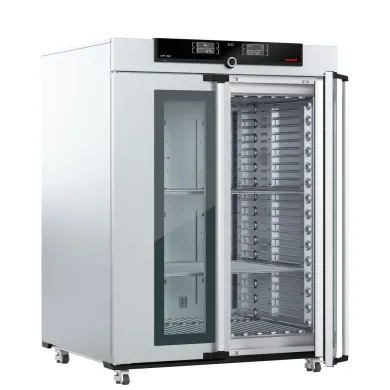
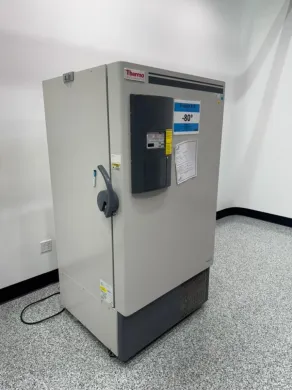
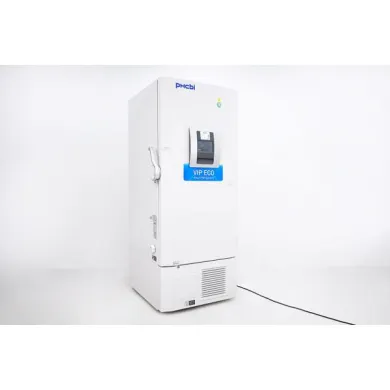
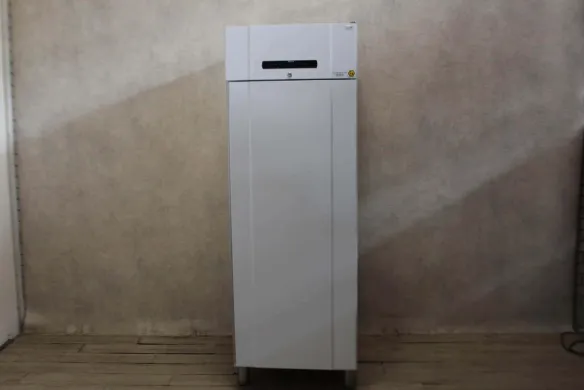
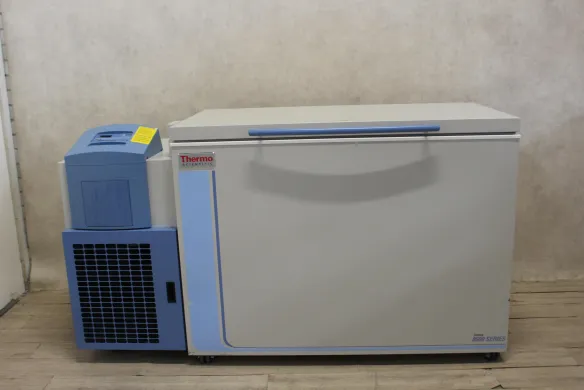
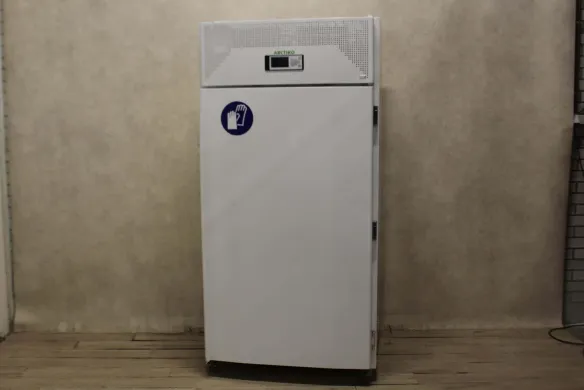
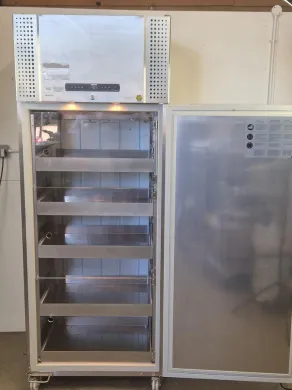
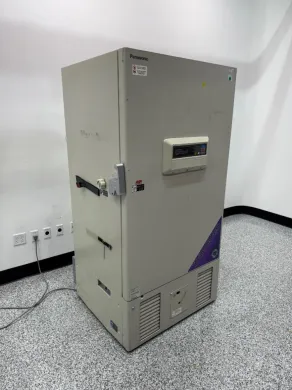
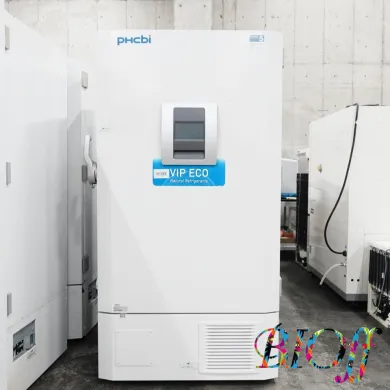
Among the listings that specify a type, the catalogue sorts into laboratory refrigerator, laboratory freezer, biomedical freezer, sample storage refrigerator, refrigerated storage unit, ultra-low temperature freezer. Laboratory refrigerators and sample storage refrigerators hold the +2°C to +8°C range used for reagents, media and short-term biological samples, and are the everyday cold storage of a working lab. Laboratory freezers and biomedical freezers reach down to roughly -30°C and are built for longer-term storage of enzymes, antibodies and processed samples, with the biomedical grade adding the uniformity and alarm features a regulated workflow expects. Ultra-low temperature freezers sit at the bottom of the range near -80°C, the band that preserves cell lines, DNA and tissue for genomics and biobanking. Refrigerated storage units cover the larger-capacity cabinets that serve as the central cold store for a department.
These types serve real work in biotechnology and the life sciences. A sample storage refrigerator holds the plated media and reagents of routine cell culture, and an ultra-low freezer is where a lab keeps the cryogenically stored cell lines, competent cells and plasmid stocks that molecular biology depends on. Biomedical freezers hold the antibody and enzyme stocks that feed immunoassay and protein purification work, and the serum and plasma archives of molecular diagnostics. An ultra-low temperature freezer for biobanking is the backbone of a tissue repository, keeping DNA and biospecimens stable for genomics and proteomics over years. These are also used across microbiology, where strain collections and controls sit at defined cold storage temperatures.
The brands behind the cold storage listings
The names that recur here are Thermo Fisher Scientific, Thermo Scientific, VWR, Fisherbrand, Liebherr. Their presence shapes what a buyer can expect. Thermo Fisher Scientific and Thermo Scientific carry a deep range across the whole temperature band, which makes models easy to compare and keeps replacement parts and shelving widely available through verified suppliers and distributors. Liebherr brings purpose-built laboratory and pharmacy refrigeration, and VWR and Fisherbrand fill the general-purpose and budget-grade end. A catalogue weighted toward established names means a buyer can cross-check a given model against others in the same line and against its original specification rather than guessing at an orphan unit.
What a used cold storage unit costs here
The condition mix is heavily used: 957 of the listings are used against 81 new, so 92 percent are used. Prices span EUR 9 to EUR 44.167, with the average near EUR 2.479. That spread covers the distance between a small under-counter refrigerator and a large validated ultra-low freezer, and because used and refurbished units list below new, the band is where most of the value sits for a buyer matching a cabinet to a defined storage temperature.
Frequently asked questions
What is a climate-controlled cabinet or enclosure?
It is a laboratory unit that holds a set temperature, and in some cases humidity, around stored samples, reagents or biological material. The class covers refrigerators, freezers and ultra-low temperature storage, from benchtop coolers to walk-in cold rooms.
What does climate-controlled mean for this kind of storage?
It means the interior stays within a specified temperature band regardless of the room around it, rather than tracking ambient conditions. For stored biological material, it also means the unit limits drift across shelves and recovers its setpoint after a door opening.
How do climate-controlled cabinets work?
A refrigeration circuit with a compressor removes heat from the interior and a thermostat or controller maintains the target temperature. Door seals, insulation and in some units internal fans keep the temperature uniform across the storage space.
What types of climate-controlled cabinets are there?
The catalogue sorts into laboratory refrigerators, laboratory freezers, biomedical freezers, sample storage refrigerators, refrigerated storage units and ultra-low temperature freezers. They differ mainly by the temperature band they hold, from +2°C to +8°C for refrigerators down to around -80°C for ultra-low freezers.
What are these cabinets used for?
Refrigerators hold reagents, media and short-term biological samples at +2°C to +8°C. Freezers and biomedical freezers store enzymes, antibodies and processed samples at lower temperatures, while ultra-low freezers near -80°C preserve cell lines, DNA and tissue for genomics and biobanking.
How do I choose the right unit?
Start with the temperature band the stored material actually requires, then match the class to it. A cabinet at +4°C, a biomedical freezer at -30°C and an ultra-low freezer at -80°C are not interchangeable, and the gap between them includes uniformity and recovery after a door opening, not just the setpoint.
What is the difference between refurbished and used units?
A used unit is sold in its existing condition, while a refurbished unit has been checked and brought back toward working specification before resale. Both are listed below new prices; for either, verify the compressor run hours, door seals and whether the unit still holds a uniform temperature under load.
How much does a climate-controlled cabinet cost?
Prices on Questpair run from EUR 9 to EUR 44.167, with the average near EUR 2.479. The low end covers small sample refrigerators and spare components, while the upper end covers large biomedical and ultra-low freezers with validated performance.
Which brands show up most in this category?
The names that recur are Thermo Fisher Scientific, Thermo Scientific, VWR, Fisherbrand and Liebherr. Thermo Fisher Scientific and Thermo Scientific span the whole temperature band, Liebherr covers laboratory and pharmacy refrigeration, and VWR and Fisherbrand fill the general-purpose and budget end.
Can I get a warranty on a refurbished unit?
A warranty is often possible and is arranged in consultation for the specific listing. Terms depend on the individual unit rather than being set centrally, so check the listing you are considering.
Are replacement parts available for these units?
Parts such as shelving and refrigeration components can be sourced via Questpair. A catalogue weighted toward established names like Thermo Fisher Scientific keeps replacement parts easier to match against the original model.
How long does a climate-controlled cabinet last?
Lifespan depends on the compressor condition, how the unit was run and how well the door seals and refrigeration circuit are maintained. A unit that has sat idle may need its seals and circuit checked before it will hold a validated band again.
Should I buy new or refurbished?
Used and refurbished units are listed at lower prices than new, which is what keeps a validated freezer within a modest budget. The decision comes down to the specific listing and the condition details it carries, with warranty arranged in consultation.
Where can I buy these cabinets?
They are listed on Questpair from 17 verified suppliers and distributors across 9 countries, in new, used and refurbished condition. The catalogue currently holds 1039 listings in this category.
What are the lead time and shipping like?
Lead time and shipping depend on the individual supplier and the unit's location, which vary across the 9 countries represented. The specifics are set per listing, so check the one you are interested in.
What calibration and maintenance do these units need?
Temperature mapping or calibration confirms the interior holds its band across shelves, and routine checks of door seals and the compressor keep it reliable. For a used unit, ask whether any temperature mapping or calibration record exists and at what setpoint it was last run.
Which types are listed most, and who reaches for which?
Laboratory and sample storage refrigerators are the everyday cold storage for reagents and media in a working lab. Biomedical freezers hold antibody and enzyme stocks for immunoassay and protein work, while ultra-low freezers serve genomics labs and biobanks storing cell lines, DNA and tissue.
Which brands dominate this category, and what does that mean for me as a buyer?
Thermo Fisher Scientific, Thermo Scientific and Liebherr recur across the listings, with VWR and Fisherbrand at the budget end. A catalogue weighted toward established names lets you cross-check a model against others in the same line and against its original specification rather than guessing at an orphan unit.
What separates the cheapest units here from the most expensive?
The bottom of the band covers small under-counter refrigerators and spare components holding the +2°C to +8°C range. The top covers large biomedical and ultra-low freezers reaching -80°C with validated uniformity and alarm features, where recovery after a door opening and drift across shelves are the specifications that matter.