

Environmental chambers
We personally find you the right used, refurbished and new environmental chambers instruments & equipment from verified suppliers.
Environmental chambers are enclosed, temperature-controlled units that hold a defined climate inside a sealed cabinet, used in laboratories to store samples or to subject them to a set thermal or humidity condition. The category spans cold storage and controlled heating, from laboratory refrigerators and freezers through to drying ovens. On Questpair the catalogue holds 861 listings in this class from 18 verified suppliers and distributors across 10 countries, offered new, used and refurbished. 88 percent of the listings are used. Prices run from EUR 1 to EUR 172.178, with an average around EUR 4.315. The equipment underpins sample preservation and controlled-environment work in most research and clinical settings.
Updated:
Environmental chambers product list


Not the exact instrument you need?
Tell our scientists what you are after. We track it down, including off-market supply.
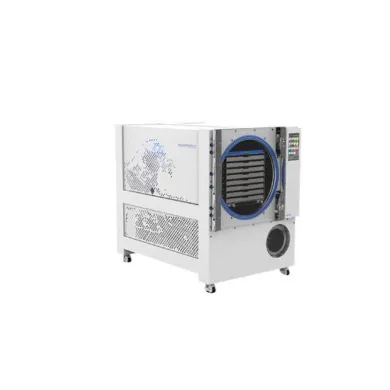
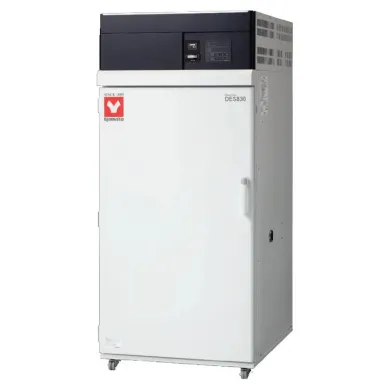
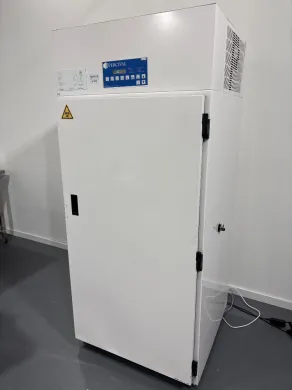
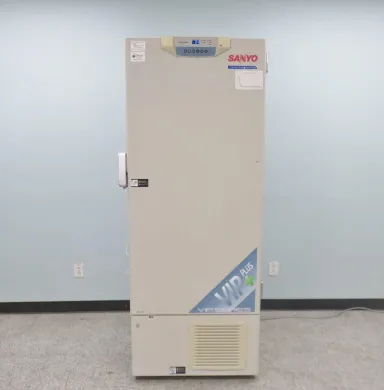
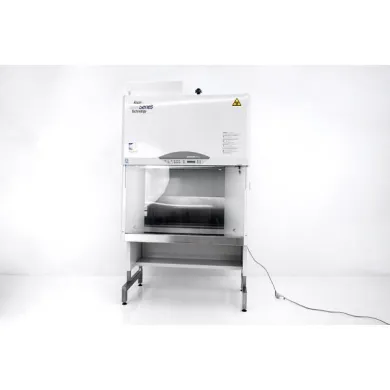
Not the exact instrument you need?
Tell our scientists what you are after. We track it down, including off-market supply.
Showing 1–40 of 394 listings
Show 40 more listingsBuying guide
The temperature a chamber has to reach, and hold, settles the choice before anything else on the datasheet. A unit built to sit at a few degrees above freezing is a different machine from one that runs at minus eighty, and the gap is not a matter of degree but of compressor design, insulation and cost. So the first question is the set point the work demands and how tightly it must be held around that point: a vaccine store and a reagent fridge both read "cold" on a label and behave nothing alike. Stability at the set point, how far the interior drifts over a cycle, matters as much as the headline number, and it is the figure a manufacturer is least likely to lead with.
Once the thermal range is fixed, the capacity and the interior layout follow from it, because a chamber that cannot be reached into or racked sensibly wastes its cold volume. Then comes condition. With 88 percent of the catalogue listed as used, most buyers here are weighing a pre-owned cabinet, and that shifts what has to be checked. On a used unit the compressor hours and the seal condition carry the risk: a door gasket that no longer pulls flush lets the interior drift and the compressor run long to compensate, which is both a performance problem and a sign of wear. Ask when the unit last held its rated temperature under load, not empty, and whether the defrost and alarm systems still function. A used environmental chamber that has sat idle can need its refrigerant circuit checked before it holds a set point reliably.
Price spans the whole breadth of the field, from EUR 1 at the accessory end to EUR 172.178 for large or ultra-low capacity, with the average nearer EUR 4.315. A used or refurbished cabinet is listed for sale below a new equivalent, which is what brings a specification within a given budget that new pricing would put out of reach. What a unit costs tracks closely with its temperature range and volume, so the band a buyer lands in is largely decided by the first two questions rather than by brand. The names that occupy the catalogue, Thermo Fisher Scientific, Thermo Scientific, VWR, Yamato, Siemens among them, sit across that range rather than at one end of it, so a budget figure narrows the field more than a brand preference does.
Types of Environmental chambers
Which environmental chamber types are listed?
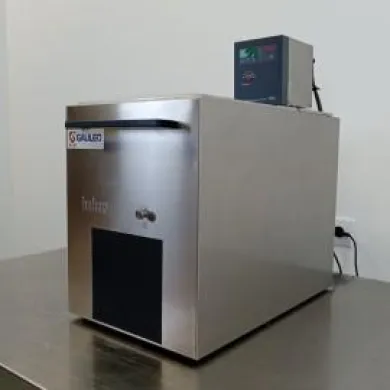
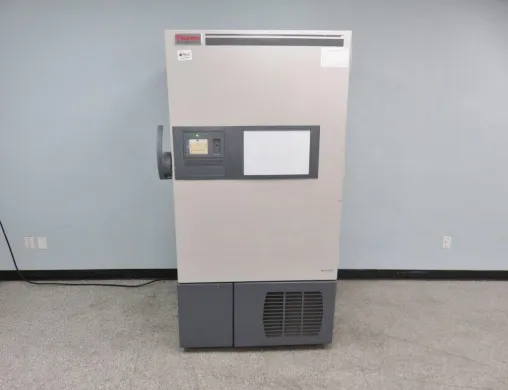
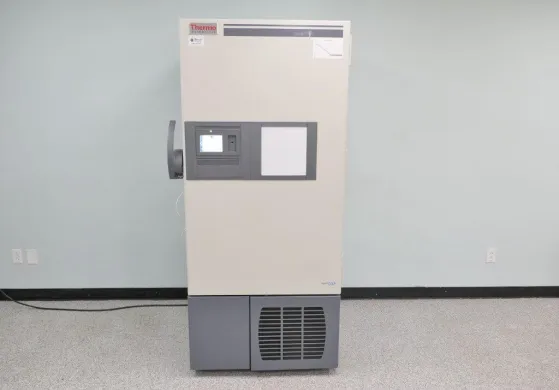
Among the listings that specify a type, the catalogue is dominated by cold-storage equipment at several temperature grades. A laboratory refrigerator holds the near-freezing range for reagents, media and routine samples, and is the general store of most labs. A laboratory freezer drops below zero for longer-term holding, while a biomedical freezer is built to the tighter stability a clinical or pharmaceutical store needs, often with validation and alarm features a general freezer lacks. The ultra-low temperature freezer, written either as ultra-low or ultra low, reaches around minus eighty for the deep storage that cell lines, tissue and certain biologics require, and is the most demanding unit in the group on both power and compressor design. The one heated type here, the laboratory drying oven, sits at the other end, holding a raised temperature to dry glassware, cure samples or remove moisture.
The split in the field each type serves is as wide as the temperature span. Biomedical and ultra-low freezers anchor cell culture and biobanking, where long-term cell preservation and the storage of samples for genomics and proteomics work depend on a stable deep cold. An ultra-low temperature freezer for cell line storage is the standard way to hold a working stock between experiments, and biomedical cold storage for molecular diagnostics keeps the reagents and patient samples a clinical assay relies on. A laboratory refrigerator is also used for immunoassay reagents and electrophoresis buffers, which lose activity at room temperature. The drying oven serves sample preparation across microbiology and analytical chemistry, drying filters, media and labware before use.
The brands behind the environmental chamber listings
The names that recur across these listings, Thermo Fisher Scientific, Thermo Scientific, VWR, Yamato, Siemens among them, matter to a buyer for practical reasons rather than reputation. A brand with a broad installed base means parts and service parts are easier to source and a used model is easier to compare against others of the same line, because its specifications are widely documented. Where Thermo Scientific and Thermo Fisher Scientific appear across several temperature grades, a buyer can hold to one family from refrigerator to ultra-low freezer, which simplifies matching racks and spares. Parts for the listed makes can be sourced via Questpair.
What a used environmental chamber costs here
88 percent of the listings are used. Prices run from EUR 1 to EUR 172.178, the widest spread in the catalogue, covering everything from a small accessory at the low end to a large-capacity or ultra-low cabinet at the high end, with the average near EUR 4.315. Used and refurbished units are listed below the price of a new equivalent. Where a buyer is weighing new against used, warranty is arranged in consultation for the specific listing, so the comparison comes down to the individual unit rather than a blanket rule.
Frequently asked questions
What is an environmental chamber?
An environmental chamber is an enclosed, temperature-controlled unit that holds a defined climate inside a sealed cabinet. In laboratories it is used to store samples or to hold them at a set thermal or humidity condition, spanning cold storage through controlled heating.
What does environmental chamber mean?
The term covers any sealed cabinet that maintains a specific internal environment, usually a fixed temperature and sometimes humidity. In this category it groups cold-storage units like refrigerators and freezers alongside heated units like drying ovens.
How do environmental chambers work?
Cold units use a compressor and refrigerant circuit to pull heat out of the sealed cabinet, held down by insulation and a sealing door gasket, while heated units apply a controlled heat source. A thermostat or controller reads the interior and cycles the system to hold the set point within a stated band.
What types of environmental chambers are there?
The listed types include the laboratory refrigerator for near-freezing storage, the laboratory freezer for below-zero holding, the biomedical freezer built to tighter stability, and the ultra-low temperature freezer reaching around minus eighty. The one heated type is the laboratory drying oven, which holds a raised temperature to dry or cure samples.
What is an environmental chamber used for?
It preserves samples and supports controlled-environment work. Refrigerators hold reagents, media and buffers; freezers and ultra-low units anchor cell culture and biobanking; drying ovens dry filters, media and labware before use in microbiology and analytical chemistry.
How do I choose an environmental chamber?
Start with the set point the work demands and how tightly the interior must hold around it, since that settles whether you need a reagent fridge or an ultra-low cabinet. Capacity and interior layout follow from the thermal range, and on a used unit the compressor hours and gasket condition then decide whether a given cabinet is sound.
What is the difference between refurbished and used?
A used unit is sold in its existing condition, while a refurbished unit has been checked over and brought back toward working order before listing. Both are listed below the price of a new equivalent; check the individual listing for what has been done to the specific cabinet.
How much does an environmental chamber cost?
Prices across this category range from EUR 1 to EUR 172.178, with the average near EUR 4.315. The figure a buyer lands on tracks closely with temperature range and capacity, so a small accessory sits at the low end and a large-capacity or ultra-low cabinet at the high end.
Which brands make environmental chambers?
Names recurring across these listings include Thermo Fisher Scientific, Thermo Scientific, VWR, Yamato and Siemens. A broad installed base makes parts easier to source and a used model easier to compare against others of the same line.
Is there a warranty on refurbished environmental chambers?
A warranty is often possible and is arranged in consultation for the specific listing. Because terms are set per unit rather than centrally, check the listing you are considering.
Can I get parts for an environmental chamber?
Parts for the listed makes can be sourced via Questpair. A brand with a wide installed base, such as Thermo Scientific or Thermo Fisher Scientific, generally has service parts that are easier to find.
How long does an environmental chamber last?
Lifespan depends on compressor hours and how hard the unit has run, which is driven by seal condition and load. A door gasket that no longer pulls flush lets the interior drift and forces the compressor to run long, which shortens service life, so ask when the unit last held its rated temperature under load.
Should I buy new or used?
Used and refurbished units are listed at lower prices than a new equivalent, which brings a higher specification within a given budget. Warranty is arranged in consultation for the specific listing, so weigh the individual unit rather than applying a blanket rule.
Where can I buy an environmental chamber?
The Questpair catalogue holds 861 listings in this class from 18 verified suppliers and distributors across 10 countries. Units are offered new, used and refurbished.
What is the lead time and shipping?
Lead time and shipping depend on the individual listing, the supplier and the country it ships from, since the catalogue spans 10 countries. For a specific unit you can contact Questpair, where specialists respond within 1 hour.
How are environmental chambers calibrated and maintained?
Maintenance centres on the refrigerant circuit, door seals and defrost and alarm systems, which should be verified to hold the rated temperature under load rather than empty. A used chamber that has sat idle can need its refrigerant circuit checked before it holds a set point reliably; Questpair does not carry out servicing.
Which environmental chamber types are listed most, and who reaches for which?
Cold-storage equipment dominates the listings across several temperature grades. A laboratory refrigerator is the general store of most labs for reagents and media, biomedical and ultra-low freezers anchor cell culture and biobanking where deep stable cold matters, and the laboratory drying oven serves sample preparation in microbiology and analytical chemistry.
Which brands dominate this category and what does that mean for a buyer?
Thermo Fisher Scientific, Thermo Scientific, VWR, Yamato and Siemens recur across these listings. Where one family appears across several temperature grades, a buyer can hold to it from refrigerator to ultra-low freezer, which simplifies matching racks and spares and makes a used model easier to compare.
What separates the cheapest environmental chambers from the most expensive?
The spread tracks temperature range and capacity more than brand. A small accessory or a refrigerator holding a few degrees above freezing sits near EUR 1, while a large-capacity cabinet or an ultra-low freezer running at minus eighty, with its heavier compressor and insulation, sits near EUR 172.178.