58k+ listingsShips to NLResponse within one hour+31 73 711 4717info@questpair.com

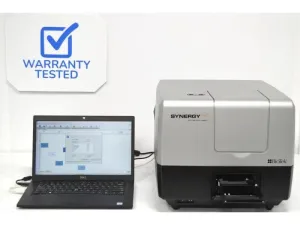
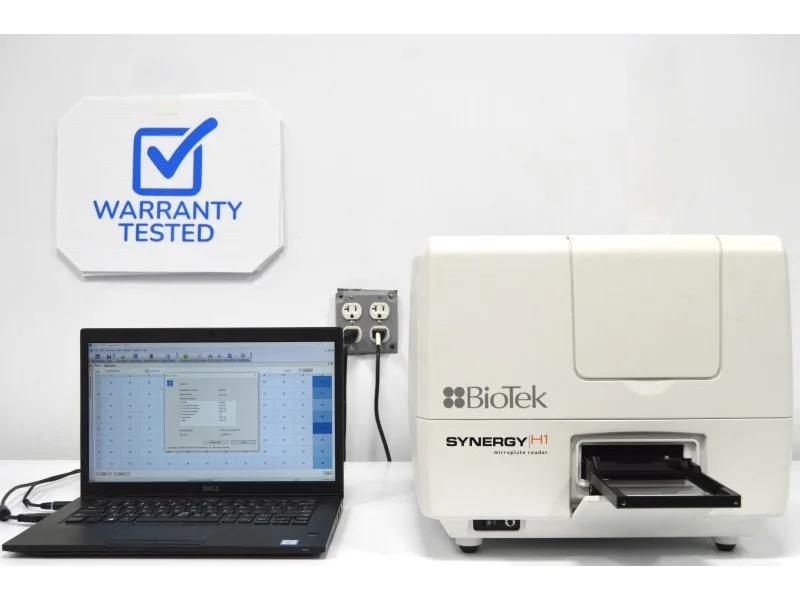
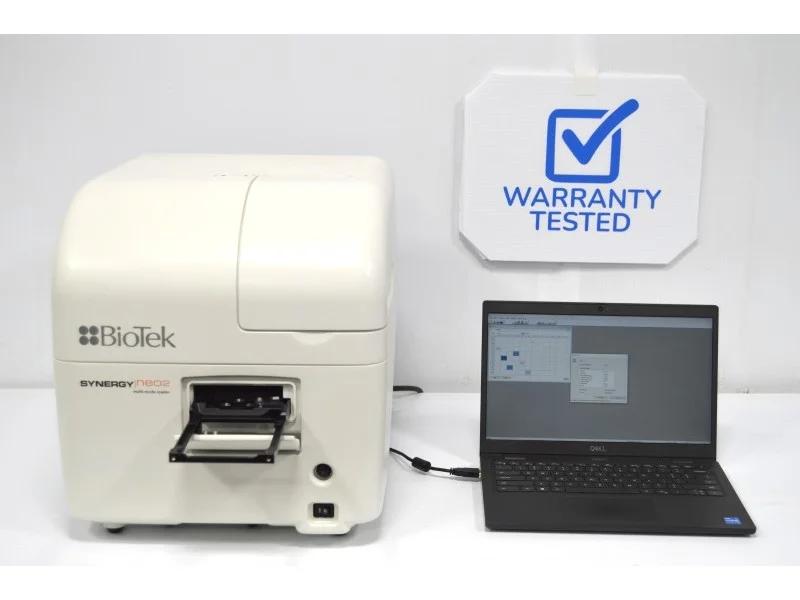
Agilent BioTek Synergy H1M Multimode Microplate Reader

UsedAgilentMicroplate readersUnited States

Price on request

In stock

Can't find what you're looking for?

Stock
In Stock
Product Code
69352
Detection Modes
Absorbance, Fluorescence Intensity, Luminescence, TRF/HTRF
Wavelength Selection
Monochromator-Based
Plate Formats
6–48 Well, 96-Well, 384-Well
All 8 specifications
  • Ships to NL
  • Response within 1 hour
  • Warranty available. Buy without worry
  • Support from a scientist

Specifications 8

Brands
Agilent
New/Used
Used
Stock
In Stock
Product Code
69352
Detection Modes
Absorbance, Fluorescence Intensity, Luminescence, TRF/HTRF
Wavelength Selection
Monochromator-Based
Plate Formats
6–48 Well, 96-Well, 384-Well
Detail
Incubation Function

Pre-Owned

Product description

Multimode microplate reader for absorbance, fluorescence, luminescence, and time-resolved fluorescence assays.

The Agilent BioTek Synergy H1M multimode microplate reader is designed for flexible absorbance, fluorescence intensity, luminescence, and time-resolved fluorescence analysis in life science and biotechnology laboratories. Its monochromator-based optical system supports UV-Vis measurements, fluorescence assays, kinetic studies, spectral scans, and well-area scans.

  • Detection modes: UV-Vis absorbance, fluorescence intensity, luminescence, and time-resolved fluorescence
  • Wavelength selection: Quadruple grating monochromator system
  • Read methods: Endpoint, kinetic, spectral scanning, and well-area scanning
  • Microplate formats: 6-, 12-, 24-, 48-, 96-, and 384-well plates
  • Temperature control: Up to 45 °C; ±0.2 °C at 37 °C
  • Shaking: Linear, orbital, and double orbital
  • Included hardware: Standard power and communication cables
  • Software: Gen 5 or Gen 6 software is not included and must be purchased separately
  • Optional accessory: BioTek BioStack Microplate Stacker for higher-throughput workflows

Absorbance performance

  • Xenon flash lamp light source
  • Monochromator wavelength selection
  • Wavelength range: 230–999 nm in 1 nm increments
  • Bandpass: 4 nm at 230–285 nm; 8 nm above 285 nm
  • Dynamic range: 0–4.0 OD
  • Resolution: 0.0001 OD
  • Pathlength correction: Yes
  • OD accuracy: <1% at 2.0 OD; <3% at 3.0 OD
  • OD repeatability: <0.5% at 2.0 OD
  • Reading speed: 11 seconds for 96 wells and 22 seconds for 384 wells

Fluorescence intensity performance

  • Xenon flash lamp light source
  • PMT detectors
  • Double grating monochromators for top and bottom reading
  • Wavelength range: 250–700 nm
  • Dynamic range: 5 decades
  • Sensitivity with monochromators:
  • Top: Fluorescein 2.5 pM, equivalent to 0.25 fmol/well in a 384-well plate
  • Bottom: Fluorescein 4 pM, equivalent to 0.4 fmol/well in a 384-well plate

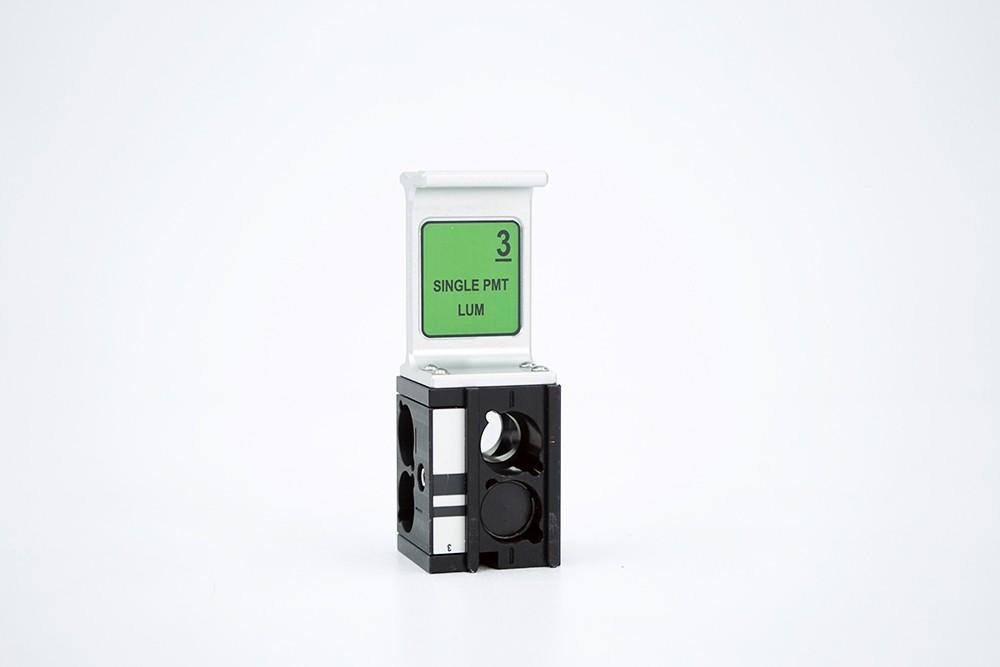
Luminescence performance

  • Monochromator system sensitivity: 20 amol ATP, flash
  • Wavelength range: 300–700 nm
  • Dynamic range: >6 decades
  • Full-light luminescence detection for glow and flash assays

Time-resolved fluorescence performance

  • Xenon flash lamp light source
  • Europium sensitivity: 1200 fM with monochromators, equivalent to 120 amol/well in a 384-well plate
  • Wavelength range: 250–850 nm

The Synergy H1M is suitable for ELISA, protein quantification, DNA/RNA concentration analysis, cell viability and proliferation assays, reporter gene assays, enzyme kinetics, drug screening, and toxicity testing. It is also applicable to molecular biology, cell-based research, bioprocessing assay development, molecular diagnostics, and broader biotechnology workflows.

This pre-owned microplate reader was tested by an in-house service team for power-on operation, system initialization, control software connection, plate carrier movement and positioning, incubator performance, shaking, fluorescence, luminescence, and absorbance functionality.

Why Questpair exists

Lab equipment markets are fragmented. Buyers spend weeks calling distributors, comparing quotes, and verifying supplier reliability. Sellers struggle to reach global research labs.

We built Questpair to fix this. Every supplier on the platform is verified before listing. Every quote you receive comes from a real, vetted seller. AI prepares your case in minutes, then a real specialist takes over.

We're an independent team based in The Netherlands, working with research labs and procurement teams across Europe and worldwide.

Frequently asked questions

How long does laboratory equipment typically last?

With a service contract, ten to fifteen years is normal for most benchtop instruments. Detectors and pumps are the parts that wear first.

Can I get service for older equipment?

Yes. Every verified supplier states which service partners cover the instrument, and we list that alongside the offer.

Where can I buy parts?

Ask a scientist through the request button. Parts are often available even when the instrument itself is discontinued.

What is the typical lead time for refurbished equipment?

Two to six weeks, depending on refurbishment scope and whether calibration is included.

Does laboratory equipment ship internationally?

We ship to 38 countries. Crating and customs handling are quoted with the instrument.

Reply in one hour

Can't find the exact configuration?

Tell us what you need and a scientist finds it for you, usually within the hour.

Last updated 19 October 2026