

Microplate equipment
We personally find you the right used, refurbished and new microplate equipment from verified suppliers.
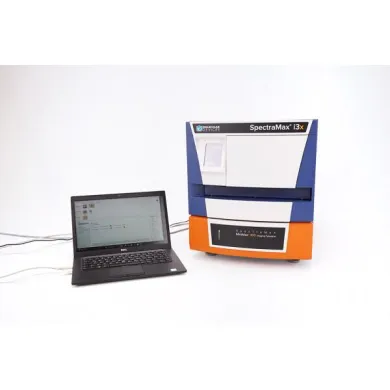
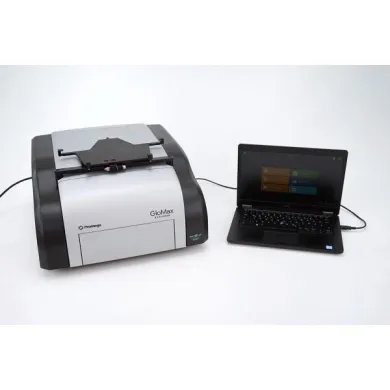
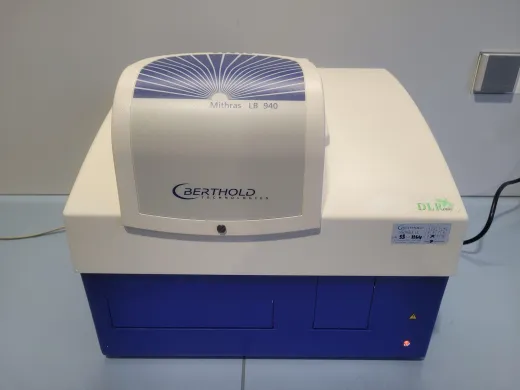
Microplate equipment is the family of instruments that reads, washes and processes samples held in standardised multi-well plates, the 96-well and 384-well formats that run parallel assays in biology, chemistry and clinical laboratories. The Questpair catalogue holds 1303 microplate listings from 23 verified suppliers and distributors across 12 countries. New, used and refurbished units are all listed, and 96 percent of the listings are used. Readers quantify light, absorbance, luminescence or fluorescence from each well; washers flush and aspirate reagents between assay steps. Prices run from EUR 1 to EUR 215.222, a span that covers a basic single-mode absorbance reader through to a fully configured multi-mode plate system.
Updated:
Microplate equipment product list
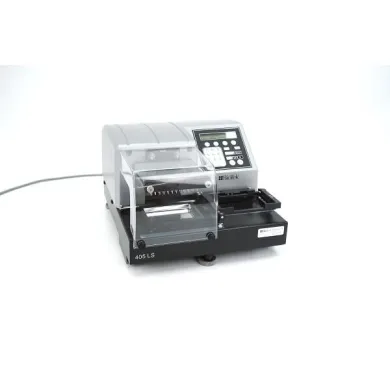
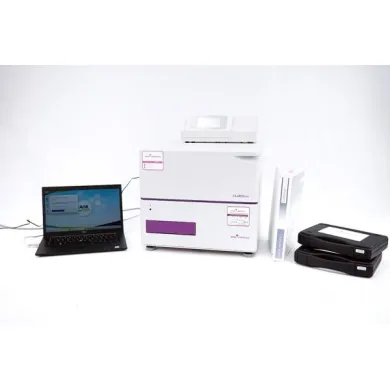


Not the exact instrument you need?
Tell our scientists what you are after. We track it down, including off-market supply.
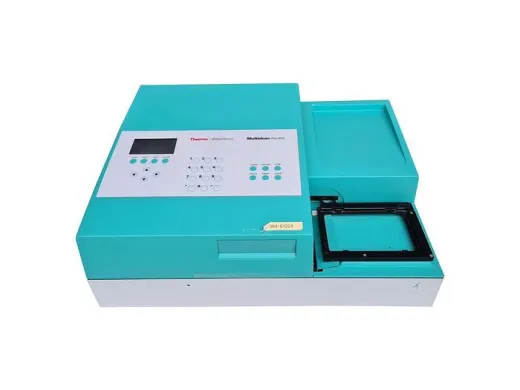
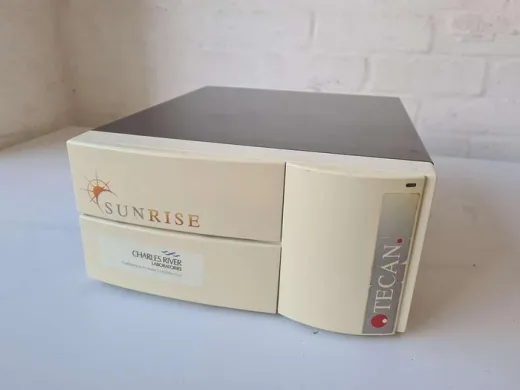
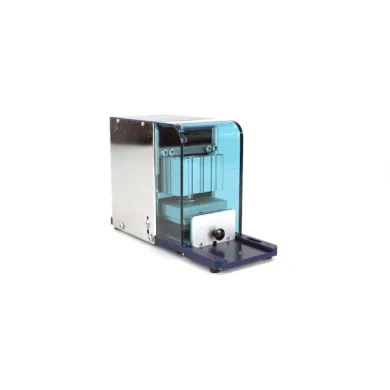
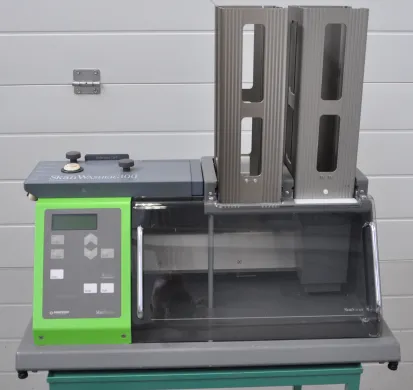
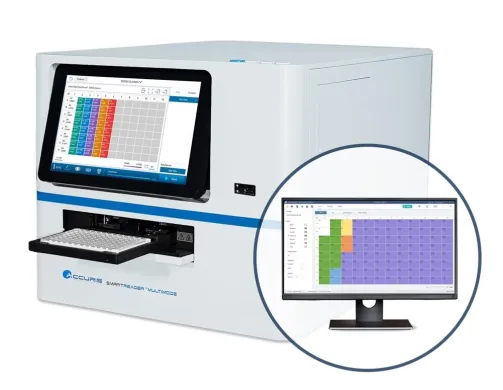
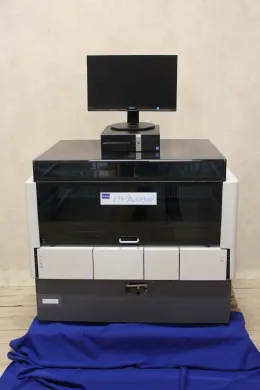
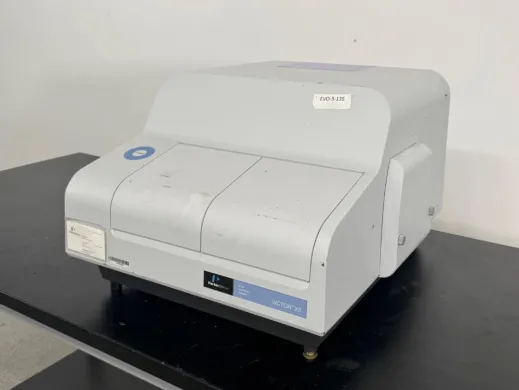
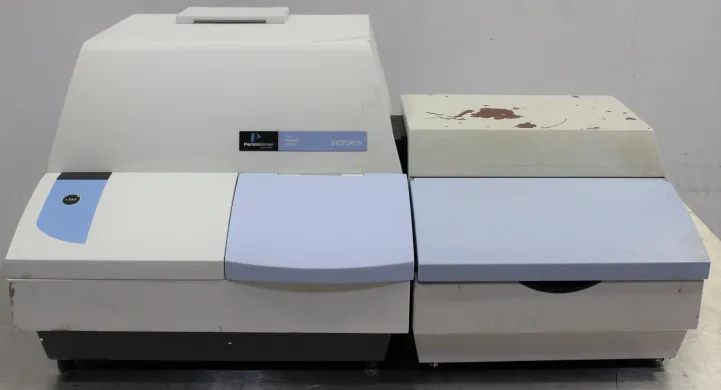
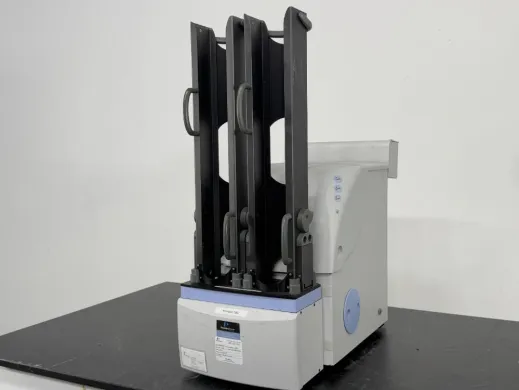
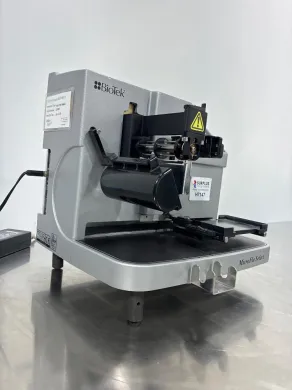
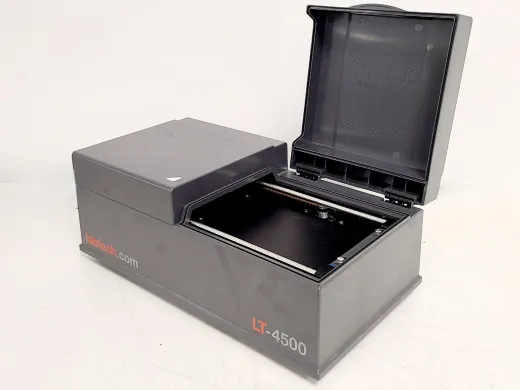
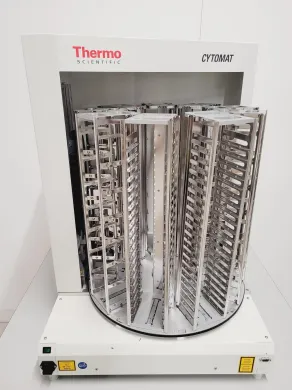
Not the exact instrument you need?
Tell our scientists what you are after. We track it down, including off-market supply.
Showing 1–40 of 870 listings
Show 40 more listingsBuying guide
What settles a microplate reader purchase before anything else is the detection mode, because a reader built for one measurement cannot be made to do another. An absorbance-only instrument reads optical density through the sample and suits ELISA, protein and nucleic acid quantification; a luminescence reader measures emitted light with no excitation source and serves reporter-gene and ATP assays; a multi-mode reader combines absorbance, fluorescence and luminescence in a single chassis. Decide which assays the laboratory actually runs now and over the next few years, because a reader that reads only absorbance is cheaper to buy but caps the workflows it can support. Plate format follows from the same question: confirm the instrument takes the well density in use, 96 and 384 being standard, and that it handles the plate heights and lid configurations the protocols call for.
A used microplate reader needs verification that a datasheet cannot give. The optics and the light source age, so ask when the lamp or LED array was last replaced and whether the instrument still meets its stated sensitivity and linearity across the wavelength range. Filters and monochromators should be present and matched to the detection modes advertised. For a plate washer, the manifold and the fluid lines are the wear points: check that the dispense and aspirate pins are clear and that the pump holds pressure, since a partially blocked manifold leaves residual volume that corrupts assay reproducibility. Where documentation is needed to confirm a specification, Questpair specialists respond within one hour, and parts for these systems can be sourced through Questpair.
The price band here is wide, and the detection mode explains most of it. A single-mode absorbance reader sits near the bottom of the range, where a modest budget buys a working instrument; a multi-mode plate system with reagent injectors and automated optics sits far higher, which is why the average, EUR 5.552, falls well below the top of the span rather than in the middle of it. The brands that fill the catalogue, Molecular Devices, BioTek, Thermo Scientific, Tecan, PerkinElmer, occupy different parts of this range, and used units listed for sale are more affordable than new, which is what makes a capable multi-mode reader reachable on a budget that would otherwise buy only a basic reader new.
Types of Microplate equipment
Which microplate instruments are listed here?
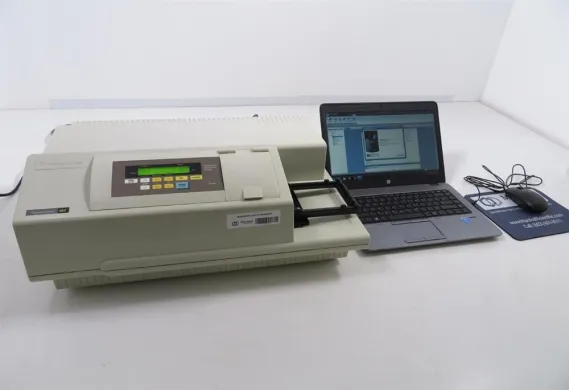
Among the listings that specify a type, the catalogue divides into readers and washers, and the readers divide again by what they detect. A microplate reader quantifies an optical signal from each well; an absorbance microplate reader, often listed simply as an absorbance reader, measures how much light the sample transmits, the format behind the ELISA and the colorimetric endpoint. A multi-mode microplate reader adds fluorescence and luminescence to the same instrument, so one unit covers assays that would otherwise need two or three. A luminescence reader measures light the sample emits without any excitation source, which is what a reporter-gene or an ATP-based viability assay produces. A microplate washer does none of the reading; it dispenses and aspirates buffer between assay steps, and its reproducibility depends on an even, complete flush of every well.
These instruments sit at the centre of life sciences work. Plate readers run the immunoassay and the ELISA that underpin molecular diagnostics, measure cell culture viability and proliferation in drug screening, and quantify DNA and protein in genomics and proteomics sample preparation. A multi-mode microplate reader is the standard tool for high-throughput screening, where thousands of wells are read in a single session across fluorescence, absorbance and luminescence. Luminescence readers also used for bioluminescent reporter assays in gene expression and cell signalling studies. Washers support every plate-based immunoassay by removing unbound reagent between incubation steps, a stage that decides the background signal of the final read.
The brands behind the microplate listings
The makers that recur most across the catalogue are Molecular Devices, BioTek, Thermo Scientific, Tecan, PerkinElmer. For a buyer this concentration is useful: parts and consumables for the common lines are easier to source, replacement filters and injectors are more likely to be available, and a model from a well-represented maker is simpler to compare against another listing of the same family. It also means price levels are easier to read, because several units of a comparable specification appear side by side rather than in isolation.
What a used microplate reader costs here
The split is heavily towards used equipment: 96 percent of the listings are used, with the remainder new. Prices run from EUR 1 to EUR 215.222. That spread covers the full range of the category, from an entry absorbance reader to a multi-mode plate system with automated optics and reagent injection, which is why the two ends sit so far apart.
Frequently asked questions
What is microplate equipment?
Microplate equipment is a group of laboratory instruments that read, wash, or process samples held in the wells of a standard microtiter plate, usually in 96, 384, or 1536-well formats. The category covers readers that measure an optical signal, washers that handle buffer exchange, and multi-mode units that combine several detection modes.
What does microplate equipment mean in practice?
In practice it refers to the bench instruments a lab uses to run plate-based assays: a reader quantifies a signal per well, a washer automates the rinse steps between assay stages, and a multi-mode reader handles more than one detection type in one body. The term groups these by the job they do on a plate rather than by a single technology.
How does microplate equipment work?
A reader passes light through or collects light from each well and converts that signal into a value, using absorbance, fluorescence, or luminescence depending on the detection mode. A washer dispenses wash buffer into every well and aspirates it back out, repeating the cycle to clear unbound material between binding and detection.
What types of microplate equipment are there?
The listings here split into readers and washers. Readers include absorbance microplate readers, luminescence readers, and multi-mode microplate readers that fold several detection modes into one unit; microplate washers sit apart and automate the buffer-exchange steps in an assay.
What is microplate equipment used for?
Absorbance readers run ELISA immunoassays and protein quantitation used in diagnostics and clinical screening. Multi-mode readers cover fluorescence-based work, enzyme kinetics, and high-throughput plate assays, luminescence readers serve reporter and ATP-based assays, and washers handle the wash steps in immunoassay workflows.
How do I choose microplate equipment?
Start from the assays you run: the detection mode decides the reader class, so an ELISA lab needs absorbance while a lab with mixed assay types may want a multi-mode body instead of a second instrument. Then match plate format, throughput, and whether you need injectors or automation, and compare those specs against condition across the listings.
What is the difference between refurbished and used microplate equipment?
Used describes a unit sold in its existing working condition, while refurbished means it has been reconditioned before resale. Both appear in the catalogue at lower prices than new, and the exact condition of any given unit is stated in its own listing.
How much does microplate equipment cost?
Across the Questpair catalogue prices range from EUR 1 to EUR 215.222, with the average listing at EUR 5.552. The spread is wide because it runs from plate accessories and consumables at the floor to fully configured multi-mode readers with injectors and automation at the ceiling.
Which are the best brands for microplate equipment?
The listings here cluster around Molecular Devices, BioTek, Thermo Scientific, Tecan, and PerkinElmer. Which suits you depends on the detection mode and plate format you need, since each of these makers covers single-mode and multi-mode readers and, in some cases, washers.
Is there a warranty on refurbished microplate equipment?
A warranty is often possible and is arranged in consultation for the specific listing, since terms are not set across the catalogue. Check the individual listing and raise warranty with the supplier before committing.
Can I get parts for microplate equipment?
Parts such as filters, lamps, and injector components can be sourced via Questpair. Models from the makers that dominate the catalogue have a large installed base, which helps when cross-referencing part numbers across listings.
How long does microplate equipment last?
A reader or washer is a durable bench instrument that can run for many years when its lamp, filters, and fluidics are maintained and calibrated. Lifespan depends on how heavily the unit is used and how well consumable parts are kept up, not on the purchase date alone.
Should I buy new or refurbished microplate equipment?
The difference the catalogue lets you state is price: used and refurbished units are listed below new. Weigh that saving against the specification and stated condition of the individual listing, and settle warranty in consultation for that unit.
Where can I buy microplate equipment?
It is available through the verified suppliers and distributors listed on Questpair. Supply spans 23 suppliers across 12 countries, so a given detection spec can often be matched across more than one listing before you commit.
What are the lead time and shipping for microplate equipment?
Lead time and shipping depend on the supplier and the unit, since the listings come from 23 suppliers across 12 countries. The specifics are confirmed with the supplier of the individual listing.
How are microplate readers calibrated and maintained?
Routine maintenance covers lamp and filter condition, optical cleanliness, and fluidics for washers, with periodic calibration checks against known standards to keep readings accurate. Questpair does not provide servicing, but replacement parts for these upkeep tasks can be sourced via Questpair.
Which types in this category are listed most, and who reaches for which?
Readers dominate the listings and split by detection mode, with absorbance readers being the most common single-mode instrument, which suits colorimetric and ELISA labs. Luminescence readers go to reporter and ATP assay work, multi-mode readers to labs running mixed assay types, and washers to high-throughput immunoassay workflows.
Which brands dominate this category, and what does that mean for a buyer?
The catalogue clusters around Molecular Devices, BioTek, Thermo Scientific, Tecan, and PerkinElmer. For a buyer that concentration is practical: parts and lamps for these makers circulate on the used market, and a model with a large installed base is easier to cross-reference against published assay protocols and against other units on offer.
What separates the bottom of the price band from the top here?
At the floor sit plate accessories and single consumables, which is why EUR 1 is so far below the ceiling. The top of the band at EUR 215.222 is held by fully configured multi-mode readers with injectors and automation, while single-mode readers and washers sit nearer the average of EUR 5.552.