53k+ listingsShips to NLResponse within one hour+31 73 711 4717info@questpair.com
Procurable · sourced on request

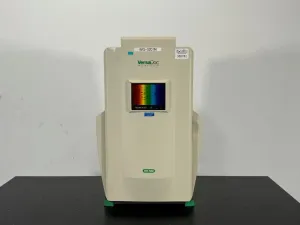
Bio-Rad VersaDoc Imaging System

UsedBio-RadMicroarray scannersNetherlands
Procurable

Not in stock, available to order through our sourcing team

Not in stock, but we can get it for you

We source this model through our supplier network. Request a quote and we'll come back within one hour.

  1. Request a quote
  2. We confirm price and lead time
  3. You approve, we ship to you
Voltage
100–250 V
Power Consumption
350 W
Operating Temperature Range
10–28°C
Operating Humidity Range
10–85% relative humidity
Detector Type
Cooled CCD, 6 megapixels
Availability
Procurable
Lead time
Confirmed with your quote
All 14 specifications
  • Ships to NL
  • Response within 1 hour
  • Warranty available. Buy without worry
  • Support from a scientist

Specifications 14

Brands
Bio-Rad
New/Used
Used
Dimensions
610 x 510 x 530 mm
Weight
35 kg
Voltage
100–250 V
Power Consumption
350 W
Operating Temperature Range
10–28°C
Operating Humidity Range
10–85% relative humidity
Detector Type
Cooled CCD, 6 megapixels
Illumination Sources
Trans-UV (302 nm), Epi-white, Trans-white, Trans-blue (450–490 nm)
Sample Compatibility
Fluorescent, chemiluminescent, and colorimetric samples
Data Output Formats
16-bit or 8-bit; SCN, TIFF, JPEG files
Availability
Procurable
Lead time
Confirmed with your quote

Product description

High-resolution imaging system for fluorescent, chemiluminescent, and colorimetric biomolecule detection.

The Bio-Rad VersaDoc 4556 is a versatile imaging system designed for the detection and analysis of various biomolecules, including proteins and nucleic acids. This instrument captures high-resolution digital images from fluorescent, chemiluminescent, and colorimetric samples, facilitating accurate and reproducible data acquisition.

Key features:

  • High-resolution imaging: Equipped with a cooled CCD camera, the system delivers detailed images essential for precise analysis.
  • Multiple illumination sources: Supports red, green, and blue LED epi-illumination, as well as UV and white light transillumination, accommodating a wide range of applications.
  • Dynamic flat fielding: Utilises patented technology to eliminate imaging non-uniformities, ensuring consistent image quality across the entire imaging area.
  • Versatile detection modes: Capable of detecting fluorescent, chemiluminescent, and colorimetric signals, enhancing its applicability in diverse research settings.
  • User-friendly software: Integrated with Quantity One® software, providing comprehensive control over image acquisition and analysis.

Applications:

  • Proteomics and genomics: Ideal for analysing 1-D and 2-D protein gels, as well as nucleic acid gels.
  • Blotting techniques: Supports Western, Northern, and Southern blot analyses.
  • Microarray analysis: Suitable for imaging microarrays with spots ≥400 μm, facilitating high-throughput studies.
  • Colony counting: Enables accurate quantification of bacterial or cell colonies.

The VersaDoc 4556 is widely adopted in biotechnology research, particularly in molecular biology and proteomics laboratories. It is commonly utilised in university labs, biomedical research centres, and clinical environments. While the exact release date is not specified, the VersaDoc series has been a staple in laboratories since the early 2000s, with models like the MP 4000 and MP 5000 being prominent.

Why Questpair exists

Lab equipment markets are fragmented. Buyers spend weeks calling distributors, comparing quotes, and verifying supplier reliability. Sellers struggle to reach global research labs.

We built Questpair to fix this. Every supplier on the platform is verified before listing. Every quote you receive comes from a real, vetted seller. AI prepares your case in minutes, then a real specialist takes over.

We're an independent team based in The Netherlands, working with research labs and procurement teams across Europe and worldwide.

Frequently asked questions

How long does laboratory equipment typically last?

With a service contract, ten to fifteen years is normal for most benchtop instruments. Detectors and pumps are the parts that wear first.

Can I get service for older equipment?

Often, yes. Verified suppliers frequently work with service partners converting the instrument. If applicable, we can list servicing options alongside the offer.

Where can I buy parts?

Ask a scientist through the request button. Parts are often available even when the instrument itself is discontinued.

What is the typical lead time for refurbished equipment?

Two to six weeks, depending on refurbishment scope and whether calibration is included.

Does laboratory equipment ship internationally?

We ship to 38 countries. Crating and customs handling are quoted with the instrument.

Reply in one hour

Can't find the exact configuration?

Tell us what you need and a scientist finds it for you, usually within the hour.

Last updated 4 November 2026