51k+ listingsShips to NLResponse within one hour+31 73 711 4717info@questpair.com
Sold · specialists can find another

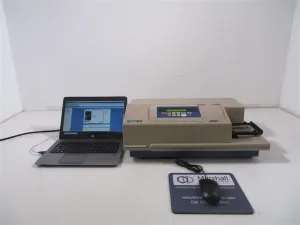
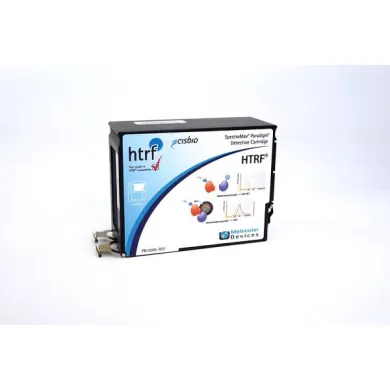
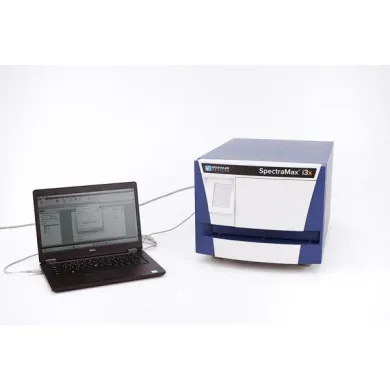
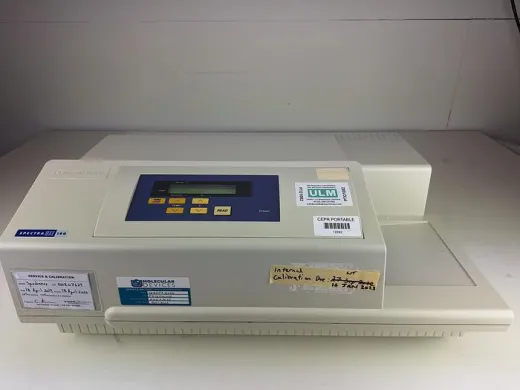
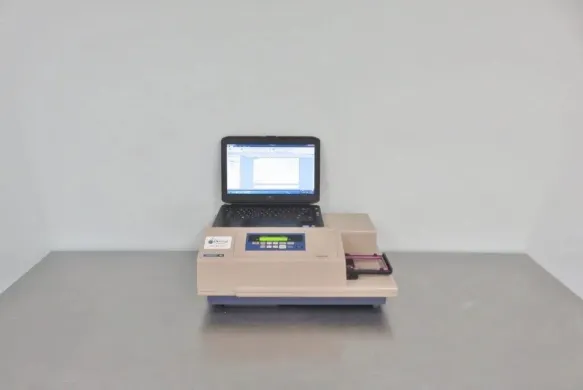
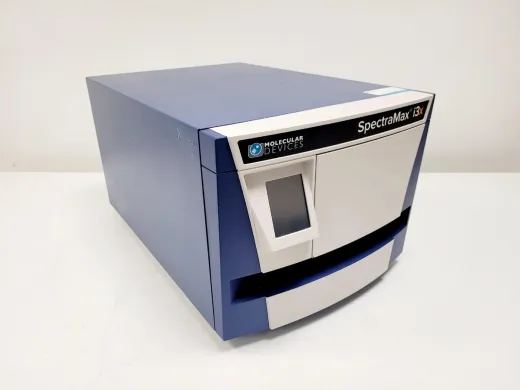
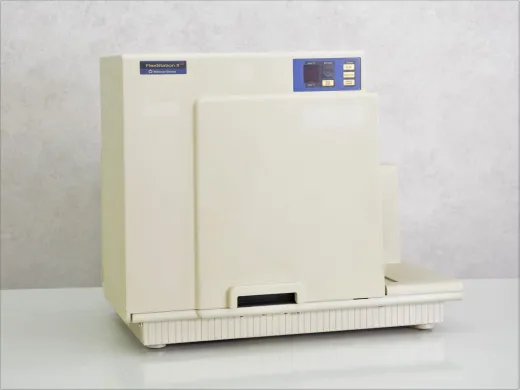
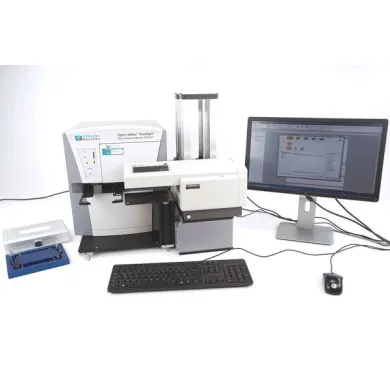
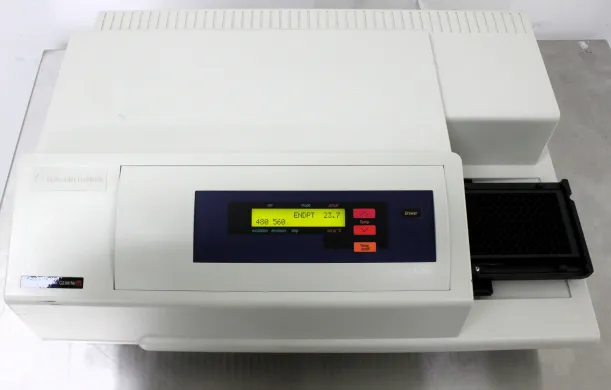
Molecular Devices SpectraMax M5 Multi-Mode Microplate Reader

Sold

This item is sold

Our specialists can find you another one, the same model or a close equivalent, and send you a quote.

Wavelength Range
200 to 1000 nm
Wavelength Selection
Monochromator, tunable in 1.0 nm increments
Wavelength Bandwidth
≤ 4.0 nm
Wavelength Accuracy
± 2.0 nm
Wavelength Repeatability
± 0.2 nm
Availability
Sold
All 26 specifications
  • Ships to NL
  • Response within 1 hour
  • Warranty available. Buy without worry
  • Support from a scientist

Specifications 26

Brands
Molecular Devices
New/Used
Used
Wavelength Range
200 to 1000 nm
Wavelength Selection
Monochromator, tunable in 1.0 nm increments
Wavelength Bandwidth
≤ 4.0 nm
Wavelength Accuracy
± 2.0 nm
Wavelength Repeatability
± 0.2 nm
Photometric Range
0 to 4.0 OD
Photometric Resolution
0.001 OD
Photometric Accuracy (Microplate)
< ± 0.006 OD ± 1.0%, 0-2 OD
Photometric Precision
< ± 0.003 OD ± 1.0%, 0-2 OD
Baseline Flatness
< 0.001 OD
Stray Light
< 0.05% @ 230 nm
Dual Monochromators
1 nm increments EX: 250 to 850 nm EM: 250 to 850 nm
Bandwidth (EX, EM)
9, 15 nm
Detection Limit
3.0 fmol/well FITC 200ul in 96 wells
Sensitivity
0.5fmol/well Eu-chelate (obtained with DELFIA reagent from PE by using a 384 well plate)
Data Collection
50 to 1450 usec increments
Light Source
Xenon Flash Lamp
Detector
Photomultiplier (R-3896)
Plate Formats
6, 12, 24 , 48, 96, 384 wells
Read Time
96 well (Abs 18 sec, FI 15 sec) 384 well (Abs 49 sec, FI 45 sec)
Shaker Time
0 to 999 seconds
Temperature Range
Ambient +4C to 45C
Temperature Uniformity
± 0.5C @ 37C set point
Electrical
110 to 120 VAC, 50/60Hz

Product description

Multi-mode microplate reader with UV-Vis Abs, FI, TRF, FP, Lumi; 6–384 wells; dual monochromator; temperature control.

Molecular Devices SpectraMax M5 Multi-Mode Microplate Reader

  • Detection Modes:
  • UV-Visible Absorbance (Abs)
  • Fluorescence Intensity (FI)
  • Time-Resolved Fluorescence (TRF)
  • Fluorescence Polarization (FP)
  • Luminescence (Lumi)
  • Microplate Formats Supported:
  • 6-, 12-, 24-, 48-, 96-, and 384-well plates
  • Read Types:
  • Endpoint
  • Kinetic
  • Spectrum
  • Well Scan
  • Key Features:
  • Dual monochromator optics enabling broad assay compatibility without filter changes
  • Xenon Flash Lamp light source combined with Photomultiplier tube (R-3896) detector for enhanced sensitivity and accuracy
  • Temperature control range: Ambient +4°C to 45°C with ±0.5°C uniformity at 37°C set point
  • Plate shaking capability with adjustable timer from 0 to 999 seconds
  • Supports assays in both microplates and cuvettes with minimal optimization needed
  • Applications:
  • Biochemistry, cell biology, immunology, molecular biology, microbiology
  • ELISA, nucleic acid and protein assays
  • Enzymatic homogenous and heterogeneous assays
  • Microbial growth monitoring, endotoxin testing, pipettor calibration
  • Additional Information:

Fully factory-tested to ensure compliance with specifications before shipment.

Why Questpair exists

Lab equipment markets are fragmented. Buyers spend weeks calling distributors, comparing quotes, and verifying supplier reliability. Sellers struggle to reach global research labs.

We built Questpair to fix this. Every supplier on the platform is verified before listing. Every quote you receive comes from a real, vetted seller. AI prepares your case in minutes, then a real specialist takes over.

We're an independent team based in The Netherlands, working with research labs and procurement teams across Europe and worldwide.

Frequently asked questions

How long does laboratory equipment typically last?

With a service contract, ten to fifteen years is normal for most benchtop instruments. Detectors and pumps are the parts that wear first.

Can I get service for older equipment?

Often, yes. Verified suppliers frequently work with service partners converting the instrument. If applicable, we can list servicing options alongside the offer.

Where can I buy parts?

Ask a scientist through the request button. Parts are often available even when the instrument itself is discontinued.

What is the typical lead time for refurbished equipment?

Two to six weeks, depending on refurbishment scope and whether calibration is included.

Does laboratory equipment ship internationally?

We ship to 38 countries. Crating and customs handling are quoted with the instrument.

Reply in one hour

Can't find the exact configuration?

Tell us what you need and a scientist finds it for you, usually within the hour.

Last updated 21 November 2026