58k+ listingsShips to NLResponse within one hour+31 73 711 4717info@questpair.com
Procurable · sourced on request

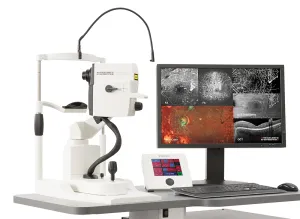
Heidelberg Engineering Spectralis

UsedHeidelberg EngineeringMolecular imaging devicesNetherlands
Procurable

Not in stock, available to order through our sourcing team

Not in stock, but we can get it for you

We source this model through our supplier network. Request a quote and we'll come back within one hour.

  1. Request a quote
  2. We confirm price and lead time
  3. You approve, we ship to you
Scan Speed
Up to 125,000 A-scans per second
Axial Resolution
3.9 µm
Lateral Resolution
14 µm
Scan Depth
Up to 1.9 mm
Scan Angle
Up to 55° (approximately 16.5 mm)
Availability
Procurable
Lead time
Confirmed with your quote
All 16 specifications
  • Ships to NL
  • Response within 1 hour
  • Warranty available. Buy without worry
  • Support from a scientist

Specifications 16

Brands
Heidelberg Engineering
New/Used
Used
Scan Speed
Up to 125,000 A-scans per second
Axial Resolution
3.9 µm
Lateral Resolution
14 µm
Scan Depth
Up to 1.9 mm
Scan Angle
Up to 55° (approximately 16.5 mm)
Dimensions
Length: 1,000 mm, Width: 600 mm, Height: 1,200 mm
Weight
Approximately 100 kg
Power Supply
100 – 240 V AC
Compatible Materials
Retinal and anterior segment tissues
Detection Limits
Not specified
Measurement Range
Not specified
Connectivity/Interface
USB, Ethernet, HDMI
Availability
Procurable
Lead time
Confirmed with your quote

Product description

High-resolution multimodal ophthalmic imaging with OCT, scanning laser, eye tracking, and glaucoma modules.

The SPECTRALIS® is an advanced ophthalmic imaging platform designed to deliver high-resolution, multimodal diagnostic images of the eye's posterior segment. Its modular and upgradable design allows clinicians to tailor the system to their specific diagnostic needs, enhancing patient care and clinical efficiency.

Key features include:

  • Multimodal Imaging Capabilities: Combines Optical Coherence Tomography (OCT) with multiple scanning laser fundus imaging modalities, including fluorescein angiography, indocyanine green angiography, and autofluorescence imaging, providing comprehensive retinal assessments.
  • TruTrack™ Active Eye Tracking: Ensures precise image capture by compensating for eye movements, resulting in consistent and reliable imaging, even in challenging cases.
  • High-Speed Scanning: Offers scan speeds up to 125 kHz, facilitating efficient workflows and high-quality imaging for both structural and angiographic assessments.
  • Glaucoma Module Premium Edition: Provides comprehensive analysis of the optic nerve head, retinal nerve fibre layer, and ganglion cell layer, aiding in early detection and monitoring of glaucoma.
  • Widefield and Ultra-Widefield Imaging: Captures detailed images from the macula through the periphery, enhancing the detection of peripheral retinal pathologies.

The SPECTRALIS® is widely utilised in various scientific fields, including ophthalmology, neuroscience, and clinical research, supporting studies related to retinal diseases, neuro-ophthalmic conditions, and systemic diseases with ocular manifestations. It is commonly employed in university laboratories, biomedical research centres, clinical environments, and even in specialised settings such as space research, where NASA has utilised the system to investigate the effects of microgravity on ocular health.

First introduced in the early 2000s, the SPECTRALIS® platform has continually evolved, incorporating cutting-edge technologies to meet the advancing needs of eye care professionals and researchers.

Why Questpair exists

Lab equipment markets are fragmented. Buyers spend weeks calling distributors, comparing quotes, and verifying supplier reliability. Sellers struggle to reach global research labs.

We built Questpair to fix this. Every supplier on the platform is verified before listing. Every quote you receive comes from a real, vetted seller. AI prepares your case in minutes, then a real specialist takes over.

We're an independent team based in The Netherlands, working with research labs and procurement teams across Europe and worldwide.

Frequently asked questions

How long does laboratory equipment typically last?

With a service contract, ten to fifteen years is normal for most benchtop instruments. Detectors and pumps are the parts that wear first.

Can I get service for older equipment?

Often, yes. Verified suppliers frequently work with service partners converting the instrument. If applicable, we can list servicing options alongside the offer.

Where can I buy parts?

Ask a scientist through the request button. Parts are often available even when the instrument itself is discontinued.

What is the typical lead time for refurbished equipment?

Two to six weeks, depending on refurbishment scope and whether calibration is included.

Does laboratory equipment ship internationally?

We ship to 38 countries. Crating and customs handling are quoted with the instrument.

Reply in one hour

Can't find the exact configuration?

Tell us what you need and a scientist finds it for you, usually within the hour.

Last updated 22 October 2026