56k+ listingsShips to NLResponse within one hour+31 73 711 4717info@questpair.com
Procurable · sourced on request

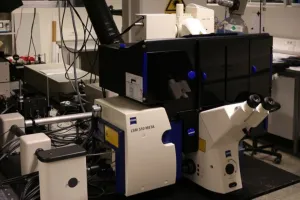
Zeiss LSM 510 META

UsedZeissConfocal microscopesNetherlands
Procurable

Not in stock, available to order through our sourcing team

Not in stock, but we can get it for you

We source this model through our supplier network. Request a quote and we'll come back within one hour.

  1. Request a quote
  2. We confirm price and lead time
  3. You approve, we ship to you
Laser lines
405 nm, 458 nm, 477 nm, 488 nm, 514 nm, 543 nm, 633 nm
Laser powers
405 nm: 30 mW, Argon (458/477/488/514 nm): 30 mW, HeNe 543 nm: 1 mW, HeNe 633 nm: 5 mW
Imaging capabilities
Z-sectioning, 3D reconstruction, time-lapse imaging, FRAP, FRET
Objective lenses
10x/0.3 NA, 25x/0.8 NA, 40x/0.6 NA, 40x/1.2 NA, 63x/1.4 NA, 100x/1.45 NA
Working distances
10x: 5.5 mm, 25x: 0.21 mm, 40x: 2.9 mm, 40x (water immersion): 0.28 mm, 63x: 0.19 mm, 100x: 0.11 mm
Availability
Procurable
Lead time
Confirmed with your quote
All 13 specifications
  • Ships to NL
  • Response within 1 hour
  • Warranty available. Buy without worry
  • Support from a scientist

Specifications 13

Brands
Zeiss
New/Used
Used
Laser lines
405 nm, 458 nm, 477 nm, 488 nm, 514 nm, 543 nm, 633 nm
Laser powers
405 nm: 30 mW, Argon (458/477/488/514 nm): 30 mW, HeNe 543 nm: 1 mW, HeNe 633 nm: 5 mW
Imaging capabilities
Z-sectioning, 3D reconstruction, time-lapse imaging, FRAP, FRET
Objective lenses
10x/0.3 NA, 25x/0.8 NA, 40x/0.6 NA, 40x/1.2 NA, 63x/1.4 NA, 100x/1.45 NA
Working distances
10x: 5.5 mm, 25x: 0.21 mm, 40x: 2.9 mm, 40x (water immersion): 0.28 mm, 63x: 0.19 mm, 100x: 0.11 mm
Detector channels
2 PMTs, 1 META detector
Spectral detection range
411.3 nm to 753.7 nm in 10.7 nm bins across 32 channels
Live-cell imaging support
Incubation system with temperature, humidity, and CO₂ control
Software
Zeiss AIM software with time-lapse, photobleaching, FRAP, FRET capabilities
Availability
Procurable
Lead time
Confirmed with your quote

Product description

Confocal laser scanning microscope with multi-wavelength lasers and spectral detection for advanced fluorescence imaging.

The Zeiss LSM 510 META is a versatile confocal laser scanning microscope designed for high-resolution imaging of fluorescently labelled specimens. Introduced in the early 2000s, this instrument has been widely adopted in various research settings.

Key features include:

  • Multi-wavelength laser excitation: Equipped with seven laser lines, including UV (405 nm), tunable Argon (458/477/488/514 nm), and HeNe lasers (543 nm and 633 nm), facilitating excitation of a broad spectrum of fluorophores.
  • META detector: Enables spectral emission fingerprinting, allowing simultaneous detection of up to 10 fluorophores and effective separation of overlapping emission spectra.
  • Advanced imaging capabilities: Supports Z-sectioning (Z-stacking), 3D reconstruction, time-lapse imaging, and techniques such as Fluorescence Recovery After Photobleaching (FRAP) and Förster Resonance Energy Transfer (FRET).
  • Live-cell imaging support: Features an incubation system for precise control of temperature, humidity, and CO₂ levels, essential for maintaining cell viability during extended imaging sessions.
  • High-quality optics: Offers a selection of objective lenses, including water and oil immersion options, ensuring sharp and detailed imaging across various magnifications.

This system is extensively utilised in cell biology, neuroscience, molecular biology, and biomedical research for applications such as live-cell imaging, protein localisation, and cellular dynamics studies. It is commonly found in university laboratories, biomedical research centres, and clinical research facilities. While newer models have been introduced, the Zeiss LSM 510 META remains in use due to its robust performance and comprehensive imaging capabilities.

Why Questpair exists

Lab equipment markets are fragmented. Buyers spend weeks calling distributors, comparing quotes, and verifying supplier reliability. Sellers struggle to reach global research labs.

We built Questpair to fix this. Every supplier on the platform is verified before listing. Every quote you receive comes from a real, vetted seller. AI prepares your case in minutes, then a real specialist takes over.

We're an independent team based in The Netherlands, working with research labs and procurement teams across Europe and worldwide.

Frequently asked questions

How long does laboratory equipment typically last?

With a service contract, ten to fifteen years is normal for most benchtop instruments. Detectors and pumps are the parts that wear first.

Can I get service for older equipment?

Often, yes. Verified suppliers frequently work with service partners converting the instrument. If applicable, we can list servicing options alongside the offer.

Where can I buy parts?

Ask a scientist through the request button. Parts are often available even when the instrument itself is discontinued.

What is the typical lead time for refurbished equipment?

Two to six weeks, depending on refurbishment scope and whether calibration is included.

Does laboratory equipment ship internationally?

We ship to 38 countries. Crating and customs handling are quoted with the instrument.

Reply in one hour

Can't find the exact configuration?

Tell us what you need and a scientist finds it for you, usually within the hour.

Last updated 30 October 2026