56k+ listingsShips to NLResponse within one hour+31 73 711 4717info@questpair.com
Procurable · sourced on request

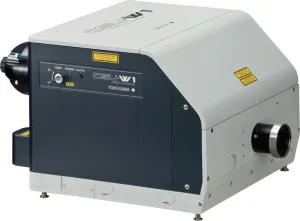
Yokogawa CSU

UsedYokogawaConfocal microscopesNetherlands
Procurable

Not in stock, available to order through our sourcing team

Not in stock, but we can get it for you

We source this model through our supplier network. Request a quote and we'll come back within one hour.

  1. Request a quote
  2. We confirm price and lead time
  3. You approve, we ship to you
External Dimensions (Main Unit)
327.1 x 251.5 x 475.1 mm
Weight (Main Unit)
17 kg
Field of View (FOV)
17 x 16 mm
Spinning Speed
1,500 to 4,000 rpm
Excitation Wavelength Range
405 to 785 nm
Availability
Procurable
Lead time
Confirmed with your quote
All 21 specifications
  • Ships to NL
  • Response within 1 hour
  • Warranty available. Buy without worry
  • Support from a scientist

Specifications 21

Brands
Yokogawa
New/Used
Used
External Dimensions (Main Unit)
327.1 x 251.5 x 475.1 mm
Weight (Main Unit)
17 kg
Field of View (FOV)
17 x 16 mm
Spinning Speed
1,500 to 4,000 rpm
Excitation Wavelength Range
405 to 785 nm
Observation Wavelength Range
420 to 850 nm
Operating Temperature Range
15 to 30 °C
Operating Humidity Range
20 to 75% RH
Power Supply
100 to 240 VAC ±10%, 50/60 Hz
Power Consumption
250 VA max
Microscope Compatibility
Olympus IX series, Nikon ECLIPSE Ti, Zeiss Axio Observer, Leica DMi series
Emission Filter Wheel Positions
10-position
Emission Filter Wheel Filter Size
25 mm diameter
Emission Filter Wheel Switching Speed
100 ms max (Standard mode), 40 ms max (High speed mode)
External Control Interface
RS-232C
Camera Adapter
C-mount 1x (Variable magnification: 0.83x)
Light Introduction Port
Optional Photo breach
Availability
Procurable
Lead time
Confirmed with your quote

Product description

High-speed spinning disk confocal scanners for live-cell imaging with enhanced light efficiency and wide field of view.

The Yokogawa CSU series, notably the CSU-W1 and CSU-X1 models, are advanced spinning disk confocal scanner units designed for high-speed, high-resolution live-cell imaging. These systems are integral to modern biotechnology research, enabling detailed observation of dynamic cellular processes with minimal phototoxicity.

Key features include:

  • High-speed imaging: The CSU-X1 achieves scanning speeds up to 10,000 RPM, allowing imaging rates up to 2,000 frames per second, essential for capturing rapid biological events.
  • Enhanced light efficiency: Optimised optical paths and beam shaper lenses in the CSU-X1 improve excitation power efficiency, reducing the need for high-power lasers and minimising exposure times.
  • Wide field of view: The CSU-W1 offers a field of view four times wider than conventional models, facilitating comprehensive imaging of larger specimens.
  • Versatile configurations: Options for dual-camera setups, bright-field imaging paths, and super-resolution capabilities (e.g., SoRa disk) provide flexibility for diverse experimental requirements.

These confocal scanner units are widely utilised in fields such as cell biology, neuroscience, and molecular biology, supporting applications like live-cell imaging, 3D reconstruction, and high-content analysis. They are commonly employed in university laboratories, biomedical research centres, and pharmaceutical companies.

First introduced over two decades ago, the CSU series has continually evolved, maintaining its relevance and prominence in cutting-edge biotechnology research.

Why Questpair exists

Lab equipment markets are fragmented. Buyers spend weeks calling distributors, comparing quotes, and verifying supplier reliability. Sellers struggle to reach global research labs.

We built Questpair to fix this. Every supplier on the platform is verified before listing. Every quote you receive comes from a real, vetted seller. AI prepares your case in minutes, then a real specialist takes over.

We're an independent team based in The Netherlands, working with research labs and procurement teams across Europe and worldwide.

Frequently asked questions

How long does laboratory equipment typically last?

With a service contract, ten to fifteen years is normal for most benchtop instruments. Detectors and pumps are the parts that wear first.

Can I get service for older equipment?

Often, yes. Verified suppliers frequently work with service partners converting the instrument. If applicable, we can list servicing options alongside the offer.

Where can I buy parts?

Ask a scientist through the request button. Parts are often available even when the instrument itself is discontinued.

What is the typical lead time for refurbished equipment?

Two to six weeks, depending on refurbishment scope and whether calibration is included.

Does laboratory equipment ship internationally?

We ship to 38 countries. Crating and customs handling are quoted with the instrument.

Reply in one hour

Can't find the exact configuration?

Tell us what you need and a scientist finds it for you, usually within the hour.

Last updated 30 October 2026