53k+ listingsShips to NLResponse within one hour+31 73 711 4717info@questpair.com
Procurable · sourced on request

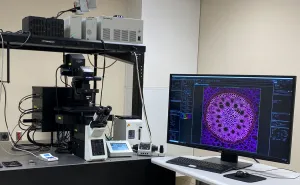
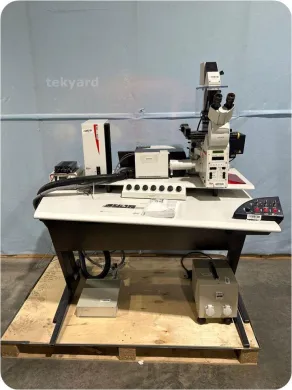
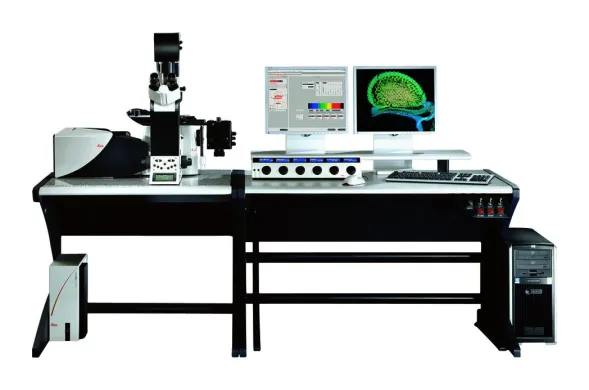
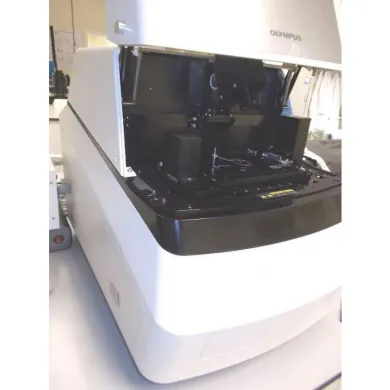
Olympus FV3000

UsedOlympusConfocal microscopesNetherlands
Procurable

Not in stock, available to order through our sourcing team

Not in stock, but we can get it for you

We source this model through our supplier network. Request a quote and we'll come back within one hour.

  1. Request a quote
  2. We confirm price and lead time
  3. You approve, we ship to you
Imaging Speed
up to 438 frames per second
Spectral Detection
High-Sensitivity Spectral Detector with GaAsP Photomultiplier Tubes
Spectral Method
Motorized Volume Phase Holographic transmission diffraction grating
Spectral Unmixing Channels
up to 16 channels
Spectral Unmixing Precision
2 nm
Availability
Procurable
Lead time
Confirmed with your quote
All 14 specifications
  • Ships to NL
  • Response within 1 hour
  • Warranty available. Buy without worry
  • Support from a scientist

Specifications 14

Brands
Olympus
New/Used
Used
Imaging Speed
up to 438 frames per second
Spectral Detection
High-Sensitivity Spectral Detector with GaAsP Photomultiplier Tubes
Spectral Method
Motorized Volume Phase Holographic transmission diffraction grating
Spectral Unmixing Channels
up to 16 channels
Spectral Unmixing Precision
2 nm
Laser Wavelengths
405 nm, 445 nm, 488 nm, 514 nm, 561 nm, 640 nm
Scanner Type
Galvanometer scanner
Software
FLUOVIEW software with an intuitive interface
Software Customization
Users can create and save workflows and customize the interface’s layout
Objective Magnification Range
1.25x to 150x
Availability
Procurable
Lead time
Confirmed with your quote

Product description

High-speed confocal microscope with TruSpectral detection, 1.25x-150x magnification for detailed live-cell imaging.

The Olympus FV3000 is a state-of-the-art confocal laser scanning microscope designed to deliver high-resolution, fast, and accurate imaging of biological samples. Launched in 2016, this instrument excels in capturing dynamic intracellular processes and fine structures within live cells and tissues.

Key features include:

  • High-speed imaging: Capable of acquiring up to 438 frames per second, enabling observation of rapid biological events.
  • Advanced detection system: Equipped with the Olympus TruSpectral detection system for precise spectral separation and high sensitivity, facilitating clear imaging of even dim samples.
  • Versatile magnification: Offers objectives ranging from 1.25x to 150x, supporting both macro and micro imaging applications.
  • User-friendly software: Features an intuitive interface that allows customization of workflows and layouts, enhancing usability for researchers.

This microscope is widely utilized in various scientific fields, including cell biology, cancer research, stem cell research, and neuroscience. Its applications extend to live-cell imaging, 3D imaging, spectral imaging, and time-lapse studies.

Commonly found in university laboratories, biomedical research centres, and clinical environments, the FV3000 continues to be a valuable tool for scientists seeking to advance their understanding of complex biological systems.

Why Questpair exists

Lab equipment markets are fragmented. Buyers spend weeks calling distributors, comparing quotes, and verifying supplier reliability. Sellers struggle to reach global research labs.

We built Questpair to fix this. Every supplier on the platform is verified before listing. Every quote you receive comes from a real, vetted seller. AI prepares your case in minutes, then a real specialist takes over.

We're an independent team based in The Netherlands, working with research labs and procurement teams across Europe and worldwide.

Frequently asked questions

How long does laboratory equipment typically last?

With a service contract, ten to fifteen years is normal for most benchtop instruments. Detectors and pumps are the parts that wear first.

Can I get service for older equipment?

Often, yes. Verified suppliers frequently work with service partners converting the instrument. If applicable, we can list servicing options alongside the offer.

Where can I buy parts?

Ask a scientist through the request button. Parts are often available even when the instrument itself is discontinued.

What is the typical lead time for refurbished equipment?

Two to six weeks, depending on refurbishment scope and whether calibration is included.

Does laboratory equipment ship internationally?

We ship to 38 countries. Crating and customs handling are quoted with the instrument.

Reply in one hour

Can't find the exact configuration?

Tell us what you need and a scientist finds it for you, usually within the hour.

Last updated 31 October 2026