53k+ listingsShips to NLResponse within one hour+31 73 711 4717info@questpair.com
Procurable · sourced on request

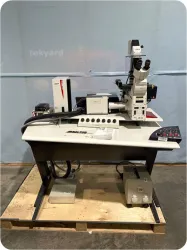
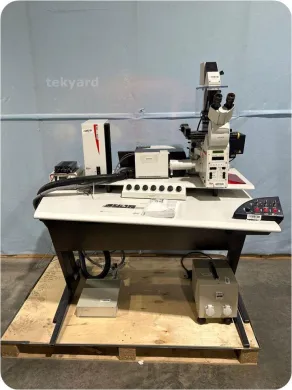
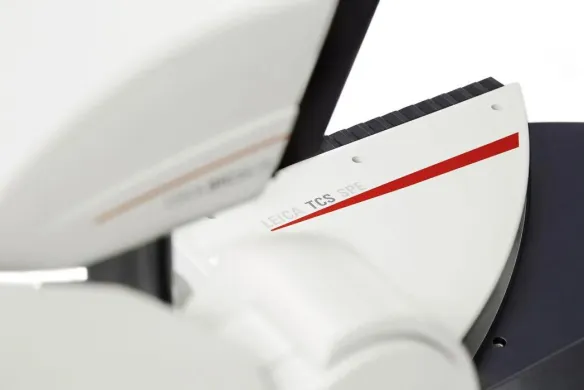
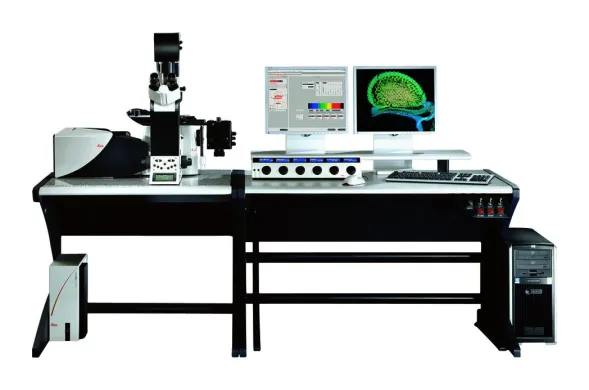
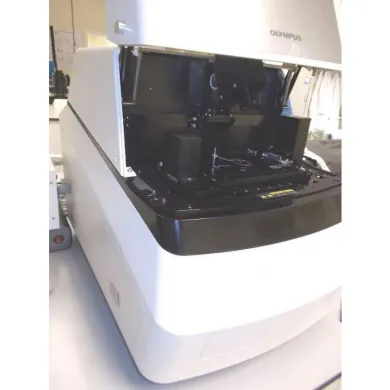
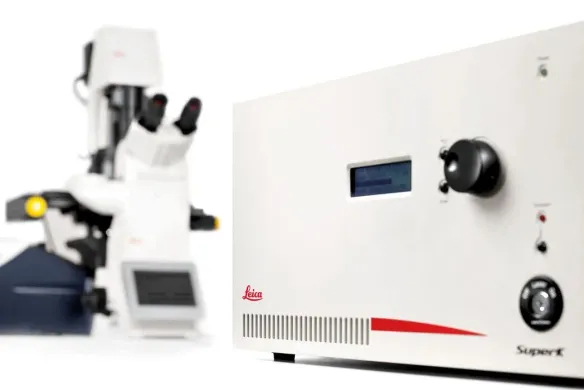
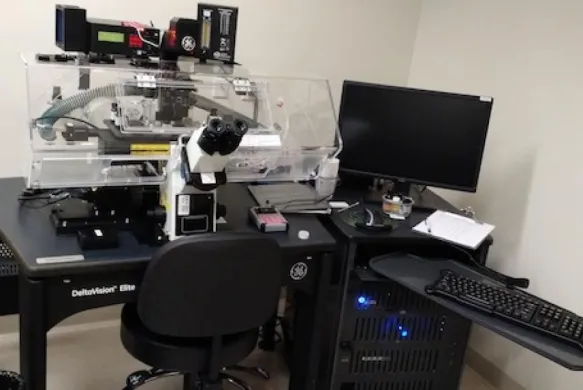
Leica TCS SP2 AOBS

UsedLeicaConfocal microscopesNetherlands
Procurable

Not in stock, available to order through our sourcing team

Not in stock, but we can get it for you

We source this model through our supplier network. Request a quote and we'll come back within one hour.

  1. Request a quote
  2. We confirm price and lead time
  3. You approve, we ship to you
Laser Lines
405 nm, 458 nm, 476 nm, 488 nm, 496 nm, 514 nm, 543 nm, 594 nm, 633 nm
Spectral Detection Range
350 nm to 900 nm
Spectral Resolution
5 nm
Spatial Resolution
0.3 to 0.5 µm
Scanning Speed
200 to 1000 lines per second
Availability
Procurable
Lead time
Confirmed with your quote
All 14 specifications
  • Ships to NL
  • Response within 1 hour
  • Warranty available. Buy without worry
  • Support from a scientist

Specifications 14

Brands
Leica
New/Used
Used
Laser Lines
405 nm, 458 nm, 476 nm, 488 nm, 496 nm, 514 nm, 543 nm, 594 nm, 633 nm
Spectral Detection Range
350 nm to 900 nm
Spectral Resolution
5 nm
Spatial Resolution
0.3 to 0.5 µm
Scanning Speed
200 to 1000 lines per second
Bit Depth
8 or 12 bits
Temperature Control
Home-built microscope incubator with PeCon heated stage
Objectives
10x/0.30, 20x/0.70, 40x/1.25-0.75 oil, 40x/0.8 water-immersion, 63x/1.2, 63x/1.4-0.60 oil
Detector Channels
Three channels with cooled PMTs and spectral detectors
Data Output
Digital images
Availability
Procurable
Lead time
Confirmed with your quote

Product description

High-resolution laser scanning confocal microscope with AOBS and multiple laser lines for advanced fluorescence imaging.

The Leica SP2 AOBS is a laser scanning confocal microscope renowned for its high-resolution imaging capabilities, making it indispensable in various scientific research fields. This instrument excels in capturing detailed images of both fixed and live specimens, facilitating advanced studies in cellular and molecular biology.

Key features include:

  • Acousto-Optical Beam Splitter (AOBS): Allows flexible and rapid selection of excitation wavelengths without the need for manual filter changes.
  • Multiple Laser Lines: Equipped with lasers at 405 nm, 458 nm, 476 nm, 488 nm, 496 nm, 514 nm, 543 nm, 594 nm, and 633 nm, enabling excitation of a wide range of fluorophores.
  • Spectral Imaging: Facilitates precise separation and analysis of overlapping fluorescence signals.
  • Time-Lapse Imaging: Captures dynamic processes over time, essential for live-cell studies.
  • 3D Z-Stacks: Constructs three-dimensional representations of specimens by compiling multiple focal planes.
  • Advanced Techniques: Supports Fluorescence Recovery After Photobleaching (FRAP), Fluorescence Resonance Energy Transfer (FRET), and Fluorescence Loss in Photobleaching (FLIP) experiments.

This confocal microscope is widely applied in fields such as neuroscience, molecular biology, biotechnology, and biomedical engineering. Its versatility makes it suitable for various applications, including live-cell imaging, fluorescence analysis, and bioprocessing studies.

Commonly found in university laboratories, biomedical research centres, and clinical environments, the Leica SP2 AOBS has been a cornerstone in scientific imaging since its release in the early 2000s. While newer models have emerged, this system remains in use due to its reliability and comprehensive feature set.

Why Questpair exists

Lab equipment markets are fragmented. Buyers spend weeks calling distributors, comparing quotes, and verifying supplier reliability. Sellers struggle to reach global research labs.

We built Questpair to fix this. Every supplier on the platform is verified before listing. Every quote you receive comes from a real, vetted seller. AI prepares your case in minutes, then a real specialist takes over.

We're an independent team based in The Netherlands, working with research labs and procurement teams across Europe and worldwide.

Frequently asked questions

How long does laboratory equipment typically last?

With a service contract, ten to fifteen years is normal for most benchtop instruments. Detectors and pumps are the parts that wear first.

Can I get service for older equipment?

Often, yes. Verified suppliers frequently work with service partners converting the instrument. If applicable, we can list servicing options alongside the offer.

Where can I buy parts?

Ask a scientist through the request button. Parts are often available even when the instrument itself is discontinued.

What is the typical lead time for refurbished equipment?

Two to six weeks, depending on refurbishment scope and whether calibration is included.

Does laboratory equipment ship internationally?

We ship to 38 countries. Crating and customs handling are quoted with the instrument.

Reply in one hour

Can't find the exact configuration?

Tell us what you need and a scientist finds it for you, usually within the hour.

Last updated 31 October 2026