

Syringe pumps
We personally find you the right used, refurbished and new syringe pumps instruments & equipment from verified suppliers.
Syringe pumps are motor-driven instruments that advance or withdraw the plunger of a syringe at a controlled rate, delivering liquid at a programmed flow with high precision. They are used across laboratory, analytical and life sciences work wherever a steady, repeatable volume matters more than speed. Of the 265 syringe pump listings on Questpair, 89 percent are used, drawn from 16 verified suppliers and distributors across 10 countries. New, used and refurbished units all appear in the catalogue, with laboratory, precision and gastight syringes listed alongside the pumps themselves. Prices run from EUR 10 to EUR 1.549.601.
Updated:
Syringe pumps product list
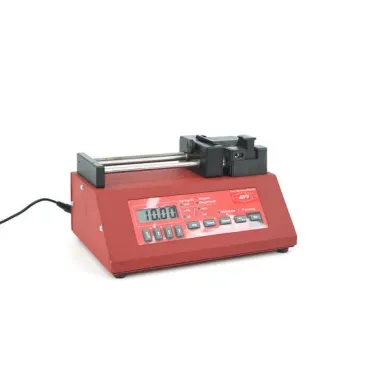
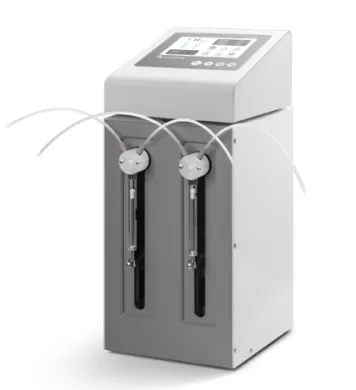
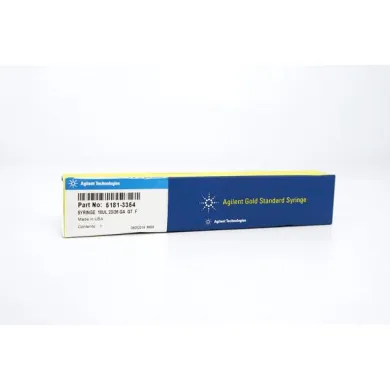
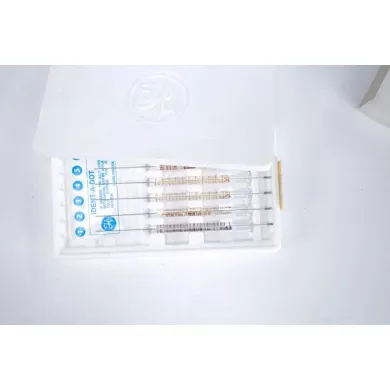


Not the exact instrument you need?
Tell our scientists what you are after. We track it down, including off-market supply.


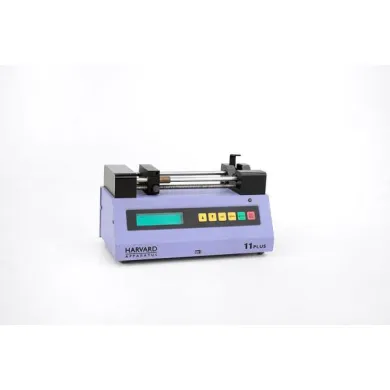
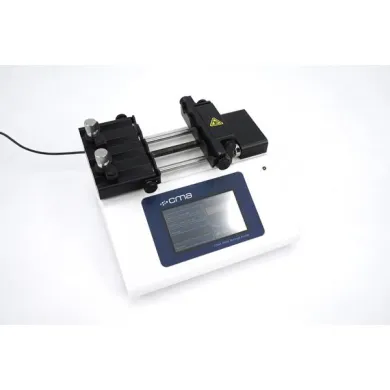
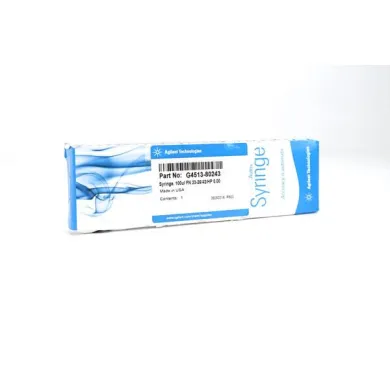
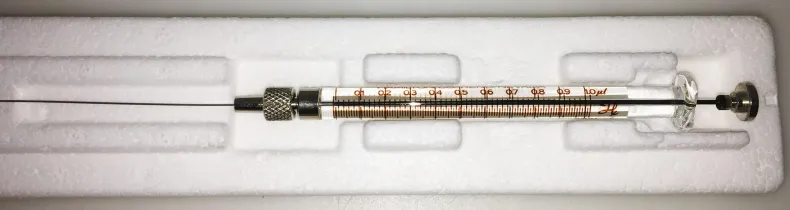

Not the exact instrument you need?
Tell our scientists what you are after. We track it down, including off-market supply.
Showing 1–40 of 169 listings
Show 40 more listingsBuying guide
Flow rate and its accuracy decide a syringe pump purchase before any other specification. A pump built for microfluidics holds a few microlitres per minute steady for hours, while one feeding a reactor pushes litres per hour, and the two share almost nothing mechanically. Read the rate range against the work: the lowest controllable flow matters as much as the highest, because a pump that only resolves down to a millilitre per minute is useless for infusion studies. Step resolution and the minimum syringe volume the drive accepts tell you whether the pump reaches the low end at all.
Syringe compatibility follows from that. The pump has to clamp the barrel and grip the plunger of the syringe you actually use, so check the diameter range and whether gastight, glass or disposable barrels are supported. A pump that takes only its own branded syringes locks you into one consumable supply, which is worth knowing before purchase rather than after.
On a used unit, the drive mechanism is what wears. Ask about backlash in the lead screw, the state of the plunger clamp, and whether the unit still holds its rate under back pressure, because a tired drive loses accuracy long before it fails outright. Firmware and the control interface age too: an older pump may lack the serial or USB control a current protocol assumes. Where a listing gives no calibration history, treat recalibration as part of the cost of ownership. On Questpair, 89 percent of the listings are used, so most of what you will compare is second-hand, and warranty is arranged in consultation for the specific listing rather than set across the board.
The price band is wide. Units cost anywhere from EUR 10 to EUR 1.549.601, and the average sits near EUR 7.346, which reflects a range running from a single bench infusion pump to a multi-channel industrial system. For a modest budget, the used end of the market holds the general-purpose laboratory pumps, where refurbished units listed for sale come in well below new. The names behind those listings, Hamilton, Harvard Apparatus, Inovenso, Agilent, Gilson, set where the brackets fall, with Hamilton and Harvard Apparatus anchoring the research-grade end and the broader analytical suppliers filling the mid-range. Compare on flow specification first and brand second: a pump that meets the rate and resolution you need is the affordable choice whoever made it.
Types of Syringe pumps
Which syringe types are listed with the pumps?
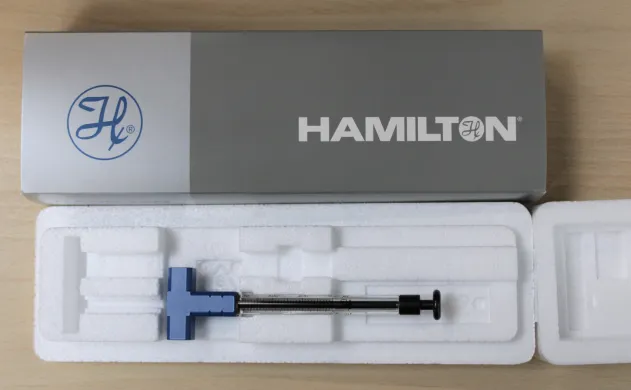
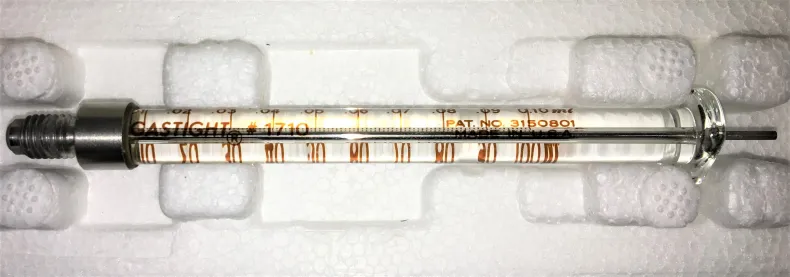
Among the listings that specify a type, the pumps themselves sit alongside the syringes they drive, and the two are catalogued together. The syringe pump is the motorised unit; the entries for laboratory syringe, precision syringe, analytical syringe, liquid handling syringe and gastight syringe are the consumables and manual instruments a pump accepts. A precision syringe pairs barrel and plunger to a tight tolerance so the delivered volume matches the commanded one, which is what a quantitative method needs. A gastight syringe seals with a PTFE-tipped plunger against the barrel wall, holding volatile or pressurised fluids without leakage, and it is the one to reach for in headspace and gas-phase work. Analytical and liquid handling syringes serve autosampler injection and automated dispensing, where the syringe is a component inside a larger instrument rather than a standalone tool. These distinctions decide which consumable fits a given drive, so read them against the pump's clamp range.
Syringe pumps do real work across the life sciences. In cell culture they feed media and reagents at a controlled rate into perfusion systems and bioreactors, supporting bioprocessing and continuous biomanufacturing where a steady feed keeps a culture stable. Precision infusion of enzyme and buffer streams underpins protein purification and electrophoresis sample loading, and the same controlled delivery drives the droplet generation at the heart of microfluidic molecular diagnostics and single-cell genomics. A gastight syringe on a pump is the standard way to introduce a measured, air-free volume for immunoassay dispensing and for the reagent handling behind synthetic biology assembly reactions. In molecular biology and proteomics labs these pumps also serve electrospray infusion into a mass spectrometer, delivering the analyte stream at the microlitres-per-minute rate that ionisation needs.
The brands behind the syringe pump listings
The names that recur are Hamilton, Harvard Apparatus, Inovenso, Agilent, Gilson. For a buyer that presence settles practical questions: it means parts and replacement syringes for those drives are easier to find, that several comparable models sit side by side so a specification can be checked against a rival, and that the price level of a given tier is visible rather than guessed. Hamilton and Harvard Apparatus appear most often at the research-grade end, where syringe compatibility and flow resolution are documented in detail; the broader analytical suppliers fill the mid-range where a general laboratory pump is what is wanted. A well-represented brand is simpler to compare and to keep running than a one-off model with no neighbours in the catalogue.
What a used syringe pump costs here
The catalogue runs from EUR 10 to EUR 1.549.601, with the average near EUR 7.346. 89 percent of the listings are used. That spread covers everything from a single-channel bench infusion pump to a large multi-channel or industrial system, which is why the top of the range sits so far above the average. Used and refurbished units are listed below the price of new, so the condition mix and the brand together place where any one listing falls within that band.
Frequently asked questions
What is a syringe pump?
A syringe pump is a motor-driven instrument that pushes or withdraws fluid from a syringe at a controlled, programmable rate. It is built around a stepper motor and a lead screw that advance a plunger block at a set speed.
What does syringe pump mean?
The term refers to the drive unit, not the syringe itself. The pump holds a syringe and moves its plunger at a precise rate, so flow is measured in microlitres to millilitres per unit of time rather than by total volume delivered.
How do syringe pumps work?
A stepper motor turns a lead screw, which advances a plunger block against the syringe plunger at a programmed speed. The flow rate depends on the syringe barrel diameter, so the pump needs to know the syringe size to calculate the delivered volume correctly.
What types of syringe pumps are there?
The listings cover drive units and the syringes that go into them. Among drives you find single and multi-channel models, infuse-only and infuse-and-withdraw units, and manual or scripted-control pumps; the syringe side includes laboratory syringe, precision syringe, analytical syringe, liquid handling syringe and gastight syringe types.
What are syringe pumps used for?
They feed laminar streams in microfluidics, introduce sample into mass spectrometry and chromatography, dose nutrient feeds in cell culture and bioprocessing, and deliver reagents into assay plates. Infusion studies in physiology and pharmacology are another common use.
How do I choose a syringe pump?
Fix the channel count and the flow range you need first, then confirm the syringe diameters the pump accepts. Decide whether you need infusion only or infusion and withdrawal, and whether manual rate setting is enough or you need serial control for scripted protocols.
What is the difference between refurbished and used?
A used unit is sold in its existing condition, while a refurbished unit has been checked and brought back to working order before listing. Read the condition note on the individual listing, since the detail of what was done varies between sellers.
How much does a syringe pump cost?
Prices in the catalogue range from EUR 10 to EUR 1.549.601, with an average around EUR 7.346. The spread is wide because it mixes single-syringe bench pumps with integrated analytical systems and automated handling platforms.
Which brands make syringe pumps?
The names that recur in the listings are Hamilton, Harvard Apparatus, Inovenso, Agilent and Gilson. Hamilton and Gilson are known for syringes and precision glass, Harvard Apparatus for infusion drives, and Agilent through analytical autosamplers.
Is there a warranty on a refurbished syringe pump?
A warranty is often possible and is arranged in consultation for the specific listing. Terms are not set centrally, so check the individual listing and ask before you buy.
Can I get parts for a syringe pump?
Parts such as replacement barrels and plungers can be sourced via Questpair. Matching a part to an existing pump is more straightforward with well-documented brands like Hamilton and Gilson, where the glass specification is published.
How long does a syringe pump last?
A drive unit lasts many years because the moving parts are a motor and a lead screw with few wear points. The syringes themselves are consumables and need periodic replacement, especially gastight types where the PTFE plunger seal degrades over time.
Should I buy new or refurbished?
Used and refurbished units are listed at lower prices than new. Where you have to weigh the two, compare the condition note on the individual listing against the price difference, and note that warranty is arranged in consultation rather than fixed by type.
Where can I buy a syringe pump?
The Questpair catalogue holds 265 syringe pump listings from 16 verified suppliers and distributors across 10 countries. New, used and refurbished units all appear.
What is the lead time and shipping?
Lead time and shipping depend on the individual seller and the unit's location across the 10 countries in the catalogue. The listing shows the supplier, and specialists respond within 1 hour if you need to confirm availability before ordering.
How are syringe pumps calibrated and maintained?
Calibration is verified by dispensing a known volume at a set rate and weighing or measuring the output against the programmed value. Routine maintenance covers keeping the lead screw clean, checking the plunger block alignment, and replacing worn syringe seals; Questpair does not provide servicing itself.
Which syringe pump types are listed most, and who reaches for which?
Listings split between the drive units and the syringes. A microfluidics researcher reaches for a programmable dual-channel pump, an infusion study for a single steady-rate drive, and analytical labs for precision or analytical syringes that feed mass spectrometry and chromatography; a gastight syringe goes with volatile solvents or electrospinning.
Which brands dominate this category, and what does that mean for a buyer?
Hamilton, Harvard Apparatus, Inovenso, Agilent and Gilson recur across the listings. A well-represented brand lowers the risk on a used purchase, because the specification is documented and a near-identical unit is often listed alongside, so you can compare a model against its own earlier revisions.
What separates the cheapest syringe pumps from the most expensive?
The figure at the bottom of the band reflects a single-syringe bench pump, while the figure at the top is a complete analytical system or automated handling platform rather than a pump alone. Channel count, flow range and whether the unit is integrated into a larger instrument drive the difference.