53k+ listingsShips to NLResponse within one hour+31 73 711 4717info@questpair.com

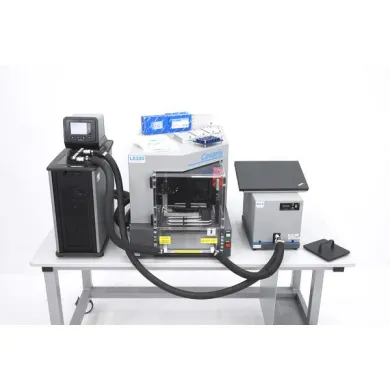
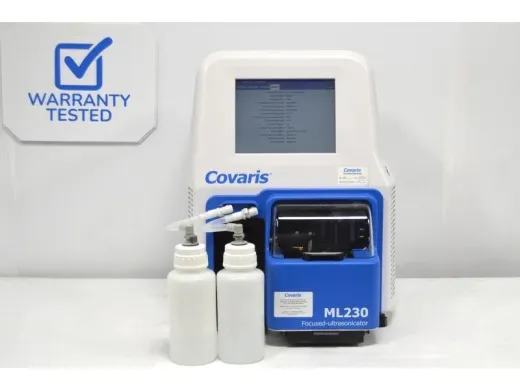
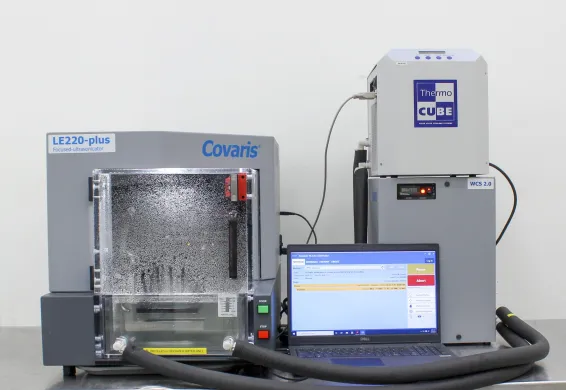
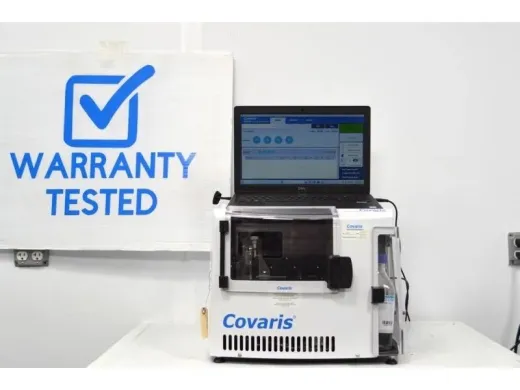
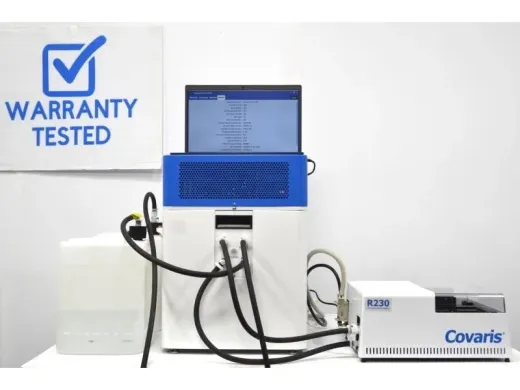
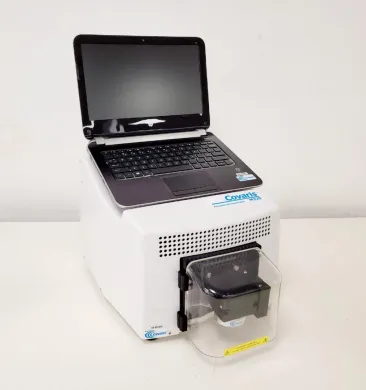
Covaris LE220 Focused Ultrasonicator for Controlled DNA and RNA Acoustic Shearing

UsedCovarisSample preparationUnited States

Price on request

In stock

Can't find what you're looking for?

Description
Serial No.: 003373. The unit operates on standard electrical utilities. Voltage: 100-240 V. Frequency: 50/60 Hz. Power consumption and fuse rating are not specified. No software version is visible. Manufacturing year is not provided.
Technical Data
Model: LE220 Serial Number: 003373 Voltage: 100-240 V Frequency: 50/60 Hz Power Consumption: N/A Fuse Rating: N/A Software Version: N/A Configuration: Focused Ultrasonicator module Manufacturing Year: N/A
Voltage
100-240 V
Frequency
50/60 Hz
Power Consumption
N/A
All 14 specifications
  • Ships to NL
  • Response within 1 hour
  • Warranty available. Buy without worry
  • Support from a scientist

Specifications 14

Brands
Covaris
New/Used
Used
Description
Serial No.: 003373. The unit operates on standard electrical utilities. Voltage: 100-240 V. Frequency: 50/60 Hz. Power consumption and fuse rating are not specified. No software version is visible. Manufacturing year is not provided.
Technical Data
Model: LE220 Serial Number: 003373 Voltage: 100-240 V Frequency: 50/60 Hz Power Consumption: N/A Fuse Rating: N/A Software Version: N/A Configuration: Focused Ultrasonicator module Manufacturing Year: N/A
Voltage
100-240 V
Frequency
50/60 Hz
Power Consumption
N/A
Fuse Rating
N/A
Software Version
N/A
Configuration
Focused Ultrasonicator module
Manufacturing Year
N/A
Accessories
Sample holder rack, Protective acrylic cover
Dimensions
23.6 x 21.7 x 21.7 inches
Weight
Approximately 70 lbs

Product description

Precision focused ultrasonicator for consistent DNA, RNA, and chromatin shearing in biotechnology workflows.

The Covaris LE220 Focused Ultrasonicator is a high-precision instrument engineered for controlled acoustic shearing of nucleic acids and chromatin, critical for molecular biology and bioprocessing applications. Utilizing advanced focused ultrasonication technology, it delivers highly consistent and reproducible fragmentation of DNA, RNA, and chromatin samples, essential for workflows in gene editing, synthetic biology, and molecular diagnostics.

Key technical features include:

  • Operating voltage range of 100–240 V with 50/60 Hz frequency compatibility for global laboratory use.
  • Modular focused ultrasonicator configuration designed to optimize acoustic energy distribution for uniform sample processing.
  • Compact footprint measuring approximately 23.6 x 21.7 x 21.7 inches, with a weight around 70 lbs, suitable for benchtop deployment in clinical diagnostics and biomedical research settings.
  • Supplied with a sample holder rack and protective acrylic cover to ensure secure sample positioning and operator safety during high-intensity sonication protocols.

This instrument is widely adopted in biotechnology research for applications such as chromatin shearing in epigenetics studies, DNA fragmentation necessary for next-generation sequencing library preparation, and RNA shearing for transcriptomics. Its reproducibility and precision make it critical in biopharmaceutical production pipelines and molecular cloning workflows where sample integrity and uniformity are paramount.

Why Questpair exists

Lab equipment markets are fragmented. Buyers spend weeks calling distributors, comparing quotes, and verifying supplier reliability. Sellers struggle to reach global research labs.

We built Questpair to fix this. Every supplier on the platform is verified before listing. Every quote you receive comes from a real, vetted seller. AI prepares your case in minutes, then a real specialist takes over.

We're an independent team based in The Netherlands, working with research labs and procurement teams across Europe and worldwide.

Frequently asked questions

How long does laboratory equipment typically last?

With a service contract, ten to fifteen years is normal for most benchtop instruments. Detectors and pumps are the parts that wear first.

Can I get service for older equipment?

Often, yes. Verified suppliers frequently work with service partners converting the instrument. If applicable, we can list servicing options alongside the offer.

Where can I buy parts?

Ask a scientist through the request button. Parts are often available even when the instrument itself is discontinued.

What is the typical lead time for refurbished equipment?

Two to six weeks, depending on refurbishment scope and whether calibration is included.

Does laboratory equipment ship internationally?

We ship to 38 countries. Crating and customs handling are quoted with the instrument.

Reply in one hour

Can't find the exact configuration?

Tell us what you need and a scientist finds it for you, usually within the hour.

Last updated 1 November 2026