55k+ listingsShips to NLResponse within one hour+31 73 711 4717info@questpair.com
Procurable · sourced on request

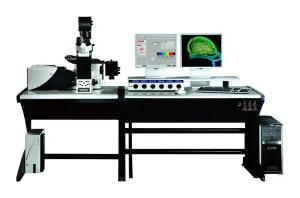
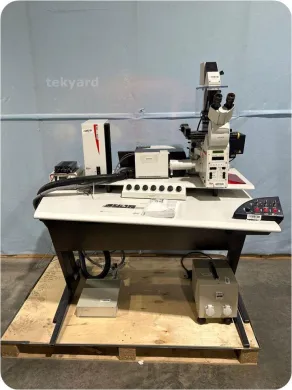
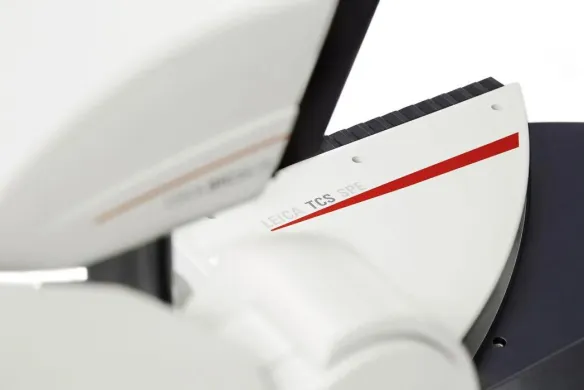
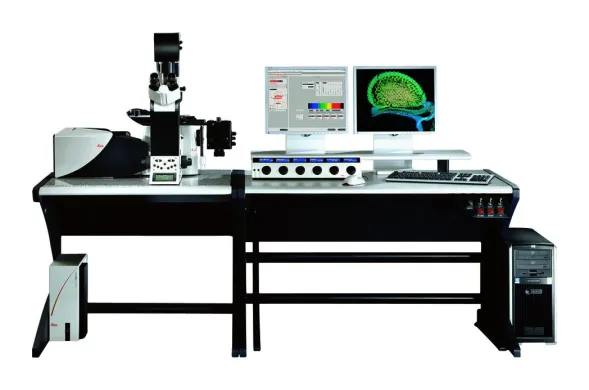
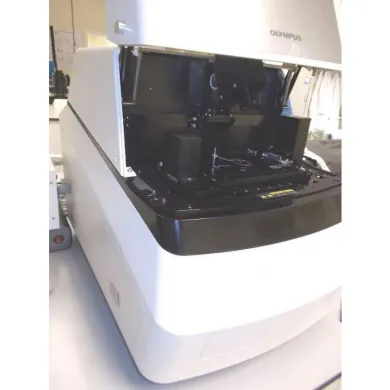
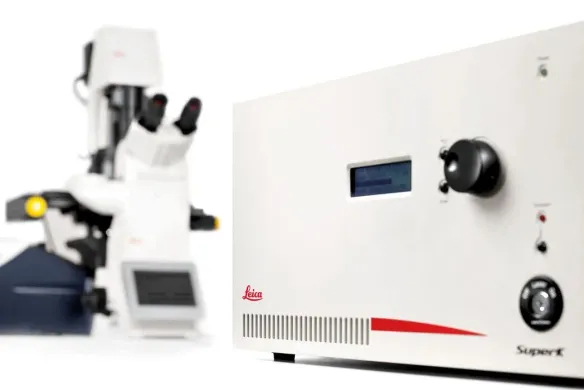
Leica Microsystems TCS SP8 AOBS

UsedLeica MicrosystemsConfocal microscopesNetherlands
Procurable

Not in stock, available to order through our sourcing team

Not in stock, but we can get it for you

We source this model through our supplier network. Request a quote and we'll come back within one hour.

  1. Request a quote
  2. We confirm price and lead time
  3. You approve, we ship to you
Operating temperature range
18 to 25 °C
Optical behavior temperature
22 ± 1 °C
Laser class
3B/IIIb, 4/IV
System dimensions (compact supply unit and upright stand)
1750 x 2300 x 1100 mm
System dimensions (compact supply unit and inverted stand)
1300 x 2530 x 1100 mm
Availability
Procurable
Lead time
Confirmed with your quote
All 40 specifications
  • Ships to NL
  • Response within 1 hour
  • Warranty available. Buy without worry
  • Support from a scientist

Specifications 40

Brands
Leica Microsystems
New/Used
Used
Operating temperature range
18 to 25 °C
Optical behavior temperature
22 ± 1 °C
Laser class
3B/IIIb, 4/IV
System dimensions (compact supply unit and upright stand)
1750 x 2300 x 1100 mm
System dimensions (compact supply unit and inverted stand)
1300 x 2530 x 1100 mm
Distance from wall (compact supply unit and upright stand)
525 mm
Distance from wall (compact supply unit and inverted stand)
525 mm
Laser lines
405, 458, 476, 488, 496, 514, 561, 633 nm
Laser output power (405 nm)
50 mW
Laser output power (488 nm)
20 mW
Laser output power (552 nm)
20 mW
Laser output power (638 nm)
30 mW
Detector types
2 x HyD (GaAsP detectors), 3 x PMT (standard photomultiplier tube)
Detector spectral range
400 – 800 nm
Objective lens magnification (10x)
10x
Objective lens numerical aperture (10x)
0.4
Objective lens immersion (10x)
Dry
Objective lens magnification (20x)
20x
Objective lens numerical aperture (20x)
0.75
Objective lens immersion (20x)
Dry
Objective lens magnification (40x)
40x
Objective lens numerical aperture (40x)
1.3
Objective lens immersion (40x)
Oil
Objective lens magnification (63x)
63x
Objective lens numerical aperture (63x)
1.4
Objective lens immersion (63x)
Oil
Objective lens magnification (63x, water immersion)
63x
Objective lens numerical aperture (63x, water immersion)
1.2
Objective lens immersion (63x, water immersion)
Water
Objective lens magnification (63x, glycerin immersion)
63x
Objective lens numerical aperture (63x, glycerin immersion)
1.3
Objective lens immersion (63x, glycerin immersion)
Glycerin
Maximum image resolution
64 megapixels
Field of view scanner
1 – 1400 Hz (5 fps at 512 x 512 px)
Scan format/resolution
16 x 16 px up to 8192 x 8192 px
Zoom range
0.75x – 48x
Availability
Procurable
Lead time
Confirmed with your quote

Product description

Confocal microscope with AOBS for precise, programmable beam splitting and enhanced fluorescence imaging.

The Leica AOBS (Acousto-Optical Beam Splitter) is an advanced beam-splitting technology integrated into Leica's confocal microscopy systems, such as the TCS SP2 and SP5 models. Introduced in the early 2000s, this innovation enhances fluorescence imaging by offering unparalleled flexibility and efficiency in separating excitation and emission light.

Key features:

  • High transparency and narrow excitation bands: Increases cell viability and reduces photobleaching, crucial for live-cell imaging.
  • Freely programmable beam splitting: Adapts to challenging multicolour experiments and accommodates new laser lines without the need for physical filter changes.
  • Fast line sequential imaging: Enables rapid imaging of living cells with spectrally close fluorophores, essential for dynamic studies.
  • Enhanced signal detection: Provides steep edges and narrow bandwidths, allowing the collection of more emission light compared to traditional dichroic mirrors.

The Leica AOBS technology is widely utilised in various scientific fields, including:

  • Cell biology
  • Neuroscience
  • Molecular biology
  • Biotechnology

It is commonly employed in institutions such as:

  • University laboratories
  • Biomedical research centres
  • Clinical research facilities

By offering a flexible and efficient solution for beam splitting, the Leica AOBS has become a critical component in confocal microscopy, supporting a wide range of applications from basic research to advanced biotechnological studies.

Why Questpair exists

Lab equipment markets are fragmented. Buyers spend weeks calling distributors, comparing quotes, and verifying supplier reliability. Sellers struggle to reach global research labs.

We built Questpair to fix this. Every supplier on the platform is verified before listing. Every quote you receive comes from a real, vetted seller. AI prepares your case in minutes, then a real specialist takes over.

We're an independent team based in The Netherlands, working with research labs and procurement teams across Europe and worldwide.

Frequently asked questions

How long does laboratory equipment typically last?

With a service contract, ten to fifteen years is normal for most benchtop instruments. Detectors and pumps are the parts that wear first.

Can I get service for older equipment?

Often, yes. Verified suppliers frequently work with service partners converting the instrument. If applicable, we can list servicing options alongside the offer.

Where can I buy parts?

Ask a scientist through the request button. Parts are often available even when the instrument itself is discontinued.

What is the typical lead time for refurbished equipment?

Two to six weeks, depending on refurbishment scope and whether calibration is included.

Does laboratory equipment ship internationally?

We ship to 38 countries. Crating and customs handling are quoted with the instrument.

Reply in one hour

Can't find the exact configuration?

Tell us what you need and a scientist finds it for you, usually within the hour.

Last updated 30 October 2026