Price on request
In stock
Can't find what you're looking for?
96-well qPCR system featuring 6-zone Peltier thermal control, 3-LED excitation, and multiplex detection for precise molecular diagnostics.
The Bio-Rad CFX96 Connect Real-Time PCR System is a 96-well quantitative PCR thermal cycler designed for high-precision molecular biology, genomics, and clinical research applications. It utilizes six independently controlled Peltier zones ensuring exceptional temperature uniformity of ±0.4°C, critical for reproducible amplification across all wells. The system supports a temperature range of 0–100°C with an accuracy of ±0.2°C at 90°C, and features a fast ramp rate of up to 5°C per second, enhancing assay throughput and efficiency.
Equipped with a programmable thermal gradient spanning 1–24°C, it enables rapid optimization of annealing temperatures, essential for assay development and protocol optimization in gene expression analysis, genotyping, copy number variation studies, and pathogen detection. The instrument’s optical detection system comprises 3 filtered LEDs and photodiodes, providing high fluorophore sensitivity with minimal spectral cross-talk, facilitating robust multiplex qPCR assays that conserve sample and improve data throughput in biotechnology and molecular diagnostics workflows.
The system is controlled via the intuitive CFX Maestro software, providing streamlined experiment setup, real-time monitoring, and comprehensive data analysis. Its design supports diverse applications including synthetic biology research, molecular cloning, bioprocessing, and biopharmaceutical production pipelines. This platform ensures consistent, repeatable performance suitable for both routine QC and complex high-throughput screening, making it widely adopted in biomedical engineering, clinical diagnostics, and molecular biology research.
This system is essential for molecular cloning workflows and quantitative gene expression analysis, providing reliable amplification and sensitive fluorescence detection in biotechnological research and clinical genomics. The Bio-Rad CFX96 Connect is a critical instrument to support synthetic biology experiments, molecular diagnostics assays, and biomanufacturing quality control.
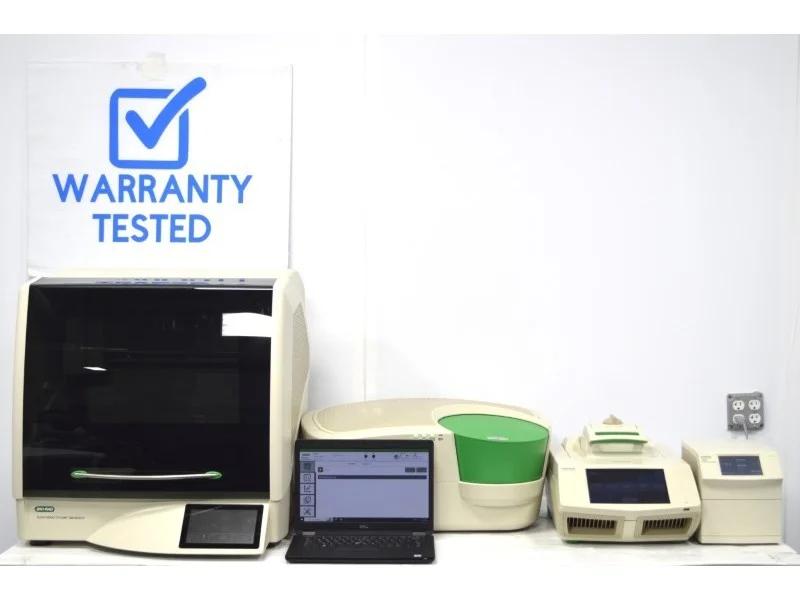
Included accessories encompass the 96-well optical module, CFX Maestro software pre-installed on a laptop, a communication cable, system validation report, user manual, and standard power cord. Note that users must supply appropriate spectral dye kits and perform validation upon installation.
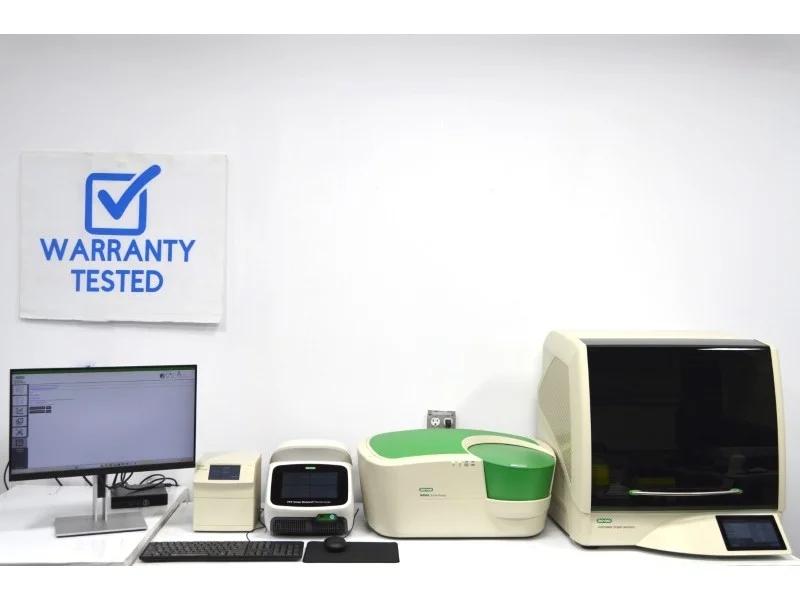
This Bio-Rad CFX96 Connect unit has been professionally tested under operational conditions and is ready for deployment in advanced molecular biology laboratories seeking robust, high-throughput qPCR capabilities.
Lab equipment markets are fragmented. Buyers spend weeks calling distributors, comparing quotes, and verifying supplier reliability. Sellers struggle to reach global research labs.
We built Questpair to fix this. Every supplier on the platform is verified before listing. Every quote you receive comes from a real, vetted seller. AI prepares your case in minutes, then a real specialist takes over.
We're an independent team based in The Netherlands, working with research labs and procurement teams across Europe and worldwide.
With a service contract, ten to fifteen years is normal for most benchtop instruments. Detectors and pumps are the parts that wear first.
Yes. Every verified supplier states which service partners cover the instrument, and we list that alongside the offer.
Ask a scientist through the request button. Parts are often available even when the instrument itself is discontinued.
Two to six weeks, depending on refurbishment scope and whether calibration is included.
We ship to 38 countries. Crating and customs handling are quoted with the instrument.
Tell us what you need and a scientist finds it for you, usually within the hour.
Last updated 19 October 2026