

Laboratory pumps
We personally find you the right used, refurbished and new laboratory pumps instruments & equipment from verified suppliers.
Laboratory pumps are fluid-handling devices that move, meter, or evacuate liquids and gases under controlled conditions in research and process settings. They cover a wide span of mechanisms, from peristaltic heads that drive fluid through flexible tubing to vacuum pumps that evacuate chambers and syringe units that deliver microlitre volumes at a set rate. On Questpair, 86 percent of the 2216 listings are used, the remainder new, offered by 24 verified suppliers and distributors across 11 countries. New, used and refurbished units appear in the catalogue, with prices spanning EUR 1 to EUR 1.549.601. The choice between them turns on flow range, chemical compatibility, and whether the application needs contamination-free paths or precise dosing.
Updated:
Laboratory pumps product list


Not the exact instrument you need?
Tell our scientists what you are after. We track it down, including off-market supply.
Not the exact instrument you need?
Tell our scientists what you are after. We track it down, including off-market supply.
Showing 1–40 of 1,040 listings
Show 40 more listingsBuying guide
What flow range and duty decide the pump?
The flow a pump has to deliver settles most of the selection before any other factor enters. A pump sized for microlitres per minute and one sized for litres per minute share almost no parts, so the throughput the protocol demands narrows the field at once. Peristaltic heads suit continuous transfer of litres per hour where the fluid must stay inside tubing; syringe pumps occupy the low end, delivering fixed volumes at rates measured in microlitres per minute; metering pumps sit between the two, dosing a repeatable volume per stroke against back pressure. Alongside flow comes duty: a pump run intermittently for sample transfer is specified differently from one that runs continuously on a process line, where seal life and motor rating matter more than peak rate.
Chemical compatibility follows directly from the fluid. The wetted path, tubing in a peristaltic head, the barrel and seals in a syringe pump, the diaphragm in a metering unit, has to tolerate the solvent, acid, or slurry it carries, so a datasheet figure for flow means little until the materials are confirmed against the chemistry. This is also where a used unit needs the most scrutiny. Tubing and diaphragms are consumables that degrade, seals harden, and a pump that ran aggressive media may show wear a photograph does not reveal. On a used pump, verify the condition of the wetted parts, ask what the unit previously handled, and confirm that replacement tubing or a service kit is still available for the model before committing.
Price spans a very wide band here, from EUR 1 to EUR 1.549.601, with an average near EUR 3.096. A simple peristaltic head or a benchtop syringe pump fits a modest budget, while a large vacuum system or a high-pressure metering skid occupies the top of the range. The brands most present on Questpair are Cole-Parmer, Watson Marlow, Hamilton, KNF, Edwards, which cover both the low-cost transfer end and the process end of the catalogue. Buying one of those names tends to make parts easier to source and models easier to compare across listings, since datasheets and service kits for established lines stay in circulation. Used and refurbished units listed for sale run below the cost of new, which is what makes a capable pump affordable on a research budget; where the two are close in price, the individual listing and its warranty terms decide the matter.
Types of Laboratory pumps
Peristaltic pumps
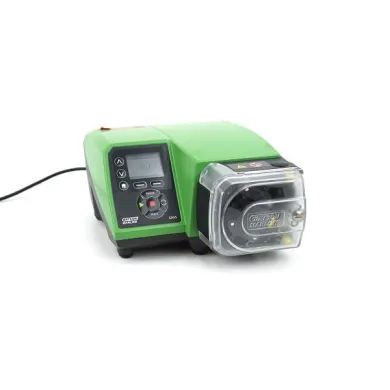
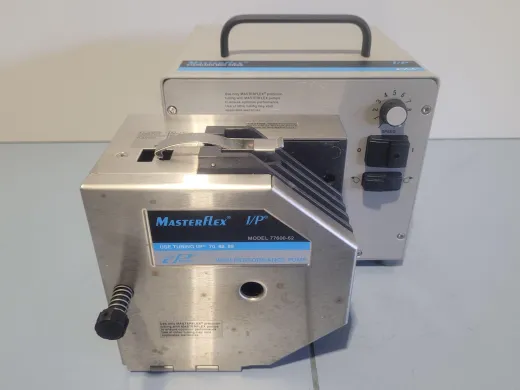
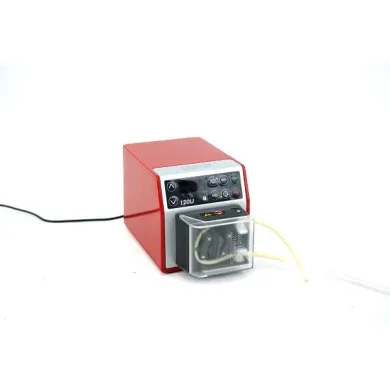
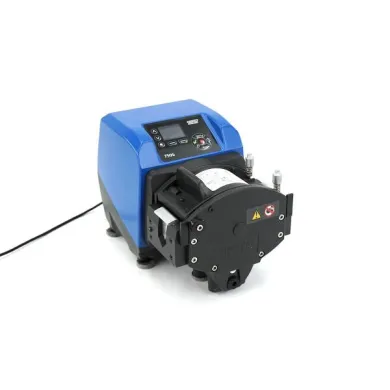
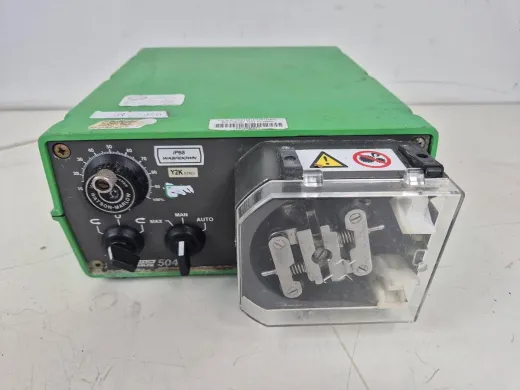
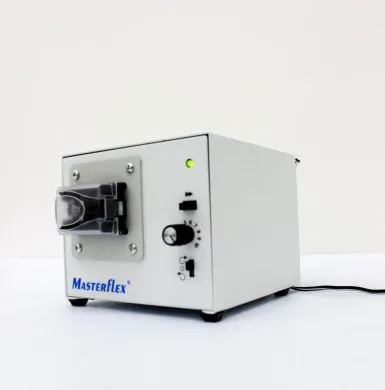
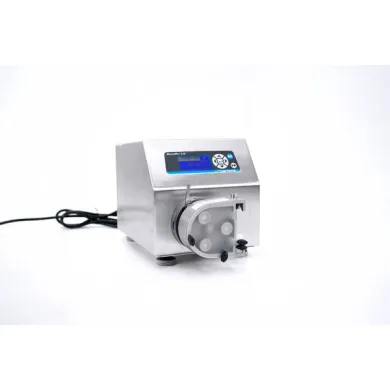
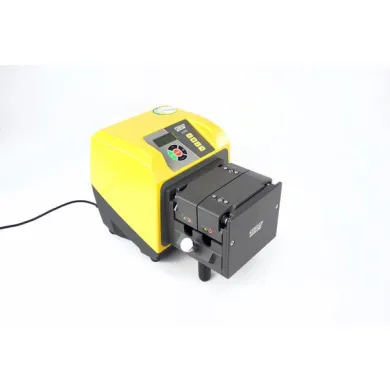
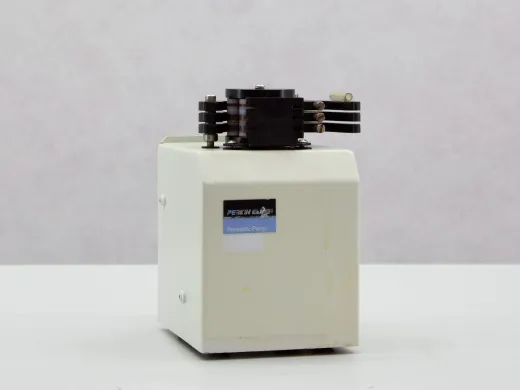
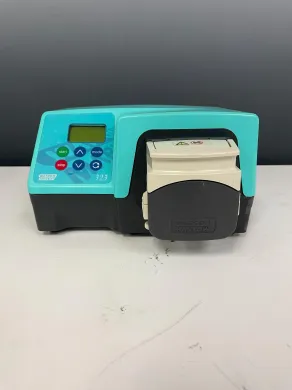
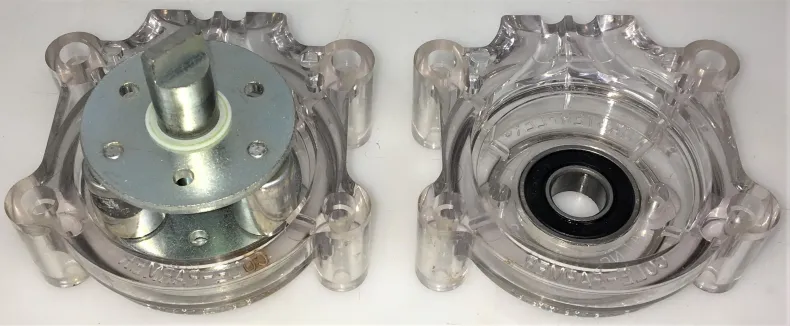
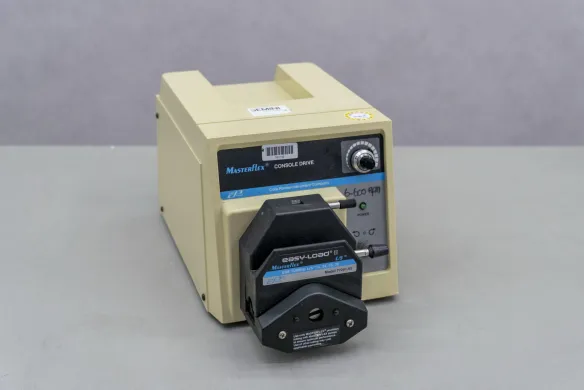
Peristaltic pumps move fluid by squeezing a flexible tube between rollers and a track, so the fluid never touches any pump component except the tubing itself. That isolation is the whole point of the design: the wetted path is a disposable tube, which makes cleaning trivial and cross-contamination almost impossible. Among the listings that specify a type, this is by far the most common pump on the marketplace. Flow is set by tube bore and roller speed, and reversing the motor reverses the flow, which suits dosing and sample recovery. In molecular biology and cell culture work they feed media and buffers into bioreactors and perfusion systems, and they handle fraction collection in protein purification where a sterile, gentle path matters. They also move viscous or particle-laden fluids that would clog a valve pump, so sample preparation and bioprocessing both lean on them heavily.
Syringe pumps
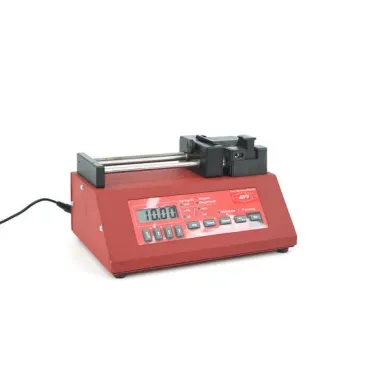
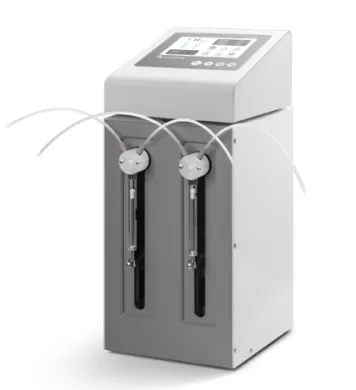
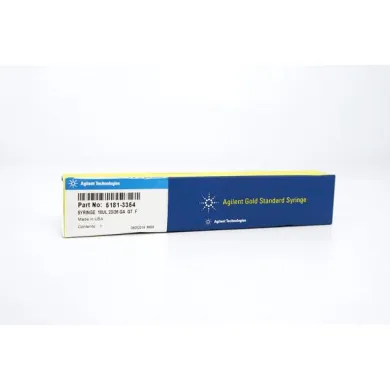
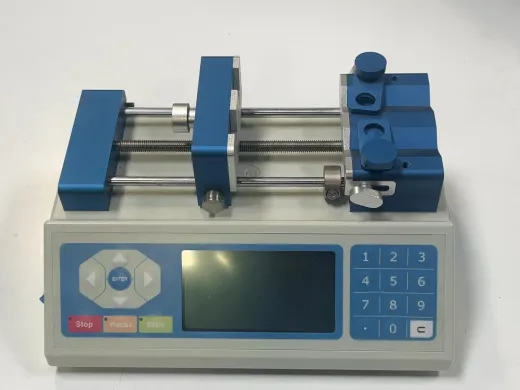
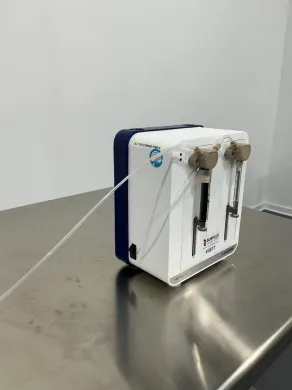
Syringe pumps drive a plunger into a barrel at a precisely controlled rate, delivering a known volume over a set time. Where a peristaltic head is about continuous transfer, a syringe pump is about accuracy at low volume: microlitres to a few millilitres, dispensed smoothly and reproducibly. The mechanism gives pulse-free flow, which is why they feed mass spectrometers and microfluidic devices where a steady stream is essential. In molecular diagnostics and immunoassay work they dispense reagents in fixed aliquots, and in cell imaging and microfluidics they infuse fluids through narrow channels at rates no other pump can hold. A syringe pump for microfluidic cell culture is a recurring requirement in synthetic biology laboratories, where exact delivery into a chip governs the experiment. The trade-off is capacity: the barrel holds a finite volume, so they serve precision dispensing rather than bulk movement.
Metering pumps
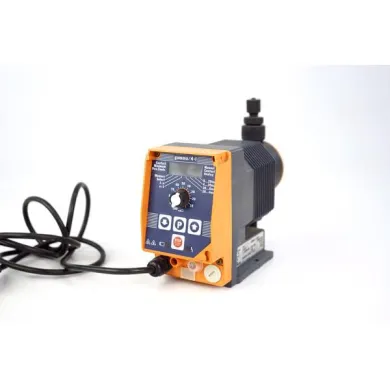
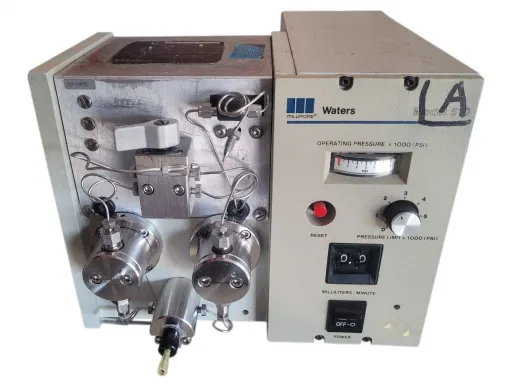
Metering pumps, also called dosing pumps, deliver a fixed and repeatable volume per stroke against resistance, which is what separates them from a simple transfer pump. A diaphragm or piston displaces a set amount with each cycle, and the stroke rate sets the dose, so the output stays accurate even as back pressure rises. That makes them the choice wherever a precise, continuous addition is needed: reagent dosing into a reactor, pH control, or feeding additives on a process line. In biomanufacturing and bioprocessing they meter nutrients and acids or bases into fermenters at a controlled rate, and in formulation work they also handle the repeatable addition of concentrates. Because the diaphragm is the wetted part and wears over time, metering pumps are the type where a buyer should confirm the seal and diaphragm condition most carefully on a used unit.
Frequently asked questions
What is a laboratory pump?
A laboratory pump is a fluid-handling device that moves, meters, or evacuates liquids and gases under controlled conditions in research and process settings. The category spans peristaltic heads, syringe units, metering pumps, and vacuum pumps, each built for a different flow range and fluid type.
What does laboratory pump mean?
The term covers any pump specified for laboratory or process work, where flow accuracy, chemical compatibility, and contamination control matter more than raw output. It is a functional label rather than one mechanism, so a peristaltic pump and a vacuum pump both fall under it.
How do laboratory pumps work?
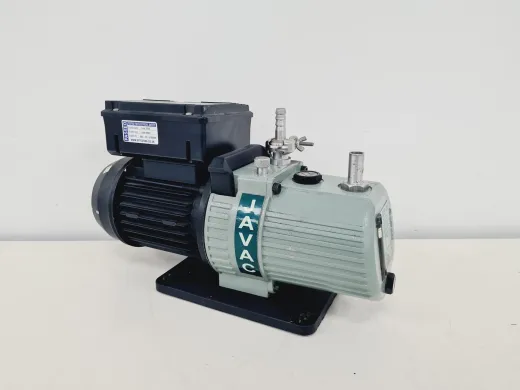
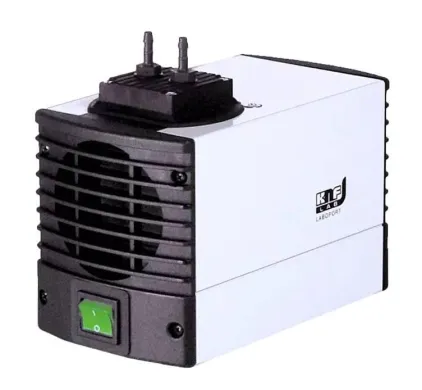
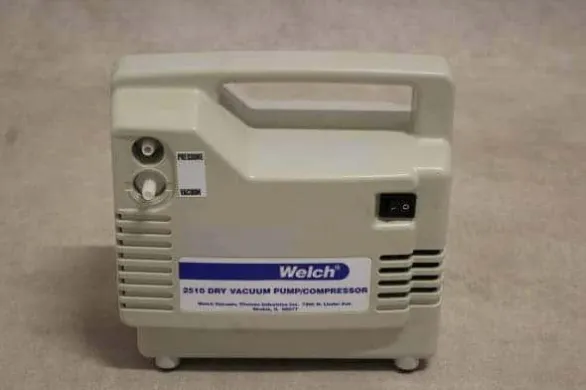
The mechanism depends on type: a peristaltic pump squeezes fluid through flexible tubing with rollers, a syringe pump drives a plunger into a barrel at a set rate, and a metering pump displaces a fixed volume per stroke with a diaphragm or piston. A vacuum pump evacuates a chamber by removing gas rather than moving liquid.
What types of laboratory pumps are there?
The types listed on Questpair include peristaltic pump, laboratory pump, vacuum pump, bioprocessing pump, diaphragm pump, and fluid transfer pump. Peristaltic pumps are the most common among listings that specify a type, with syringe and metering pumps covering precision dosing.
What are laboratory pumps used for?
They feed media and buffers into bioreactors, dose reagents into reactors, infuse fluids through microfluidic chips, collect fractions in protein purification, and evacuate chambers for drying or degassing. The application decides the type, since continuous transfer, precise dosing, and vacuum work each call for a different mechanism.
How do I choose a laboratory pump?
Start with the flow range the protocol demands, since a pump sized for microlitres per minute and one sized for litres per minute share almost no parts. Then confirm chemical compatibility of the wetted path against the fluid and match the duty, whether the pump runs intermittently or continuously.
What is the difference between refurbished and used laboratory pumps?
A used pump is sold in its existing condition, while a refurbished unit has been checked and brought back to working order before listing. On both, the wetted parts such as tubing, seals, and diaphragms degrade with use, so verify their condition regardless of the label.
How much does a laboratory pump cost?
Prices on Questpair range from EUR 1 to EUR 1.549.601, with an average near EUR 3.096. A simple peristaltic head or benchtop syringe pump sits at the low end, while a large vacuum system or high-pressure metering skid occupies the top.
Which are the best-known laboratory pump brands?
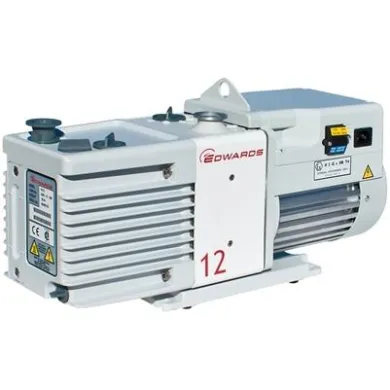
The brands most present on Questpair are Cole-Parmer, Watson Marlow, Hamilton, KNF, and Edwards. They span the low-cost transfer end through to the process and vacuum end of the catalogue.
Can I get a warranty on a refurbished laboratory pump?
A warranty is often possible and is arranged in consultation for the specific listing. Terms depend on the unit, so check what the individual listing states before buying.
Are parts available for laboratory pumps?
Parts can be sourced via Questpair. Before buying a used unit, confirm that replacement tubing or a service kit is still available for that model, since consumables such as tubing and diaphragms wear and need periodic replacement.
How long do laboratory pumps last?
The pump body and motor can run for many years, but the wetted parts are the limiting factor: tubing in a peristaltic head, seals in a syringe pump, and the diaphragm in a metering unit all wear and need replacement. Service life depends heavily on what the pump handled and how continuously it ran.
Should I buy a new or a used laboratory pump?
Used and refurbished units are listed at lower prices than new, which is what makes a capable pump affordable on a research budget. Where new and used are close in price, the individual listing and its warranty terms decide the matter, so compare them directly.
Where can I buy laboratory pumps?
Questpair lists laboratory pumps from 24 verified suppliers and distributors across 11 countries. The catalogue holds 2216 listings, of which 86 percent are used and the remainder new.
What is the lead time and shipping on a laboratory pump?
Lead time and shipping depend on the individual supplier and the unit's location, so they are stated per listing rather than set centrally. For a specific timeline, check the listing or contact Questpair, where specialists respond within one hour.
How are laboratory pumps calibrated and maintained?
Maintenance centres on the wetted parts: replace peristaltic tubing before it fatigues, inspect syringe seals, and confirm metering diaphragm condition, since a worn diaphragm throws off dose accuracy. Flow verification against a known volume or mass is the usual calibration check for metering and syringe pumps.
Which pump types are listed most, and who reaches for which?
Peristaltic pumps are the most common among listings that specify a type, chosen in cell culture and bioprocessing where a sterile, gentle path matters. Syringe pumps go to microfluidics and diagnostics for microlitre accuracy, while metering pumps serve biomanufacturing where a repeatable dose against back pressure is needed.
Which brands dominate this category and what does that mean for a buyer?
Cole-Parmer, Watson Marlow, Hamilton, KNF, and Edwards are the names most present on Questpair, covering both the transfer end and the process end. Buying an established line tends to make parts easier to source and models easier to compare across listings, since datasheets and service kits for those lines stay in circulation.
What separates the cheapest laboratory pumps from the most expensive?
The low end holds simple peristaltic heads and benchtop syringe pumps built for intermittent transfer or small-volume dosing. The top of the band is occupied by large vacuum systems and high-pressure metering skids, where higher flow, continuous duty, chemical-resistant wetted paths, and tighter dose accuracy drive the price up.