
Wyatt Technology equipment
We personally find you the right used, refurbished & new Wyatt Technology instruments & equipment from verified suppliers
Wyatt Technology is an American scientific instrumentation manufacturer specializing in light scattering and field-flow fractionation instruments for nanoparticle and macromolecule characterization. The company was founded in 1982 by Dr. Philip J. Wyatt in Santa Barbara, California, to commercialize the first multi-angle laser light scattering instruments. Its product range covers multi-angle light scattering detectors, dynamic light scattering instruments, field-flow fractionation systems, and differential refractometers, sold under names including DAWN, DynaPro, Optilab and Eclipse. Since May 2023 the firm has operated as part of Waters Corporation. On Questpair, 72 Wyatt instruments are listed by verified suppliers and distributors across 6 countries.
Updated:
Wyatt Technology product list
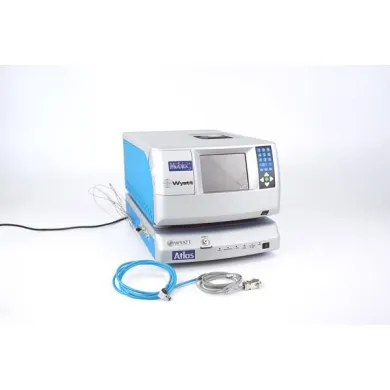
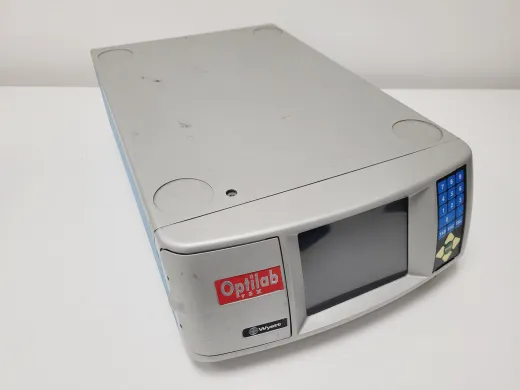
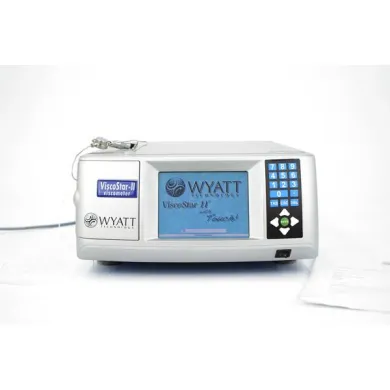
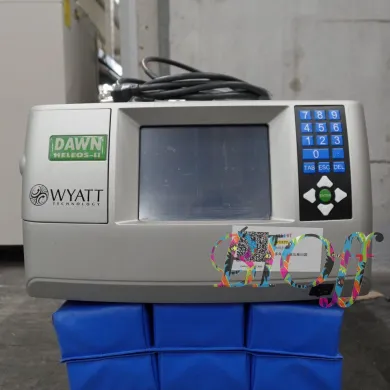


Not the exact instrument you need?
Tell our scientists what you are after. We track it down, including off-market supply.
About Wyatt Technology
Wyatt Technology is an American scientific instrumentation manufacturer that builds light scattering and field-flow fractionation instruments for characterizing nanoparticles and macromolecules. The company was founded in 1982 by Dr. Philip J. Wyatt in Santa Barbara, California, to commercialize his patents around the first multi-angle laser light scattering instruments. Its instruments measure absolute molecular weight, particle size, and molecular conformation by analyzing how a sample scatters light, a method that does not depend on column calibration or reference standards. The product range covers multi-angle light scattering detectors, dynamic light scattering instruments, field-flow fractionation systems, differential refractometers, differential viscometers, and nanoparticle analysers. Since May 2023 the firm has been part of Waters Corporation. On Questpair, 72 Wyatt instruments are listed by verified suppliers and distributors.
What Wyatt instruments do in life sciences?
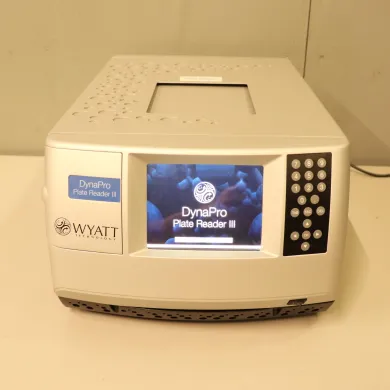
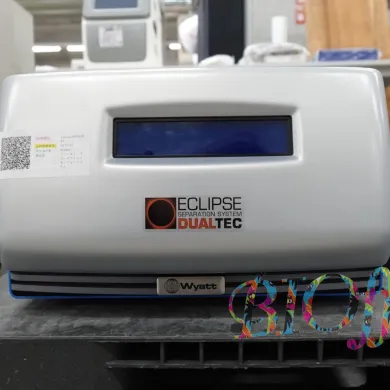
Multi-angle light scattering is a core technique in biophysical characterization, and this is the field where Wyatt detectors do most of their work. Coupled to size-exclusion chromatography, a DAWN detector performs SEC-MALS, the absolute measurement of protein molar mass and oligomeric state that is now standard in protein characterization and biologics development. Dynamic light scattering instruments such as the DynaPro measure hydrodynamic radius and are used for protein aggregation screening, stability studies, and formulation work on antibodies and other biotherapeutics. Field-flow fractionation on the Eclipse separates fragile assemblies, such as viral vectors, liposomes, and protein complexes, without the shear of a packed column, which supports characterization work in gene therapy and vaccine development. These measurements feed into molecular diagnostics, bioprocessing, and protein purification, where knowing the true size and mass of a species determines whether a batch is monomeric, aggregated, or correctly assembled. The same instruments also serve nanoparticle sizing for drug delivery research and synthetic biology.
Product lines
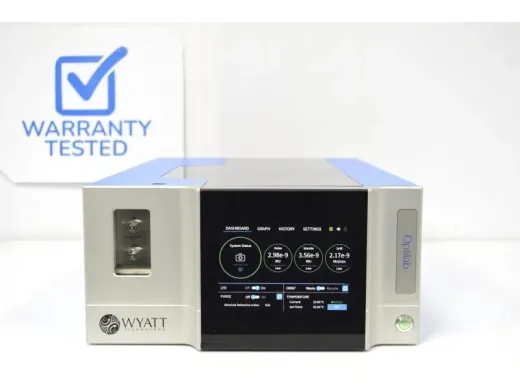
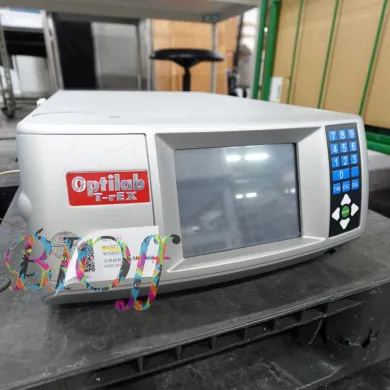
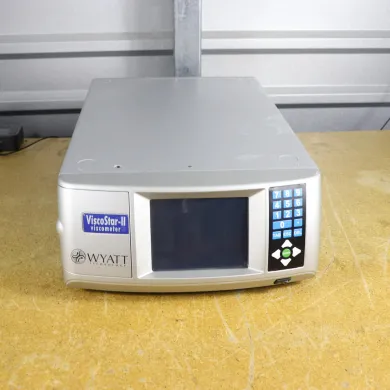
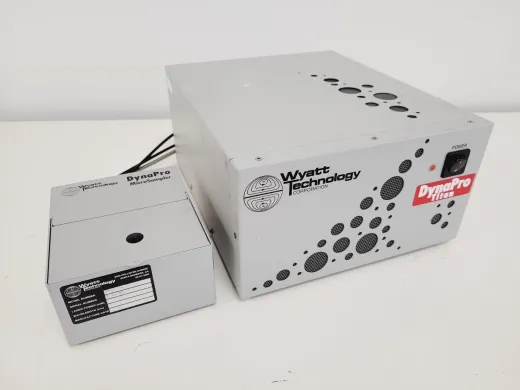
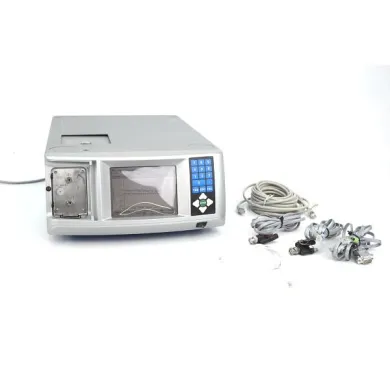
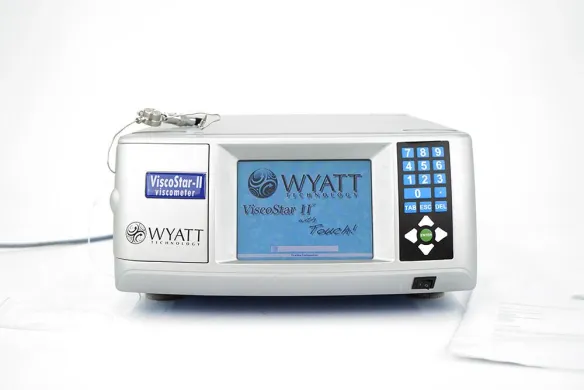
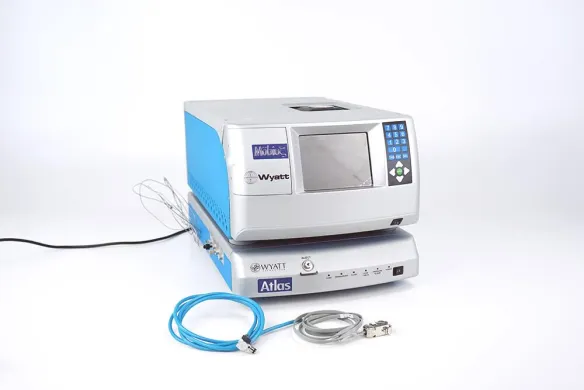
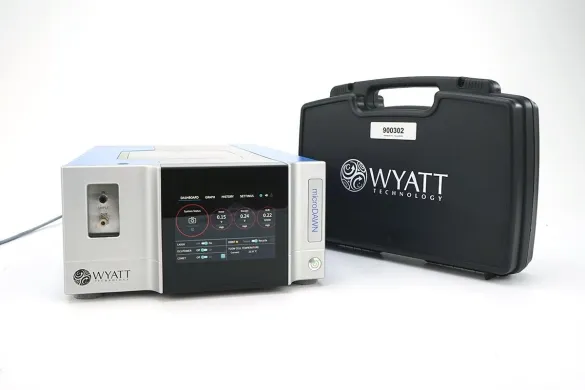
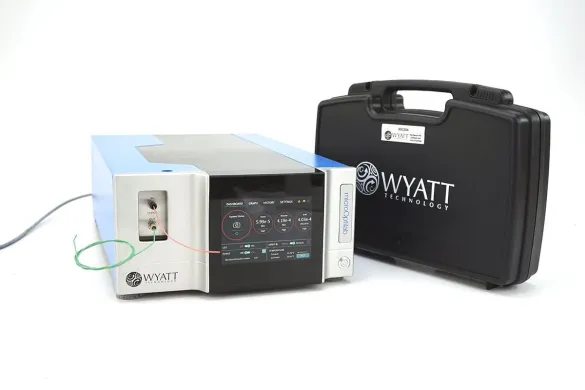
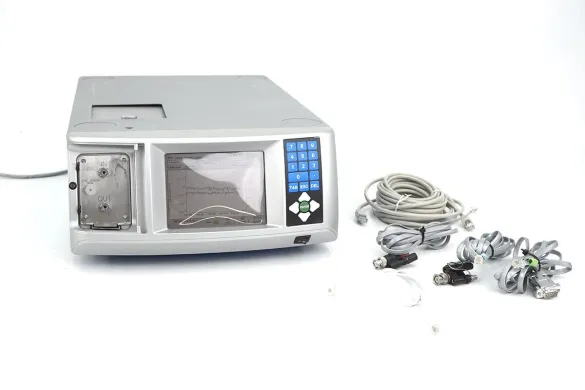
The DAWN, miniDAWN and microDAWN detectors are the multi-angle light scattering line, differing mainly in size and flow-cell scale, with the ultraDAWN aimed at process monitoring. The DynaPro family covers dynamic light scattering, including plate-reader and cuvette formats for high-throughput screening. Optilab is the differential refractometer line that supplies the concentration signal a MALS calculation needs, and ViscoStar is the differential viscometer for intrinsic viscosity and branching analysis. Eclipse is the field-flow fractionation system, while NanoStar and ZetaStar address batch nanoparticle sizing and zeta potential. On Questpair the DAWN, DynaPro and Optilab lines appear most often, reflecting their role as the detectors most labs run alongside existing separations.
On Questpair
The 72 Wyatt listings come from 9 verified suppliers and distributors across 6 countries. Prices run from EUR 240 to EUR 49.049. The average listing price is EUR 13.106. 99 percent of the listings are used, so a buyer is almost always evaluating a specific pre-owned instrument rather than choosing between condition tiers. Because these are specialist detectors, two listings of the same model can differ in configuration, flow cell, and included accessories, which makes it worth comparing individual listings rather than model names alone. Where a warranty is relevant, it is arranged in consultation for the specific listing. Parts can be sourced via Questpair, and for manuals or documentation a buyer can contact Questpair, where specialists respond within one hour.
Questpair review of Wyatt Technology
Our take based on listings data and supplier feedback
Wyatt Technology occupies a defined analytical niche: the measurement of molecular weight, size and conformation through how a sample scatters laser light. That focus explains the shape of its supply on Questpair. The 72 listings are not spread thinly across many unrelated instrument types but concentrate around a handful of recognised product lines, chiefly the DAWN multi-angle detectors, the DynaPro dynamic light scattering instruments, and the Optilab differential refractometers that pair with them. For a buyer who already runs a chromatography system, this matters, because these detectors are designed to connect downstream of a separation and read absolute molar mass rather than rely on column calibration.
The price span is the second thing worth examining. Listings run from EUR 240 to EUR 49.049, with an average of EUR 13.106. That spread is not noise. At the lower end sit individual detector modules, standalone refractometers and viscometers, items a lab buys to extend or repair an existing setup. At the upper end sit complete multi-angle scattering systems and field-flow fractionation platforms such as the Eclipse, where the instrument is the centrepiece of a characterization workflow. A buyer should read the price of any single listing against what is actually in the box, since a DAWN detector and a full Eclipse system are different purchases at different scales.
Condition is the third factor, and here the catalogue is unambiguous. 99 percent of the listings are used. These are research instruments that move through a secondary market as laboratories upgrade, consolidate or close, rather than stock bought new. For light scattering equipment that is a reasonable position, because the measurement principle is stable and a well-maintained detector retains its utility over many years. The practical consequence is that a buyer is almost always evaluating a specific used unit from a specific supplier, not choosing between a new and a refurbished tier. Where a warranty matters, it is arranged in consultation for the individual listing rather than offered as a blanket term.
Supply is distributed across 9 verified suppliers and distributors in 6 countries, which gives a buyer more than one source to compare for a given product line. That is useful for a specialist instrument, where the difference between two listings of the same model can come down to the configuration, the included accessories, or the condition of the flow cell. The strength of Wyatt as a brand on this marketplace is therefore not breadth but depth within a single analytical domain. A lab that needs absolute molar mass, size distribution, or aggregation data will find the relevant detectors and systems here; a lab outside that domain will find little, which is exactly what a focused manufacturer produces.
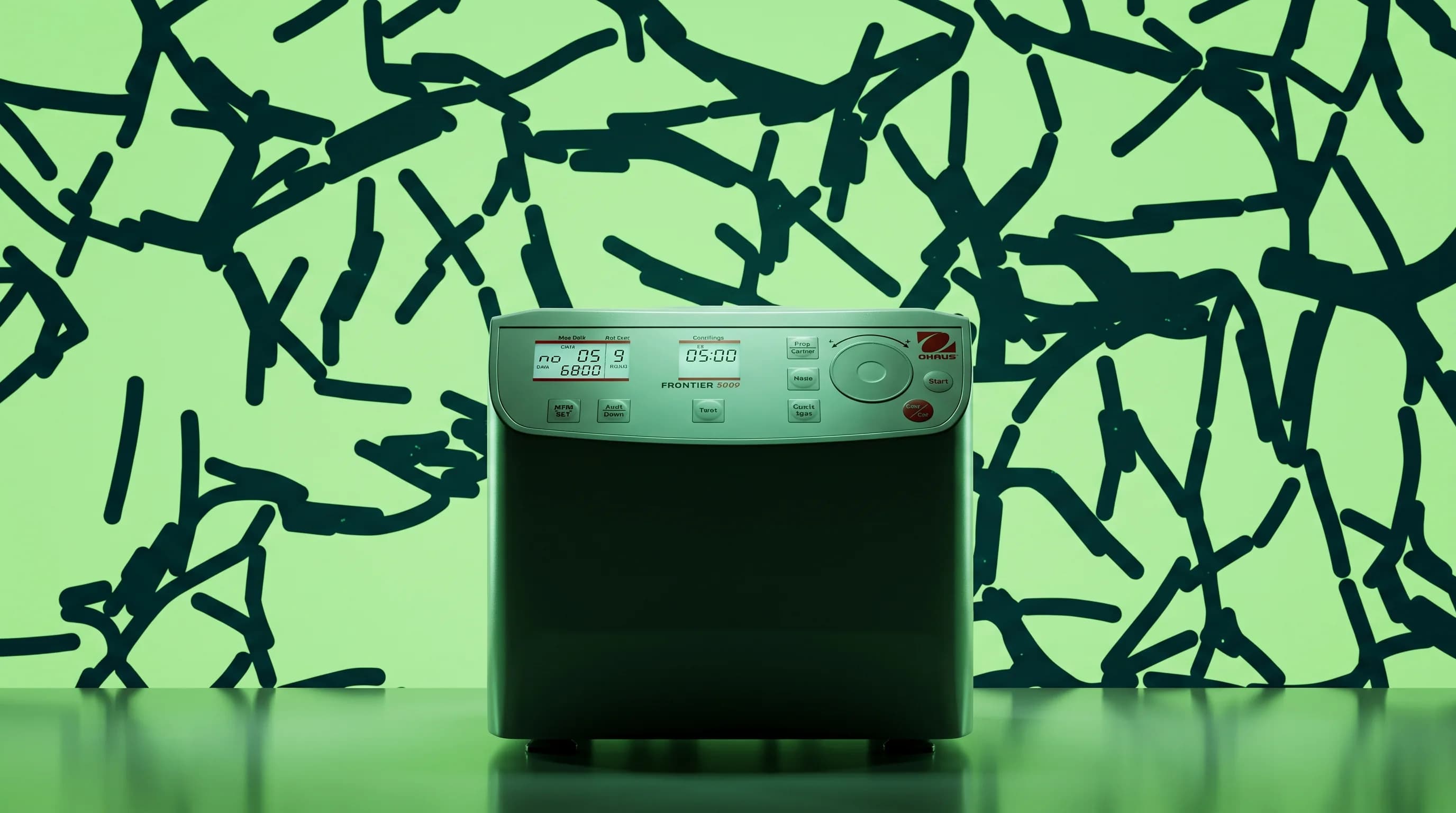
**Specialist instrument class, concentrated supply**
Wyatt Technology builds a narrow range of light scattering and field-flow fractionation instruments, so the 72 items on Questpair cluster around the DAWN, DynaPro and Optilab lines rather than spanning dozens of product types.
**Priced across a wide range**
Listings run from EUR 240 to EUR 49.049, which spans detector modules, standalone refractometers, and complete multi-angle scattering systems from 9 verified suppliers and distributors.
**Used supply dominates the catalogue**
99 percent of the listings are used, which reflects a market where these research instruments change hands as labs upgrade or close rather than buying new.
Frequently asked questions
Where can I find manuals and documentation for a Wyatt instrument?
Documentation is not attached to each listing automatically, but you can contact Questpair for manuals or technical documents tied to a specific Wyatt model. Specialists respond within one hour.
How much does a Wyatt instrument cost?
Across the Questpair listings, prices range from EUR 240 to EUR 49.049, with an average of EUR 13.106. Where a model sits in that range depends on the detector type, flow cell, and included accessories.
What's the difference between a refurbished and a used Wyatt unit?
A used unit is sold in its existing condition, while a refurbished unit has been reconditioned before sale. Both are listed below new prices on Questpair, so check the individual listing for the exact state of the instrument.
Does a Wyatt instrument come with a warranty?
A warranty is often possible and is arranged in consultation for the specific listing. Because terms are not set centrally, the detail is confirmed against the unit you are buying.
Are Wyatt instruments suitable for clinical or research work?
These detectors are built for biophysical characterization, including SEC-MALS for protein molar mass, dynamic light scattering for aggregation and stability studies, and field-flow fractionation for fragile assemblies like viral vectors. That makes them common in biologics development, bioprocessing, and nanoparticle research rather than routine clinical testing.
How long does a Wyatt instrument last?
These are specialist detectors that remain in service for many years when the laser, optics, and flow cells are maintained. Lifespan on a given used unit depends on how it was run and serviced, which is why configuration and condition details on the individual listing matter.
Can I get spare parts for a Wyatt detector?
Parts can be sourced via Questpair. Tell the specialists the exact model and the component you need so the right part is matched to your instrument.
What are the alternatives to a Wyatt light scattering detector?
The nearest alternatives depend on the measurement: for absolute molar mass by SEC-MALS the comparison is other multi-angle light scattering detectors, for hydrodynamic radius it is other dynamic light scattering instruments, and for concentration signals it is other differential refractometers. On Questpair the listed instrument classes include multi-angle light scattering detectors, particle size analyzers, refractive index detectors, chromatography detectors, molecular weight analysers, and dynamic light scattering instruments.
What is the lead time on a Wyatt instrument?
Lead time depends on the individual listing and the supplier holding it, since these are pre-owned units rather than stocked new production. Contact Questpair with the listing you are considering to confirm availability and dispatch timing.
What is the difference between parts and spares when ordering?
In practice the terms overlap: both refer to replacement components such as flow cells, optics, or laser modules for a Wyatt detector. Parts can be sourced via Questpair, so specify the model and the component to get the correct match.
Do Wyatt listings ship internationally?
Listings come from verified suppliers and distributors across 6 countries, so cross-border purchase is possible. Shipping arrangements are handled per listing, so confirm the destination with Questpair before ordering.
Which product lines does Wyatt make and how do they differ?
The DAWN, miniDAWN and microDAWN are the multi-angle light scattering detectors, differing mainly in size and flow-cell scale, with the ultraDAWN aimed at process monitoring. The DynaPro covers dynamic light scattering, Optilab is the differential refractometer, ViscoStar the differential viscometer, Eclipse the field-flow fractionation system, and NanoStar and ZetaStar address batch nanoparticle sizing and zeta potential.
Which Wyatt instrument classes are actually listed on Questpair and in what condition?
The DAWN, DynaPro and Optilab lines appear most often, reflecting their role as detectors labs run alongside existing separations. 99 percent of the listings are used, so you are usually evaluating a specific pre-owned unit rather than choosing between condition tiers.
What separates the cheapest Wyatt listings from the most expensive?
The spread from EUR 240 to EUR 49.049 tracks the detector type and its configuration: a single refractometer or an older dynamic light scattering unit sits lower, while a current multi-angle detector with a full flow-cell set and accessories sits higher. Two listings of the same model can still differ in flow cell and included accessories, so compare individual listings rather than model names alone.
About Questpair
Questpair is the European marketplace for lab equipment, where AI-prepared cases and personal specialists guide every purchase. We work with 247 verified suppliers across 38 countries to find buyers the right used, refurbished or new instruments, with response within 1 hour and significant savings vs buying new.
Personal · Fast · Reliable · Affordable