
Radwag analytical instruments
We personally find you the right new, used and refurbished radwag analytical instruments from verified suppliers.
Radwag analytical instruments on Questpair run from industrial platform scales through to the UYA ultra-microbalance, with the weighing lines that read to seven decimal places sitting alongside calibration weights and mass standards in the same catalogue. Among the listings that specify a type, the spine is industrial scales, calibration weights and precision balances, with mass standards and precision weights filling out the metrology side. The intersection holds 2727 listings from 6 verified suppliers and distributors across 6 countries. The XA and MYA families cover the high-resolution laboratory work, the PS and WLC lines handle general precision weighing, and the weight sets let a lab close the loop on its own instrumentation.
Updated:
Radwag Analytical instruments product list


Not the exact instrument you need?
Tell our scientists what you are after. We track it down, including off-market supply.
Not the exact instrument you need?
Tell our scientists what you are after. We track it down, including off-market supply.
Showing 1–40 of 2,724 listings
Show 40 more listingsBuying guide
Choosing a Radwag analytical instrument
The first decision on any Radwag weighing instrument is readability against the mass you actually handle, because buying more resolution than the sample needs costs money and slows every measurement with longer stabilisation. Decide whether your smallest meaningful sample is in grams, milligrams or micrograms, then pick the line that reads one decade finer: the UYA and MYA for microgram and sub-microgram work, the XA and AS for standard analytical weighing, the PS and WLC where capacity in kilograms matters more than the last digit. A microbalance bought for routine milligram work will frustrate anyone who has to wait for it to settle.
On a used Radwag balance, the parts that drift are the ones to verify. Ask the seller for a recent calibration certificate and, where the model has one, confirm the internal adjustment weight still operates, since an external-only balance ties you to your own mass standards. Check the weighing pan, the draught-shield glass and the levelling feet, and on moisture analysers confirm the halogen or infrared heating element and the temperature sensor behave, because a worn heater skews every loss-on-drying result. A seller should be able to show that the balance reaches its rated readability at full span, not just at zero.
Price tracks resolution and completeness rather than age. A bare XA head without its anti-static enclosure sits well below a fully configured one, and a weight set is priced by its OIML or ASTM class, so an E2 set costs many times an F1 set of the same denominations. Match the weight class to the balance you intend to check: a set two classes coarser than the instrument cannot verify it meaningfully. Within the Radwag range, confirm that any weighing module, indicator or software you add is specified for your exact series, since the XA, PS and industrial platforms do not share one interface across every generation.
Radwag weighing series across the balance range
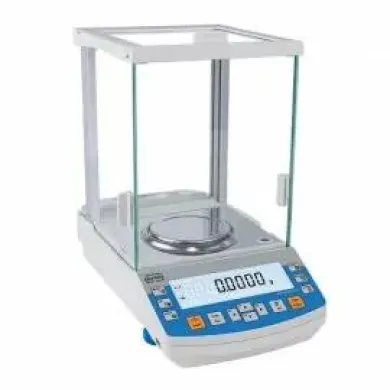
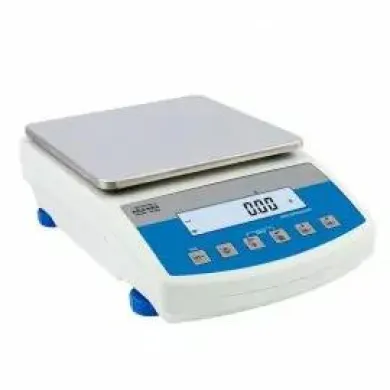
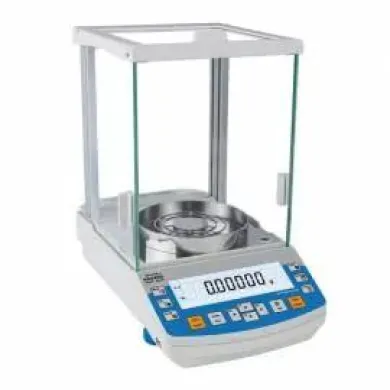
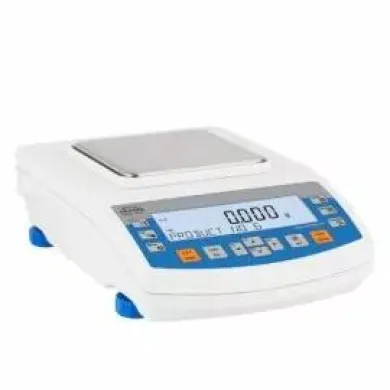
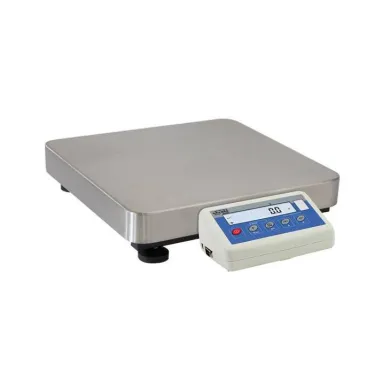
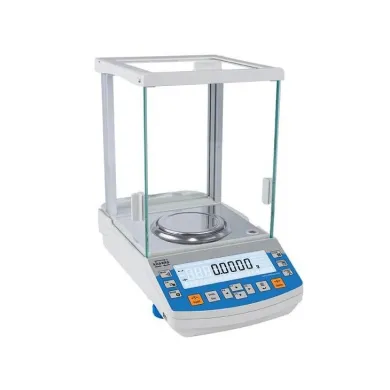
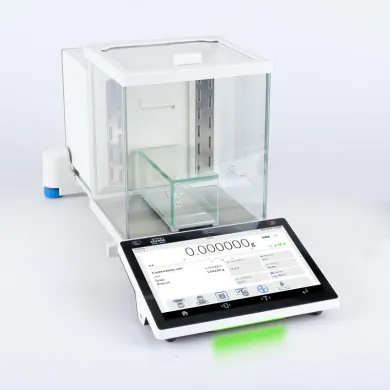
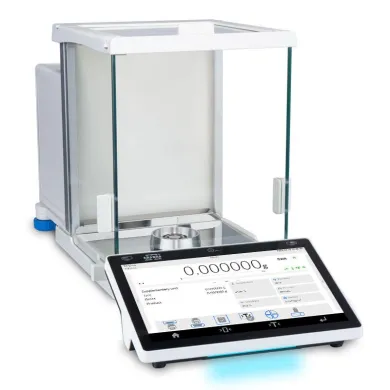
Among the listings that specify a type, the catalogue splits between the weighing instruments themselves and the standards used to check them. The resolution ladder starts with the XA series, which covers both analytical balances reading to five decimal places and microbalances built on the same platform. Above it sit the MYA microbalances, dedicated to sub-milligram work, and the UYA ultra-microbalances, which push readability to a tenth of a microgram for filter weighing and particulate analysis. The AS series is the general analytical balance, the one most labs reach for first. For coarser work the PS and WLC precision balances carry larger capacities at milligram readability, which is where most of the precision-balance listings fall. The MA moisture analysers sit apart from the weighing ladder: they heat a sample and weigh the loss, so they belong with analytical instrumentation rather than straight gravimetric work. Calibration weights, mass standards and precision weights round out the metrology side, letting a lab verify its own balances in-house.
Where the XA, PS and UYA lines diverge
The deciding parameter here is readability against capacity, and Radwag's own models trade one for the other in a predictable way. The UYA reads to 0.1 microgram but caps capacity at a few grams, so it suits filter and pipette work where the sample is tiny and the answer must be exact. The MYA sits a step down, microgram readability against a slightly higher ceiling, which covers most pharmaceutical microweighing. The XA analytical line reads to 0.01 or 0.1 milligram across capacities into the hundreds of grams, the workhorse resolution for standard laboratory analysis. The AS series overlaps the XA on capacity but with simpler readability, and the PS and WLC lines move to milligram resolution with capacities running into several kilograms, which is why they carry the industrial and platform work. For the standards, what matters is the OIML or ASTM accuracy class rather than capacity, since a weight set is specified by how tightly its mass is known. A buyer matching instrument to task works down this ladder from the sample size, not up from the budget.
How price and condition break down
Prices across these listings run from EUR 10 to EUR 204.879. 1 percent of the listings are used. The low end of the range is the calibration weights and individual mass standards, which sell as consumable metrology items; the high end is complete analytical and microbalance systems with enclosures and ionisers. The spread is wide because a single weight and a fully specified ultra-microbalance both appear here. The catalogue holds 2701 new listings against 26 used ones.
Frequently asked questions
Which Radwag weighing series are listed, and how do they differ?
The catalogue carries the XA analytical balances, the MYA microbalances and UYA ultra-microbalances for fine work, the AS general analytical line, and the PS and WLC precision balances for larger capacities. The MA moisture analysers sit apart, heating a sample and weighing the loss rather than performing straight gravimetric weighing. The deciding difference across the weighing lines is readability against capacity: finer resolution comes with lower maximum load.
How much does a used Radwag balance cost?
Across all Radwag listings on Questpair prices run from EUR 10 to EUR 204.879, with 1 percent of the listings used. The low end is individual calibration weights and mass standards; the high end is complete analytical and microbalance systems with enclosures and ionisers.
Are refurbished Radwag instruments available?
Yes, both used and refurbished units appear in the catalogue, listed at lower prices than new ones. Price is the difference you can count on; warranty on any individual unit is arranged in consultation for that specific listing.
Which Radwag model suits which application?
Work down from your smallest meaningful sample: the UYA for filter and pipette work at 0.1 microgram, the MYA for pharmaceutical microweighing at microgram readability, the XA and AS for standard analytical work in milligrams, and the PS and WLC where capacity in kilograms matters more than the last digit. Moisture analysers in the MA line fit loss-on-drying tasks rather than fixed-mass weighing.
What should I check before buying a used Radwag balance?
Ask for a recent calibration certificate and, where the model has one, confirm the internal adjustment weight still operates, since an external-only balance ties you to your own mass standards. Inspect the weighing pan, the draught-shield glass and the levelling feet, and verify the balance reaches its rated readability at full span rather than only at zero. On moisture analysers, check that the halogen or infrared heating element and the temperature sensor behave, because a worn heater skews every result.
Do Radwag weighing modules and parts carry over between series?
Not reliably. The XA, PS and industrial platforms do not share one interface across every generation, so a weighing module, indicator or software you add must be specified for your exact series. Parts can be sourced via Questpair when you need a match for a particular model.
How do I match a Radwag weight set to the balance I want to check?
A weight set is specified by its OIML or ASTM accuracy class, not its capacity, and an E2 set costs many times an F1 set of the same denominations. Choose a class fine enough for the instrument: a set two classes coarser than the balance cannot verify it meaningfully.
How does Radwag compare to other analytical balance brands for choosing a model?
What separates the Radwag range internally is the resolution ladder, from 0.1 microgram on the UYA up to kilogram-capacity milligram readability on the WLC, paired with in-house weight sets so a lab can verify its own instruments. When comparing makers, the parameters that matter are the same everywhere: readability against capacity, internal versus external adjustment, and whether the enclosure and ionisation fit your sample type. The Questpair catalogue lists Radwag units from 6 verified suppliers and distributors across 6 countries so you can weigh specific models rather than brands in the abstract.